A noisier Salish Sea: New research and a public education hub document the acoustic crisis facing Southern Resident killer whales
New findings from Boundary Pass show the underwater soundscape is degrading, and current protections are not keeping pace.
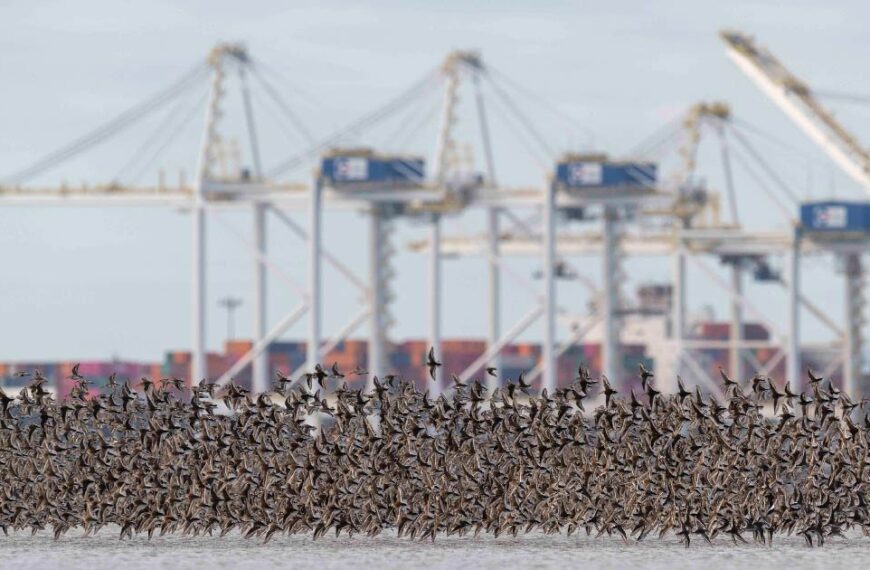
Southern Resident killer whales (SRKWs) live in one of the noisiest stretches of ocean on the Pacific coast. Boundary Pass and Haro Strait, core habitat for these endangered whales, serve as the primary maritime gateway to and from the Port of Vancouver, one of Canada’s largest and busiest ports. Every cargo ship, tanker, ferry, and recreational boat that transits these waters contributes to an underwater soundscape that the whales must navigate to find food, communicate with family members, and survive.
We’ve known for years that underwater noise is a problem for SRKW. What we didn’t have, until now, was a detailed, decade-long picture of how much things have changed, or a rigorous assessment of whether current management measures are making a difference.
Today, we are sharing two resources developed through Raincoast’s NoiseTracker initiative: a technical report on acoustic conditions in Boundary Pass, and a publicly accessible Education Hub designed to help make sense of the science.
Citation
McNeilly J, Hendricks B, and Vergara V. 2026. NoiseTracker: Tracking vessel noise and its implications for Southern Resident killer whales in the Salish Sea. Raincoast Conservation Foundation. DOI: 10.70766/8.76355
The report: Nearly a decade of acoustic change in the Salish Sea
Our new technical report NoiseTracker: Tracking Vessel Noise and its Implications for Southern Resident Killer Whales in the Salish Sea, presents findings from two hydrophones deployed in SRKW critical habitat, one operated by the Saturna Island Marine Research and Education Society (SIMRES) off Monarch Head, Saturna Island, and one deployed by Raincoast off Wallace Point, Pender Island. Together, these hydrophones sit directly within or adjacent to the Pender and Saturna Vessel Restricted Zones (VRZs), the seasonal protected areas established in 2019 to reduce vessel noise and disturbance to SRKW.

The analysis, conducted by SoundSpace Analytics, compared acoustic conditions in 2017, 2023, and 2025 using a suite of biologically relevant metrics, including Quiet Time and Listening Space Reduction (LSR), a measure of how much of the whales’ effective acoustic habitat is lost to vessel noise at any given time.
The findings are sobering.
Eight years of sustained acoustic degradation
In 2017, the waters near the Monarch Head hydrophone were free of detectable vessel noise for an average of 34.5% of the time. By 2025, that number had fallen to 19.6%. The average level of excess vessel noise (sound above the natural baseline in the killer whale communication frequency band of 0.5–15 kHz) rose from 3.4 dB in 2017 to 5.0 dB in 2025. Because decibels are measured on a logarithmic scale, such small numerical differences reflect large real-world changes in sound energy. And critically, Listening Space Reduction, the proportion of acoustic habitat rendered effectively unusable by vessel noise, regularly exceeded 40% in 2023 and 2025, with peak summer values surpassing 80%.
Put simply: the acoustic environment in one of the most important stretches of habitat for these whales has deteriorated sharply and consistently over the past eight years.
What’s behind the increase? Vessel traffic has grown substantially, rising from 8,338 AIS-recorded vessel trips near the Saturna hydrophone in 2017 to 11,037 in 2025, a 32% increase overall. But the composition of that traffic matters just as much as the volume. Recreational vessel trips nearly tripled over the same period (+199%).Tanker traffic more than doubled (+146%) following the 2024 expansion of the Westridge Marine Terminal, a direct consequence of the Trans Mountain Pipeline expansion. Each laden tanker transiting Boundary Pass is accompanied by an escort tug, further compounding acoustic impacts.

Current protections are not sufficient
The VRZs were established to provide acoustic refuge for SRKWs, but the evidence suggests they are falling short. Their effectiveness is limited by several factors: they are only in effect from June through November; their fixed boundaries may not align with where whales actually are during a given vessel transit; compliance among non-commercial vessels is inconsistent; and the zones are narrow enough that any SRKW inside them would still be acoustically exposed to vessels operating just outside. Analysis of vessel noise acoustic fingerprints recorded at the Pender hydrophone, deployed inside the Pender VRZ, found that individual vessel transits repeatedly pushed Listening Space Reduction to 100% in the killer whale communication band. During those transits, the whales’ entire acoustic space was briefly eliminated.
The findings also inevitably raise questions about the ECHO Program’s voluntary vessel slowdown. Despite an 86% voluntary participation rate among eligible commercial vessels, noise levels in critical SRKW habitat have continued to increase, suggesting that reductions in the noise output of individual vessels are being offset by the growing number of vessels, particularly tankers and recreational craft.
In short: these findings suggest that current management measures are not sufficient to address the cumulative acoustic burden these whales face across their habitat and throughout the year.
A troubling 2025
SRKW detections at the Saturna hydrophone declined sharply in 2025 compared to 2023, with just 13 detection events recorded across 8 days, versus 34 events across 29 days in 2023. The summer of 2025 saw one of the lowest numbers of confirmed SRKW presence days in the Salish Sea since systematic monitoring began decades ago, a pattern observed not just at our hydrophones but across the broader monitoring network. The reasons behind this decline are likely multiple, and prey availability is probably a key driver. Whether this represents a temporary shift or the beginning of a longer change in habitat use will require continued monitoring to determine.
The Education Hub: Making the science accessible
Acoustic metrics, decibels, and frequency bands are not intuitive concepts for most people. But understanding what underwater noise does to killer whales, and why the numbers in our report matter, is important for anyone who cares about the fate of these iconic animals, or who wants to participate meaningfully in conversations about their recovery.
That’s why, alongside the report, we’ve also launched the NoiseTracker Education Hub, a comprehensive, publicly accessible educational resource designed to work as a companion to the technical report. It explains the basics of underwater acoustics, the metrics used to measure noise (including the same ones featured in the report), and what elevated noise levels mean in practice for marine mammals. It covers how scientists detect and measure underwater sound, why different species are affected differently, and what mitigation efforts are underway. Interactive visualizations, including some developed by our own Marie-Ana Mikus, help make abstract acoustic concepts visible and tangible.
Whether you are a student, a curious member of the public, a policy-maker, or a researcher new to the field, the NoiseTracker Education Hub is a starting point for understanding the acoustic world that marine mammals depend on, and what we stand to lose when that world becomes too noisy.
What comes next
The findings in this report point to a clear conclusion: the acoustic environment in critical SRKW habitat is degrading, and current measures are not sufficient to reverse that trend.
That doesn’t mean nothing can be done. The report’s findings align closely with recommendations in a recent report by an Independent Science Panel on SRKW Recovery, convened in Vancouver in March 2025. The report calls for the prompt implementation of enforceable, biologically meaningful noise reduction targets; expanded vessel slowdown zones; noise output standards for large commercial vessels; and an evaluation and redesign of the Vessel Restricted Zones to better align with SRKW foraging areas and improve enforcement – echoing our own findings about the limitations of the Pender and Saturna VRZs. Extending the VRZs beyond their current June-to-November window would further improve their effectiveness. On the vessel approach distance, there has already been a step forward: earlier this year, the federal government enacted an Interim Order requiring all vessels to stay at least 1,000 m from SRKWs in southern BC coastal waters, and is now proposing to make this distance a permanent part of the Marine Mammal Regulations. Our acoustic data from Boundary Pass provides precisely the kind of evidence base needed to inform and justify these and further measures.
These whales depend on sound for virtually every aspect of their lives: finding food, maintaining family bonds, and navigating their world. The least we can do is understand what we are taking from them, and act on what we know.
Acknowledgements
We are grateful to MEOPAR (Marine Environmental Observation, Prediction and Response Network) for supporting this work through a knowledge mobilization grant. We thank SoundSpace Analytics for conducting the acoustic analysis, and the Saturna Island Marine Research and Education Society (SIMRES) for providing long-term hydrophone data from Saturna Island.