

Backgrounders
Materials to provide context, establish facts, and aid understanding.
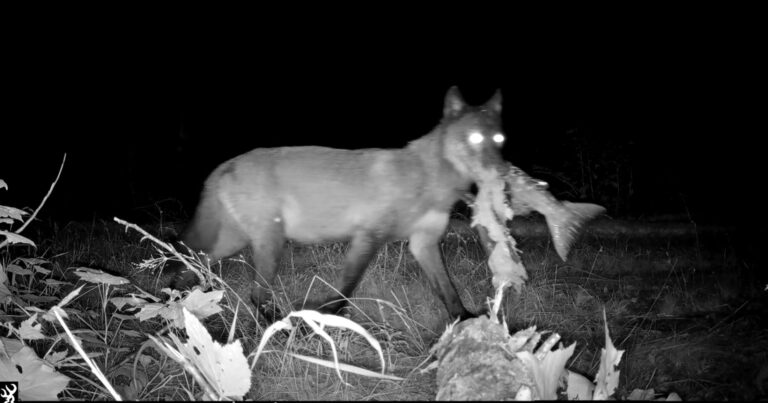
A wolf’s connection to salmon
In the rich coastal forests of British Columbia, gray wolves are not just land-based hunters – they become salmon specialists each fall when these fish return to spawn.
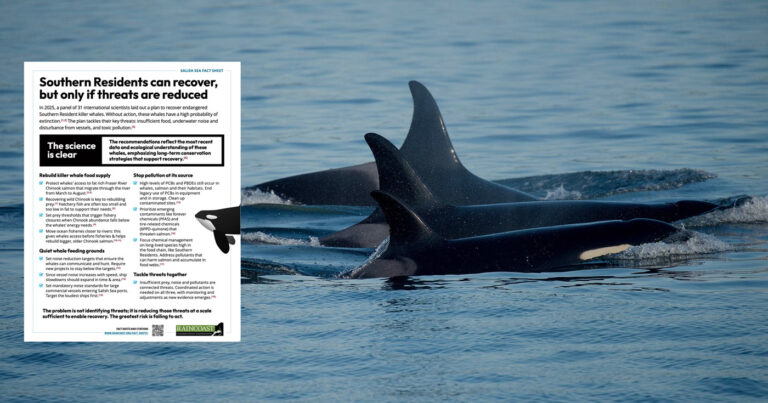
Scientists agree: Southern Residents can recover, but only if threats are reduced
The problem is not identifying threats; it is reducing those threats at a scale sufficient to enable recovery. The greatest risk is failing to act.
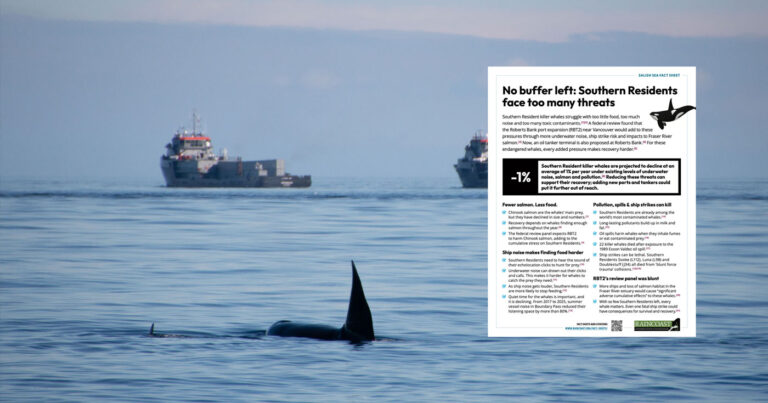
No buffer left: Southern Residents face too many threats
Too little food. Too much noise. Too much pollution. Ship strikes. This is how extinction happens – one added pressure at a time.

Why Canada needs SARA’s jeopardy test
The jeopardy test is a legal line: a project cannot be authorized if it threatens the survival or recovery of a species.
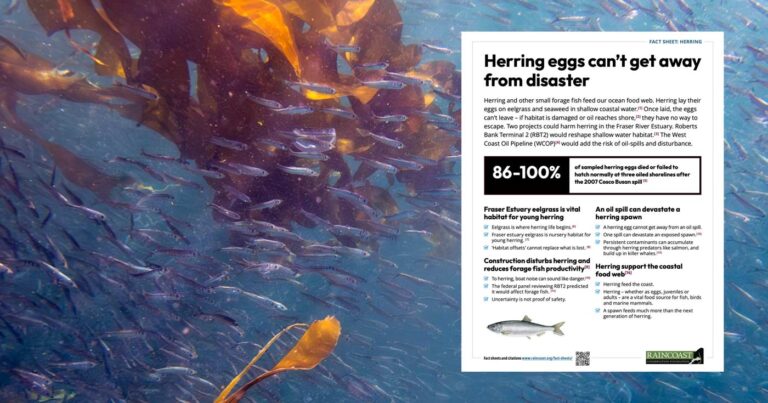
Herring eggs can’t get away from disaster
Don’t build new risks into herring’s nursery. Robert’s Bank Terminal 2 and West Coast Oil Pipeline would add different pressures to the same nearshore waters. Pacific herring should not have to absorb both.

The roles of wolves in healthy ecosystems and how their presence benefits other species
Protect wolves, protect entire ecosystems.

Endangered caribou, wolves, and ecological integrity
Killing wolves to protect caribou may accelerate ecological decline and ultimately diminish long-term caribou survival prospects.

Wolf ecotypes in BC
Understanding the ecotype of recovering wolves is critical for conservation, as distinct ecotypes carry adaptations that influence habitat use, diet, and ecological function.

Genetic legacy and ecological differences of grey wolves (Canis lupus) in southern British Columbia
Understanding the ecotype of recovering wolf populations is important for conservation and management.