

So you live in B.C., but you’re mostly finding Alaska-caught salmon in stores. Why?
We need to talk about cost, complexities, and what “sustainable salmon” really means.
The desire to ‘buy Canadian’ has only increased amongst consumers in recent times, but it’s not always easy. B.C. salmon is an iconic food, so why are so many fish in stores coming from Alaska?
A recent article from Narwhal journalist, Steph Kwetásel’wet Wood, dove deep into this question, where she spoke to Aaron Hill, executive director of Watershed Watch Salmon Society, and Misty MacDuffee, Raincoast’s Wild Salmon Program director.
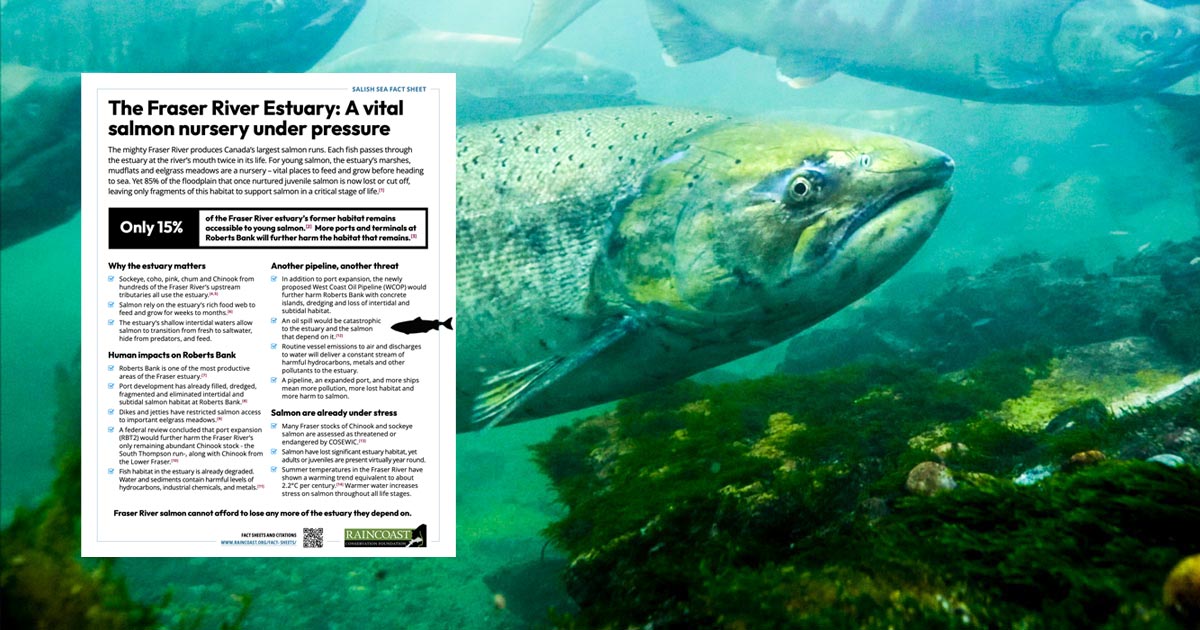
Despite B.C’s deep connection to wild salmon, the reality is that Alaskan salmon dominates grocery store shelves and restaurant menus. This is largely due to scale, price, and global sustainability certifications that B.C. fisheries currently lack. Alaska harvests tens of millions more salmon each year than B.C., making its products m ore consistent and affordable for retailers, while also benefiting from widely recognized eco-certifications that influence purchasing decisions.
At the same time, concerns remain. Raincoast, along with SkeenaWild and Watershed Watch, have argued that some of Alaska’s interception fisheries impact at-risk salmon populations bound for Canadian rivers and take food from Southern Resident killer whales, raising questions about what “sustainable” really means (and who gets to define it).
For consumers hoping to support local and buy sustainable Canadian seafood, the answer isn’t always straightforward. B.C. fisheries are often smaller, and many small-scale fisheries are more selective and deeply tied to Indigenous stewardship. However, they can be harder to find, sometimes come at a higher cost, and lack the necessary data for sustainability certifications. So next time you’re at the seafood counter, it’s worth taking a closer look at where your salmon comes from. Because the story behind it might be more nuanced than the label can convey.