Wolf home range and travel distances
Range size varies widely depending on factors like prey density, pack size, and terrain.
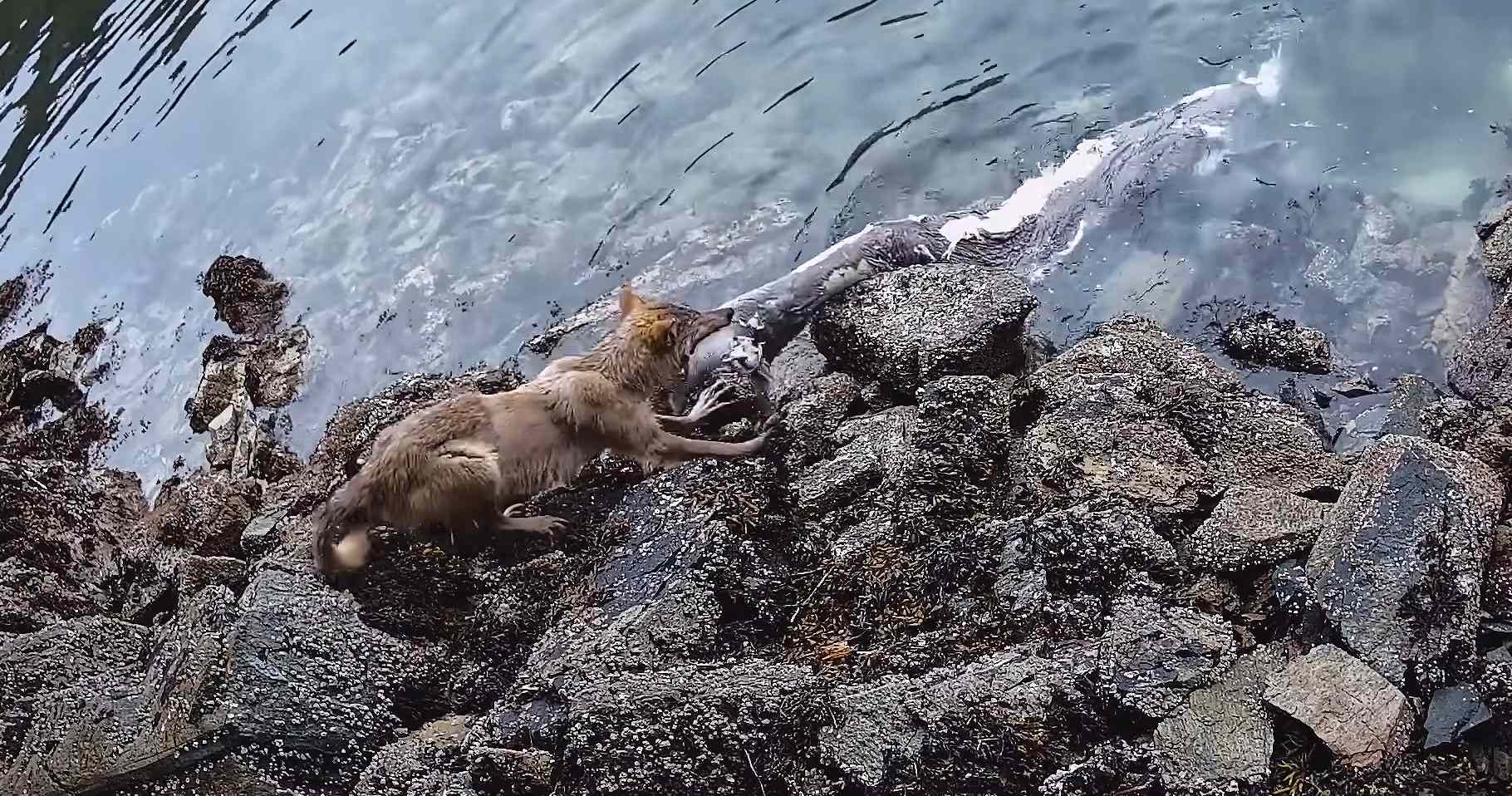
Wolves in mountainous regions, like those of British Columbia, roam some of the largest home ranges of any land mammal. A wolf’s home range is the area where all its life needs are met – from hunting grounds and travel corridors to den sites and pup-rearing areas.
Range size varies widely depending on factors like prey density, pack size, and terrain. In North American mountain ecosystems, studies have documented home ranges spanning 583 to 3,374 km², with wolves in the Rocky Mountains occupying some of the largest territories.
Wolves are also incredible travellers. Research in Alaska found that wolves can cover up to 24 km per day, while other studies have documented daily movements ranging from 1.6 to 18.7 km. Dispersing wolves – those leaving their birth packs – may travel 50 to more than 800 km in search of new territories.

In other cases, wolves can travel even greater distances, such as Pluie, the iconic wolf, who travelled over an astonishing 100,000km², including across three U.S. states and two Canadian provinces, before she was killed in British Columbia. Their extensive home ranges and mobility highlight both their adaptability and the importance of maintaining large, connected landscapes for their survival that span vast regions and go beyond human borders.
References
Paquet PC, Harrington FH, editors. 1982. Wolves of the world: Perspectives of behavior, ecology, and conservation. Behavioural Processes. 9(2-3). doi:https://doi.org/10.1016/0376-6357(84)90073-1.
Paquet PC, Carbyn LN. 2003. Gray Wolf. In Canis Lupus and Allies. p. 23–483. https://defenders.org/sites/default/files/publications/gray_wolf_chapter_in_north_american_wolves.pdf