Monitoring on the edge: tracking Southern Residents from a Pender Island bluff
Three years observing whales in a vessel-free zone.
This is our third year monitoring the Pender Vessel Restricted Zone (VRZ), a protected area designed to reduce disturbance to critically endangered Southern Resident killer whales. From a cliffside lookout on Pender Island and through our underwater hydrophone, we track when whales use this area and how vessels behave around them.

Why this matters
An acoustic environment free from human noise is essential for Southern Residents. Like all marine mammals, these whales rely on sound for communication, navigation, and foraging. Underwater noise from vessels can interrupt their calls and mask their echolocation, effectively shrinking the acoustic space available to them and making it harder for them to socialize and find food.
How monitoring works
Researchers scan the VRZ and surrounding waters from the Oaks Bluff viewpoint. Using a precision surveying instrument called a theodolite, we determine the exact positions of whales and vessels in real time.


Our hydrophone, strategically located within the Pender Island VRZ, continuously records underwater sound, capturing both whale calls and vessel noise. By combining our visual sightings with what we hear underwater, we can identify which whales are present, track how they move through the area, and better understand the acoustic conditions they experience below the surface.
What we see and hear
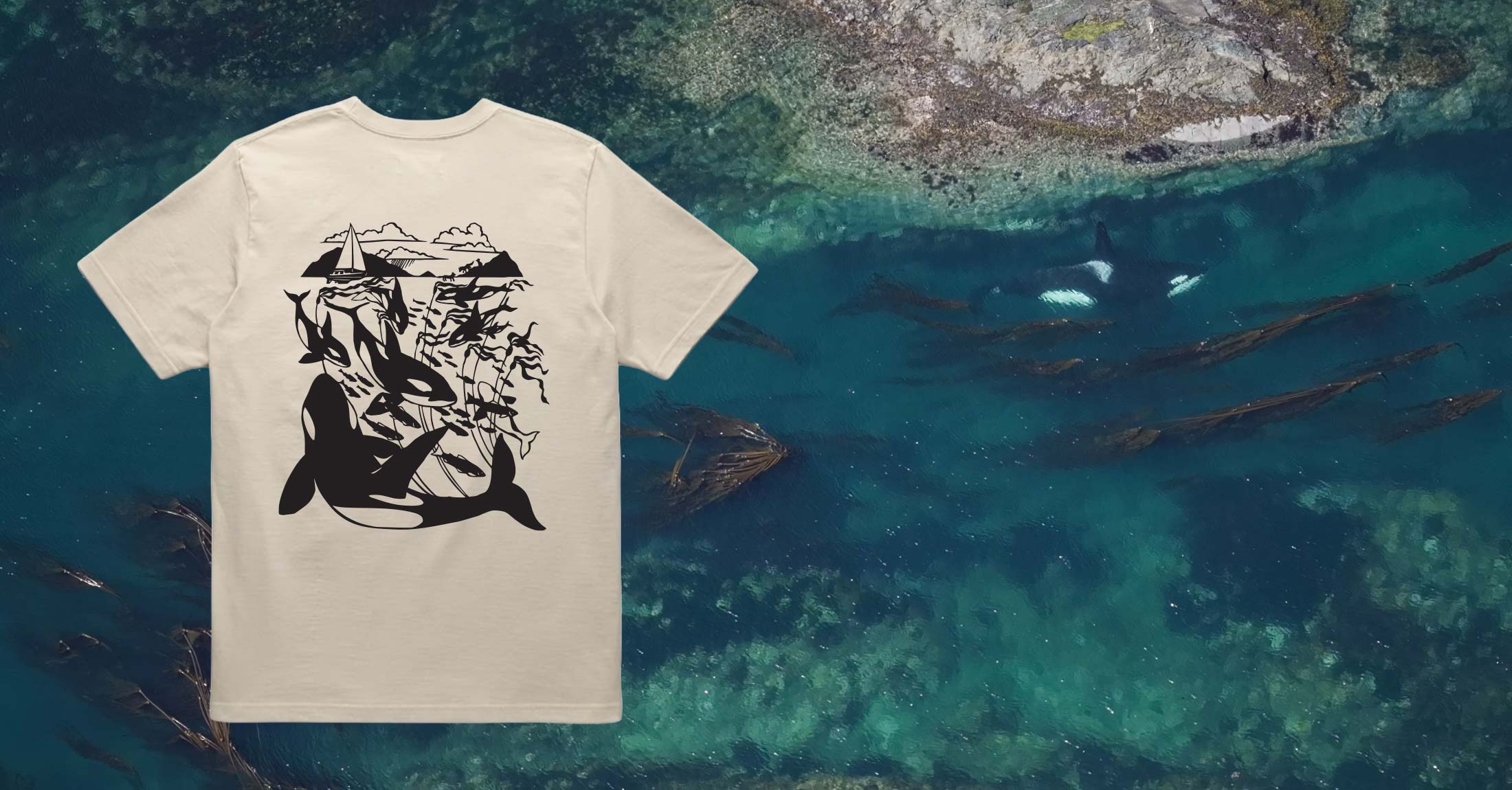
While the VRZ was designed to protect Southern Residents, it is frequently used by mammal-eating Bigg’s (transient) killer whales and humpback whales. Our hydrophone has recorded calls from all three species as we followed their movements with the theodolite. We’ve also tracked harbour porpoise, Dall’s porpoise, minke whales, and even a fin whale during our surveys.


Vessel compliance
The VRZs were established to provide a quiet refuge from vessel noise, but their effectiveness depends on both vessel compliance and appropriate monitoring. Enforcement currently relies on Automatic Information System (AIS) data, which tracks vessel identity and location. However, our monitoring indicates that approximately 70% of recreational vessels transiting through our survey area are not equipped with AIS, meaning their presence and associated noise contributions are consistently underestimated. Over the past two seasons, we have submitted more than 1,400 reports to Transport Canada for vessels without AIS. These infractions would have gone undetected without our dedicated monitoring efforts.
Collaboration across the region
This work is part of a broader regional effort. Since 2020, Simon Fraser University has partnered with the Saturna Island Marine Research and Education Society (SIMRES) to monitor the Saturna VRZ using similar methods. By aligning protocols and sharing data, we’re building a more complete picture of how Southern Residents and other whales use protected areas across the Southern Gulf Islands.