Genetic legacy and ecological differences of grey wolves (Canis lupus) in southern British Columbia
Understanding the ecotype of recovering wolf populations is important for conservation and management.
Grey wolves (Canis lupus) historically occupied much of southern British Columbia, including west coast temperate rainforest ecosystems. However, widespread predator control programs and habitat changes during the late nineteenth and early twentieth centuries resulted in significant population declines and local extirpations across portions of the region.1 2
Today, wolves are experiencing a significant recovery in southern British Columbia, with a marked westward expansion toward the Pacific coast. This process represents a complex interaction between genetic legacies and ecological specializations, reflecting the influence of historical population reductions, anthropogenic pressures, and the environmental divergence between coastal and inland habitats.
Genetic legacy of re-establishing wolves
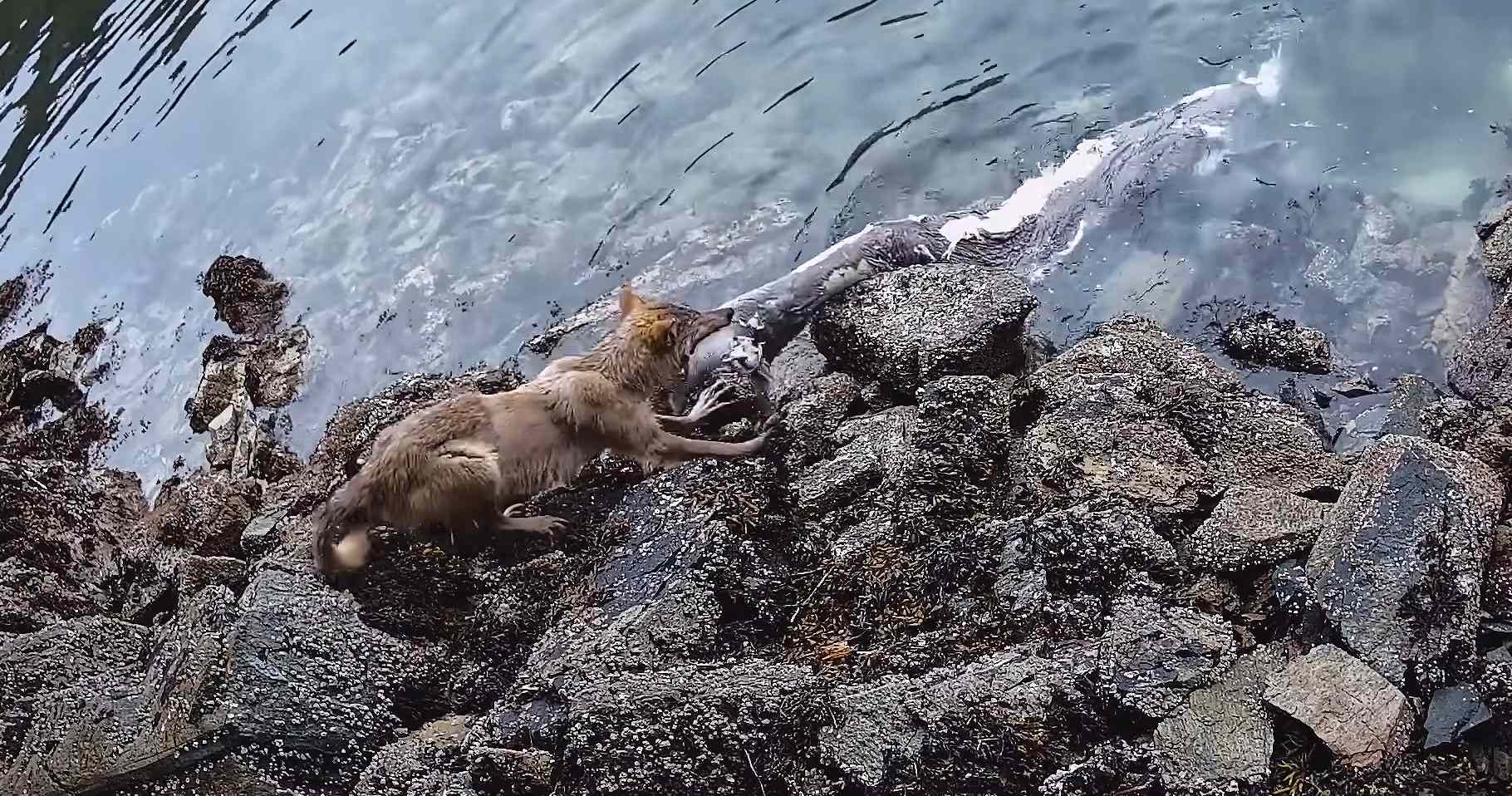
Genetic analyses indicate that re-establishing wolves in southern British Columbia are predominantly derived from interior continental populations historically associated with the Canadian Rockies, with a comparatively modest contribution from coastal lineages.3 4 Wolves inhabiting the Great Bear Rainforest and the surrounding island archipelagos display distinct genetic signatures that are strongly associated with maritime ecosystems, including reliance on marine-derived food sources such as salmon (Oncorhynchus spp). These populations show clear genetic, ecological, and behavioural differentiation from interior wolves, consistent with long-term local adaptation and ecological divergence in coastal environments.5 6 7 8 9
Wolf as an ecotype
These genetic, ecological, and behavioural differences are often described in terms of ecotypes. An ecotype is a genetically distinct population within a species that has adapted to particular environmental conditions. Ecotypes arise when populations experience different ecological pressures, such as climate, prey availability, or habitat structure, leading to genetic differences associated with those environments.10 11 12 13 14 Although ecotypes are genetically distinct, they are not separate species and can usually interbreed where their ranges overlap.15 1617 18
A useful contrast can be found in killer whale (Orcinus orca) populations along the coast of British Columbia. Bigg’s (transient) and Resident killer whale ecotypes are genetically, socially, and culturally distinct, and despite overlapping ranges, there is no evidence that they interbreed. This separation is maintained through strong social structures, distinct vocalizations, dietary specializations, and learned behaviours that are passed down through generations, effectively creating reproductive isolation without physical barriers.19 20 21 22
Wolf as a subspecies
Over the past 250 years, grey wolves have been classified into many subspecies, with as many as 38 proposed globally, 14 of which are now considered extinct.23 In North America, Hall (1982) recognized 24 subspecies, but was later simplified to five primary subspecies24 25: Arctic wolf (Canis lupus arctos), northwestern wolf (C. l. occidentalis), Great Plains wolf (C. l. nubilus), Mexican wolf (C. l. baileyi), and eastern timber wolf (C. l. lycaon), though some debate the eastern timber wolf should be a distinct species, the eastern wolf (Canis sp. cf. lycaon). Eastern wolves, specifically, have been the subject of significant controversy, being viewed as either a distinct taxonomic (Canis lycaon) entity of conservation concern or a recent hybrid of coyotes (C. latrans) and grey wolves (C. lupus).26 27 28
Many wolf subspecies in North America are disputed, as most lack sufficient differentiation. Hall (1981) identified three western coastal subspecies – C. l. ligoni in southeast Alaska, C. l. fuscus in coastal British Columbia, and C. l. crassodon on Vancouver Island – based on morphological differences. However, later revisions grouped all coastal wolves into the Great Plains wolf subspecies C. l. nubilus.29 Recent genetic studies challenge this classification, showing that coastal wolves in British Columbia and southeast Alaska are distinct from interior populations. Notably, Munoz-Fuentes et al. (2009) found greater genetic differentiation between coastal B.C. wolves and other North American subspecies than among subspecies themselves, supporting recognition of C. l. fuscus for coastal wolves.
Although conceptually related, subspecies and ecotypes serve different roles and are defined in distinct contexts. Subspecies can carry formal legal protections, such as the Mexican grey wolf under the U.S. Endangered Species Act, whereas ecotypes generally do not, even when they represent ecologically critical populations. While subspecies and ecotypes can overlap, ecotypes are not formally recognized in taxonomy and are defined primarily by ecological adaptation rather than strict genetic classification. In practice, understanding wolves as ecotypes is often more useful for guiding conservation and management decisions, as it emphasizes how populations function within their specific environments rather than just their taxonomic classification.30
Ecotype variation in wolves
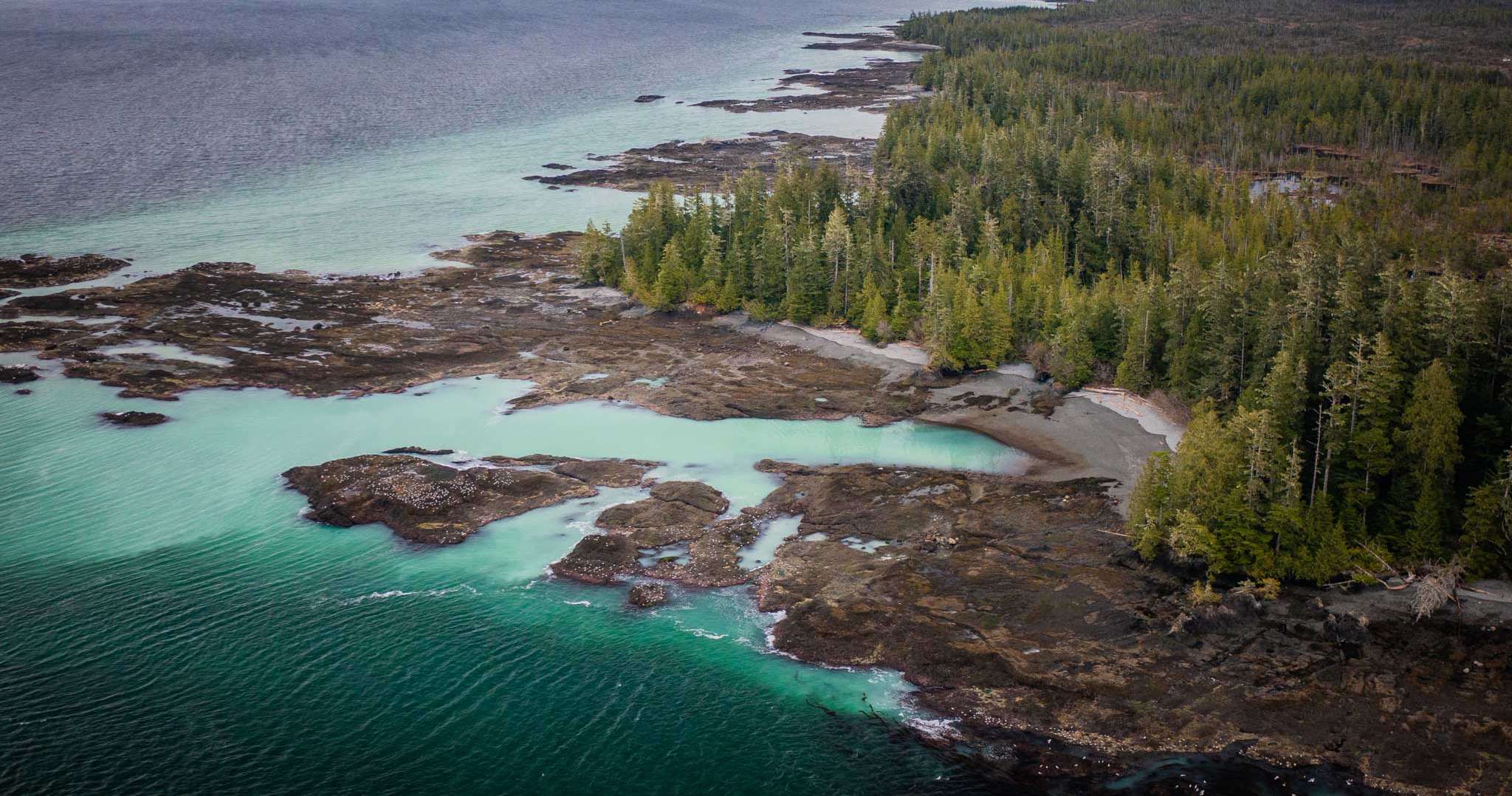
Ecologically, two primary wolf ecotypes are recognized in British Columbia. The interior or Northern Rocky Mountain (NRM) forest ecotype occupies the Rocky Mountains and interior plateaus, characterized by larger body sizes and a dietary reliance on large ungulates such as moose, elk, caribou, and deer. In contrast, the coastal rainforest ecotype is generally smaller, exhibits strong site fidelity to marine-influenced landscapes, and consumes a diverse diet including salmon, intertidal invertebrates, marine mammals, and deer.31 32 33 Coastal wolves are typically found west of BC’s Coast Mountain Range, which separates coastal from interior areas of the province. In BC, this includes the Great Bear Rainforest, many islands and archipelagos in the Salish Sea, Vancouver Island, and along BC’s coast,34 with their range extending northward through the contiguous temperate rainforests of coastal Southeast Alaska.35 Their ecological specialization, combined with genetic differentiation from interior populations, has led some researchers to propose that coastal wolves constitute a distinct Ecologically Significant Unit (ESU).36 Wolves currently re-occupying southern British Columbia predominantly display the phenotypic and behavioural traits of the interior ecotype, although access to coastal habitats presents future opportunities for both ecological adaptation and gene flow between the two forms.
Interactions Between Rocky Mountain and Coastal Wolves
Interactions between Rocky Mountain and coastal wolves are characterized by a gradual genetic and ecological transition rather than a discrete boundary.37 38 Rocky Mountain wolves act as the primary source of recolonization, dispersing through mountain corridors, while coastal wolves retain distinct genetic and ecological identities with limited hybridization where ranges overlap. Molecular studies indicate that gene flow remains relatively high across the mountainous interior but declines toward the Pacific coast, where marked genetic differentiation emerges. This gradient likely reflects both geographic barriers, including mountain ranges and waterways, and ecological partitioning between marine-influenced and terrestrial ecosystems. Together, these dynamics create a mosaic of partial admixture and adaptive differentiation shaped by dispersal opportunities and strong habitat-driven selection.39
What genetics can tell us
Genetic studies can examine population relationships at multiple levels. Broad genomic approaches analyze the complete DNA sequence of an organism, including nuclear DNA inherited from maternal and paternal sources, providing detailed insight into population structure, gene flow, and evolutionary history.40 However, these methods require high-quality samples and extensive laboratory resources.
Within this genomic framework, single-nucleotide polymorphisms (SNPs), which are small variations at individual positions in the genome, are commonly used to generate high-resolution data on population structure, admixture, and connectivity. While powerful, SNP-based approaches also depend on higher-quality DNA (i.e. fresher scat) and more intensive processing.
Consequently, many wildlife studies rely on mitochondrial DNA (mtDNA) to investigate population history and lineage patterns.41 mtDNA is inherited through the maternal line and can be used to identify haplotypes, which are distinct genetic variants that reflect shared maternal ancestry. Because mtDNA is more easily recovered from non-invasive samples such as scat, haplotype analysis remains a widely used approach for examining broad patterns of genetic distribution and lineage in wildlife populations.
Conservation implications
In summary, the recovery of grey wolves in southern British Columbia is largely driven by dispersal from interior Rocky Mountain populations, with limited but ecologically meaningful interactions with coastal lineages. These processes are generating a complex and evolving landscape of genetic and ecotypic variation. While continued range expansion may increase opportunities for admixture, the persistence of habitat-specific selection is likely to maintain ecotypic differentiation across the region.
Understanding the ecotype of reoccupying wolves is important for conservation and management. Wolves from distinct ecotypes, such as coastal rainforest wolves or interior/NRM forest wolves, may carry adaptations that influence habitat use, diet, movement, and ecological roles within the landscape.42 43 In parallel, interactions between coastal and interior wolves may result in admixture, where individuals from different lineages interbreed. This can increase genetic diversity and potentially enhance the resilience of wolf populations in changing environments. However, extensive mixing between ecotypes could also reduce the genetic distinctiveness of coastal wolf populations.44 Understanding the lineage composition of re-establishing wolves can therefore guide strategies that balance ecological function with the preservation of unique genetic traits.45
Suggested citation
Robertshaw C, Greer C, Paquet PC. 2026. Genetic legacy and ecological differences of grey wolves (Canis lupus) in southern British Columbia. Raincoast Conservation Foundation. https://doi.org/10.70766/23.7573
Further reading
Notes and references
- Muñoz-Fuentes V, Darimont CT, Wayne RK, Paquet PC, Leonard JA. 2009. Ecological factors drive differentiation in wolves from British Columbia. Journal of Biogeography. 36(8):1516–1531. https://doi.org/10.1111/j.1365-2699.2008.02067.x
- Hendricks SA, Schweizer RM, Harrigan RJ, Pollinger JP, Paquet PC, Darimont CT, Adams JR, Waits LP, vonHoldt BM, Hohenlohe PA, Wayne RK. 2019. Natural recolonization and admixture of wolves (Canis lupus) in the US Pacific Northwest: Challenges for the protection and management of rare and endangered taxa. Heredity. 122:133–149. https://doi.org/10.1038/s41437-018-0094-x
- Weckworth BV, Talbot SL, Sage GK, Person DK, Cook JA. 2005. A signal for independent coastal and continental histories among North American wolves. Molecular Ecology. 14(3):917–931. https://doi.org/10.1111/j.1365-294x.2005.02461.x
- Muñoz-Fuentes, et al. 2009. https://doi.org/10.1111/j.1365-2699.2008.02067.x
- Muñoz-Fuentes, et al. 2009. https://doi.org/10.1111/j.1365-2699.2008.02067.x
- Weckworth BV, Dawson NG, Talbot SL, Flamme MJ, Cook JA. 2011. Going coastal: Shared evolutionary history between coastal British Columbia and southeast Alaska wolves (Canis lupus). PLOS ONE. 6 https://doi.org/10.1371/journal.pone.0019582
- Stronen AV, Quinn NEL, Paquet PC, Bryan HM, Darimont CT. 2014. Population genetic structure of gray wolves (Canis lupus) in a marine archipelago suggests island-mainland differentiation consistent with dietary niche. BMC Ecology. 14(1):11. https://doi.org/10.1186/1472-6785-14-11
- Hendricks SA, Schweizer RM. 2018. Conservation genomics illuminates the adaptive uniqueness of North American gray wolves. Conservation Genetics. 20(1):29–43. https://doi.org/10.1007/s10592-018-1118-z
- Hendricks SA, et al. 2018. https://doi.org/10.1007/s10592-018-1118-z
- Muñoz-Fuentes, et al. 2009. https://doi.org/10.1111/j.1365-2699.2008.02067.x
- Stronen AV, et al. 2014. https://doi.org/10.1186/1472-6785-14-11
- Hendricks SA, et al. 2018. https://doi.org/10.1007/s10592-018-1118-z
- Hendricks SA, et al. 2019. https://doi.org/10.1038/s41437-018-0094-x
- Musiani M, Leonard JA, Cluff HD, Gates CC, Mariani S, Paquet PC, Vilà C, Wayne RK. 2007. Differentiation of tundra/taiga and boreal coniferous forest wolves: Genetics, coat colour and association with migratory caribou. Molecular Ecology. 16(19):4149–4170. https://doi.org/10.1111/j.1365-294x.2007.03458.x
- Stronen AV, Paquet PC. 2013. Perspectives on the conservation of wild hybrids. Biological Conservation. 167:390–395. https://doi.org/10.1016/j.biocon.2013.09.004
- Hendricks SA, et al. 2019. https://doi.org/10.1038/s41437-018-0094-x
- Stronen AV, Norman AJ, Vander Wal E, Paquet PC. 2022. The relevance of genetic structure in ecotype designation and conservation management. Evolutionary Applications. 15(2):185–202. https://doi.org/10.1111/eva.13339
- Pilot M, Dahlheim ME, Hoelzel AR. 2010. Social cohesion among kin, gene flow without dispersal and the evolution of population genetic structure in the killer whale (Orcinus orca). Journal of Evolutionary Biology. 23(1):20–31. https://doi.org/10.1111/j.1420-9101.2009.01887.x
- Ford JKB, Ellis GM, Balcomb KC. 1994. Killer whales: The natural history and genealogy of Orcinus orca in British Columbia and Washington State. Vancouver (BC): UBC Press
- Ford JKB, Ellis GM, Barrett-Lennard LG, Morton AB, Palm RS, Balcomb KC III. 1998. Dietary specialization in two sympatric populations of killer whales (Orcinus orca) in coastal British Columbia and adjacent waters. Canadian Journal of Zoology. 76(8):1456–1471. https://doi.org/10.1139/z98-089
- Barrett-Lennard LG. 2000. Population structure and mating patterns of killer whales (Orcinus orca) as revealed by DNA analysis. Vancouver (BC): University of British Columbia. https://doi.org/10.14288/1.0099652
- Wilson DE, Reeder DM. 2005. Mammal species of the world: a taxonomic and geographic reference. 3rd ed. Baltimore (MD): Johns Hopkins University Press. 2 vols.
- Nowak RM. 1995. Another Look at Wolf Taxonomy. In: Carbyn L, Fritts S, Seip DR, editors. Ecology and Conservation of Wolves in a Changing World. University of Alberta: Canadian Circumpolar Institute. p. 375–398. https://redwolves.com/newsite/wp-content/uploads/2016/01/13-Nowak-1995.pdf.
- Another look at wolf taxonomy. Ecology and conservation of wolves in a changing world. Pages 375-398. Edited by Carbyn LN, Fritts SH, Seip DR. Canadian Circumpolar Institute, Occasional Publication Number 35, University of Alberta.
- Chambers SM, Fain SR, Fazio B, Amaral M. 2012. An Account of the Taxonomy of North American Wolves From Morphological and Genetic Analyses. North American Fauna. 77(1):1–67. doi:https://doi.org/10.3996/nafa.77.0001.
- Vilaça ST, Donaldson ME, Benazzo A, Wheeldon TJ, Vizzari MT, Bertorelle G, Patterson BR, Kyle CJ. 2023. Tracing eastern wolf origins from whole-genome data in context of extensive hybridization. Molecular Biology and Evolution. 40. https://doi.org/10.1093/molbev/msad05
- Benson JF, Mahoney PJ, Wheeldon TJ, Thompson CA, Ward ME, Ashley MV, Desy GE, Fryxell JM, Patterson BR. 2024. Humans drive spatial variation in mortality risk for a threatened wolf population in a Canis hybrid zone. Journal of Applied Ecology. 61:700–712. https://doi.org/10.1111/1365-2664.14589
- Nowak RM. 1995. Another Look at Wolf Taxonomy. In: Carbyn L, Fritts S, Seip DR, editors. Ecology and Conservation of Wolves in a Changing World. University of Alberta: Canadian Circumpolar Institute. p. 375–398. https://redwolves.com/newsite/wp-content/uploads/2016/01/13-Nowak-1995.pdf.
- Stronen AV, et al. 2022. https://doi.org/10.1111/eva.13339
- Darimont CT, Paquet PC, Reimchen TE. 2008. Landscape heterogeneity and marine subsidy generate extensive intrapopulation niche diversity in a large terrestrial vertebrate. Journal of Animal Ecology. 78(1):126–133. doi:https://doi.org/10.1111/j.1365-2656.2008.01473.x.
- Stronen AV, et al. 2014.https://doi.org/10.1186/1472-6785-14-11
- Roffler GH, Allen JM, Massey A, Levi T. 2021. Metabarcoding of fecal DNA shows dietary diversification in wolves substitutes for ungulates in an island archipelago. Ecosphere. 12(1). doi:https://doi.org/10.1002/ecs2.3297.
- Muñoz-Fuentes, et al. 2009. https://doi.org/10.1111/j.1365-2699.2008.02067.x
- Weckworth BV, Dawson NG, Talbot SL, Flamme MJ, Cook JA. 2011. Going coastal: Shared evolutionary history between coastal British Columbia and southeast Alaska wolves (Canis lupus). PLOS ONE. 6 https://doi.org/10.1371/journal.pone.0019582
- Muñoz-Fuentes, et al. 2009. https://doi.org/10.1111/j.1365-2699.2008.02067.x
- Muñoz-Fuentes, et al. 2009. https://doi.org/10.1111/j.1365-2699.2008.02067.x
- Stronen AV, Paquet PC. 2013. https://doi.org/10.1016/j.biocon.2013.09.004
- Bryan HM, Darimont CT, Paquet PC, Wynne-Edwards KE, Smits JE. 2015. Stress and reproductive hormones in coastal versus interior wolves in British Columbia. PLOS ONE. 10(2):e0117206. https://doi.org/10.1371/journal.pone.0080537
- Stronen AV, et al. 2022. https://doi.org/10.1111/eva.13339
- See: Leonard JA, et al. 2004; Musiani, et al. 2007; Muñoz-Fuentes, et al. 2009; Hendricks 2018.
- Muñoz-Fuentes, et al. 2009. https://doi.org/10.1111/j.1365-2699.2008.02067.x
- Hendricks SA, et al. 2019. https://doi.org/10.1038/s41437-018-0094-x
- Stronen AV, Paquet PC. 2013. https://doi.org/10.1016/j.biocon.2013.09.004
- Stronen AV, et al. 2022. https://doi.org/10.1111/eva.13339