

Education hub
British Columbia’s coastal waters support an exceptional diversity of marine life while also hosting some of the busiest marine transportation corridors in the world.
The convergence of international shipping, ferry traffic, industrial development, military activity, and intense seasonal recreational use has made underwater noise a defining feature of many BC marine environments. As a result, the province has become a focal region for both scientific research and policy discussions on ocean noise.
Six sections and a glossary

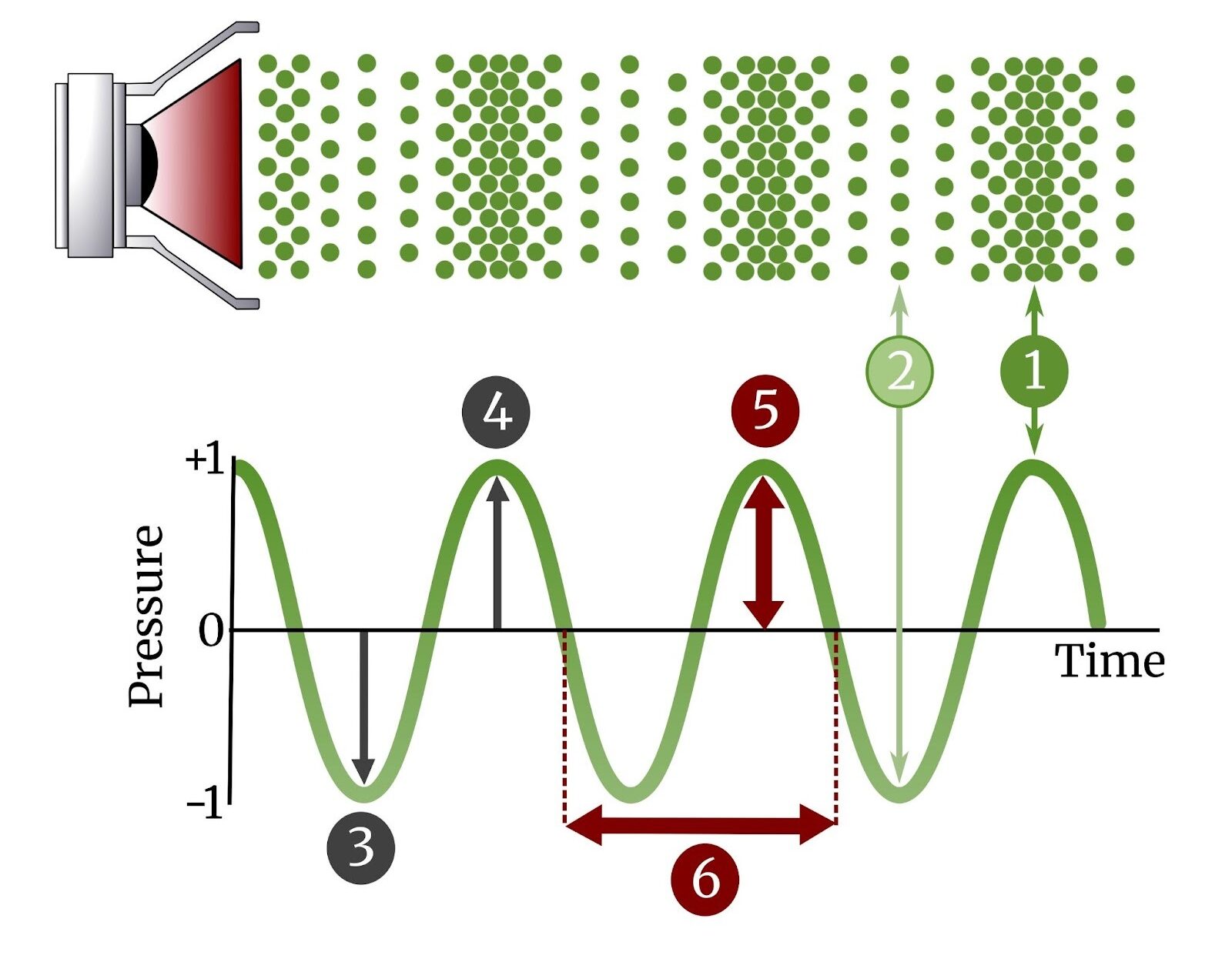
Section 1. What is sound?
Sound is a mechanical wave created when something vibrates. These vibrations travel through a medium (such as air or water) as pressure waves that carry energy.

Section 2. An ocean of sounds
Even in the deepest parts of the sea where one might expect silence, sound is everywhere.

Section 3. Sources and impacts of underwater noise
Ships generate underwater noise – known as Underwater Radiated Noise (URN).

Section 4. Passive acoustic monitoring techniques
Passive Acoustic Monitoring (PAM) is a method used to measure, monitor, and study sounds in the ocean using acoustic recorders such as hydrophones.

Section 5. Underwater acoustics and noise metrics
To study and understand these complex sounds, scientists convert acoustic recordings into visual representations that allow us to “see” sound patterns, structure, and energy.

Section 6. Underwater noise in British Columbia
The coastal waters of BC, Canada support an exceptional diversity of marine life while also hosting some of the busiest marine transportation corridors in the world.