

Endangered caribou, wolves, and ecological integrity
Killing wolves to protect caribou may accelerate ecological decline and ultimately diminish long-term caribou survival prospects.
Southern Mountain Caribou are an ecotype, or subpopulation, of caribou (Rangifer tarandus caribou), and are among the most endangered large mammals in British Columbia. These caribou are listed as “Threatened” under Canada’s Species at Risk Act (SARA), are provincially red-listed (threatened to endangered), and are identified as a Priority 2 species under British Columbia’s Conservation Framework due to ongoing population declines and habitat loss.
Of the 32 herds that make up the Southern Mountain Caribou ecotype, 10 have already become locally extinct (extirpated), while seven of the 22 remaining herds are at critically low population levels, with fewer than 100 individuals remaining. Since the provincial government began implementing caribou recovery measures involving predator control in 2015, more than 2,800 wolves have been killed through aerial shooting and ground-based trapping programs, according to published government statistics.
Key takeaways
- Rather than addressing the ultimate cause of caribou declines and protecting what habitat remains, the province continues to rely on wolf killing to offset the ecological consequences of ongoing landscape disturbance.
- Wolf killing functions as a symptomatic response that may inflict long-lasting ecological damage while offering only temporary relief for declining caribou populations.
- Southern Mountain Caribou are among BC’s most endangered mammals, with many herds already extirpated or at critically low numbers.
- In response to ongoing declines, the province has relied heavily on predator reduction programs, resulting in the killing of more than 2,800 wolves since 2015.
- Although BC’s caribou recovery strategy recognizes the importance of protecting and restoring critical habitat on paper, the areas designated for protection continue to be logged and disturbed by industrial development and recreation.
- Interactions between wolves and mountain caribou have intensified as a direct consequence of human-induced habitat alteration and the resulting changes in ungulate distributions.
The history of wolves and caribou in BC
Over the last two centuries, wolves have maintained a continuous presence in British Columbia, occupying a variety of habitats across boreal and montane regions. Historical records, Indigenous knowledge, and wildlife surveys confirm that wolves were never extirpated from the province, despite regional declines caused by bounties, hunting, and other human pressures in the late 19th and early 20th centuries. Populations have fluctuated in response to prey availability and human activity, but the species has remained ecologically significant throughout this period.
The dynamics of wolf-caribou interactions have shifted markedly over the past century, largely due to human-driven changes in the landscape. Mountain caribou, which are part of the southern group of woodland caribou, traditionally occupied high-elevation, old-growth forest ecosystems. These areas accumulated deep snowpacks that historically restricted wolf access, creating a natural refuge for caribou from most predation pressure. Wolves primarily occupied lower elevations, where their core prey species – moose, deer, and elk – were abundant and more accessible.
The onset of widespread industrial activity, including logging, road construction, and energy exploration, altered this balance significantly. The fragmentation and opening of high-elevation forests through logging and access roads allowed for the expansion of moose and deer populations into previously caribou-dominated habitats. This in turn attracted wolves to higher elevations, effectively increasing predator-prey overlap. The result has been a much higher frequency of wolf-caribou encounters than existed prior to these landscape changes, contributing to steep declines in many mountain caribou populations.
In summary, while wolves have consistently been part of British Columbia’s ecosystems for at least the past two centuries, their interactions with mountain caribou have intensified as a direct consequence of human-induced habitat alteration and the resulting changes in ungulate distributions. Consequently, British Columbia’s wolf reduction programs are framed as an attempt to mitigate elevated predation pressure that would not have existed without major human induced habitat changes.
Protection zones for endangered caribou
In British Columbia’s caribou recovery framework, core habitat and matrix habitat are used to identify and ostensibly manage the landscapes necessary to support caribou survival and recovery. Under the Species at Risk Act (SARA), this contributes to what is legally defined as “critical habitat” – the habitat necessary for the survival or recovery of a federally listed species. Core habitats are areas essential for breeding and survival, whereas matrix habitats influence broader predator-prey dynamics and ecological conditions.
British Columbia identifies these areas through a combination of scientific habitat mapping, population monitoring, and collaborative “herd planning” processes intended to balance conservation objectives with economic interests. In practice, however, these protections are often undermined by continued logging in “conditional harvest” areas, as well as other anthropogenic disturbances including winter backcountry recreation, mining, and energy development. Together, these pressures reflect a continued prioritization of resource extraction and access over ecological integrity. Despite this ongoing habitat disturbance, the provincial government continues to kill wolves under the assumption that predation pressure will be reduced, thereby enabling caribou populations to recover.
Concurrently, critical habitat for the threatened Southern Mountain caribou ecotype remains incompletely identified. This ongoing delay by the Government of Canada, now the subject of legal challenges, undermines the intent of SARA, which requires that critical habitat be identified and protected as a foundational step toward species recovery.
The ecological cost of killing wolves
The ecological cost of the provincial government’s targeted and systematic killing of wolves is significant. Wolves are apex predators that exert top-down influence on ecosystems, maintaining balance among herbivore populations and indirectly influencing vegetation health and biodiversity. Removing wolves disrupts these trophic cascades, often contributing to increases in other ungulates like deer or moose. Elevated populations of these species can intensify browsing pressure on plant communities, further degrading the habitats that caribou themselves depend upon.
This creates a paradox: the very act of killing wolves to protect caribou may accelerate ecological decline and ultimately diminish long-term caribou survival prospects.
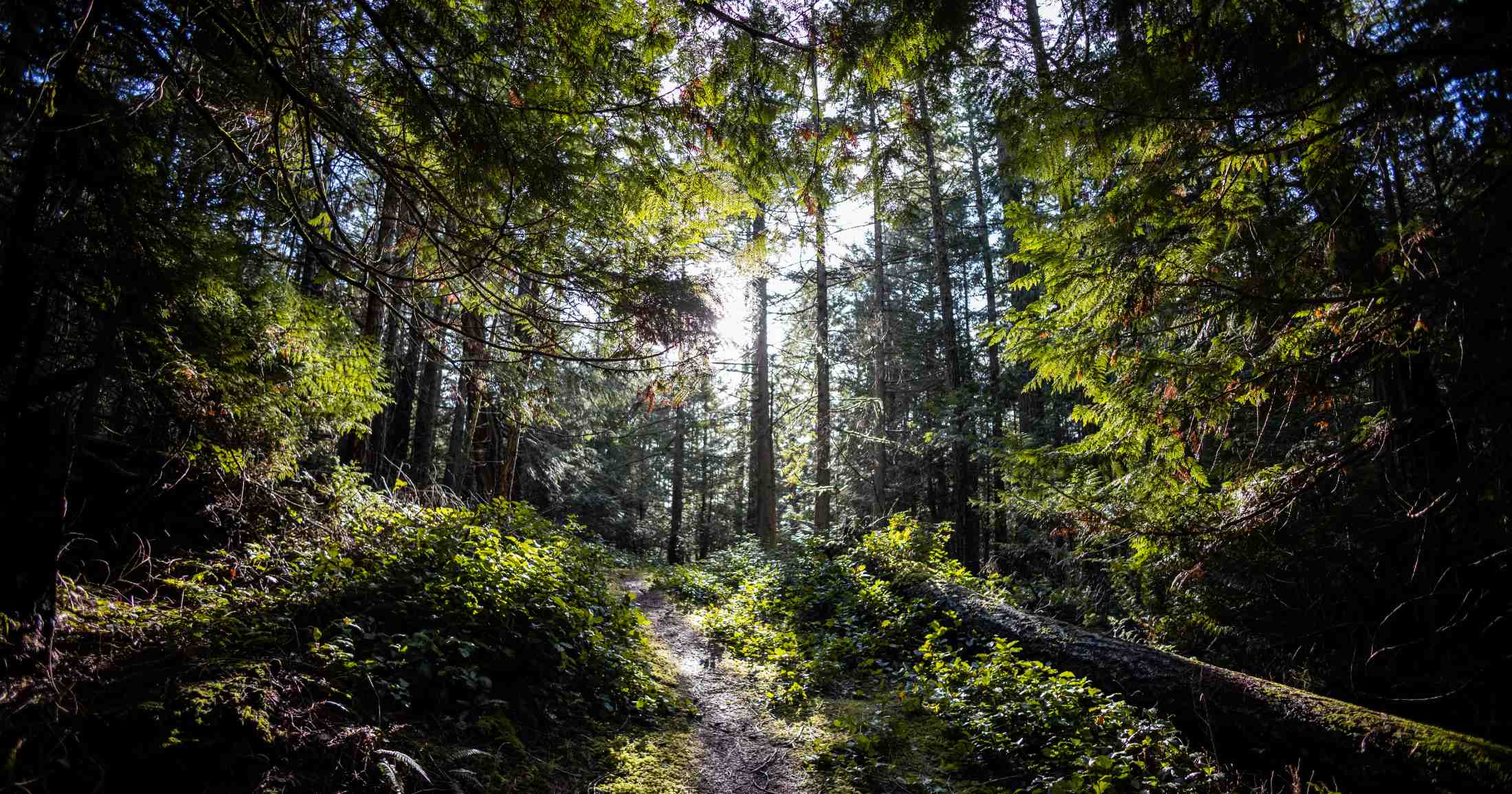
Caribou depend on large, connected tracts of old-growth forests
Critics argue that the current strategies underestimate the central role of intact old-growth forests. Caribou coevolved with and rely on large, connected tracts of mature forest ecosystems for predator avoidance and access to lichen-rich winter forage. Logging and landscape fragmentation have already reduced these essential habitats to a fraction of their historic extent. Even in the absence of additional disturbance, old-growth forests require centuries to regenerate, and climate change is increasingly altering successional pathways in ways that will alter the re-establishment of true old-growth climax communities. Without the protection of these habitats, caribou recovery is unlikely, regardless of predator control.
Furthermore, the ethical and scientific debates surrounding wolf culls illustrate a broader issue: short-term lethal interventions fail to address the root cause of caribou decline – habitat loss. Wolf killing functions as a symptomatic response that may inflict long-lasting ecological damage while offering only temporary relief for declining caribou populations. In effect, taxpayers and ecosystems bear the cost of an ecologically and morally contentious program that risks diminishing biodiversity and destabilizing ecosystems, while the long-term outlook for caribou remains uncertain.
Ultimately, the combination of continued habitat degradation, unsustainable reliance on predator control, and irreversible changes to forest ecosystems suggests that caribou recovery efforts in British Columbia are likely to fail. This failure will come at the expense of wolves, other wildlife, and the stability of the broader environment, undermining the very conservation goals the program purports to achieve.