Meet the non-salmonids of Roberts Bank eelgrass habitat
Highlighting the overlooked species that make eelgrass habitat one of the Fraser River Estuary's most diverse ecosystems.
As a member of the Wild Salmon Program at Raincoast, it is easy to develop salmon-colored goggles. In the grants we apply for, the research we carry out, and the restoration objectives of each project, the primary motivator is supporting wild salmon that rely on our rivers, estuaries, and ocean.
As ecologists and biologists, we understand the interconnectedness between organisms in an ecosystem. We know how they interact, regulate each other’s populations, and depend on specific conditions to thrive. Despite this, when we are sampling in the Fraser River Estuary, our salmon-colored goggles are hard to take off.
So I wanted to shine a light on some of the incredible “non-salmonids” (as we often call them) we see while sampling, since these species not only have intrinsic value but also support and contribute to the unique ecosystems of the Fraser River Estuary. Specifically, eelgrass habitat is the most diverse Fraser River Estuary habitat we sample1, compared to other sandflat and marsh habitat that make up the estuary.
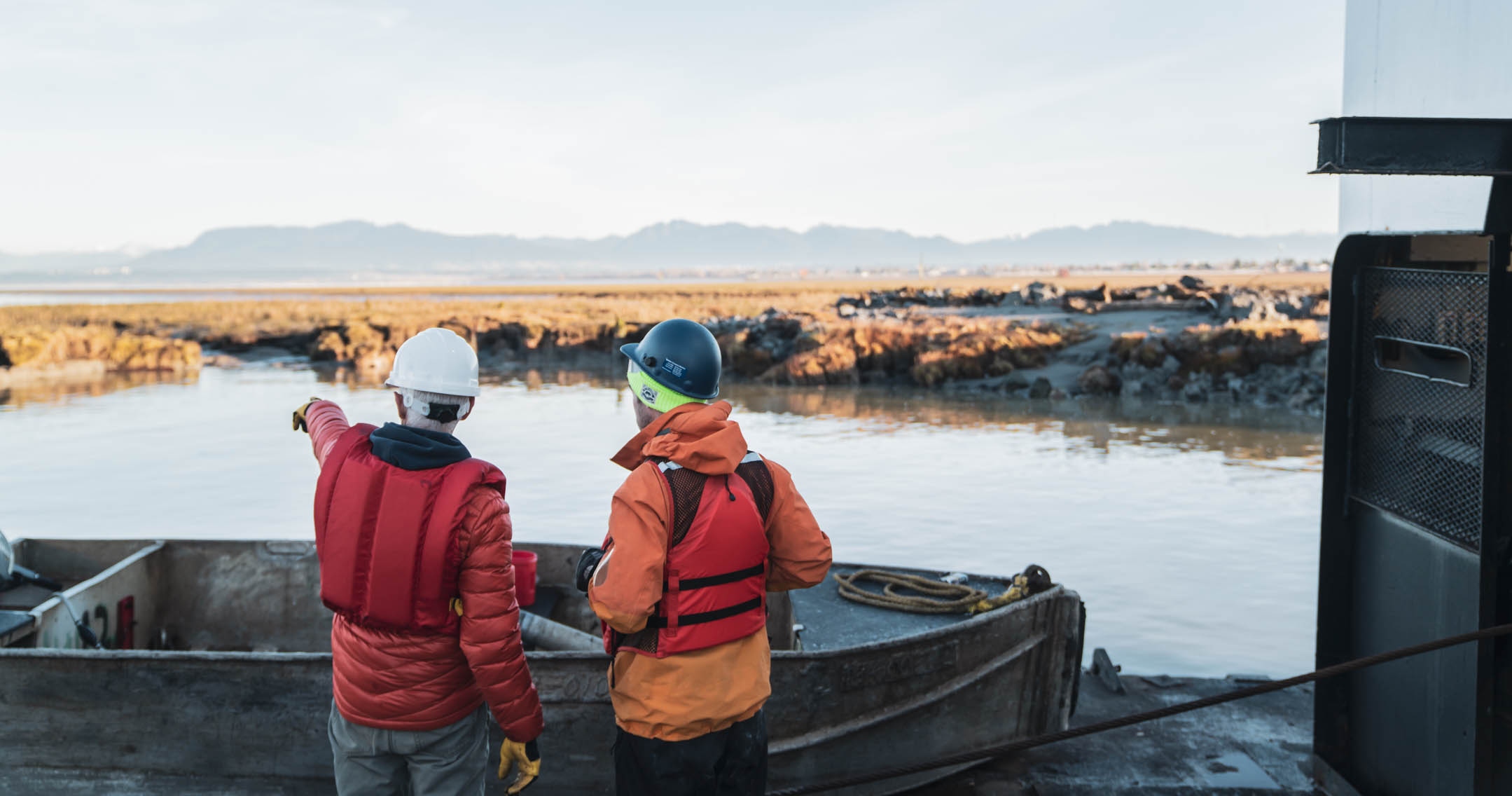
Since 2016, Raincoast has chartered a boat and captain from Tsawwassen Shuttles to access our eelgrass sites, a somewhat rare Fraser River estuary habitat, located on Roberts Bank. Eelgrass (Zostera marina and non-native Zostera japonica) are species of seagrass that create unique coastal habitats, as these beds of long green blades create foraging zones, shelter, food sources, and spawning surfaces for fish. Additionally, eelgrass beds attenuate wave energy and help reduce coastal erosion. Within this incredible habitat, a myriad of species coexist together resulting in a dynamic ecosystem and really exciting sampling days.
Here’s a closer look at some of the “non-salmonid” species that share this eelgrass habitat.
Pacific herring (Clupea pallasii)
- These forage fish swim in large schools; the word herring comes from an ancient Teutonic term ”heer” meaning army, which these fish resemble when they travel in large groups.
- Pacific herring were historically very abundant in the ecosystem, with their migration from offshore to inshore bringing them closer to people to fish. In the 1960s, Pacific herring fisheries began to collapse due to overharvesting, and many populations are still negatively impacted.
- Herring spawns are a marvel where eggs are deposited on eelgrass, kelp, and rocks that will coat the coast with billions of eggs, creating an incredible source of food for many coastal creatures.
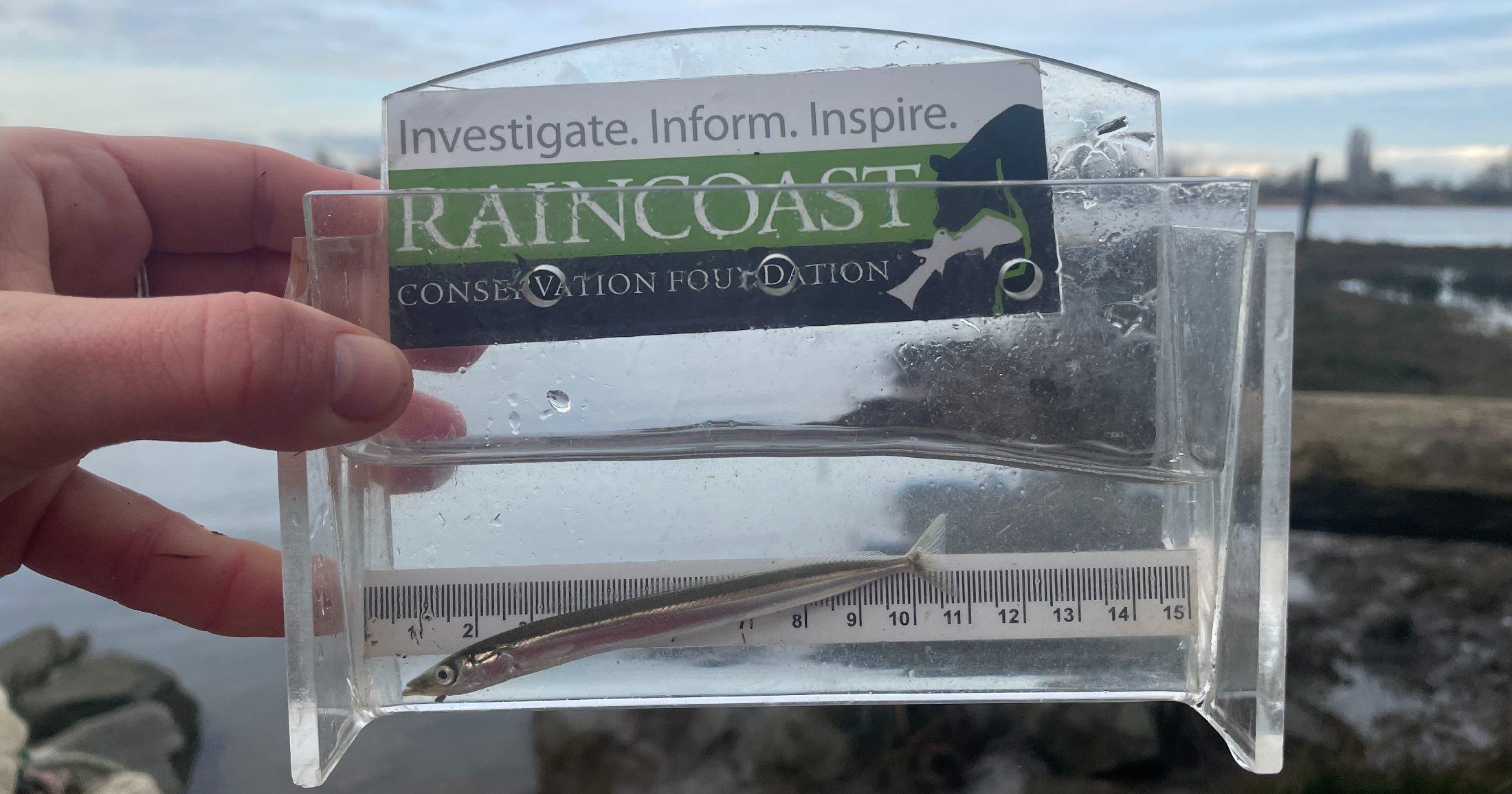
Pacific sandlance (Ammodytes personatus)
- Another forage fish that is sometimes referred to as a “sand eel” due to its elongated, torpedo-like body shape, that schools in large numbers.
- This species is considered ‘data deficient’ and has not been evaluated by the IUCN, making it difficult to grasp how populations have changed over the decades.
- These fish have very specific habitat requirements, needing well-oxygenated sandy substrate to bury themselves in and to spawn.
- In the Salish Sea, their range of adequate habitat for spawning is limited. As a result, 5.4% of Canada’s Salish Sea intertidal habitat is predicted as suitable for Pacific sandlance habitat.
Shiner surfperch (Cymatogaster aggregata)
- During the day these species move in large schools, but at night they disband and hug the bottom of the water column.
- Newborn males can immediately mate after birth.
- This species is also data-deficient, with populations seeming to have declined since the 1980’s likely as a result of climate change and habitat loss.
- They require rocky substrate, man-made structures, and are more commonly found in bays and estuaries during the spring and move into deeper ocean waters during the winter.
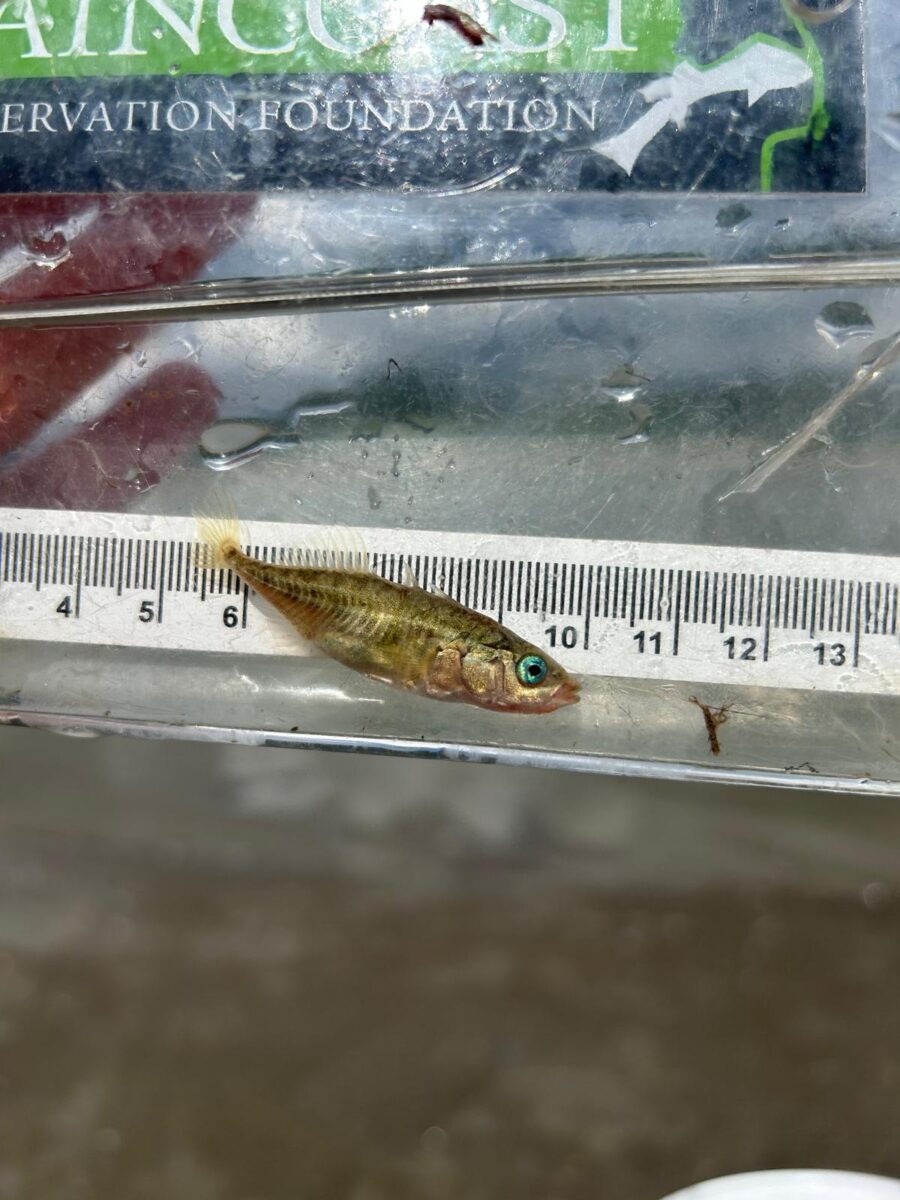
Three-spined stickleback (Gasterosteus aculeatus)
- These fish can survive in fresh, brackish, or saltwater environments, making them one of the most adaptable species found across the estuary’s shifting salinity zones.
- They’re evolutionarily fascinating: ancestrally anadromous marine fish that colonized new freshwater habitats at the end of the Last Glacial Maximum, giving rise to freshwater-adapted relatives that are now widely studied for the genomic mechanisms behind rapid adaptation.
- Males build and guard nests during the breeding season, one of the most well documented examples of paternal care in fish.
Starry flounder (Platichthys stellatus)
- This species starts life as a symmetrical-headed larva, but as it grows, its skull twists so that one eye migrates to join the other, a dramatic transformation that leaves it lying flat on the seafloor.
- Once settled, they take on the mottled, star-patterned coloring that gives the species its name and helps it blend into sandy or muddy substrate.
- Males can live up to 24 years old, making them one of the longer-lived residents of this habitat.
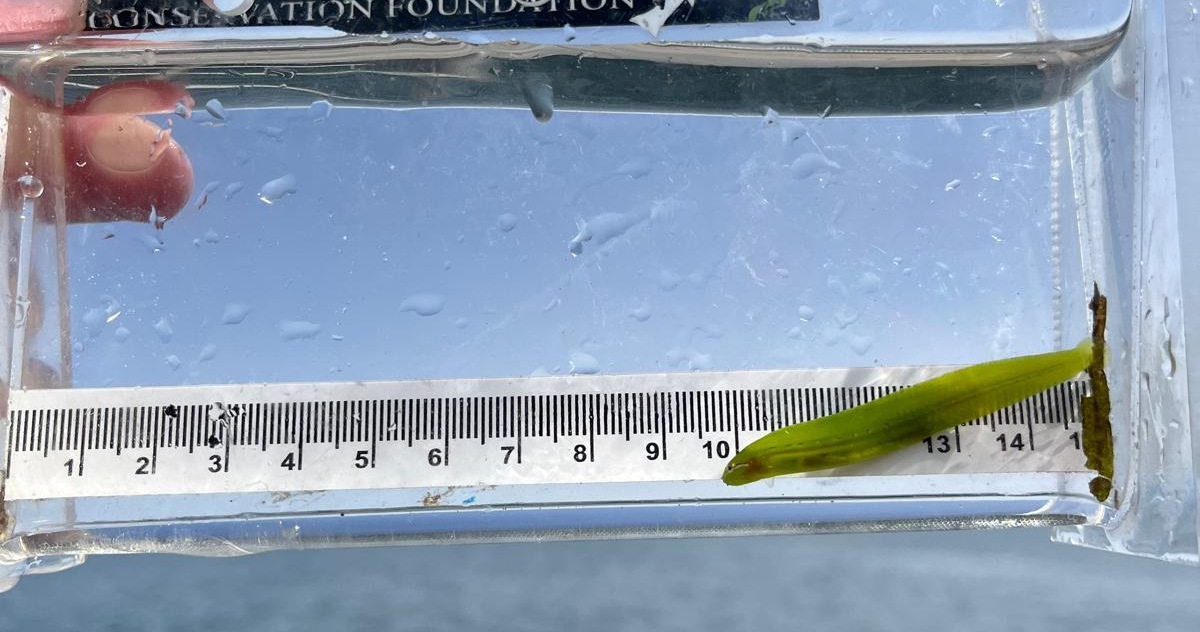
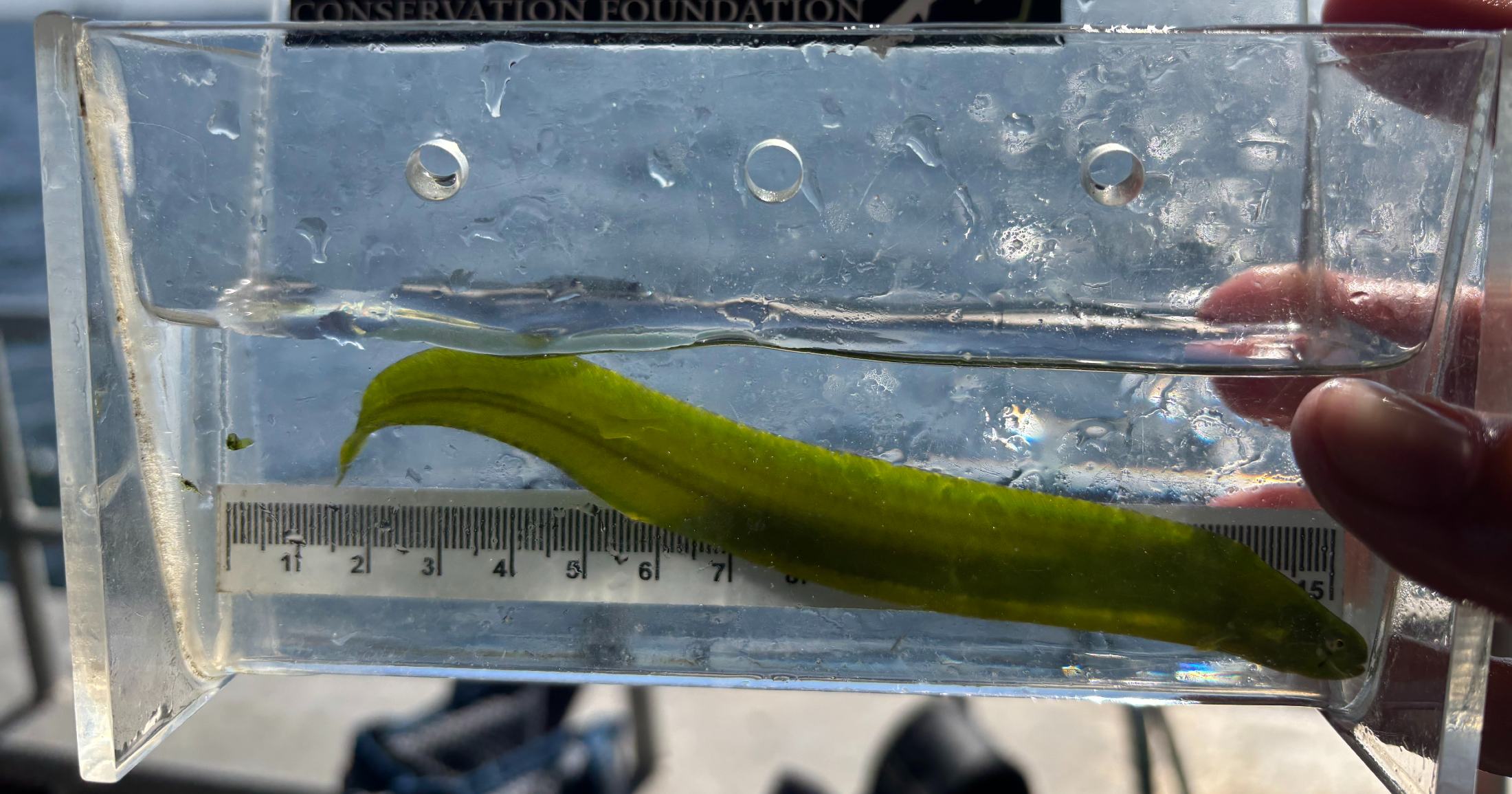
Penpoint gunnel (Apodichthys flavidus)
- These fish mimic algal colours (red, green, and golden brown) so closely that individuals are nearly invisible against the vegetation they shelter in.
- This colouring isn’t determined by genetics. Research suggests it’s shaped early on by which vegetation the transparent, colourless larvae settle on and what they feed on, with diet continuing to have some influence into adulthood, though full colour changes haven’t been reproduced experimentally once a fish is settled into a colour.
- Named for the first spine of its anal fin, which is enlarged and grooved like the point of a fountain pen.
- Found in intertidal and shallow subtidal zones among eelgrass, sea lettuce, and kelp, and can breathe air and survive out of water for stretches under damp rocks or seaweed when the tide recedes.
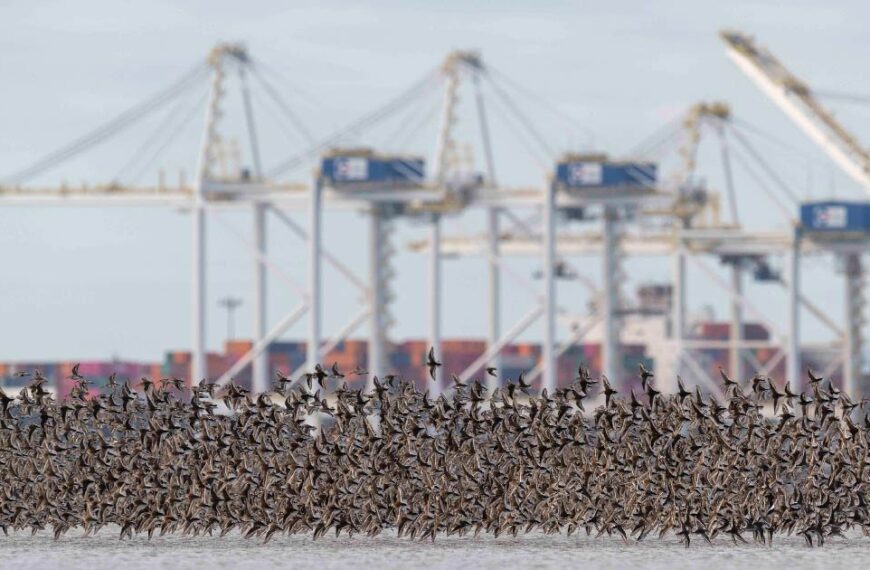
Eelgrass habitat on Roberts Bank is incredibly important not only for salmon, but other fish species, invertebrates, birds, and marine mammals that rely on the food sources and regulating properties these ecosystems provide. These organisms may not draw the same attention as salmon, but they’re woven into the same food web, and their health is often the clearest sign of how the eelgrass habitat itself is doing. As one of the busiest industrial waterfronts on the coast, Roberts Bank’s eelgrass beds face real pressure, underscoring the importance of protecting these habitats and the unique species within them.
Notes and references
- Chalifour L, Scott D, MacDuffee M, Iacarella J, Martin T, & Baum J. 2019. Habitat use by juvenile salmon, other migratory fish, and resident fish species underscores the importance of estuarine habitat mosaics. Marine Ecology Progress Series, 625, 145–162. https://doi.org/10.3354/meps13064