A wolf’s connection to salmon
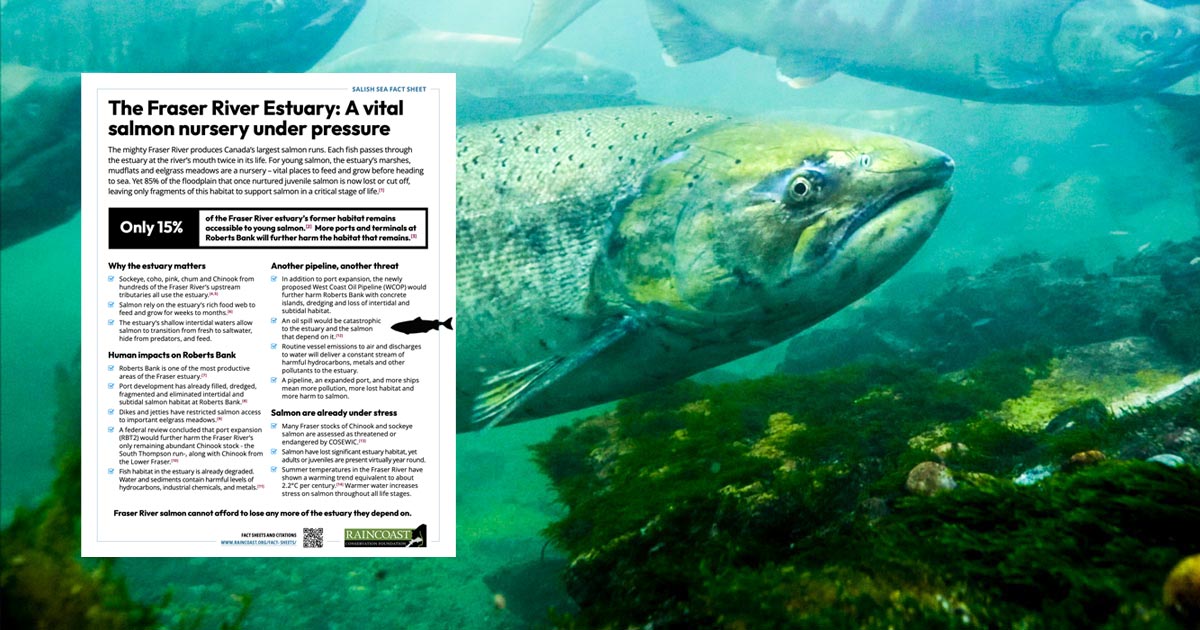
In the rich coastal forests of British Columbia, gray wolves are not just land-based hunters – they become salmon specialists each fall when these fish return to spawn.
When salmon return to coastal rivers, they bring a seasonal pulse of food that ripples through the ecosystem. Wolves are a part of this story, shifting how and where they forage in response to the returning salmon and revealing the close connections between predators, prey, and the ecosystems they share.
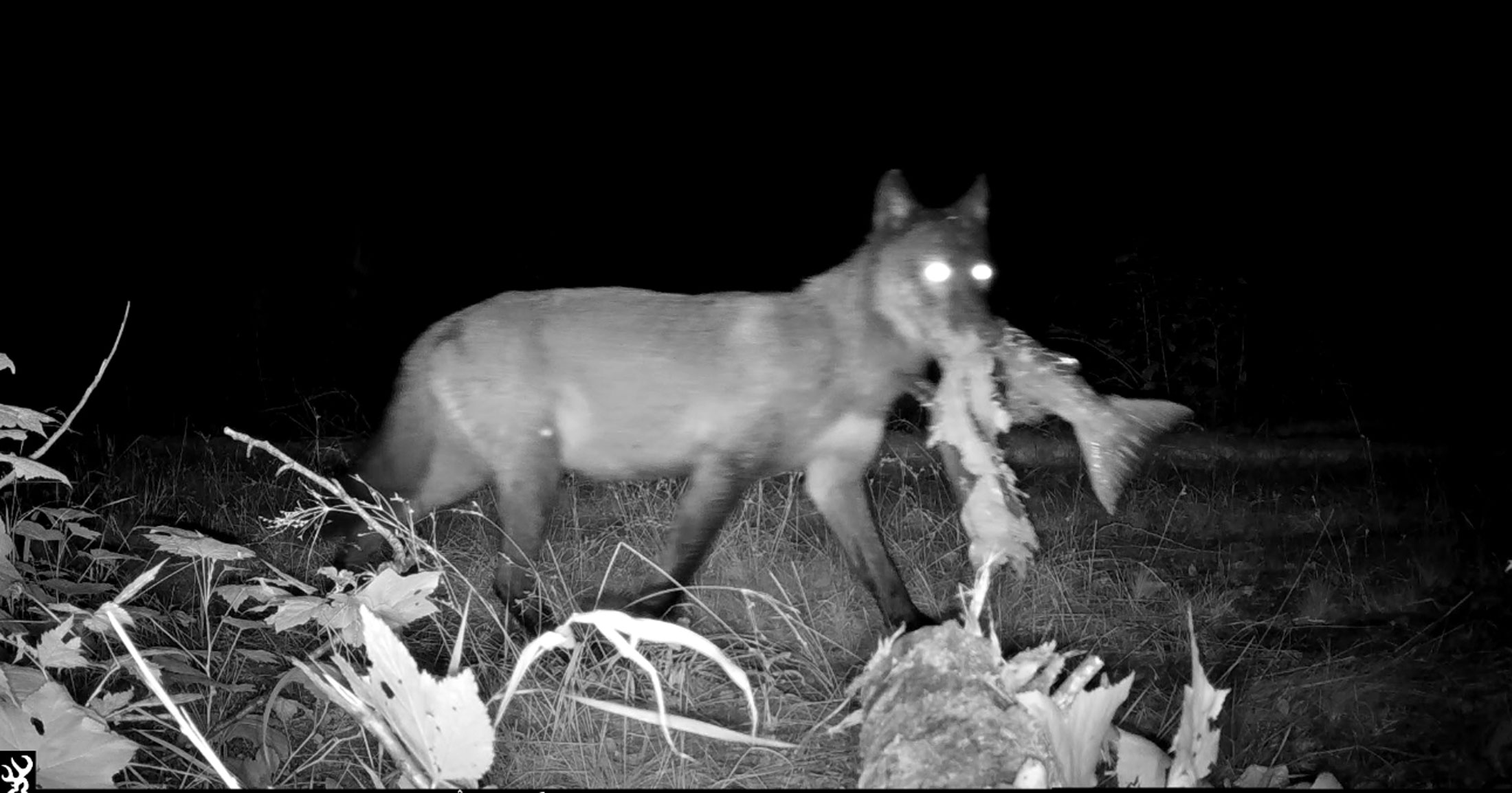
Research on wolf scat and hair isotope analysis reveals that during the salmon spawning season, wolves shift from eating their primary prey of ungulates, such as deer and elk, to salmon1. Intriguingly, many wolves consume only the heads of salmon2, an evolutionary strategy thought to reduce parasite risk and maximize consumption of high-energy brain tissue. The bacteria that cause Salmon Poisoning Disease, Neorickettsia helminthoeca, can be fatal to canid species and are transmitted through a parasitic fluke that concentrates in the flesh and internal organs of infected salmon. This bacteria can even be fatal to domestic dogs if they are fed raw salmon. By consuming primarily the head, which contains less muscle tissue and fewer flukes, wolves likely reduce their risk of infection.
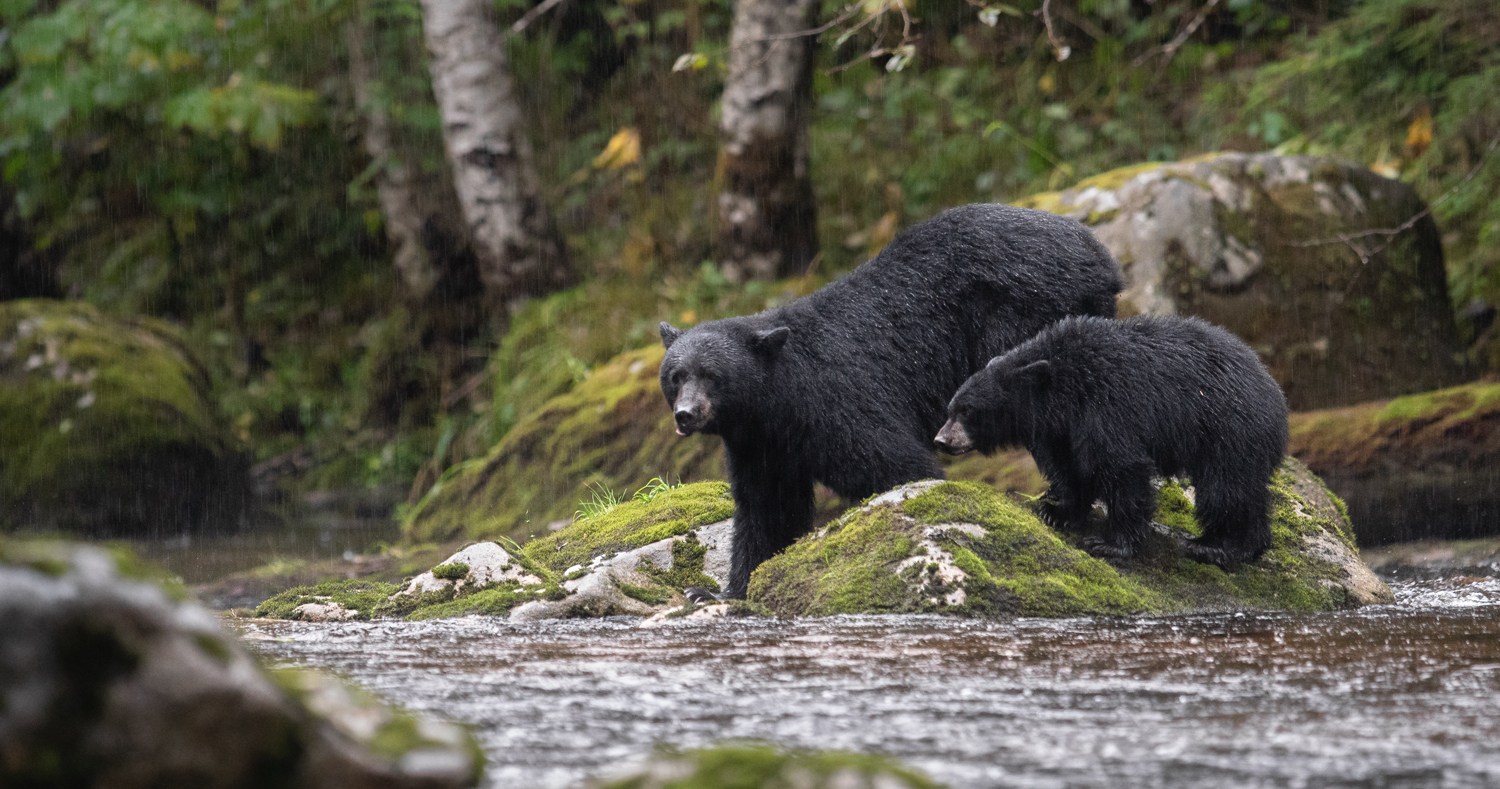
Notably, all of the wolf fishing footage we have captured has been recorded at night. This may reflect an advantage that nighttime provides to predators fishing for salmon. In low-light conditions, salmon may be less able to detect and evade approaching predators, while predators can rely more heavily on auditory cues, such as the sound of fish splashing in shallow water3. Nighttime fishing has been documented in both wolves and bears, with both species increasing their use of spawning streams during periods of darkness4
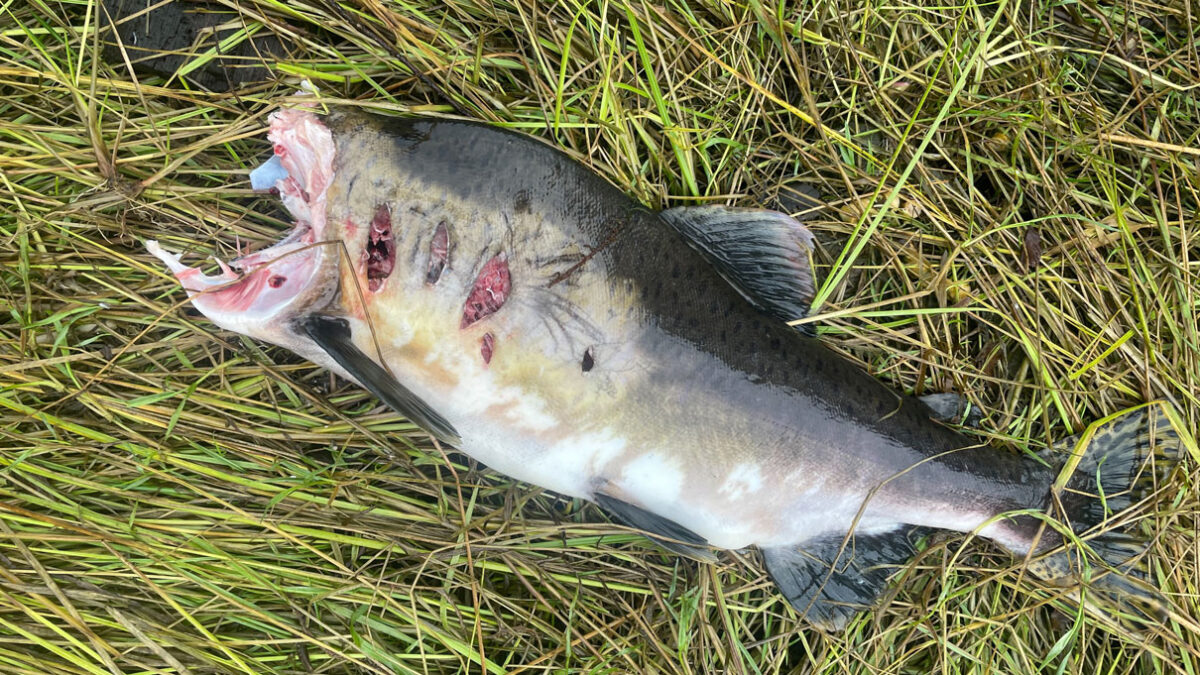
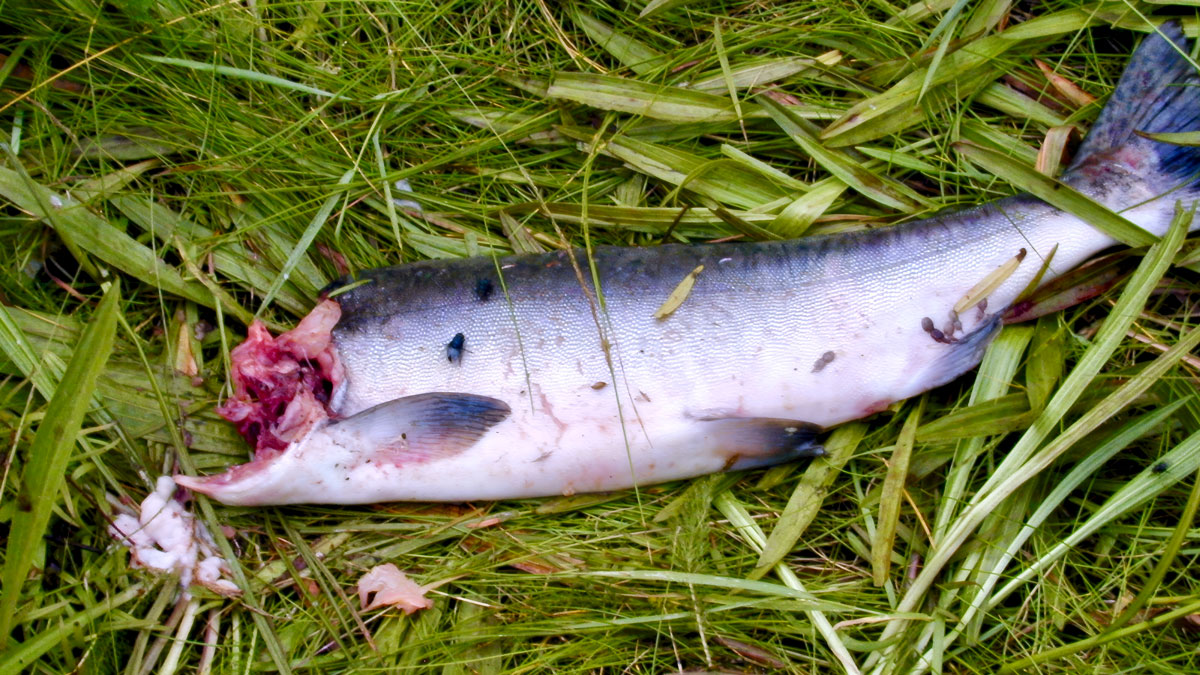
The headless salmon that they leave behind become a buffet for bears, birds, and the forest itself, transporting marine nutrients inland and fueling tree and plant growth. Understanding the connection between wolves and salmon is not just fascinating – it’s a reminder that predator-prey relationships ripple out to shape entire ecosystems.
These videos were taken as part of a research project conducted in the territory of, and in collaboration with the q̓ic̓əy̓ (Katzie) First Nation to better understand predator-prey dynamics and the behaviour and ecology of large carnivores within their territory.
Notes and references
- Darimont CT, Paquet PC, Reimchen TE. 2008. Spawning salmon disrupt trophic coupling between wolves and ungulate prey in coastal British Columbia. BMC Ecology. 8(1):14. doi:https://doi.org/10.1186/1472-6785-8-14.
- Darimont CT, Reimchen TE, Paquet PC. 2003. Foraging behaviour by gray wolves on salmon streams in coastal British Columbia. Canadian Journal of Zoology. 81(2):349–353. doi:https://doi.org/10.1139/z02-246.
- Freund DR, Gable TD, Johnson-Bice SM, Homkes AT, Windels SK, Bump JK. 2023. The ethology of wolves foraging on freshwater fish in a boreal ecosystem. Royal Society Open Science. 10(5). doi:https://doi.org/10.1098/rsos.230210.
- Klinka DR, Reimchen TE. 2009. Darkness, twilight, and daylight foraging success of bears (ursus americanus) on salmon in coastal British Columbia. Journal of Mammalogy. 90(1):144–149. doi:https://doi.org/10.1644/07-MAMM-A-200.1.