Building skills and supporting salmon with Musqueam Indian Band
Musqueam Indian Band community members joined Raincoast for a week of learning and monitoring in the Fraser River Estuary.
This spring, Raincoast Conservation Foundation collaborated with the Musqueam Indian Band’s Employment and Training Department (E&T), which offers job training and career development to community members. This partnership yielded a new program that combines skill development with field-based salmon monitoring, and was offered to graduates of the E&T’s Career and Trades Exploration Program.
The Lower Fraser Salmon Conservation Program has been conducting habitat restoration projects and monitoring at various sites throughout Musqueam’s traditional and unceded territory over the past decade, working closely with the Band. As the team is about to begin their sampling and monitoring season, which will require the help of technicians, this collaboration presented a unique opportunity to engage the community and train future field technicians.
Working in the Fraser Estuary
Since 2016, Raincoast has been in the Fraser River estuary monitoring and researching salmon, and restoring salmon habitat. Monitoring across the estuary has enhanced our understanding of salmon population distribution and behaviour, while targeted research on estuarine life history components, diet, and habitat addresses specific questions about estuary residency.
Additionally, Raincoast has identified migratory barriers to salmon and areas in need of restoration throughout the estuary. Making 5 breaches across the Steveston Jetty and the North Arm Jetty made crucial habitat accessible to salmon, and recent marsh restoration of three sites along the North Arm and Middle Arm of the Fraser River have improved salmon use of the areas. Collectively, monitoring, research and restoration in the Fraser River estuary has created a depth of knowledge and improvements throughout the region, work which we hope to continue in the future.
Musqueam’s Environmental Stewardship Department (ESD) monitors started working with Raincoast several years ago, contributing to these conservation efforts in the Fraser River estuary. The ESD has a wide range of expertise and knowledge, and the collaborative effort between Raincoast and the ESD has been immensely valuable for the development of restoration projects, research and monitoring.

A week of learning and monitoring in the field
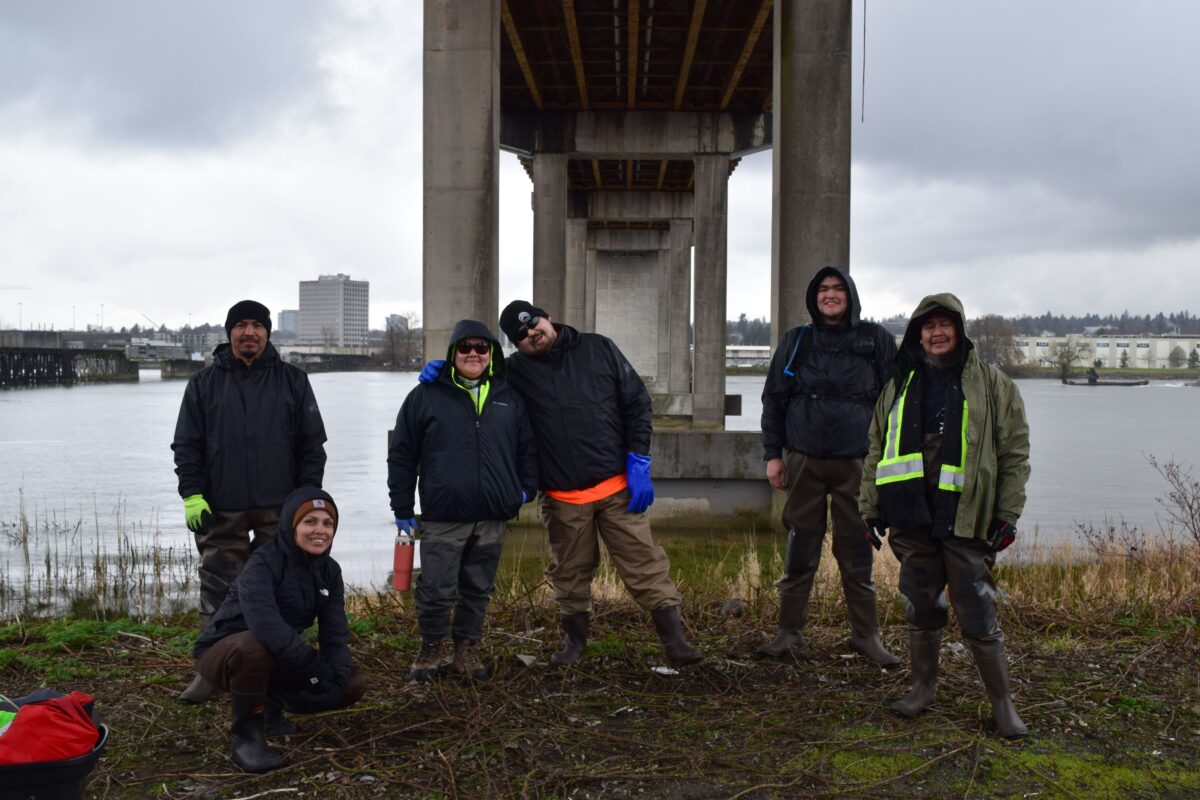
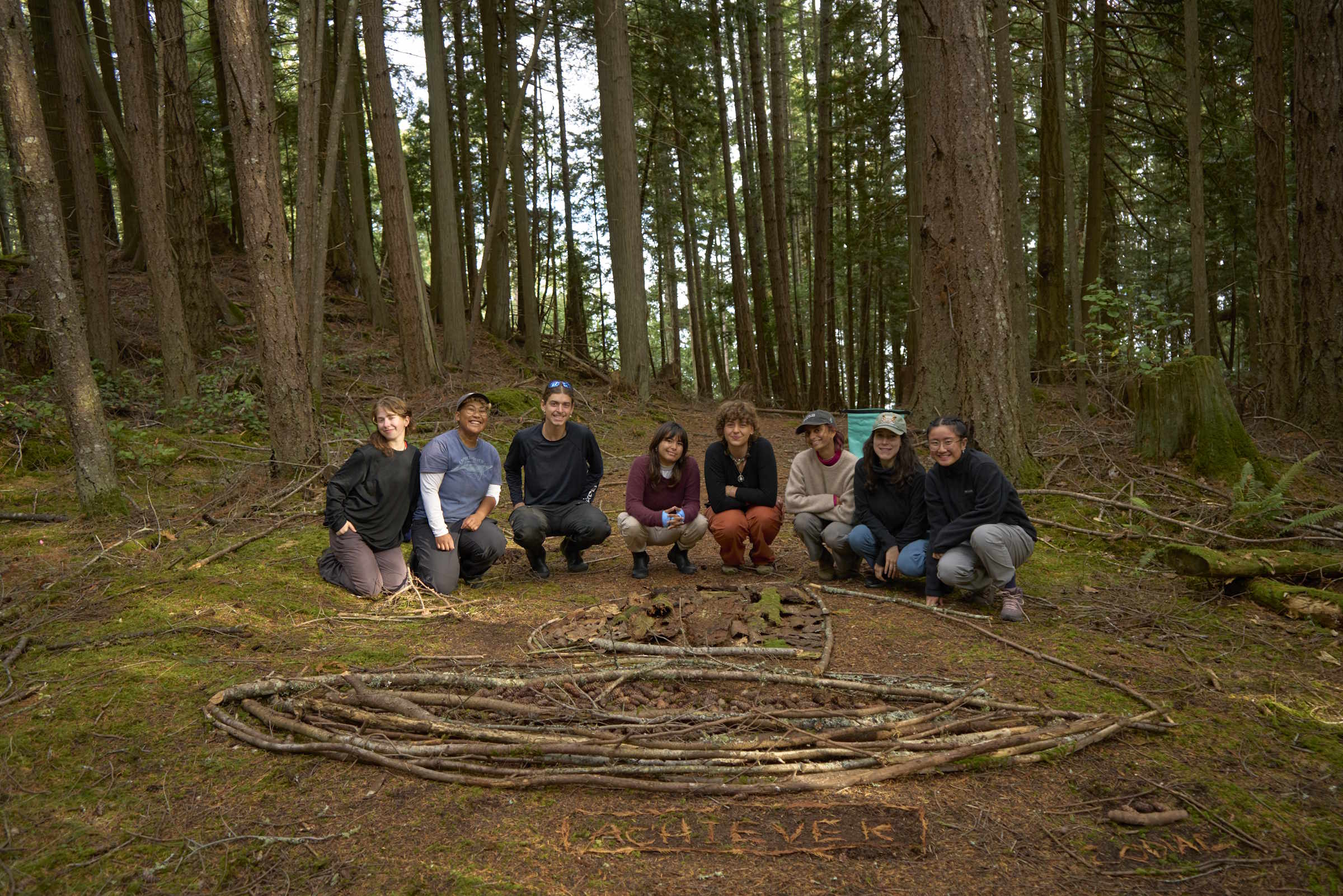
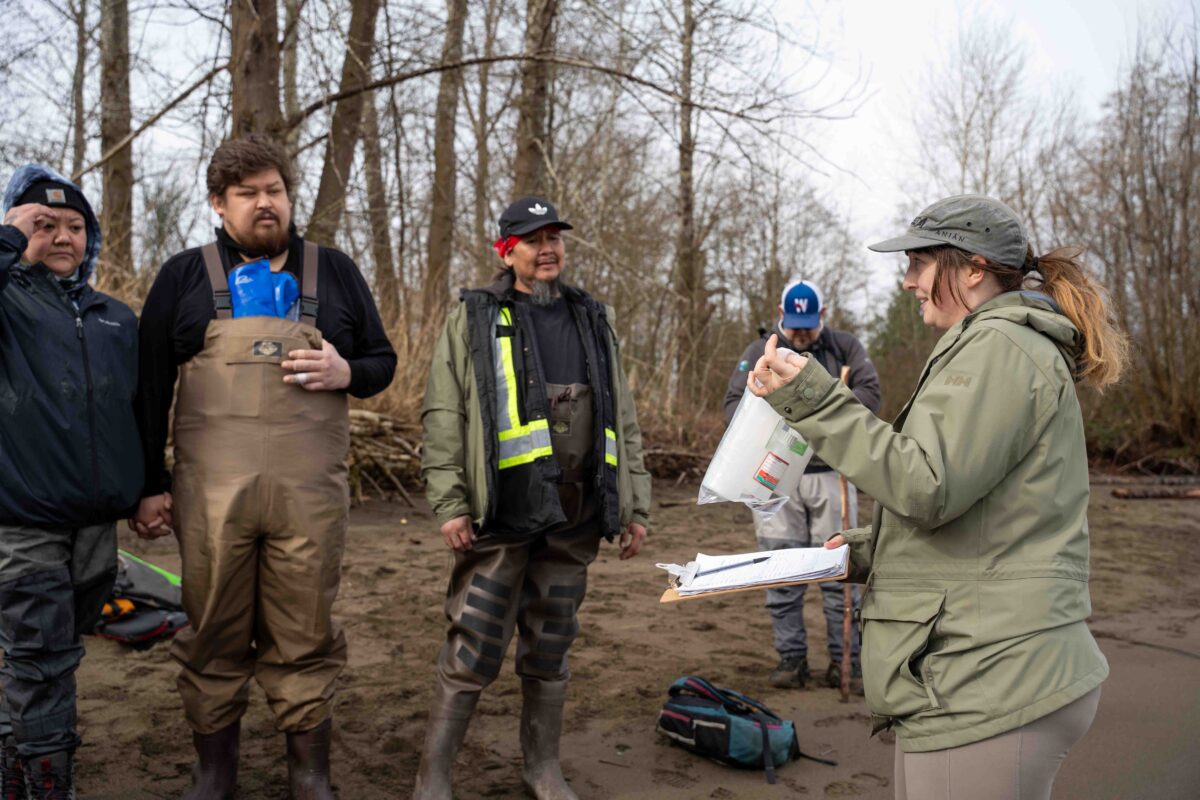
Lower Fraser Salmon Conservation Coordinator, Paige Roper, Education Coordinator, Pascale Campagna-Slater, as well as MSc student and Lower Fraser Conservation Program Researcher, Samantha Rhodes, met the seven participants at the Musqueam Community Centre. Coming in with different life experiences and interests, the participants all expressed a cultural and personal connection to salmon, and a desire to gain new skills.
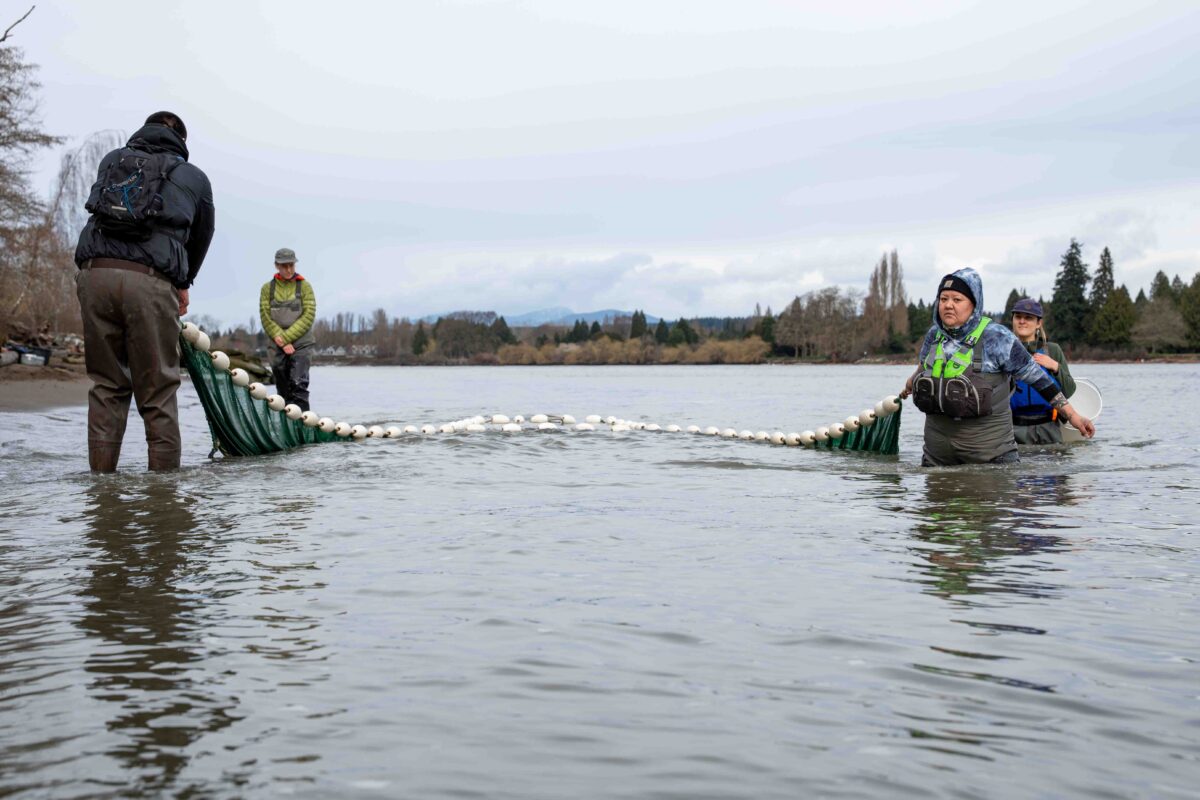
We began the week in class with an overview of the Fraser River Estuary, discussing hydrology, conservation threats, and the Fraser’s importance to Pacific salmon. As preparation for the week’s field work, we covered the ongoing monitoring and the techniques used, such as beach seining and how to measure and process fish. We also discussed salmon’s life cycle and went into detail on how to identify the 5 species of salmon at their juvenile stage by looking at their parr marks, size, colour and shape. The final step in preparing for a week in the field was to ensure that everyone was properly geared up with waders, rain jackets, and field ID booklets.
As a key part of this program was to bring participants into the field to get hands-on experience in all parts of salmon sampling,the group spent two days joining the team, Erin Pippus (Raincoast), Aline Isabelle (Raincoast), and Jamie Haldane (ESD), at three different sites.
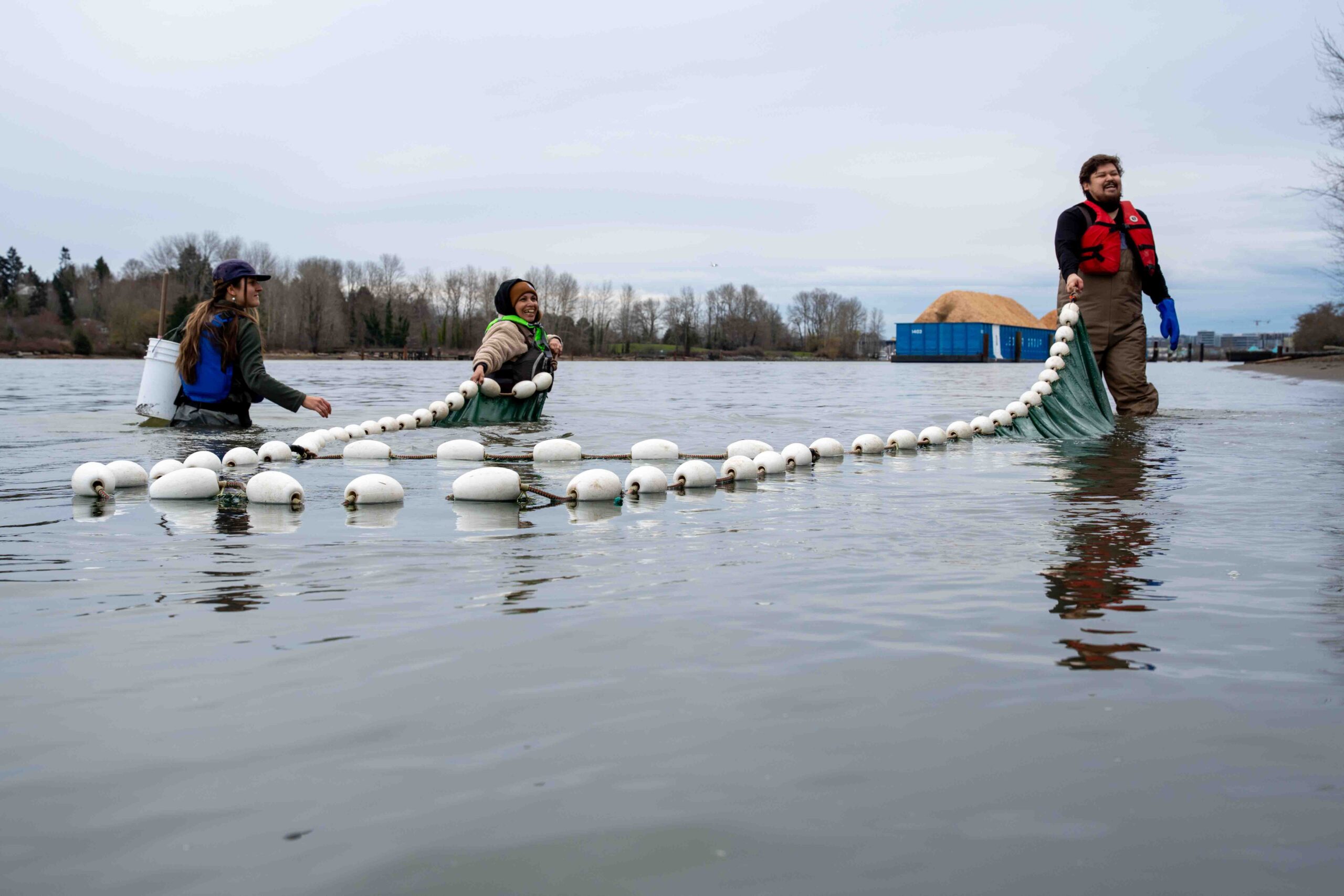
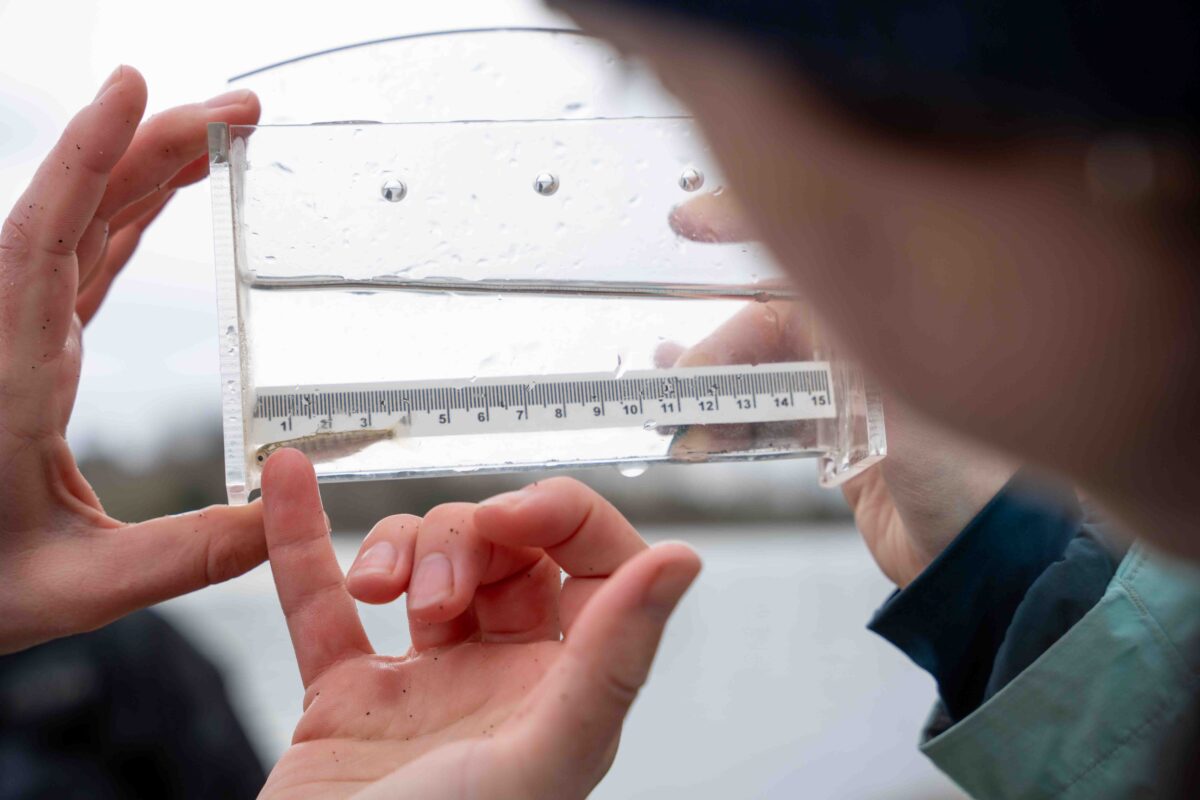
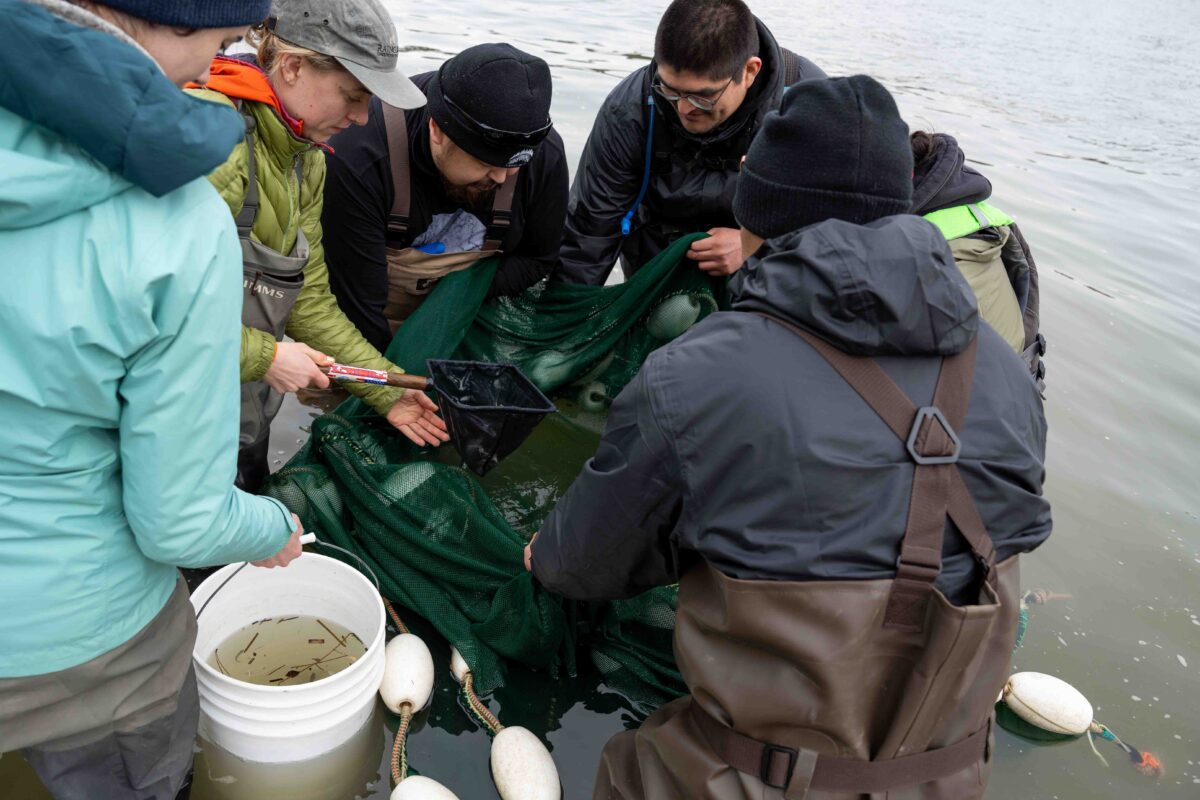
We first headed to our monitoring site under the Oak Street bridge, which has been an area of extremely high salmon abundance in previous years of sampling in the area. Participants got their gear on and waded into the soft marsh edge where they were taught beach seining techniques. Once fish were captured, the group scooped juvenile fish into viewers, identified the species captured, took measurements for salmon species, and recorded data.
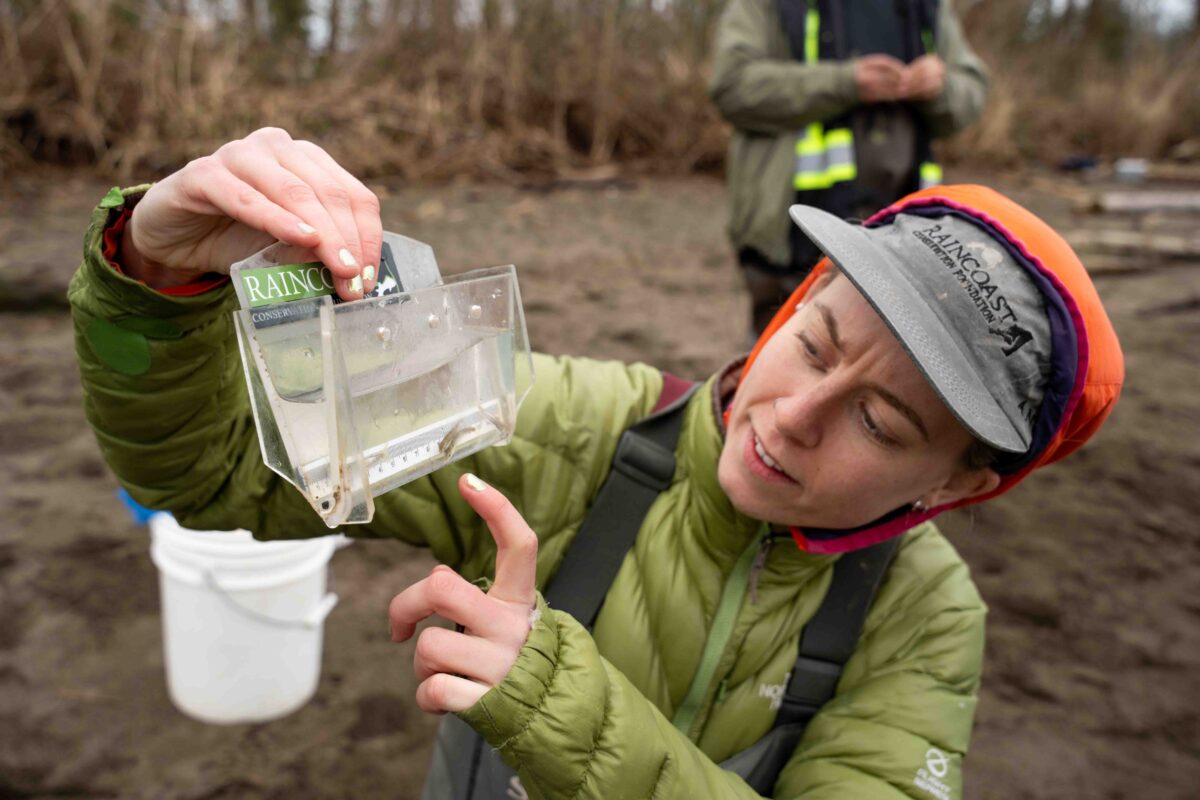
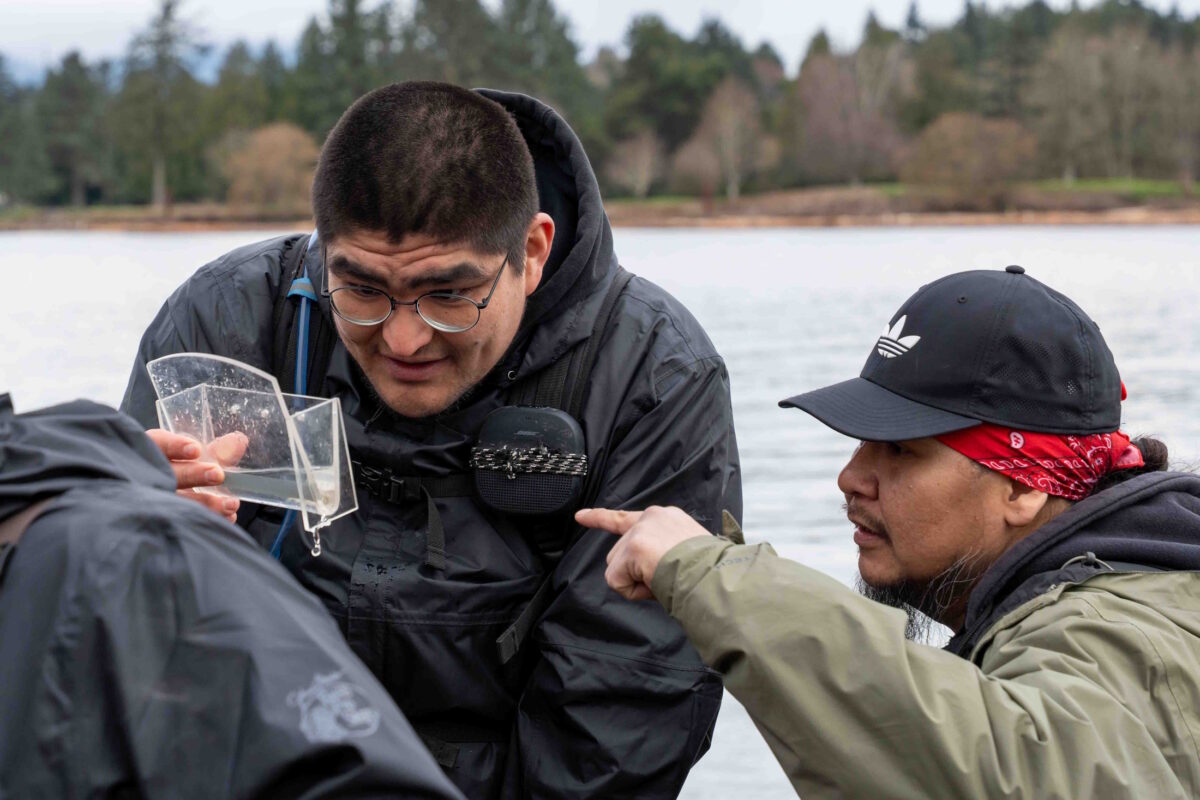
We made a quick stop at our newest restoration project adjacent to Shaughnessy Street Park where participants were able to see how a restoration site looks only a month after construction completion. Next, the group headed to Richmond to fish sample at a new marsh restoration project completed in December of 2025. A high abundance of salmon were captured, so the group was able to put their knowledge to the test.
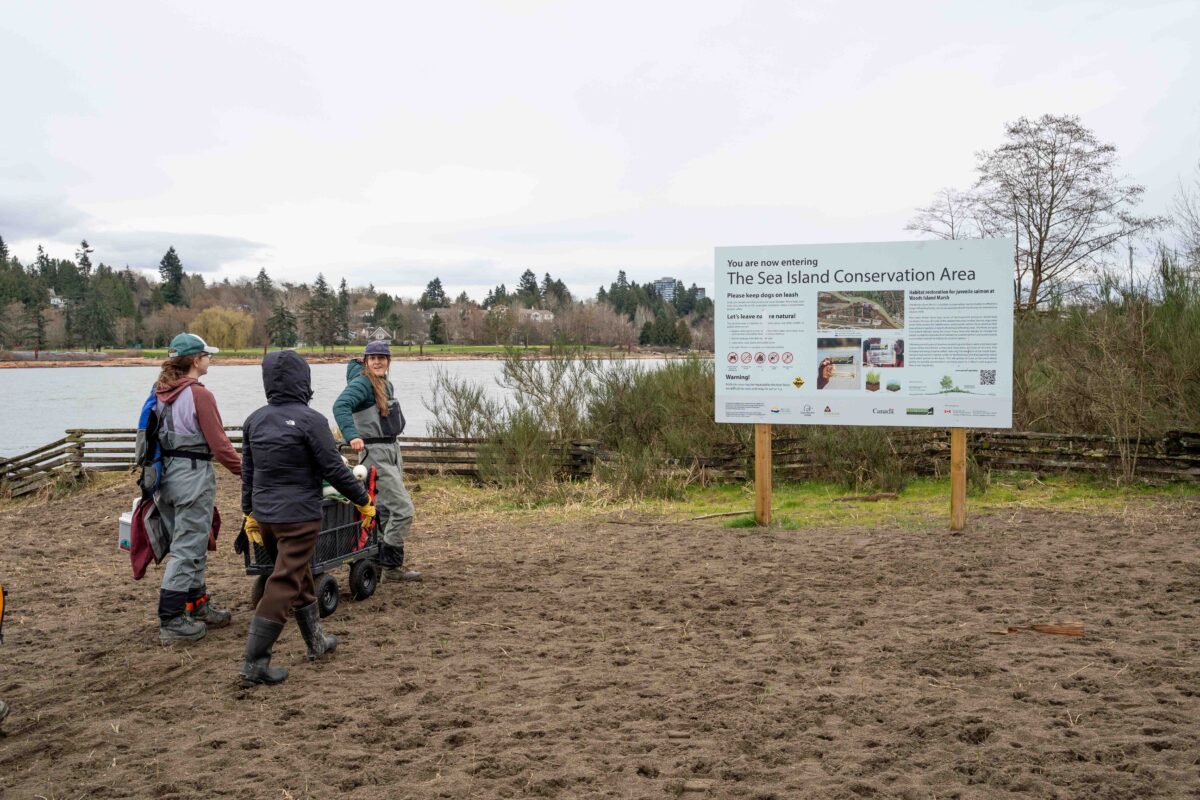
The following day we sampled at a restoration site at Woods Island, which is now over a year post-construction, where the group solidified their sampling technique, fish identification, and handling. Monitoring at recent restoration sites demonstrates both the importance and effectiveness of these projects for creating salmon habitat, which participants were able to experience through hands-on sampling.
To round out our learning on the Fraser River Estuary, we welcomed guest speakers to lead a few activities. The ESD provided a guided boat tour of Raincoast and the ESD’s monitoring sites, which ranged the North Arm and Middle Arm of the Fraser River. Past and present restoration projects, habitat monitoring, and salmon monitoring sites were identified and discussed with participants. This further contextualized the work done by both groups, and gave a unique view of many walk-in sites from the river while demonstrating the role of the ESD monitors, who captain these boats regularly in their work.
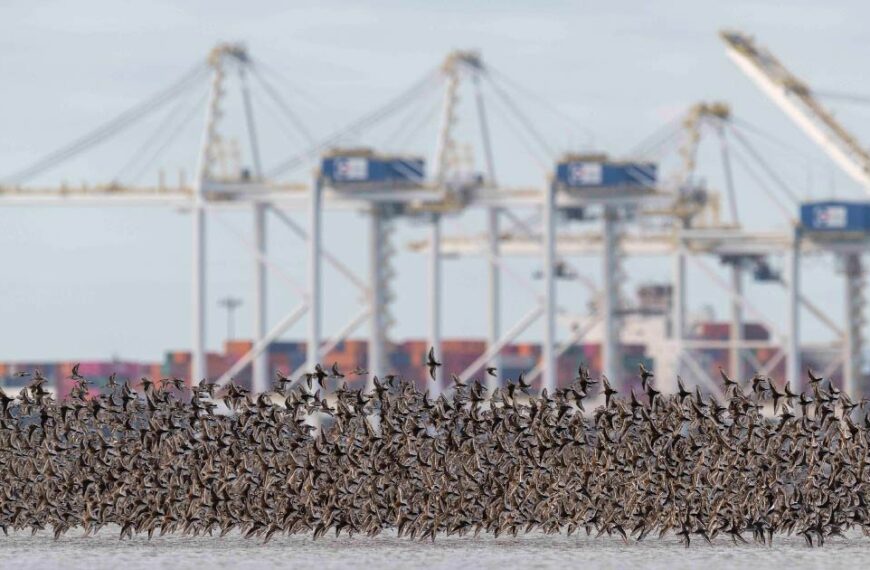
Sam Scott of the Healthy Waters Program joined us at Woods Island to teach the group about common contaminants and how to take water samples to send for analysis. She shared with us why healthy waters are important not only for salmon, but for our communities. We also welcomed the Special Bird Service, who lead the group birding along the bank of the Fraser River, where we observed species such as common mergansers and green-winged teals, and discussed the millions of shore birds who will soon visit the Fraser River Delta on their yearly migration.
We finished the week by discussing next steps for the participants. Kieran Wilson of the ESD shared about the department’s upcoming projects, the types of jobs they might need to fill in the near future, and further training and courses that are available for those interested in continuing their education. Paige also elaborated on the field monitors that will need to be hired for the summer sampling season, and encouraged participants to apply.
Equipped with new knowledge, skills, and an interest in salmon conservation, we hope participants will continue their learning journeys and apply to work in the field, and we look forward to welcoming another cohort of participants in the future.