
Salmon habitat restored on Sea Island
Marsh is vital habitat for salmon and we aim to help restore it in the Fraser River estuary.
Industrial and urban development across the Lower Mainland has caused major losses of marsh habitat in the Fraser River estuary. Juvenile salmon now depend on what little remains, often in areas crowded with invasive plants or blocked by infrastructure. To help counter these losses, Raincoast has prioritized restoring effective marsh habitats along juvenile salmon migration pathways, including recent efforts in the North Arm of the Lower Fraser River.
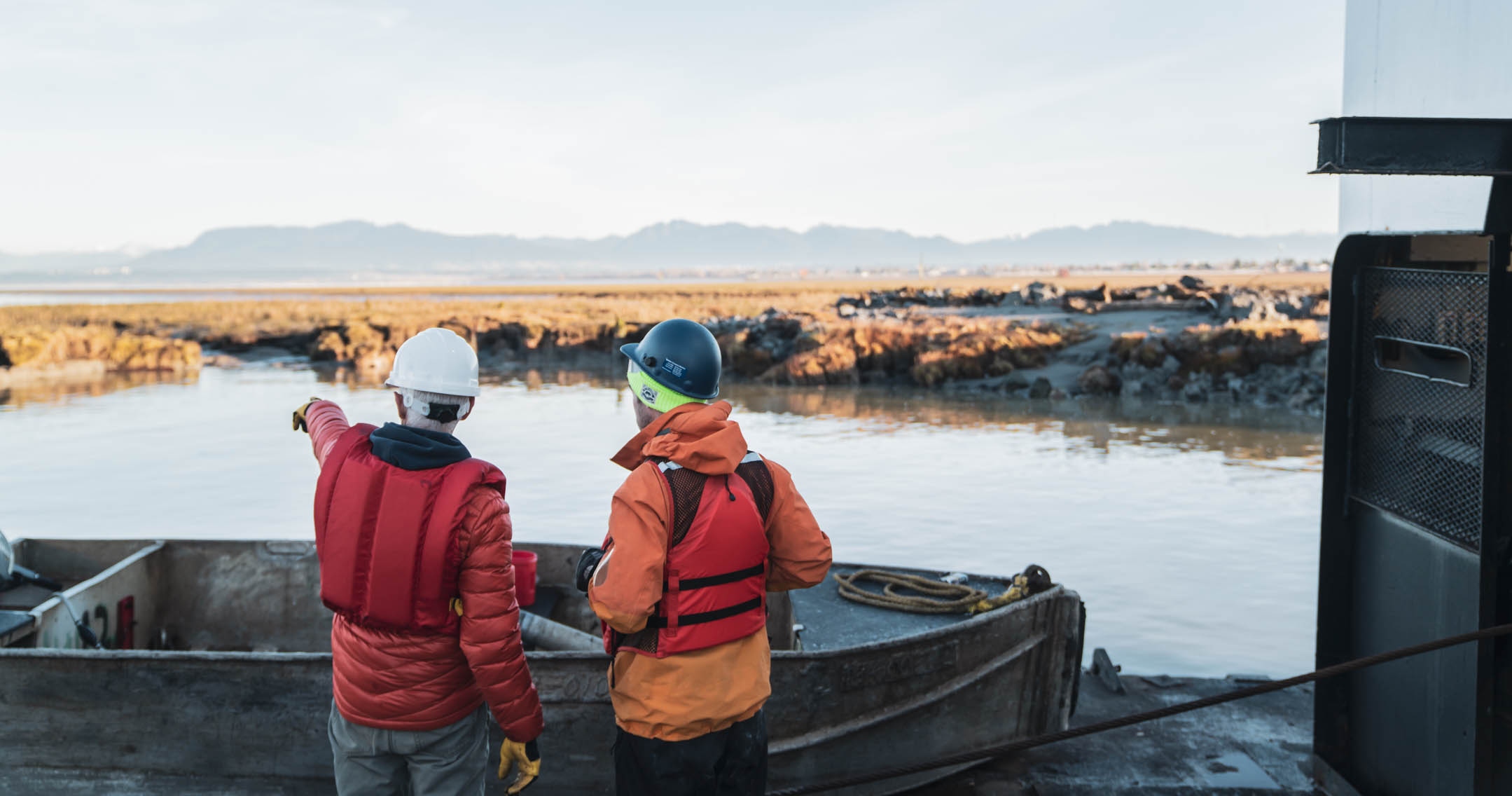
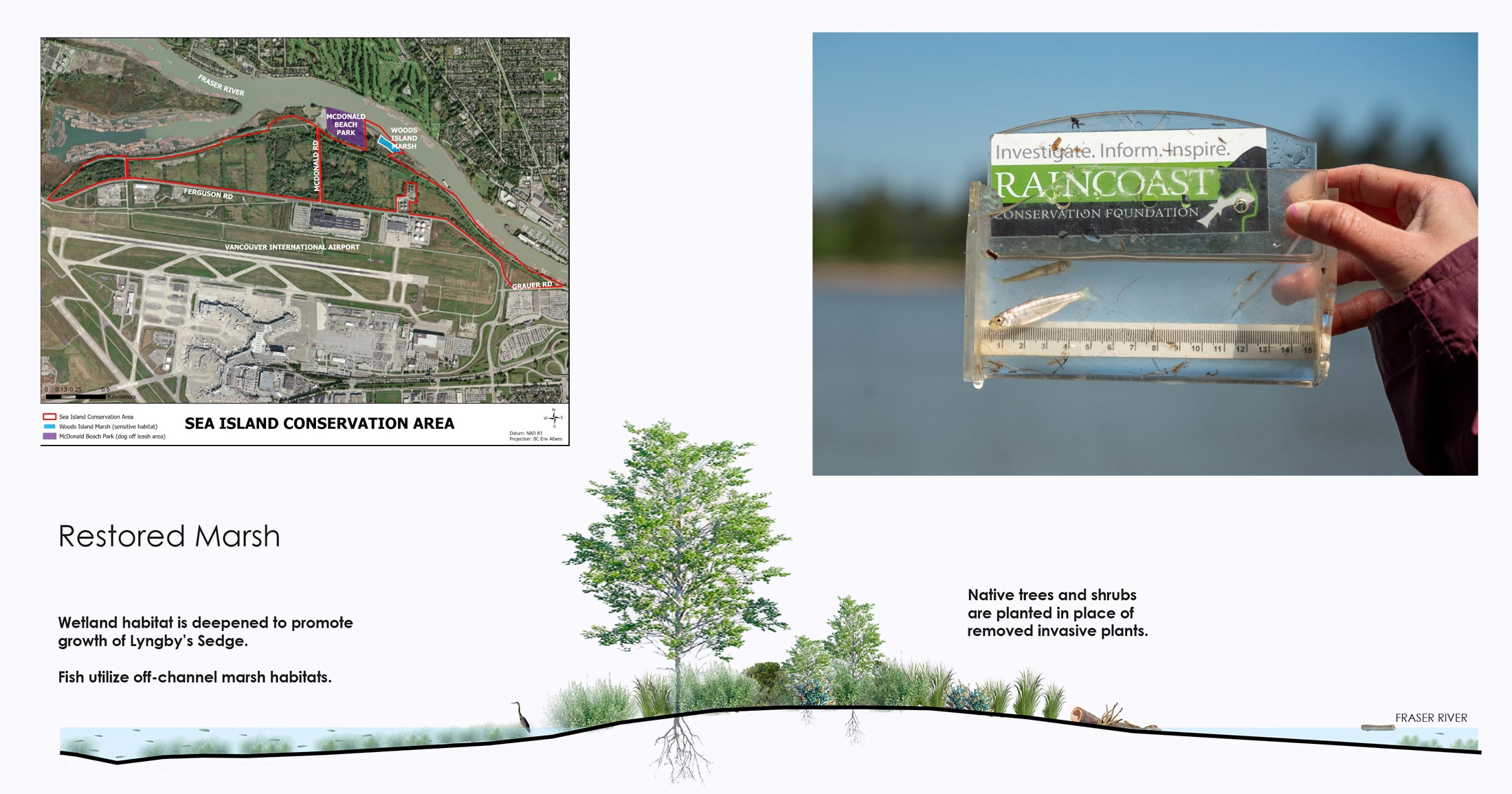
In January of 2025, we removed relic fence structures, excavated the marsh and deeper channels into and throughout the restoration area, and eventually planted native species replacing the invasive cattail previously inhabiting the entire area. A few months later, Raincoast field crews were able to test the effectiveness of restoration by fish sampling in and around the new marsh habitat. What we found: Build it, and the salmon will come.
In 2024, before restoration, we were lucky to capture a single fish per hour using the marsh habitat in the early season, and rarely a salmon. After construction, however, catch rates increased dramatically, with 70–140 salmon per hour leaving one of the two channels on a falling tide, indicating even higher rates of salmon utilizing the total marsh area. This supports the idea that well-designed restoration can successfully recreate productive salmon-rearing habitat. We also observed more non-salmonid species using the area, making the project a clear success overall.
We are excited to continue monitoring our restoration efforts at Woods Island, and based on our first year post-construction, expect it to foster the growth and survival of juvenile salmon for years to come.
Habitat restoration for juvenile salmon at Woods Island Marsh
The Woods Island Marsh is a habitat compensation marsh created to offset for a barge-offloading facility which was associated with the Vancouver International Airport (YVR).
The Lower Fraser faces high levels of development pressures which have resulted in the loss of much of the habitat that once existed, leaving large areas where little productive habitat exists, and juvenile salmon must continue their downstream migration in search of rearing and feeding areas. Therefore, our goal is to restore habitats along the Lower Fraser River and estuary to increase the overall availability of productive habitats for juvenile salmon and build towards a connected network of habitat for juvenile salmon.
Following several years of baseline monitoring activities in early 2025, Raincoast Conservation Foundation conducted restoration activities at this site. This included removing invasive cattail, reducing the elevation of the marsh basin, introducing a second channel outlet on the foreshore, and then planting native marsh plant species in the basin. This will greatly improve access and habitat quality for juvenile salmon, which use these areas from March until August on their ocean migrations.