The Fraser River Estuary: A global biodiversity hotspot
Where the Fraser River meets the sea, an extraordinary web of life converges. This estuary is irreplaceable.


What's new // Fraser River Estuary
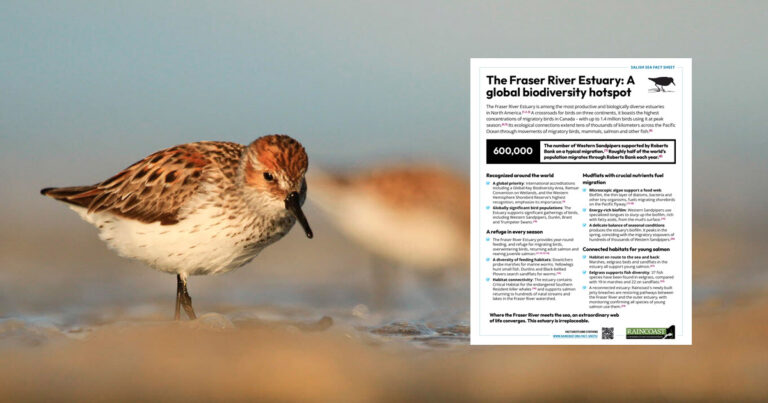
Where the Fraser River meets the sea, an extraordinary web of life converges. This estuary is irreplaceable.
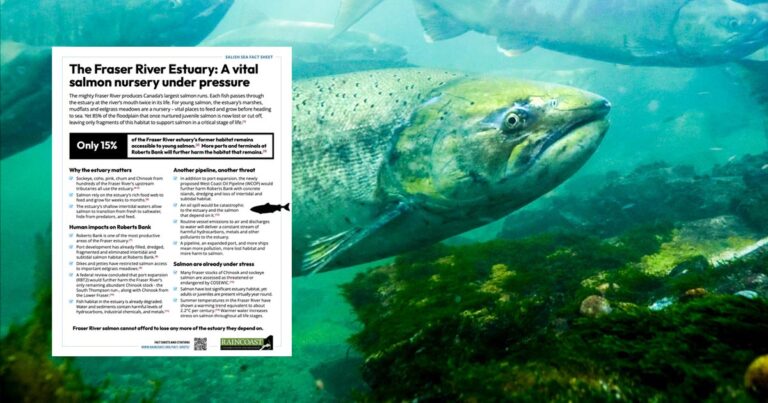
Fraser River salmon cannot afford to lose any more of the estuary they depend on.
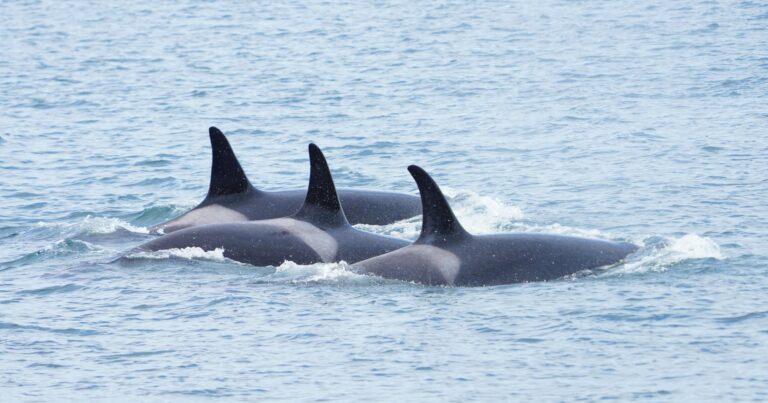
11 reasons why the West Coast Oil Pipeline should not be designated a Project of National Interest.
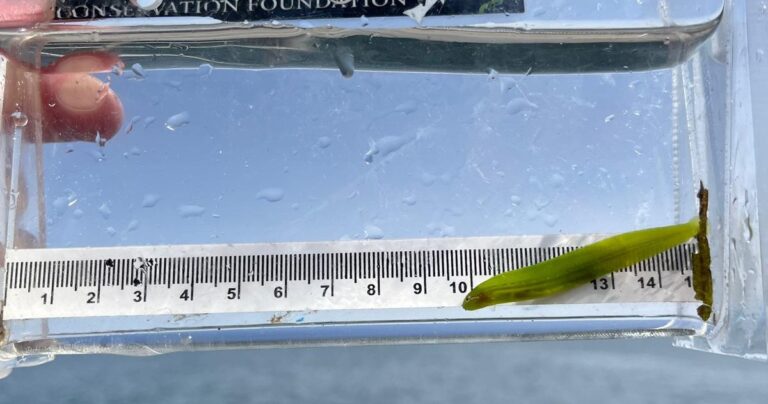
Highlighting the overlooked species that make eelgrass habitat one of the Fraser River Estuary’s most diverse ecosystems.
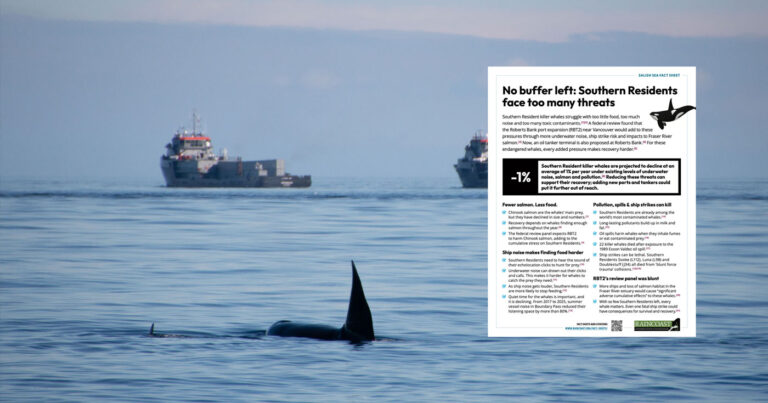
Too little food. Too much noise. Too much pollution. Ship strikes. This is how extinction happens – one added pressure at a time.
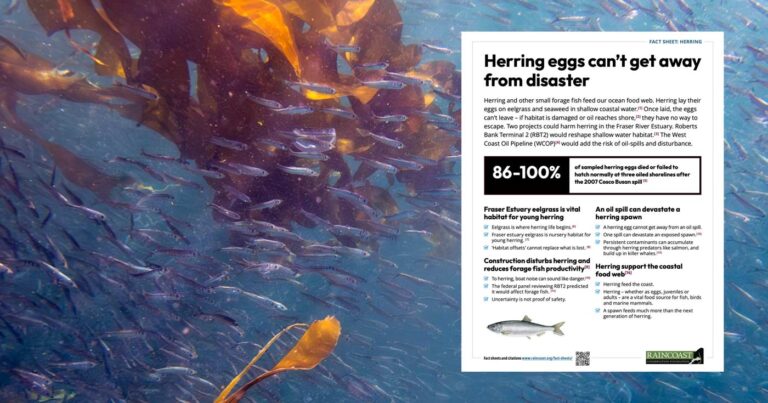
Don’t build new risks into herring’s nursery. Robert’s Bank Terminal 2 and West Coast Oil Pipeline would add different pressures to the same nearshore waters. Pacific herring should not have to absorb both.

Using big tools for small salmon.

There’s a mixture of chemicals in the Lower Fraser, which not only presents potential risks to juvenile Chinook, but also other aquatic life.

Reflections from seven (going on eight) years of fieldwork in the Fraser River Estuary.
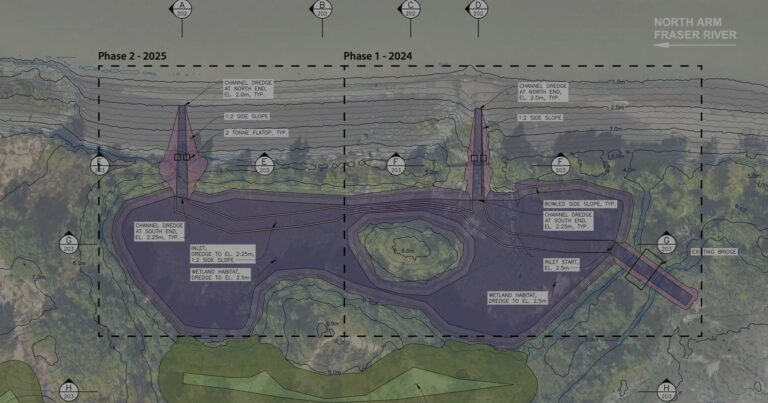
We are restoring marsh habitats to improve conditions for juvenile salmon and other wildlife.
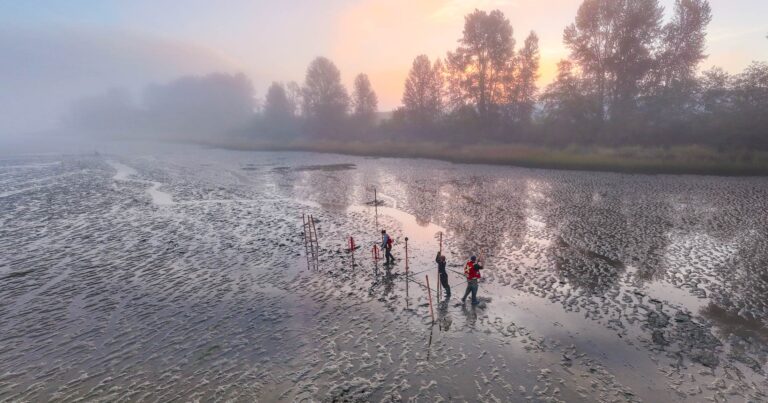
Daniel Stewart, Conservation Decisions Lab, Ducks Unlimited Canada, and Raincoast are all working in the Fraser River Estuary.
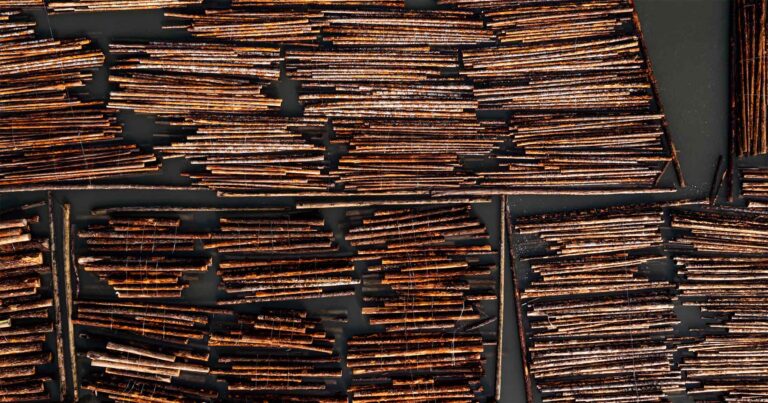
The study found that log booms impact physical habitat, water quality, and invertebrates in the lower Fraser River and Estuary.