
The Fraser River Estuary: A vital salmon nursery under pressure
Fraser River salmon cannot afford to lose any more of the estuary they depend on.
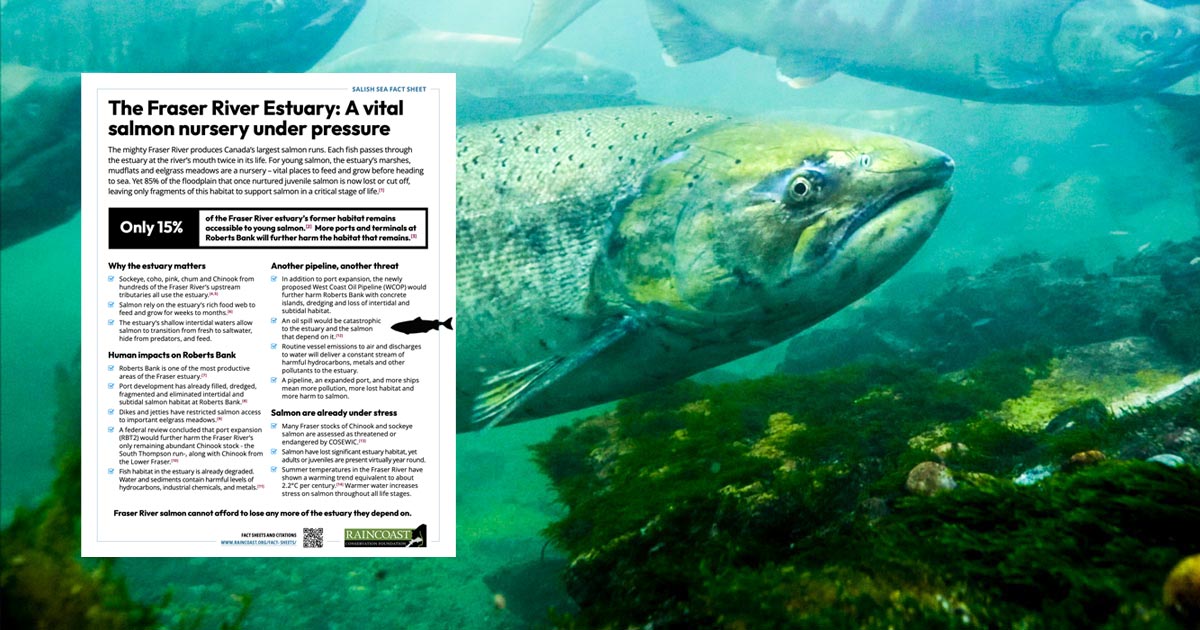
The mighty Fraser River produces Canada’s largest salmon runs. Each fish passes through the estuary at the river’s mouth twice in its life. For young salmon, the estuary’s marshes, mudflats and eelgrass meadows are a nursery – vital places to feed and grow before heading to sea. Yet 85% of the floodplain that once nurtured juvenile salmon is now lost or cut off, leaving only fragments of this habitat to support salmon in a critical stage of life.1
Why the estuary matters
- Sockeye, coho, pink, chum and Chinook from hundreds of the Fraser River’s upstream tributaries all use the estuary.45
- Salmon rely on the estuary’s rich food web to feed and grow for weeks to months.6
- The estuary’s shallow intertidal waters allow salmon to transition from fresh to saltwater, hide from predators, and feed.
Human impacts on Roberts Bank
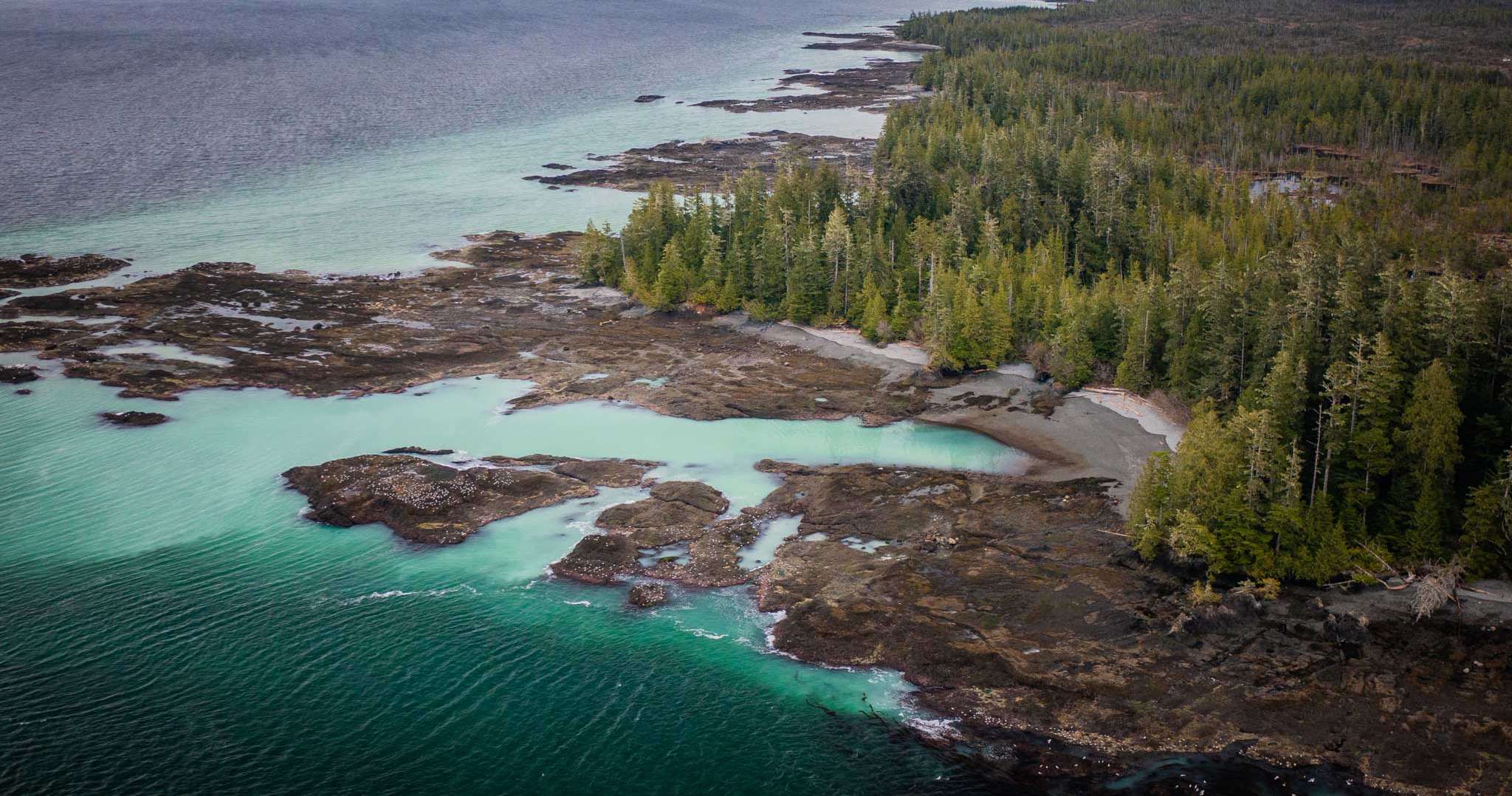
- Roberts Bank is one of the most productive areas of the Fraser estuary.7
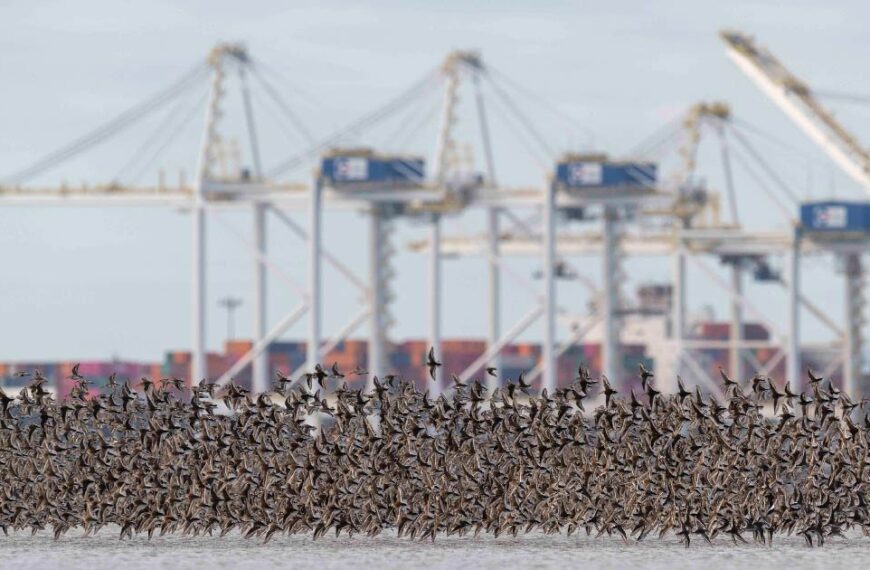
- Port development has already filled, dredged, fragmented and eliminated intertidal and subtidal salmon habitat at Roberts Bank.8
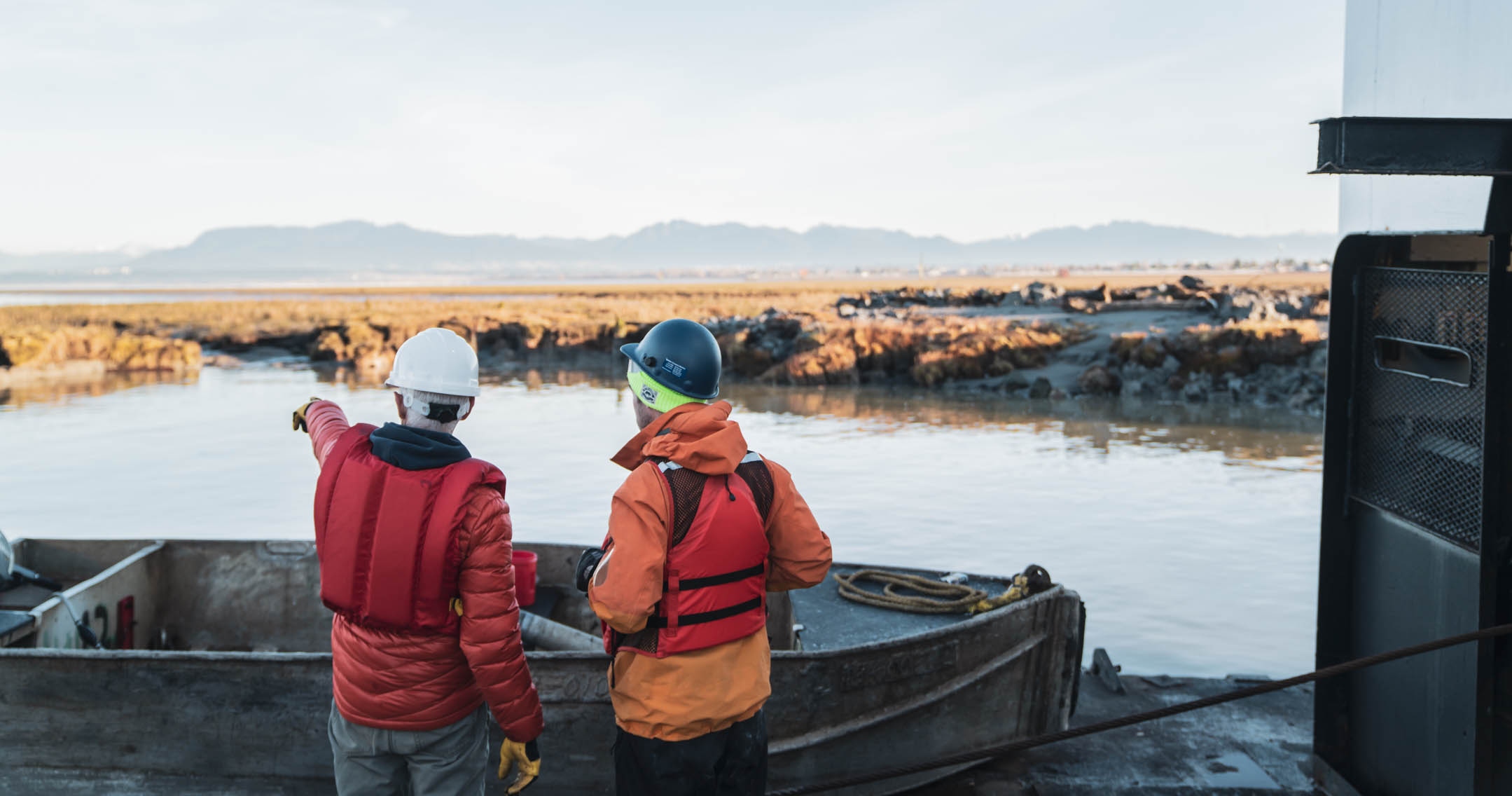
- Dikes and jetties have restricted salmon access to important eelgrass meadows.9
- A federal review concluded that port expansion (RBT2) would further harm the Fraser River’s only remaining abundant Chinook stock – the South Thompson run-, along with Chinook from the Lower Fraser.10
- Fish habitat in the estuary is already degraded. Water and sediments contain harmful levels of hydrocarbons, industrial chemicals, and metals.11
Another pipeline, another threat
- In addition to port expansion, the newly proposed West Coast Oil Pipeline (WCOP) would further harm Roberts Bank with concrete islands, dredging and loss of intertidal and subtidal habitat.
- An oil spill would be catastrophic to the estuary and the salmon that depend on it.12
- Routine vessel emissions to air and discharges to water will deliver a constant stream of harmful hydrocarbons, metals and other pollutants to the estuary.
- A pipeline, an expanded port, and more ships mean more pollution, more lost habitat and more harm to salmon.
Salmon are already under stress
- Many Fraser stocks of Chinook and sockeye salmon are assessed as threatened or endangered by COSEWIC.13
- Salmon have lost significant estuary habitat, yet adults or juveniles are present virtually year round.
- Summer temperatures in the Fraser River have shown a warming trend equivalent to about 2.2°C per century.14
- Warmer water increases stress on salmon throughout all life stages.
Notes and references
- Finn RJR, Chalifour L, Gergel SE, Hinch SG, DC Scott, and TG Martin. 2021. Quantifying lost and inaccessible habitat for Pacific salmon in Canada’s Lower Fraser River. Ecosphere 12(7): e03646. https://doi.org/10.1002/ecs2.3646.
- Finn et al. 2021
- Scott DC. 2019. Expert report prepared for the Canadian Environmental Assessment Agency in the matter of the application by the Vancouver Fraser Port Authority pursuant to the CEAA Act, 2012, SC, c 19, s 52 to build the Roberts Banks Terminal 2 Project. Raincoast Conservation Foundation. CCEA Ref No. 80054
- Chalifour L, Scott DC, MacDuffee, Iacarella JC, Martin TG and Baum JK. 2019. Habitat use by juvenile salmon, other migratory fish, and resident fish species underscores the importance of estuarine habitat mosaics. Marine Ecology Progress Series 625:145-162. https://doi.org/10.3354/meps13064
- Chalifour L, Holt C, Camaclang AE, Bradford MJ, Dixon R, Finn RJR, Hemming V, Hinch SG, Levings CD, MacDuffee M, et al. 2022. Identifying a pathway towards recovery for depleted wild Pacific salmon populations in a large watershed under multiple stressors. Journal of Applied Ecology. 59(9):2212–2226. https://www.doi.org10.1111/1365-2664.14239.
- Chalifour Lia, Scott DC, MacDuffee M, Stark S, Dower JF, Beacham TD, Martin TG, and Baum JK. 2021. Chinook salmon exhibit long-term rearing and early marine growth in the Fraser River, British Columbia, a large urban estuary. Canadian Journal of Fisheries and Aquatic Sciences 78, no. 5 (2021): 539-550. https://doi.org/10.1139/cjfas-2020-0247.
- Roberts Bank Environmental Review Committee. 1996. Final report of the Roberts Bank Environmental Review Committee, 1996. Archived report. https://web.archive.org/web/20220120053552id_/https://www.robertsbankterminal2.com/wp-content/uploads/Final-Report-of-the-Roberts-Bank-Environmental-Review-Committee-1996.pdf
- Roberts Bank Environmental Review Committee. 1996.
- Review Panel for the Roberts Bank Terminal 2 Project. 2020. Federal Review Panel Report for the Roberts Bank Terminal 2 Project. Impact Assessment Agency of Canada. https://iaac-aeic.gc.ca/050/documents/p80054/134506E.pdf
- Review Panel for RBT2. 2020.
- Scott S, Roper P, Scott D, Noel M, and Ross PS. 2026. Fraser River Estuary fish habitat: Contaminant concentrations, profiles and risks in water and sediment. Raincoast Conservation Foundation. https://doi.org/10.70766/9.66067
- MacDuffee M, Logan K, and Paquet P. 2018. Oil Spills in the Critical Habitat of Southern Resident Killer Whales (Orcinus orca). Fall 2018 submission prepared for the National Energy Board review of the Trans Mountain Expansion Project, Hearing Order MH-052-2018.
- As assessed by the Committee on the Status of Endangered Wildlife in Canada (COSEWIC)
- Talloni-Álvarez NE, Sumaila UR, Le Billon P, Cheung WWL. 2019. Climate change impact on Canada’s Pacific marine ecosystem: The current state of knowledge. Marine Policy. 104:163–176. https://doi.org/10.1016/j.marpol.2019.02.035.