
Shifting salmon policy
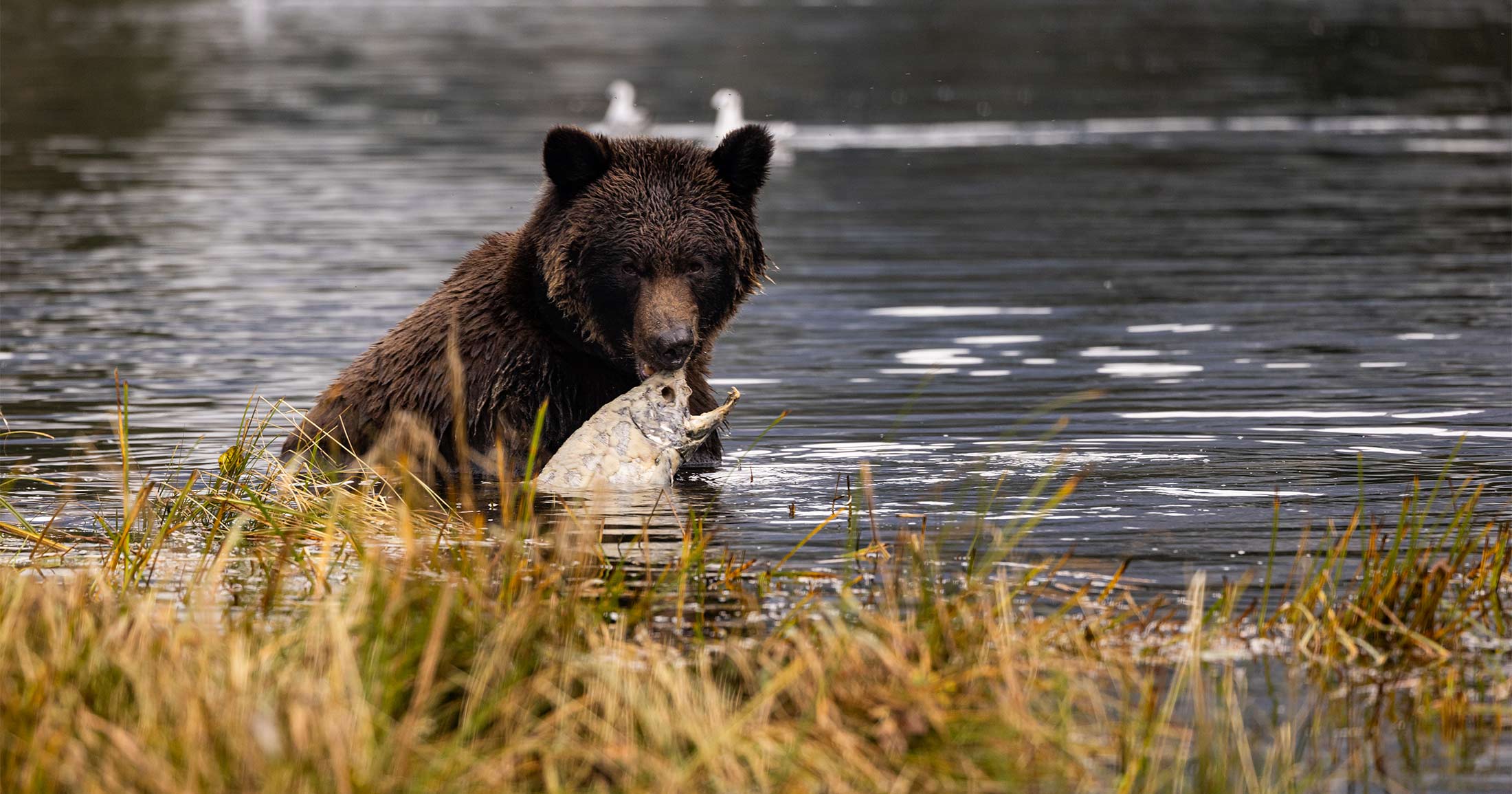
Photo by Alex Harris.
Ecosystems are complex. They are communities of living organisms connected through interacting processes and features on the land, in water, and between the two. Yet BC’s antiquated environmental policy doesn’t reflect this. Colonial society governs ecosystems by siloing them into distinct ministries and resources instead of reflecting the interconnected nature of habitats that make them function in the living world. This “siloed decision making”is the root cause of many of the ecological challenges we face today.
Our policy goals
1. Manage fisheries for ecosystems
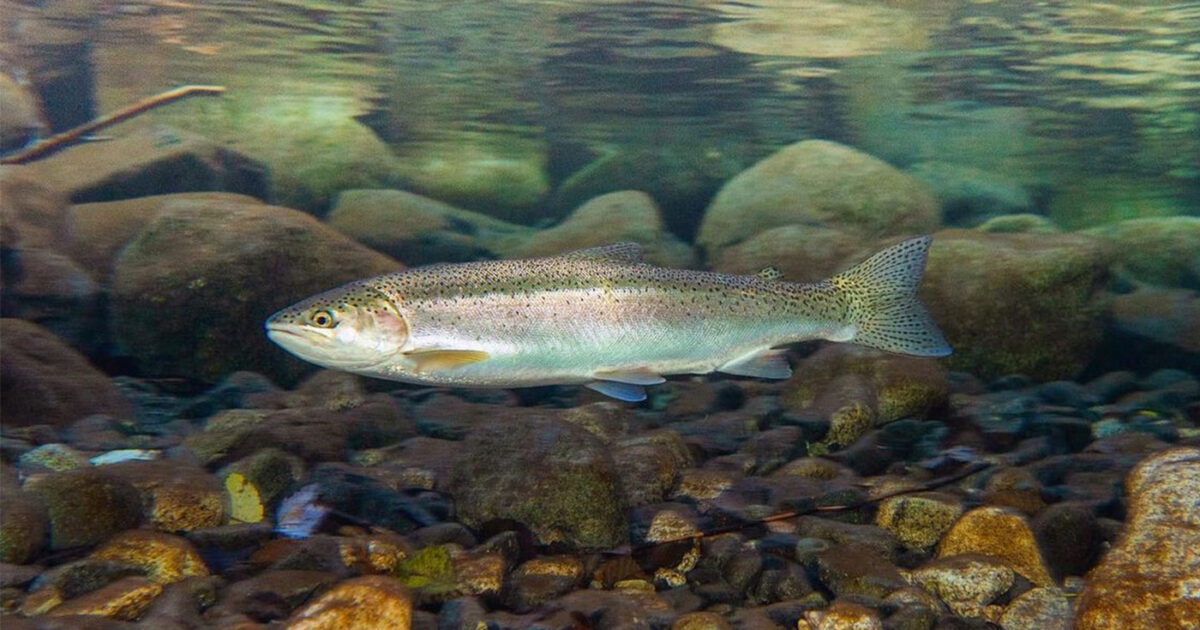
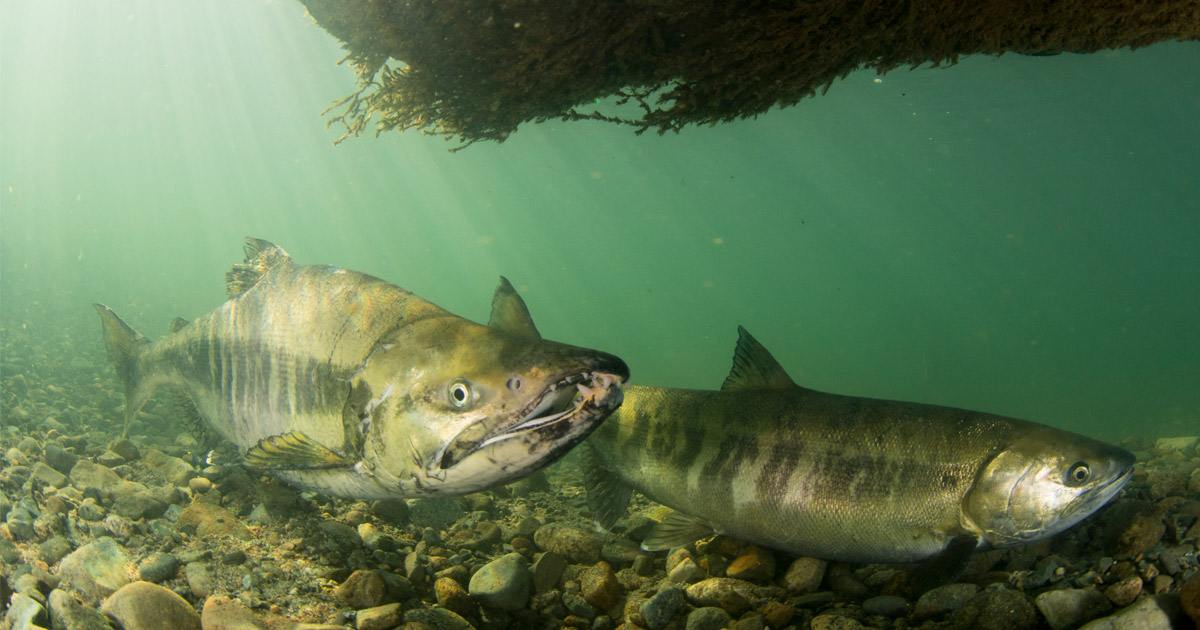
- Set salmon harvest at levels that optimize the benefits of spawning salmon to watersheds and wildlife.
- Shift away from historic management paradigms that minimize the number of spawning salmon reaching rivers and maximize harvest (called Maximum Sustainable Yield). Move towards fisheries management that meets salmon spawning targets that are ecologically based, not harvest-based.
- Shift harvest toward selective terminal fisheries (conducted in or near the rivers of origin) that respect the ‘place-based’ nature of salmon, and optimize the benefits to ecosystems, Indigenous cultures, and local communities.
2. Implement ecological-based governance
- Conservation planning and a commitment to sustainability that looks 7 generations ahead.
- A “whole-of-government” approach that implements shared solutions by Indigenous, federal, provincial, and municipal governments to achieve salmon recovery from inland watersheds and rivers, to the open ocean.
- Governance that honours Aboriginal rights and title, inherent Indigenous jurisdiction and law, and the United Nations Declaration on the Rights of Indigenous Peoples (UNDRIP) and the Declaration on the Rights of Indigenous Peoples Act (DRIPA).
- Sustainable funding strategies for watershed-scale restoration and planning.
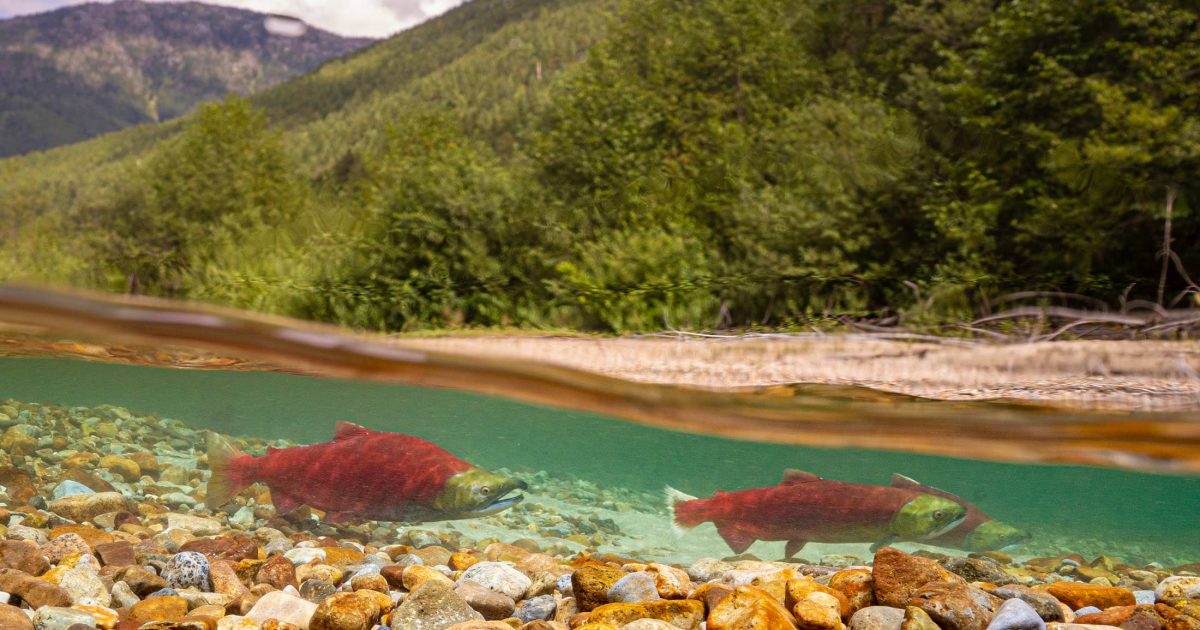
3. Advance land-use policies that prioritize the health of wild salmon and biodiversity
- Zoning that bolsters functioning watersheds and riparian habitat (i.e.protect natural features, limit impervious surfaces, reduce urban sprawl, adopt nature-based solutions).
- Forestry policy that prioritizes salmon health by restricting clear-cutting in salmon watersheds, and incentivizes a sustainable, second or third-growth forest economy.
- Climate adaptation policy that incentivizes nature-based solutions including natural shorelines, intact riparian areas, unrestricted floodplains, managed retreat, and use of rain-gardens in urban areas.
Our recent reports
Recent articles
Kids of Kvai
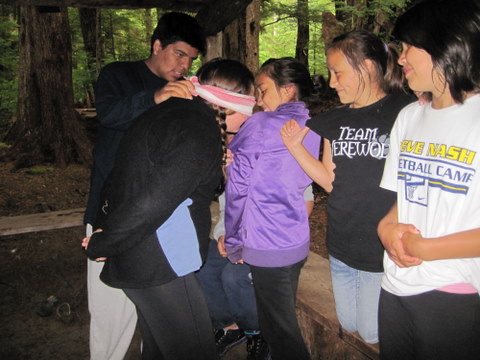
Our time at Kvai (Koeye) is coming to an end far too quickly. This morning we had another fun day of learning and games. First, we learned about provisioning theory: some of the kids (including me) pretended to be chicks in nests of different sizes, begging their parents (other kids) for food (goldfish crackers). Nests…

Magic of Koeye
I feel lucky to be at the Koeye River again where Heiltsuk youth come every year to take part in culture/science camps. Representing Raincoast, Doug, Kyle, Bryce, and I have come for a week as science resource people and also to learn from the campers and camp staff.

Would a Grizzly Bear Certify this Fishery?
Island Tides July 8, 2010 By Misty MacDuffee, Corey Peet and Chris Genovali As the Canadian federal inquiry examining the 2009 Fraser River sockeye salmon collapse in British Columbia kicks into full gear, one might be surprised to learn that at the same time, the Marine Stewardship Council wants to designate this fishery as “eco-certified.”

Stop the needless killing of British Columbia’s grizzly bears
A disturbing number of grizzlies are killed in the Bella Coola Valley on Canada’s Pacific coast because of avoidable human behaviour, but existing legislation to prevent these deaths are virtually unenforceable.

An old friend, by Doug Brown Jr.
There she is… it has been a while since I have seen her. Those long muscular legs have carried her well through the past year. She is beautiful, in good health, poised with confidence and looking quite content. It is always comforting to see a familiar face after a long time.

Momma Bear
I’m a Papa now, and in my new role I have learned a lot about just how hard Mommas work. Gestating. Lactating. Comforting. Safeguarding. Loving. (Not) sleeping. Sacrificing. Repeat. Hour by hour. Day after day. For years. Today I want to share with you a very special mother. She is the mother-of-three grizzly we wrote…