

Raincoast’s feedback on Getting Major Projects Built in Canada
The government’s proposed dismantling of a key clause has significant implications for the future of endangered species in Canada, including Southern Resident killer whales.
This week, Raincoast submitted our feedback on one of two discussion papers the Canadian federal government released in May. The discussion paper, Getting Major Projects Built in Canada, proposes significant changes to the legislation, regulations, and policies that ensure the public interest is foremost when making major decisions about large projects.
Canadian review processes evaluate the environmental, social, economic, health, and Indigenous rights implications of major projects through a science-based review that includes public participation and transparency. The changes proposed in Getting Major Projects Built in Canada would weaken these safeguards by reducing scrutiny, limiting public participation, and concentrating decision-making authority. In doing so they risk significant environmental harms, the undermining of Indigenous and even Charter rights, and a severe erosion of public trust in government’s will and ability to protect the environment.
The federal government has extended the comment period.
You can give feedback until July 22, 2026 to engagement@pco-bcp.gc.ca and to Prime Minister Carney PM@pm.gc.ca
Raincoast’s submission
Raincoast Conservation Foundation appreciates the opportunity to provide comments on the discussion paper Getting Major Projects Built in Canada. This submission addresses the proposal to exempt certain proposed projects from the requirements of section 73(3)(c) of the Species at Risk Act (SARA).
Raincoast opposes this proposal to weaken or override the jeopardy provision of SARA. Section 73(3)(c) is a foundational safeguard that prohibits the approval of activities likely to jeopardize the survival or recovery of endangered species. This provision ensures that economic development proceeds within ecological limits and prevents individual projects from pushing species to extinction.
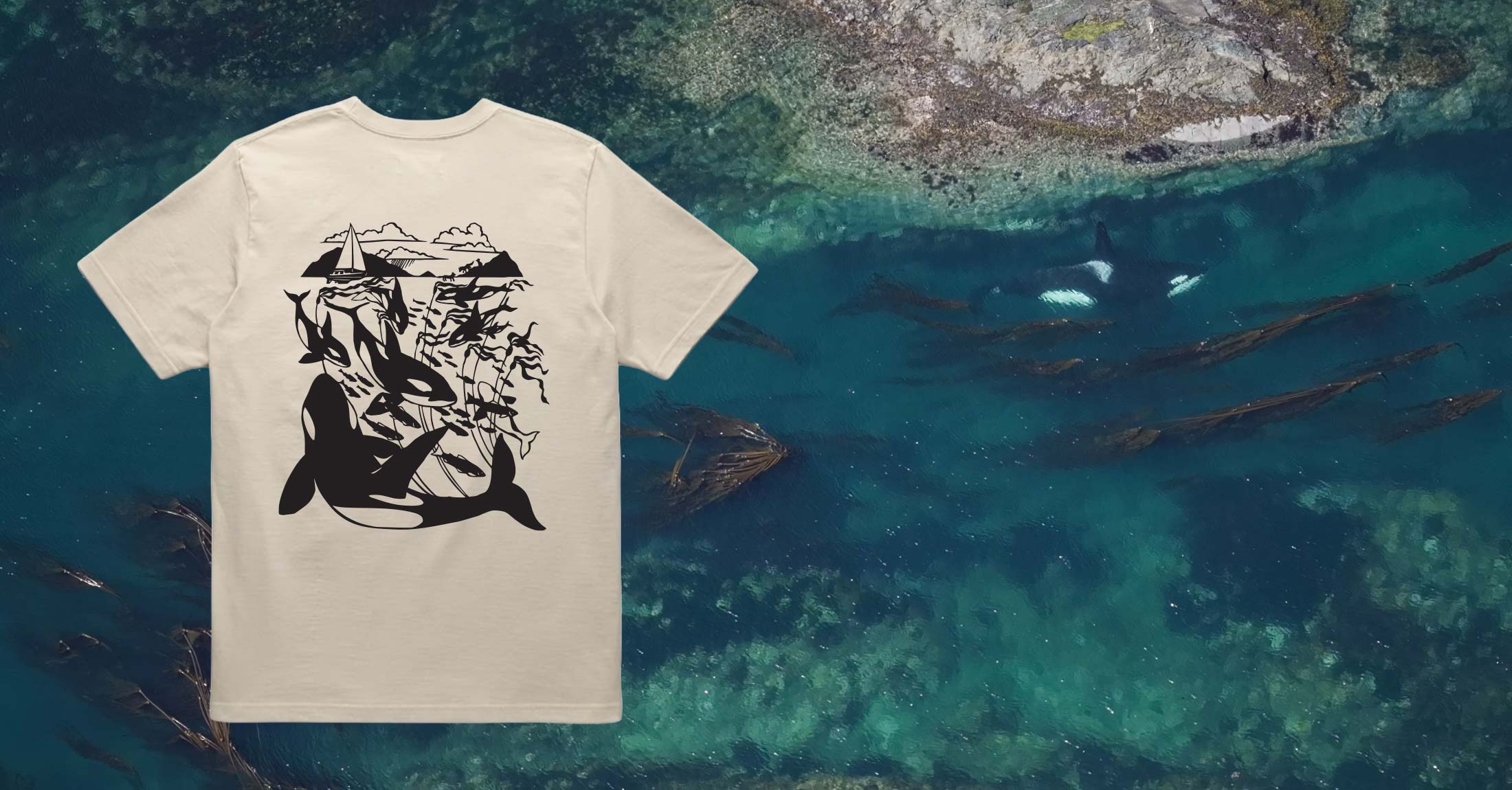
Implications for Southern Resident killer whales
The need for this safeguard is particularly evident in the case of the Southern Resident killer whale (SRKW), one of Canada’s most endangered – and iconic – wildlife populations. Fewer than 75 individuals remain. Federal assessments have repeatedly concluded that threats from underwater noise, contaminants and inadequate prey remain significant constraints on their recovery.
The federal government’s 2024 Imminent Threat Assessment concluded that, unless threats are effectively mitigated, the survival and recovery of SRKWs may become unlikely or impossible. At the same time, several proposed industrial developments in the whales’ Critical Habitat have the potential to increase underwater noise, further impairing the whales’ ability to locate and capture prey. These cumulative effects are precisely the type of impacts that section 73(3)(c) was designed to address.
Section 73 doesn’t block development. It requires proponents to develop and commit to mitigation measures that ensure their projects will not contribute to the extirpation of endangered species or prevent their recovery. At present, these measures are subject to a review process that often refines and improves them. The incentive of proponents to develop smart, comprehensive, and effective mitigation plans will be reduced if they know that Cabinet can override these SARA provisions in the pursuit of expedited project approvals. In the case of SRKWs, the consequences could be dire.
Implications for Canadian wildlife
Canada’s Species at Risk Act was enacted to prevent endangered wildlife from slipping into extinction. The jeopardy provision is one of the Act’s most important safeguards. Weakening this provision would undermine both the purpose of SARA and Canada’s commitment to species recovery. Weakening the jeopardy provision would not eliminate these biological constraints; it would simply remove a key legal mechanism for ensuring they are considered in decision-making. The result would be increased risk to endangered species and reduced confidence that recovery objectives established under SARA can be achieved.
Expansion should not mean extinction
We are not opposed to efforts to strengthen Canada’s economy, sovereignty, or transportation and infrastructure. However, economic development should not require setting aside the legal safeguards that protect Canada’s most vulnerable wildlife. Framing economic expansion and species survival as an inevitable tradeoff does not reflect Canadian values, nor does it reflect the evidence.
This discussion is about more than a single project or a single species. It is about what kind of country Canada wants to be. Canadians take pride in our natural heritage, in the wildlife that shares our coasts and forests, and in the local economies that depend on healthy ecosystems. Long-term prosperity depends on healthy ecosystems, public trust in decision-making, and regulatory systems that provide certainty, transparency, and accountability.
Removal of the ‘Jeopardy Test’ may be counterproductive
We are also concerned that exempting projects from the jeopardy test could prove counterproductive. Reducing environmental safeguards and limiting established review processes may lower public confidence, increase conflict, and increase legal uncertainty, ultimately delaying rather than accelerating project developments.
Durable decisions require public confidence that environmental laws are being applied consistently and that endangered species are receiving the protections Parliament intended and Canadians expect.
Becoming more American, rather than strengthening our distinction
The proposal is strikingly similar to efforts in the United States to weaken the Endangered Species Act when protected species stand in the way of industrial development. President Donald Trump has repeatedly sought to reduce the influence of endangered species protections on federal decision-making. Canada is now considering a comparable path. The proposed amendment would establish a Cabinet-level authority to sanction projects that scientists have determined jeopardize the survival or recovery of listed species.
In effect, it would establish the Canadian equivalent of what is termed the “God Squad” in the U.S., a body empowered to override species protection in the name of the public interest. That mechanism is currently being used in the Gulf of Mexico to exempt U.S. oil and gas development from endangered species requirements. Rather than distancing ourselves from that approach, Canada appears to be proposing to replicate it.
What Canadians are ‘for’
While in British Columbia, Prime Minister Carney recently stated the federal government didn’t want to hear what people are against, but wanted to ‘hear what people are for.’ We are happy to respond to his request.
We are for a Southern Resident killer whale population that recovers, not one managed toward extinction at Cabinet’s discretion. We are for the quiet, pollution-free, salmon-rich waters these whales depend on to find food and raise their young. We are for the salmon runs that sustain them, and provide food security to Indigenous communities and to British Columbians. We are for a region whose ecosystem health supports tourism and fisheries as major – and sustainable – economic drivers in coastal communities. We are for environmental laws that mean what they say, whose protection does not evaporate when a project triggers a political override. We are for a Canada that does not have to choose between a strong economy and healthy ecosystems. And we stand with millions of Canadians for whom these whales are not an obstacle to prosperity, but a measure of it.
We urge the Government of Canada to retain section 73(3)(c) in its current form and continue pursuing economic development in a manner consistent with species recovery, ecological sustainability, and the rule of law.