Junior researchers in the temperate rainforest
Investigating how forests and wildlife work together.
Have you ever wondered what it’s like to be a forest conservation scientist? For a small group of keen youth and their families, spring break kicked off with learning and exploring in Lynn Canyon to answer this question.
On a day that reminded us all that we live in a temperate RAIN-forest, I had the honour of leading the opening workshop for the 40th year of Wildlife Weeks at the Lynn Canyon Ecology Centre! In this workshop, we dove into the world of plants and animals in the temperate rainforest through the perspective of a forest conservation scientist.

Birds, bears, and beetles: Wildlife comes in all shapes and sizes
We started the workshop by first exploring a fundamental question – what is wildlife? After looking at examples of birds, mammals, insects, and house pets, the group of junior researchers decided that wildlife are animals that live in and find food in nature. So, while your pet dog is an animal, it is not wildlife! Often overlooked, it was a good reminder that insects and other groups of invertebrates are a part of the Animal Kingdom, and therefore, are also important forms of wildlife.


We then worked together as a group to think in more detail about where wildlife lives in nature. Looking at examples of an urban landscape, a tropical rainforest, a coral reef, and an old-growth tree, we decided that where there is nature, there is an opportunity for wildlife to find habitat.
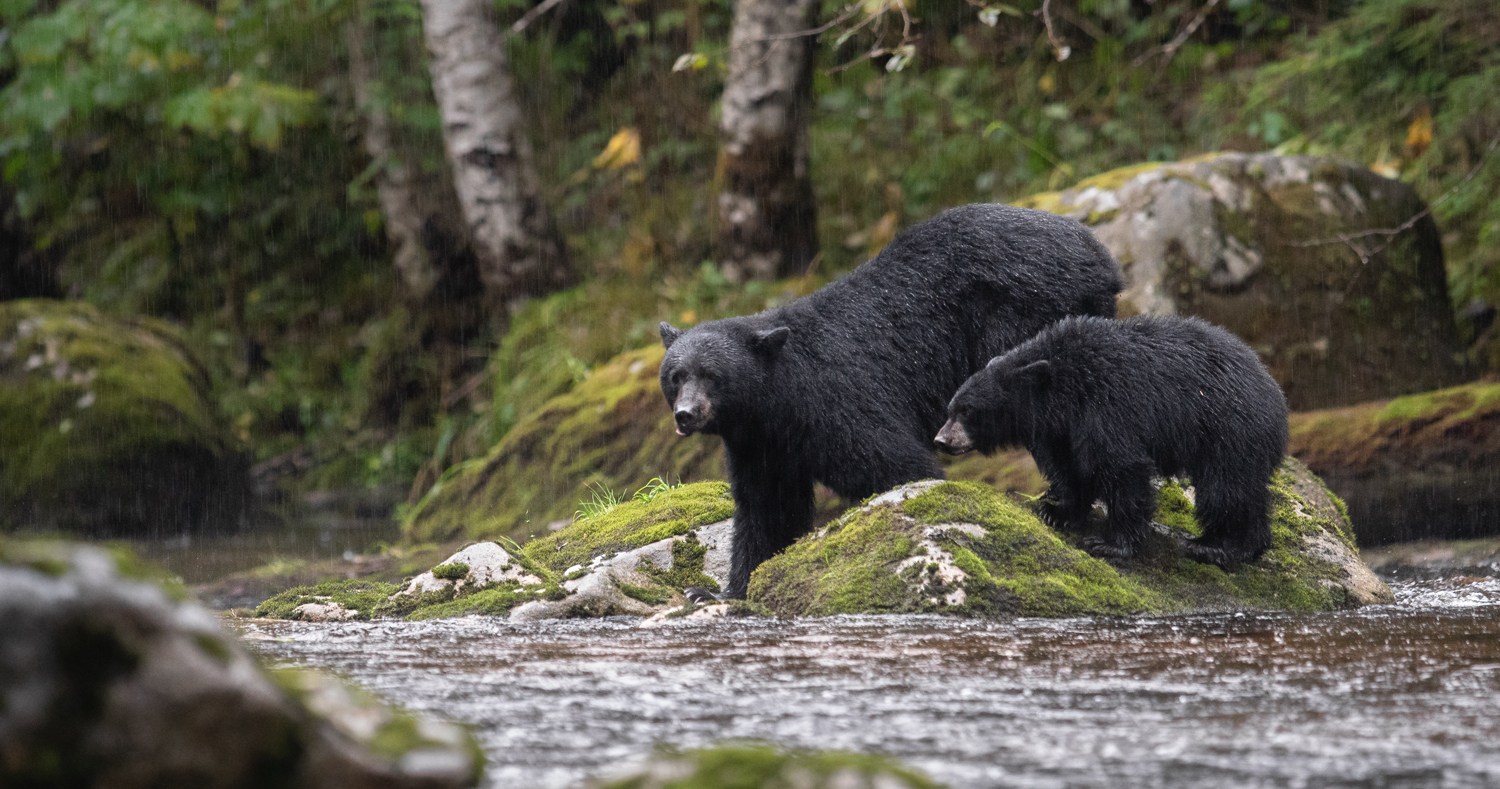
The urban landscape example prompted interesting discussion – while we know that black bears don’t live in apartment buildings with us, there are still often trees, grasses, streams, and other natural features outdoors in urban areas where different types of wildlife can find habitat. We talked about how, as humans, we are neighbours with nature and that it’s important for us to defend wildlife so they have a good, safe place to live. Otherwise, we might have to invite black bears to be our roommates!
In the same way that wildlife comes in all shapes and sizes, we discussed how wildlife habitat is diverse and also all around us. Habitat can be as large as a whole forest, or as small as an individual tree. Similar to how we are nature’s neighbours, different types of wildlife are also neighbours, living together and sharing habitats from land to sea.

With a better understanding of what wildlife is and where it lives, we then worked together to think about what wildlife eats in nature. From berries to plants to fungi, and even to other wildlife, we explored different branches of the food web 1in wildlife habitats. We also looked at a photo of garbage piled in a forest and talked about how this is harmful for wildlife habitat, and that human food sources are not safe for wildlife.


Bringing all of our discussions together, we then looked at an example of a forest food web to learn about trophic cascades.2 Following the food web, we could visualize how ecological processes connect forests and wildlife through energy transfer. We identified that a strong, healthy food web is biodiverse3, and to maintain biodiversity, all living things need to work together.
Wildlife can shape the forest
We then explored two examples of how wildlife can actually change the forest – sometimes in a good way, and sometimes in a challenging way.
Beavers, aka nature’s ecosystem engineers, play an important role in shaping riparian forest landscapes and watersheds. Using their incredibly tough front teeth, they fell trees and gather woody materials from riparian forest ecosystems to build their dams. When beavers cut down trees, they create canopy gaps, which help with forest regeneration and natural succession processes.
Beaver dams hold water in the landscape, which creates habitat for other plants and animals, as well as supporting wildlife food sources. Beaver-managed wetlands are also important for creating landscape-scale ecological mosaics that can help prevent forest wildfires, thereby reducing negative impacts, such as habitat loss, on wildlife in forests.
Conversely, overabundant deer populations in coastal forests are an example of how wildlife can cause challenges in forest ecosystems. With the removal of apex predators and the introduction of non-native deer species in coastal forest ecosystems, populations of native black-tailed and introduced fallow deer have become much larger than what these ecosystems can handle.
As a result, understory shrubs, herbaceous plants, and tree seedlings are browsed so heavily by the deer that forest floors and mid-level plant layers become barren. The decline, and sometimes complete removal, of these understory species impacts habitat and resource availability for nesting birds, flowers for pollinators, and overall creates challenging conditions for wildlife that rely on these biodiverse coastal forest ecosystems.45


Looking at these two contrasting examples helped the group better understand trophic cascades in forest ecosystems. A key takeaway that these examples highlighted was that everything in the forest is connected, i.e., the essence of forest ecology.
Forest processes support wildlife
Keeping in mind what we had just discussed, we dove deeper into forest ecology and specifically, we explored how natural ecological processes in the forest actually support wildlife.
When a tree falls over in the forest, and its base overturns, exposing a web of roots and soil, this area opened up beneath the roots can create a new habitat for wildlife. In this new area, water can pool and become a drinking source or habitat for small mammals, amphibians, and invertebrates.
As trees fall over or are cut down, logs and stumps remain on the forest floor and begin to break down, often with the help of fungi and insects that are specially adapted to be a part of tree decay processes. As these natural materials break down, all of the stored carbon and nutrients are cycled back into the forest floor, helping form soils where understory plants and tall trees can grow – plants that will feed herbivores and trees that will provide nesting structure. Even though these trees are not alive anymore, they are still feeding the forest and are part of the natural processes that support wildlife.
Sometimes trees will die and decay, but they will stay standing. These types of trees are known as ‘snags’, or more often, ‘wildlife trees’, because they provide important habitat for woodpeckers, insects, and cavity-nesting birds. As decay fungi and insects break down the stem tissues, the wood becomes softer and easier for woodpeckers to create cavities, where they forage for insects. Small cavity nesting bird species, as well as woodpeckers, make use of these holes in the wildlife trees to find shelter and forage on insects throughout the seasons.
Decaying tree stems with hollowed-out cores at the base also provide important habitat for hibernating bears to build their dens. Often, larger and older trees are necessary to create this habitat, further emphasizing the importance of maintaining diverse forest landscapes.
While these are just a few key examples, we concluded that forest processes and wildlife all work together to shape the complex ecosystems we see and enjoy all around us.
Discovering wildlife habitat in the temperate rainforest
With all of this background knowledge and group discussion in hand, the keen team of junior researchers were ready to brave the rain and step into the boots of a forest scientist to make observations in Lynn Canyon.
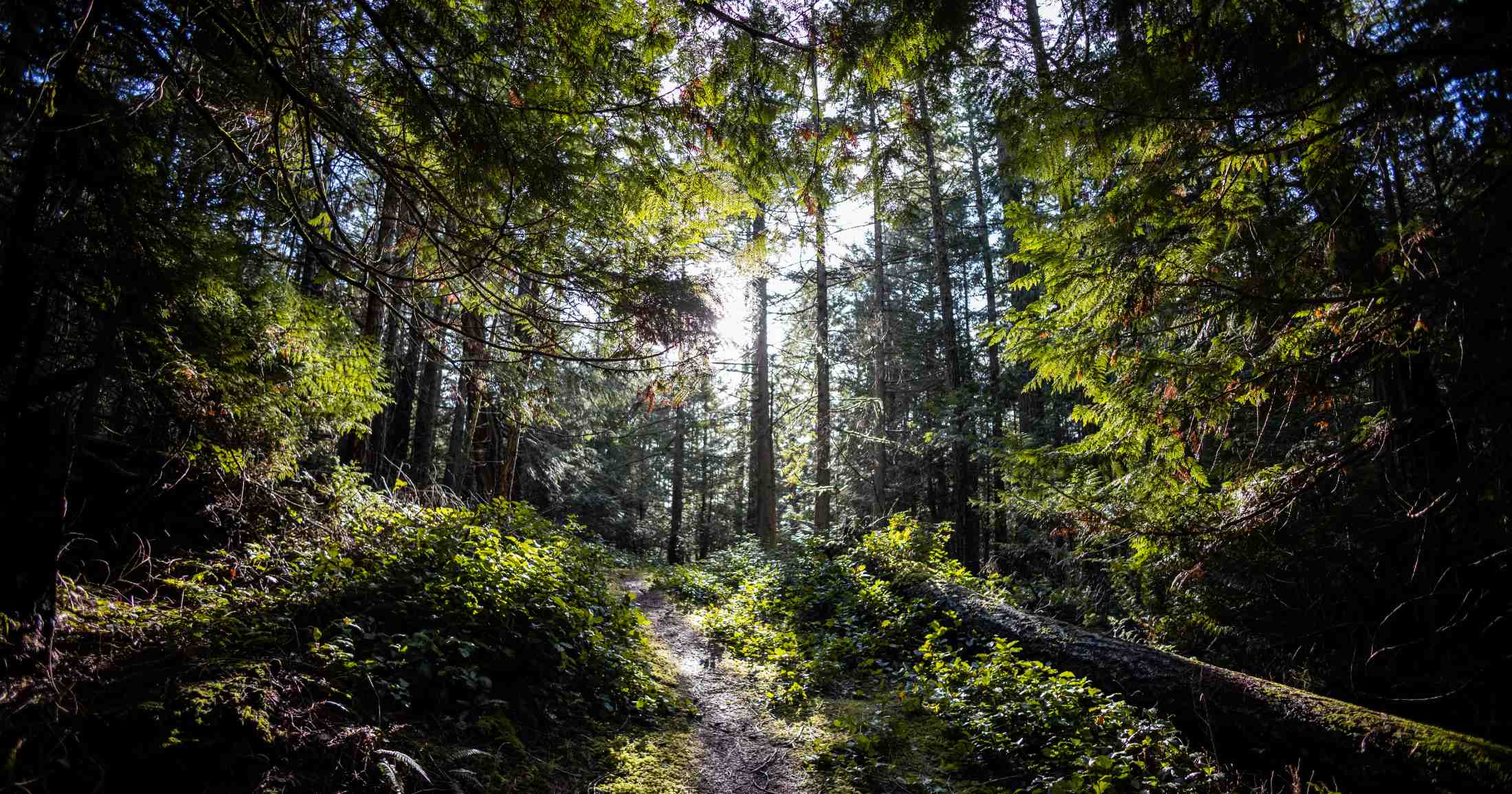
Before heading out into the forest, we asked ourselves: given what we know, what do we want to find out about forests and wildlife? Many good questions came up, and we decided to head out into the forest to discover how many different types of tree-formed wildlife habitats we could find along a trail in Lynn Canyon. Here’s what we found.


We wrapped up the workshop by sharing with each other what we learned, what we found in the forest, and the questions we still had. The junior researchers left with a worksheet to use on a (hopefully) dry day to go explore forests near where they live and find more tree-formed wildlife habitats, while also practicing their scientific observation skills.
Thank you to the keen youth and their adults who came to the workshop and to the Lynn Canyon Ecology Centre for collaborating on this event. It was an inspiring morning full of wonder and learning that was a small part of shaping future forest scientists.
Notes and references
- Hui, D. 2012. Food Web: Concept and Applications. Nature Education Knowledge 3(12):6.
- Silliman, B. R. & Angelini, C. 2012. Trophic Cascades Across Diverse Plant Ecosystems. Nature Education Knowledge 3(10):44.
- Biological diversity (biodiversity): the variability among living organisms from all sources including, terrestrial, marine and other aquatic ecosystems and the ecological complexes of which they are part; this includes diversity within species, between species and of ecosystems.
- Arcese, P and Martin, T. 2017. Black-tailed deer, plant and bird populations in the Southern Gulf Islands and Coastal Douglas-fir Zone: a primer for local communities interested in environmental stewardship. In Klinkenberg, Brian. (Editor) 2017. Biodiversity of British Columbia [www.biodiversity.bc.ca]. Lab for Advanced Spatial Analysis, Department of Geography, University of British Columbia, Vancouver.
- Beckett, K, Elle, E, Kremen, C, Sherwood, A, McComb, S, Martin, T.G. 2022. Hyperabundant black-tailed deer impact endangered Garry oak ecosystem floral and bumblebee communities. Global Ecology and Conservation. DOI: https://doi.org/10.1016/j.gecco.2022.e02237.