Habitat restoration and salmon research
Restoring vital habitat for salmon in the Fraser River estuary.
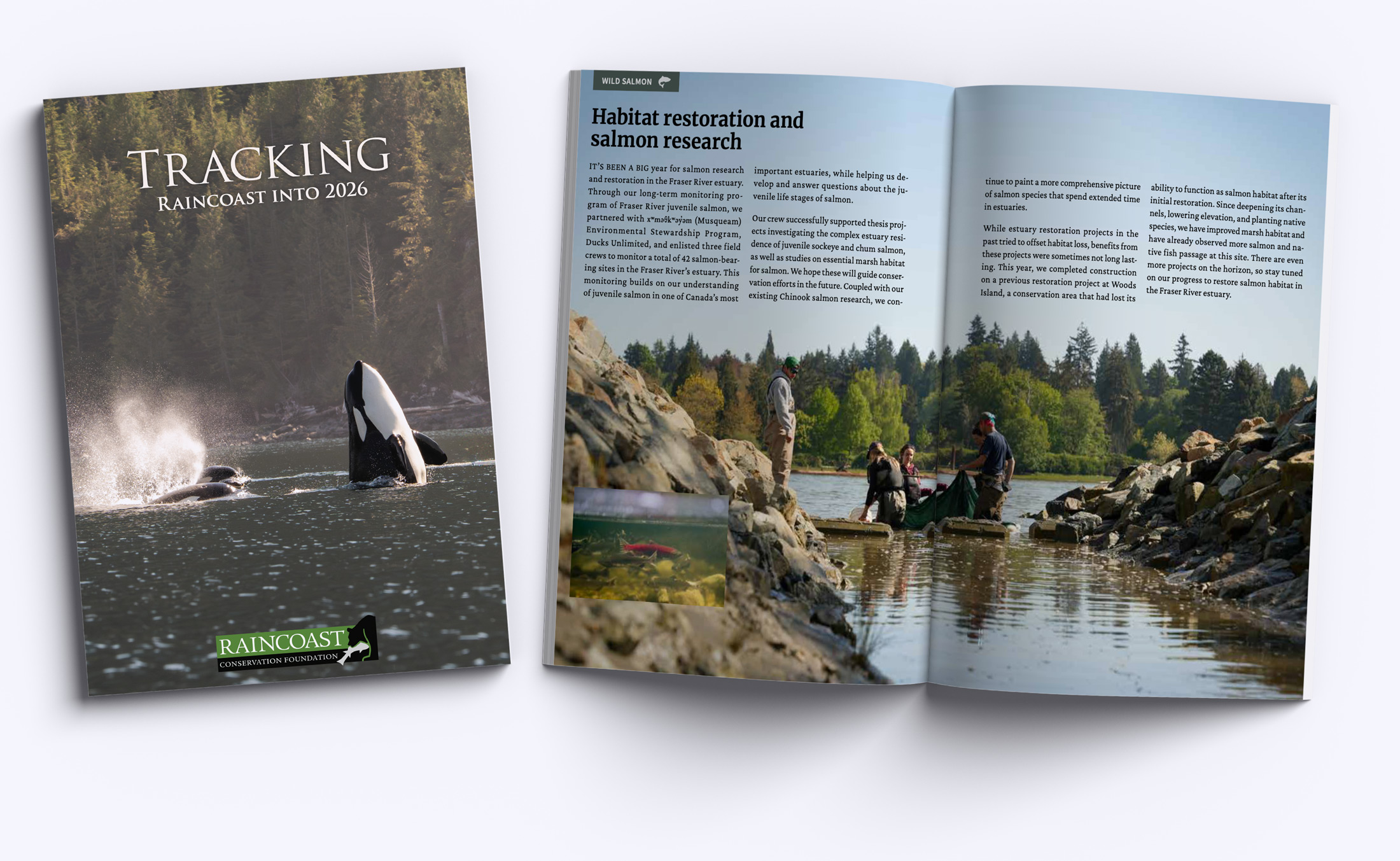
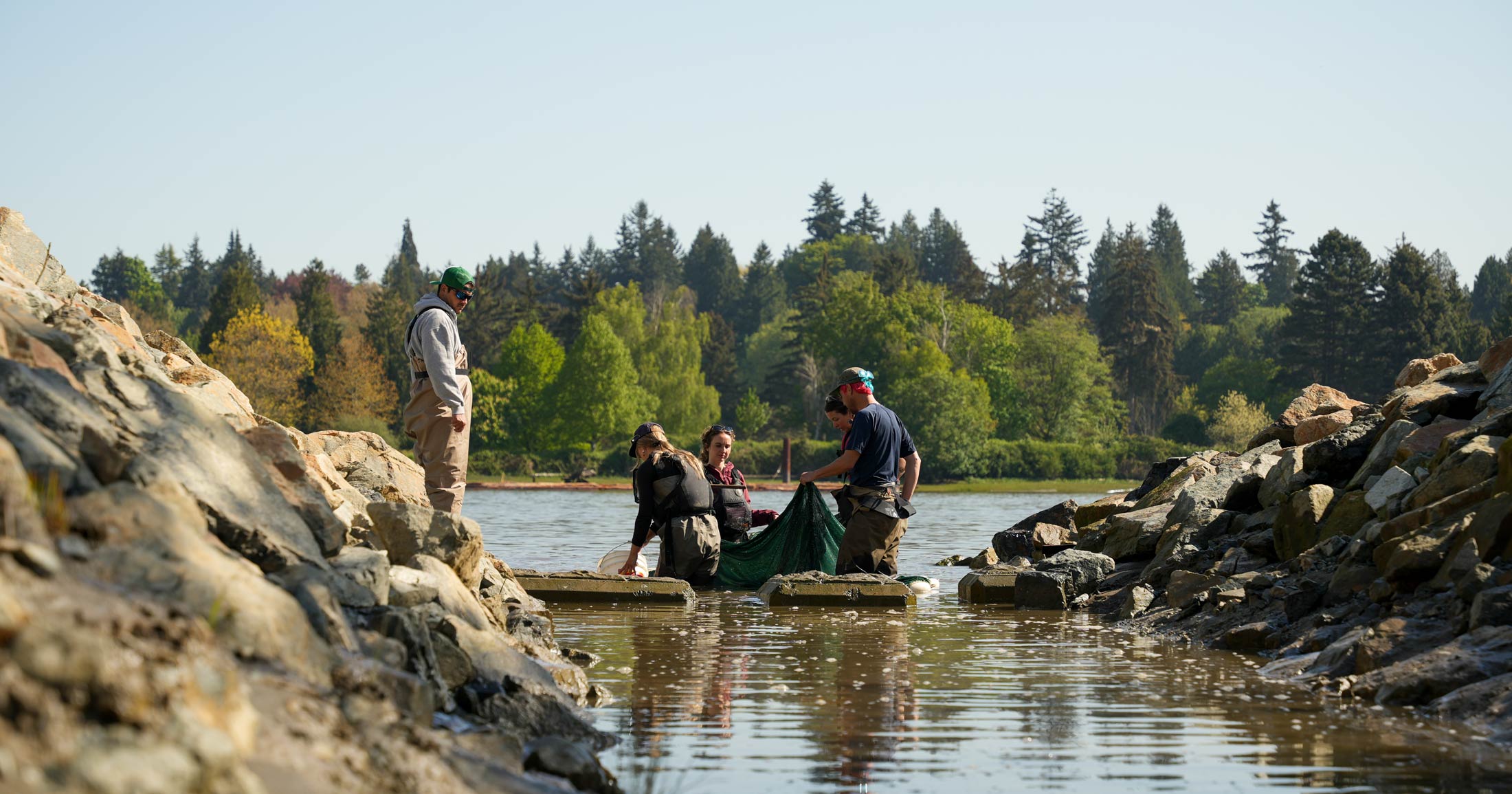
It’s been a big year for salmon research and restoration in the Fraser River estuary. Through our long-term monitoring program of Fraser River juvenile salmon, we partnered with xʷməθkʷəy̓əm (Musqueam) Environmental Stewardship Program, Ducks Unlimited, and enlisted three field crews to monitor a total of 42 salmon-bearing sites in the Fraser River’s estuary. This monitoring builds on our understanding of juvenile salmon in one of Canada’s most important estuaries, while helping us develop and answer questions about the juvenile life stages of salmon.
Our crew successfully supported thesis projects investigating the complex estuary residence of juvenile sockeye and chum salmon, as well as studies on essential marsh habitat for salmon. We hope these will guide conservation efforts in the future. Coupled with our existing Chinook salmon research, we continue to paint a more comprehensive picture of salmon species that spend extended time in estuaries.
While estuary restoration projects in the past tried to offset habitat loss, benefits from these projects were sometimes not long lasting. This year, we completed construction on a previous restoration project at Woods Island, a conservation area that had lost its ability to function as salmon habitat after its initial restoration. Since deepening its channels, lowering elevation, and planting native species, we have improved marsh habitat and have already observed more salmon and native fish passage at this site. There are even more projects on the horizon, so stay tuned on our progress to restore salmon habitat in the Fraser River estuary.
This is an excerpt from our annual report, Tracking Raincoast into 2026.