
Shifting salmon policy
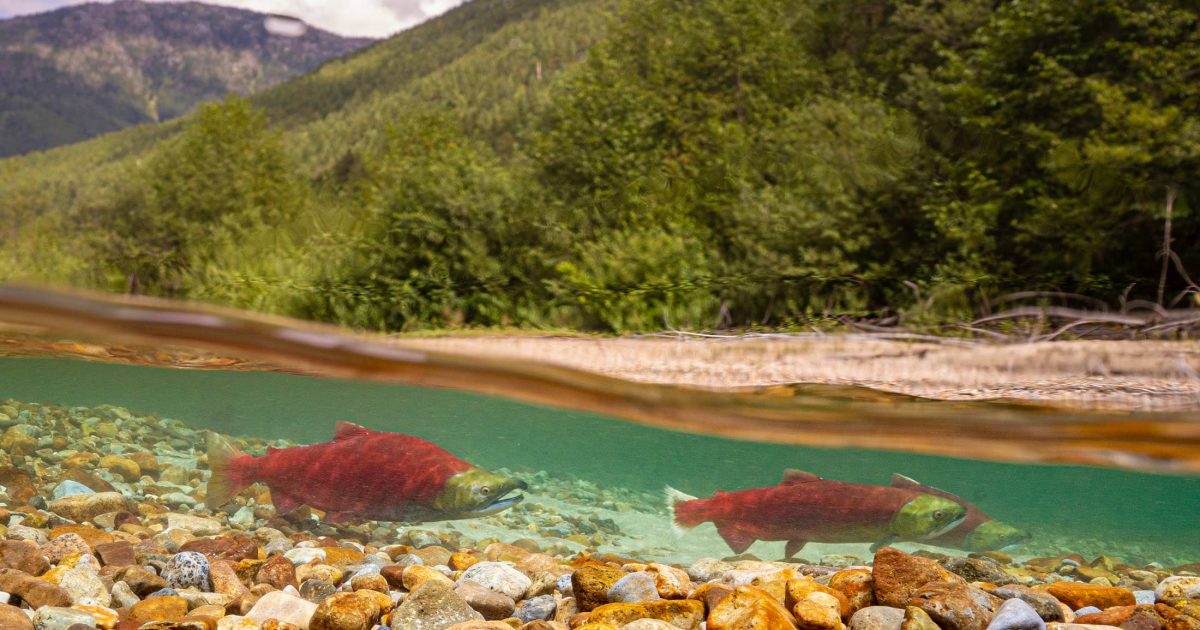
Photo by Alex Harris.
Ecosystems are complex. They are communities of living organisms connected through interacting processes and features on the land, in water, and between the two. Yet BC’s antiquated environmental policy doesn’t reflect this. Colonial society governs ecosystems by siloing them into distinct ministries and resources instead of reflecting the interconnected nature of habitats that make them function in the living world. This “siloed decision making”is the root cause of many of the ecological challenges we face today.
Our policy goals
1. Manage fisheries for ecosystems
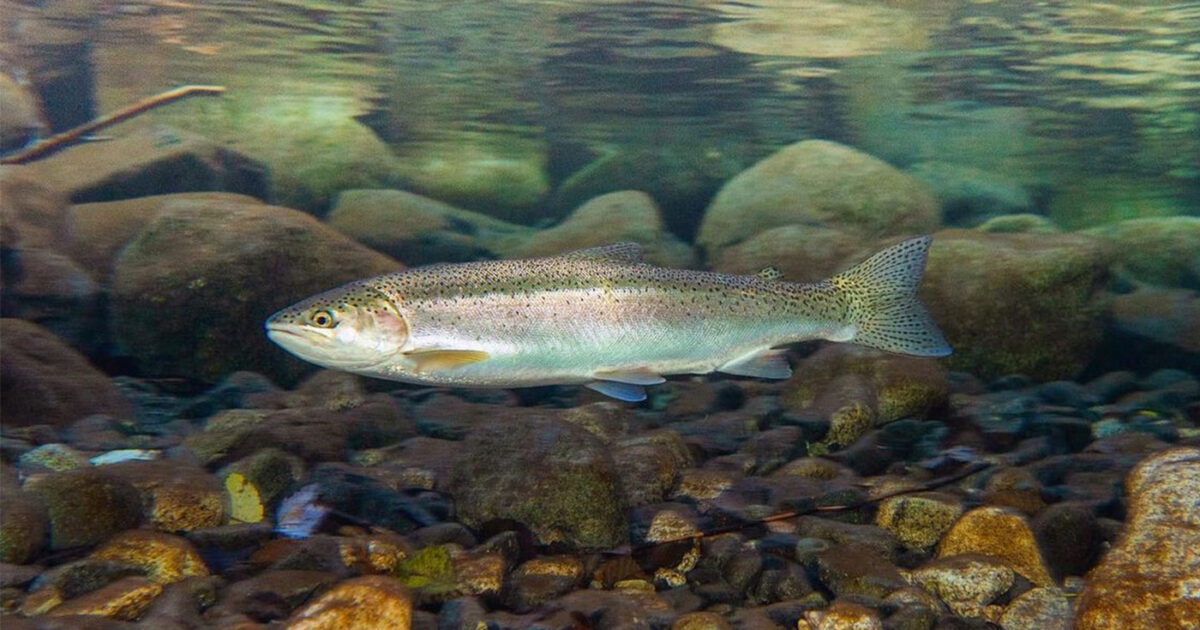
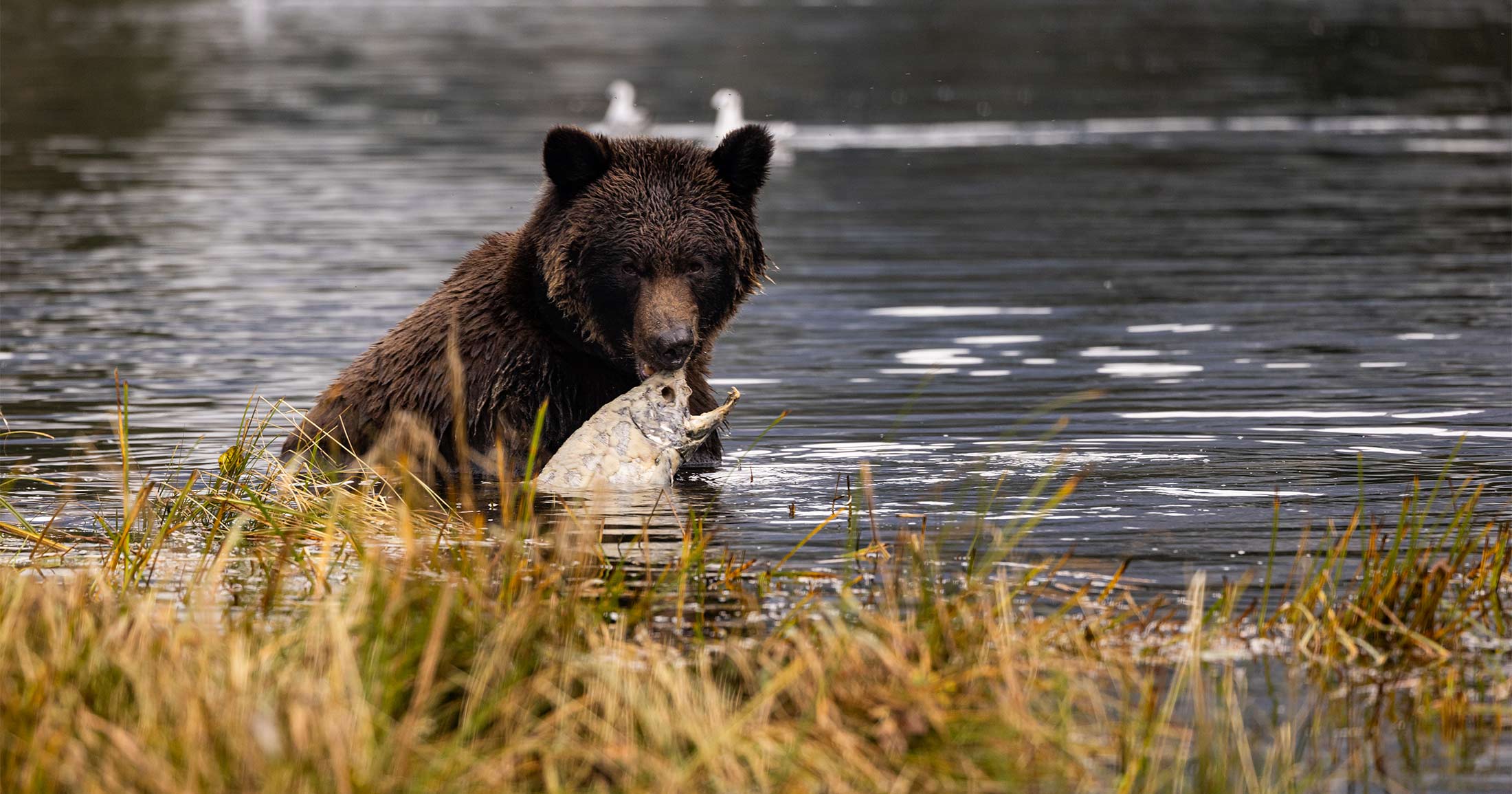
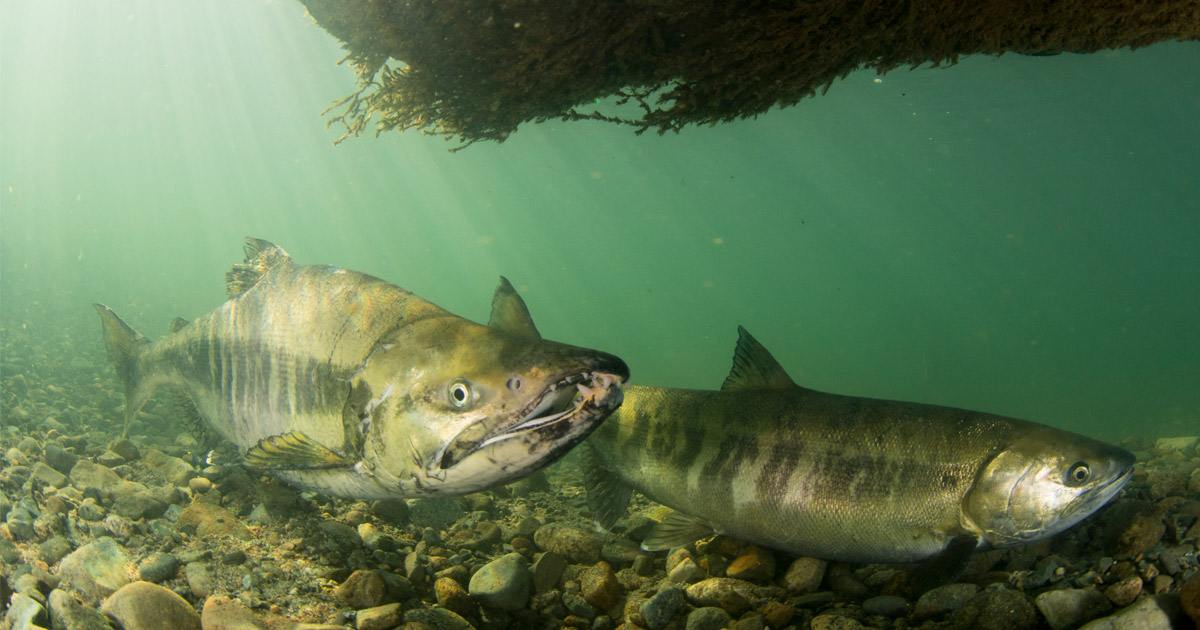
- Set salmon harvest at levels that optimize the benefits of spawning salmon to watersheds and wildlife.
- Shift away from historic management paradigms that minimize the number of spawning salmon reaching rivers and maximize harvest (called Maximum Sustainable Yield). Move towards fisheries management that meets salmon spawning targets that are ecologically based, not harvest-based.
- Shift harvest toward selective terminal fisheries (conducted in or near the rivers of origin) that respect the ‘place-based’ nature of salmon, and optimize the benefits to ecosystems, Indigenous cultures, and local communities.
2. Implement ecological-based governance
- Conservation planning and a commitment to sustainability that looks 7 generations ahead.
- A “whole-of-government” approach that implements shared solutions by Indigenous, federal, provincial, and municipal governments to achieve salmon recovery from inland watersheds and rivers, to the open ocean.
- Governance that honours Aboriginal rights and title, inherent Indigenous jurisdiction and law, and the United Nations Declaration on the Rights of Indigenous Peoples (UNDRIP) and the Declaration on the Rights of Indigenous Peoples Act (DRIPA).
- Sustainable funding strategies for watershed-scale restoration and planning.
3. Advance land-use policies that prioritize the health of wild salmon and biodiversity
- Zoning that bolsters functioning watersheds and riparian habitat (i.e.protect natural features, limit impervious surfaces, reduce urban sprawl, adopt nature-based solutions).
- Forestry policy that prioritizes salmon health by restricting clear-cutting in salmon watersheds, and incentivizes a sustainable, second or third-growth forest economy.
- Climate adaptation policy that incentivizes nature-based solutions including natural shorelines, intact riparian areas, unrestricted floodplains, managed retreat, and use of rain-gardens in urban areas.
Our recent reports
Recent articles
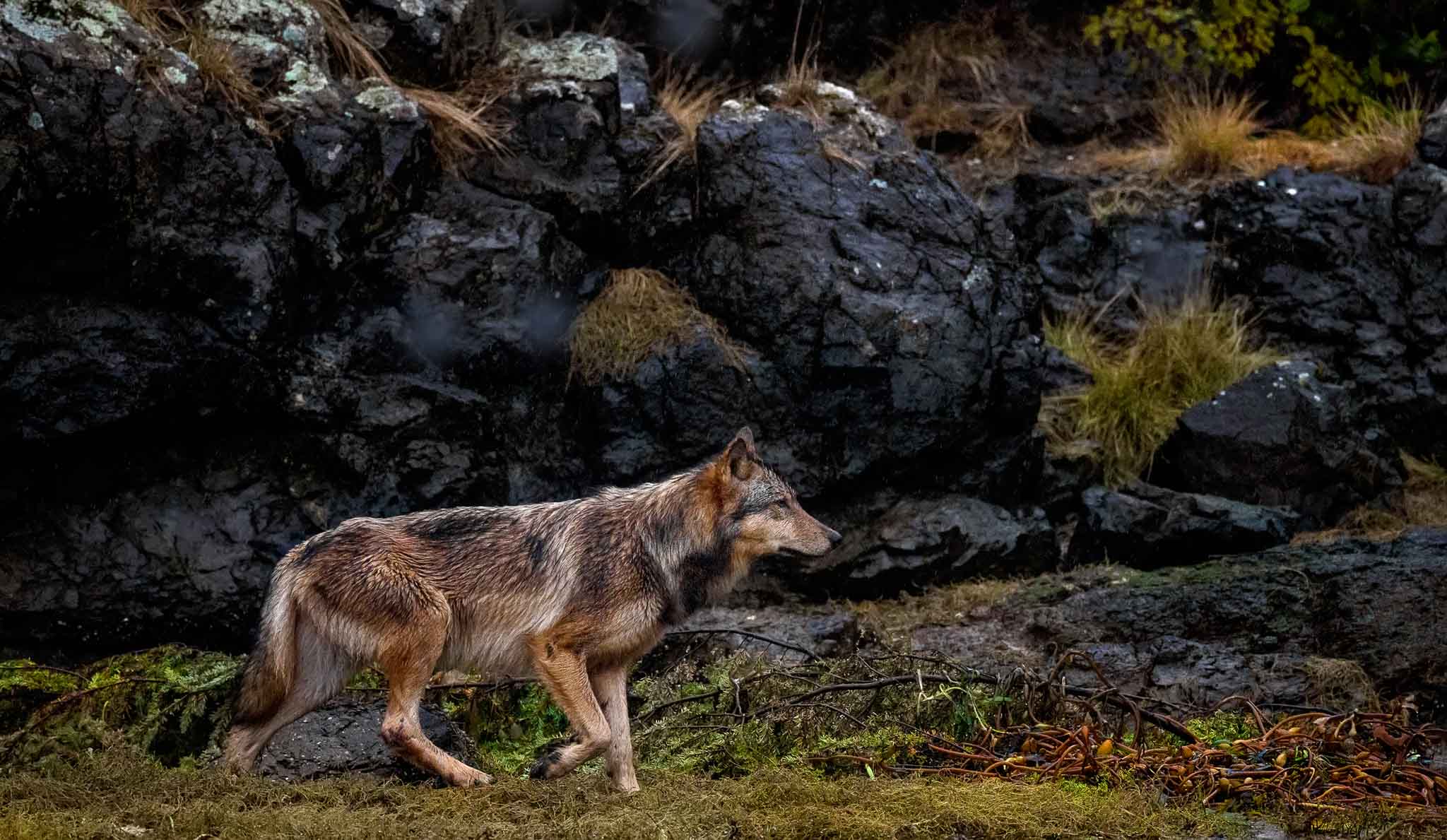
British Columbia’s Rainforest Wolves
Fall was in the air and Raincoast’s wolf project was conducting a ten day expedition on our research vessel Achiever to collect genetic samples from areas on B.C.’s north coast in the vast area known as the ‘Great Bear Rainforest.’ Arriving after sunset, we anchored in a system known to us to be a wolf…

The bear essentials of saving salmon
Fully protected safe havens would have positive effect on ecosystems By Chris Darimont and Misty MacDuffee Times Colonist The headlines blare across local, regional, and national media: Nine million Fraser River sockeye salmon missing. At the same time, questions have arisen concerning the status of other Pacific salmon runs

Cross-breeding in Vancouver Island wolves
Raincoast’s Chris Darimont speaks to CFAX. Adam Sterling of CFAX Radio interviews Raincoast’s Dr. Chris Darimont on coastal wolves and the affect that human interference has had on their breeding behaviours on Vancouver Island. Find the audio source file here (MP3).
Salmon for Bears
How do salmon declines affect coastal bears? And how much salmon biomass is required to sustain terrestrial species? These are questions many people are asking in light of the increasing number of salmon runs that fail to return as expected to fall spawning streams.
Cross-bred animals found on Vancouver Island ‘aren’t fit as pets or wild creatures’
By Nicholas Read, Special to the Vancouver Sun A1 September 29, 2009 Scientists working on Vancouver Island have determined for the first time that when you try to eliminate a population of wolves from an area, you run the risk of repopulating that area with what one biologist called “monster wolves.”
Conservation groups send letter to Minister
Multiple conservation groups concerned about grizzly bears on the BC central coast have sent a letter to Environment Minister Barry Penner requesting a cancellation of the fall grizzly hunt. Anecdotal accounts of very low bear numbers on fall streams warrants an immediate cautionary response by the government. Since no population assessment or annual monitoring is…