

Shifting salmon policy
Photo by Alex Harris.
Ecosystems are complex. They are communities of living organisms connected through interacting processes and features on the land, in water, and between the two. Yet BC’s antiquated environmental policy doesn’t reflect this. Colonial society governs ecosystems by siloing them into distinct ministries and resources instead of reflecting the interconnected nature of habitats that make them function in the living world. This “siloed decision making”is the root cause of many of the ecological challenges we face today.
Our policy goals
1. Manage fisheries for ecosystems
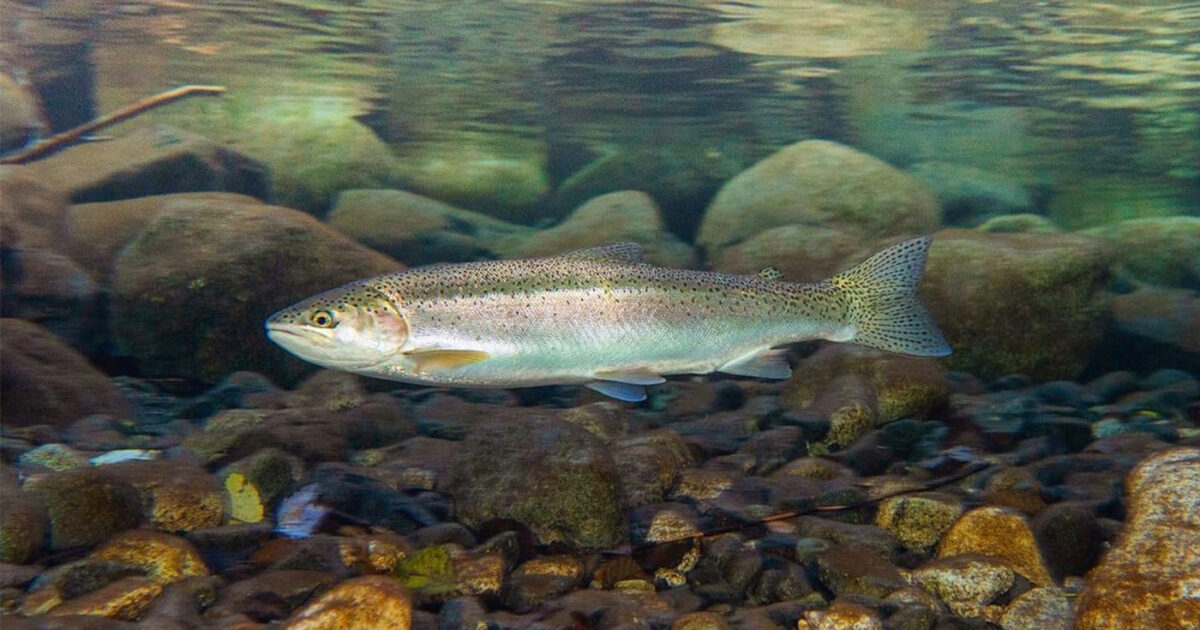
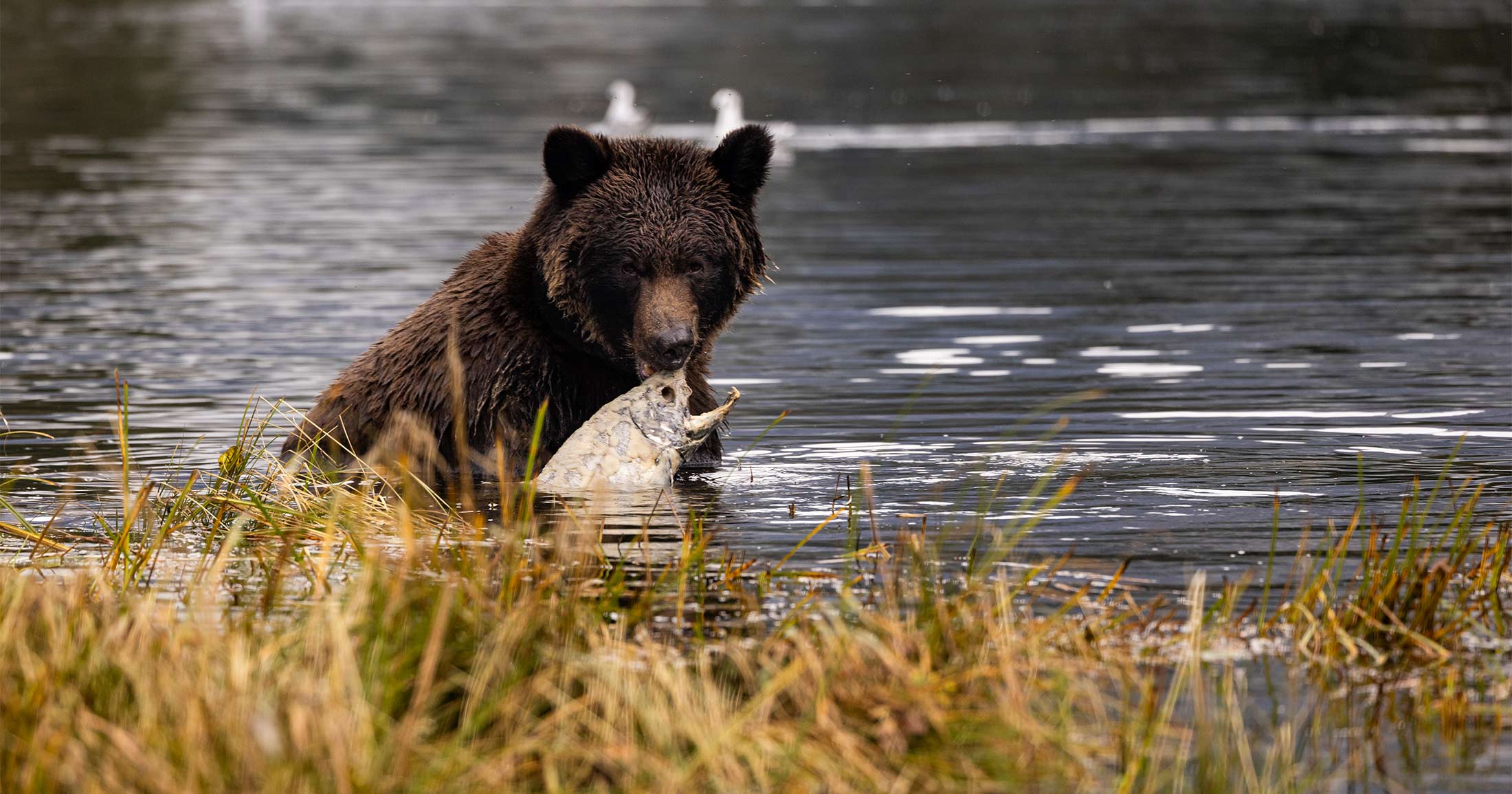
- Set salmon harvest at levels that optimize the benefits of spawning salmon to watersheds and wildlife.
- Shift away from historic management paradigms that minimize the number of spawning salmon reaching rivers and maximize harvest (called Maximum Sustainable Yield). Move towards fisheries management that meets salmon spawning targets that are ecologically based, not harvest-based.
- Shift harvest toward selective terminal fisheries (conducted in or near the rivers of origin) that respect the ‘place-based’ nature of salmon, and optimize the benefits to ecosystems, Indigenous cultures, and local communities.
2. Implement ecological-based governance
- Conservation planning and a commitment to sustainability that looks 7 generations ahead.
- A “whole-of-government” approach that implements shared solutions by Indigenous, federal, provincial, and municipal governments to achieve salmon recovery from inland watersheds and rivers, to the open ocean.
- Governance that honours Aboriginal rights and title, inherent Indigenous jurisdiction and law, and the United Nations Declaration on the Rights of Indigenous Peoples (UNDRIP) and the Declaration on the Rights of Indigenous Peoples Act (DRIPA).
- Sustainable funding strategies for watershed-scale restoration and planning.
3. Advance land-use policies that prioritize the health of wild salmon and biodiversity
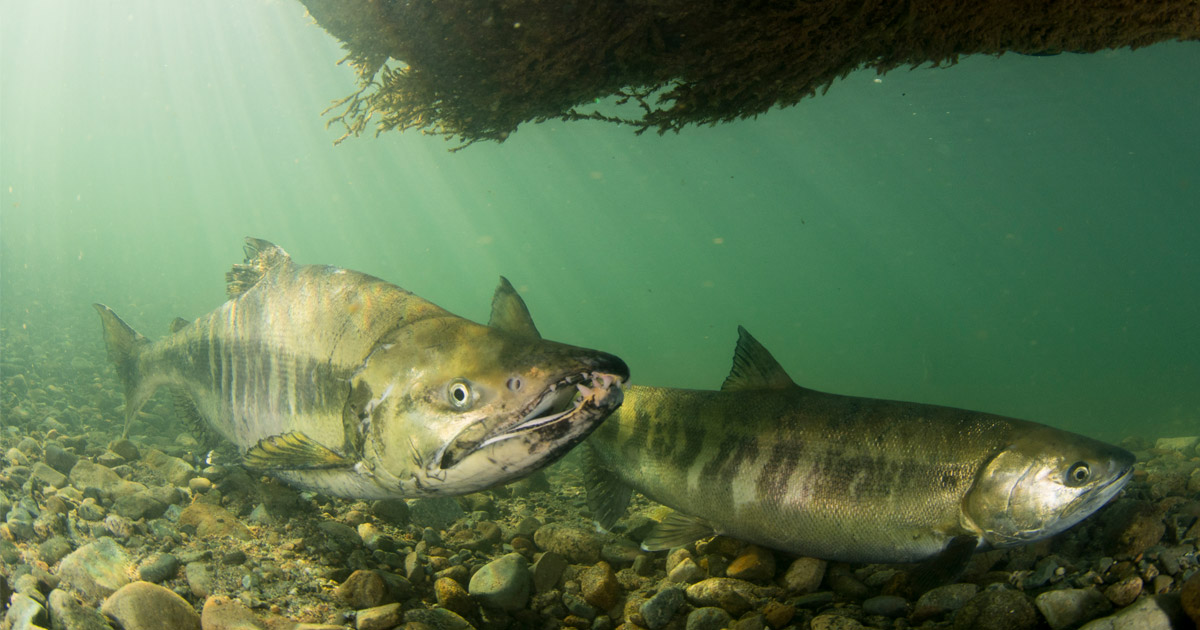
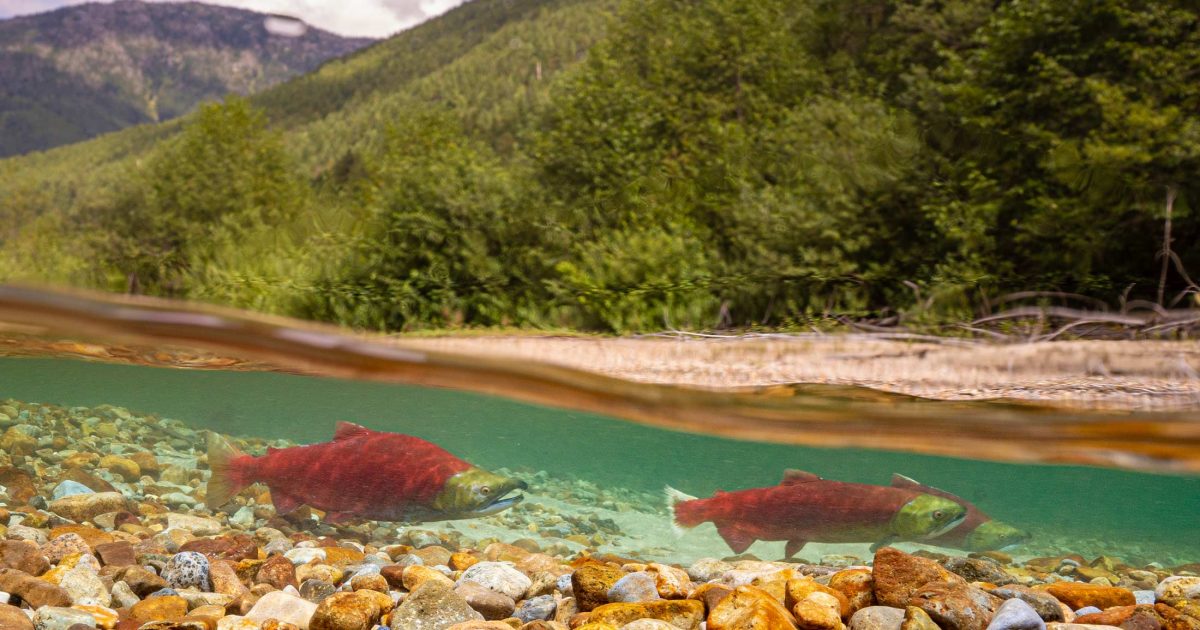
- Zoning that bolsters functioning watersheds and riparian habitat (i.e.protect natural features, limit impervious surfaces, reduce urban sprawl, adopt nature-based solutions).
- Forestry policy that prioritizes salmon health by restricting clear-cutting in salmon watersheds, and incentivizes a sustainable, second or third-growth forest economy.
- Climate adaptation policy that incentivizes nature-based solutions including natural shorelines, intact riparian areas, unrestricted floodplains, managed retreat, and use of rain-gardens in urban areas.
Our recent reports
Recent articles

Update: closing in on securing the Nadeea tenure
We now have bids on a number of pieces and we’ve sold limited editions prints. Thanks to numerous donations, large and small, we have now raised $313,182…

Join Raincoast in Victoria to view this unique exhibit and help us stop commercial trophy hunting
The Bateman Centre will serve as a backdrop for this unique photography collection with contributions from April Bencze, Tavish Campbell, Karen Cooper, Colleen Gara, Bertie Gregory, Melissa Groo, Brad Hill, John Marriott, Cristina Mittermeier…

Coastal carnivore conservation in the Pacific Northwest – The Collective, Seattle
Proceeds from the event will help secure a fourth commercial trophy hunting tenure, the Nadeaa tenure, that will add protection in the Great Bear Rainforest…

A night to celebrate women in conservation
Join us at the Robert Bateman Centre to learn from, engage and celebrate female Indigenous partners, scientists, journalists, business owners, and philanthropists supporting conservation efforts to safeguard coastal carnivores of British Columbia…

Join us for the Vancouver launch of our new photography show
A little over a week ago I was sitting in the magnificent estuary of the Khutze River, watching a grizzly bear mom with her three spring cubs, and scanning the estuary for wolves. I was sharing this place with others who are passionate about protecting the wildlife that calls this place home. I feel an…

The Salish Sea Emerging Stewards kick off
We’re very excited to be kicking off the Salish Sea Emerging Stewards Program this week with youth from the Indigenous Leadership program and other youth from the Cowichan School District. We’re in the first phase of our new three part Salish Sea Stewards program. This is the land-based preliminary learning phase where we’ll be introducing…