

Shifting salmon policy
Photo by Alex Harris.
Ecosystems are complex. They are communities of living organisms connected through interacting processes and features on the land, in water, and between the two. Yet BC’s antiquated environmental policy doesn’t reflect this. Colonial society governs ecosystems by siloing them into distinct ministries and resources instead of reflecting the interconnected nature of habitats that make them function in the living world. This “siloed decision making”is the root cause of many of the ecological challenges we face today.
Our policy goals
1. Manage fisheries for ecosystems
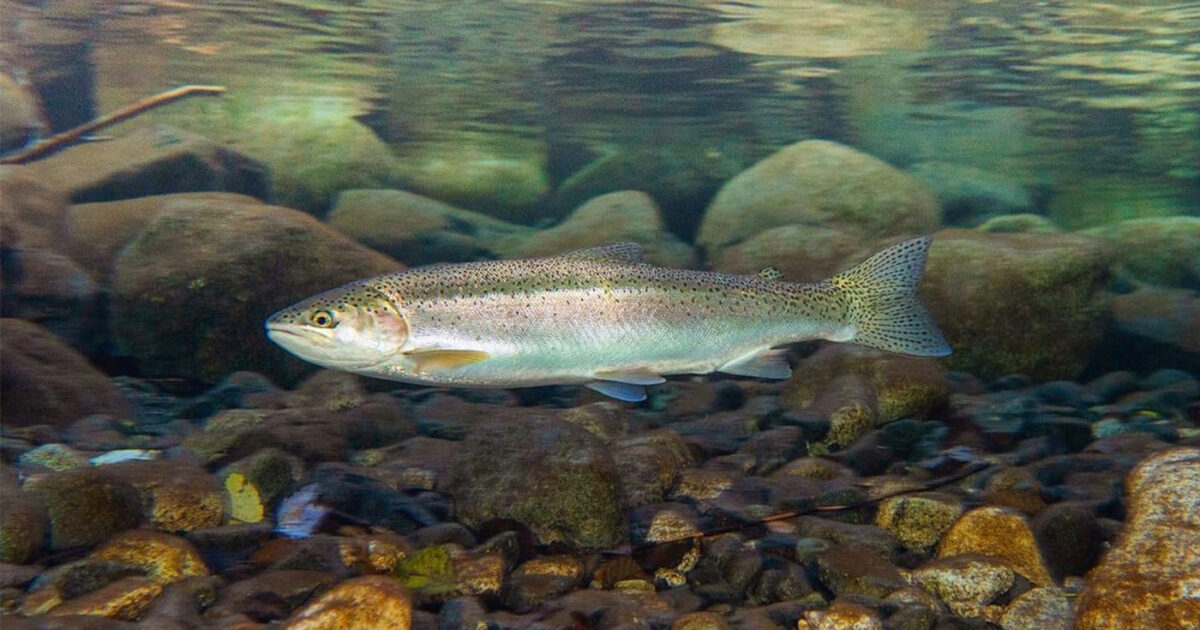
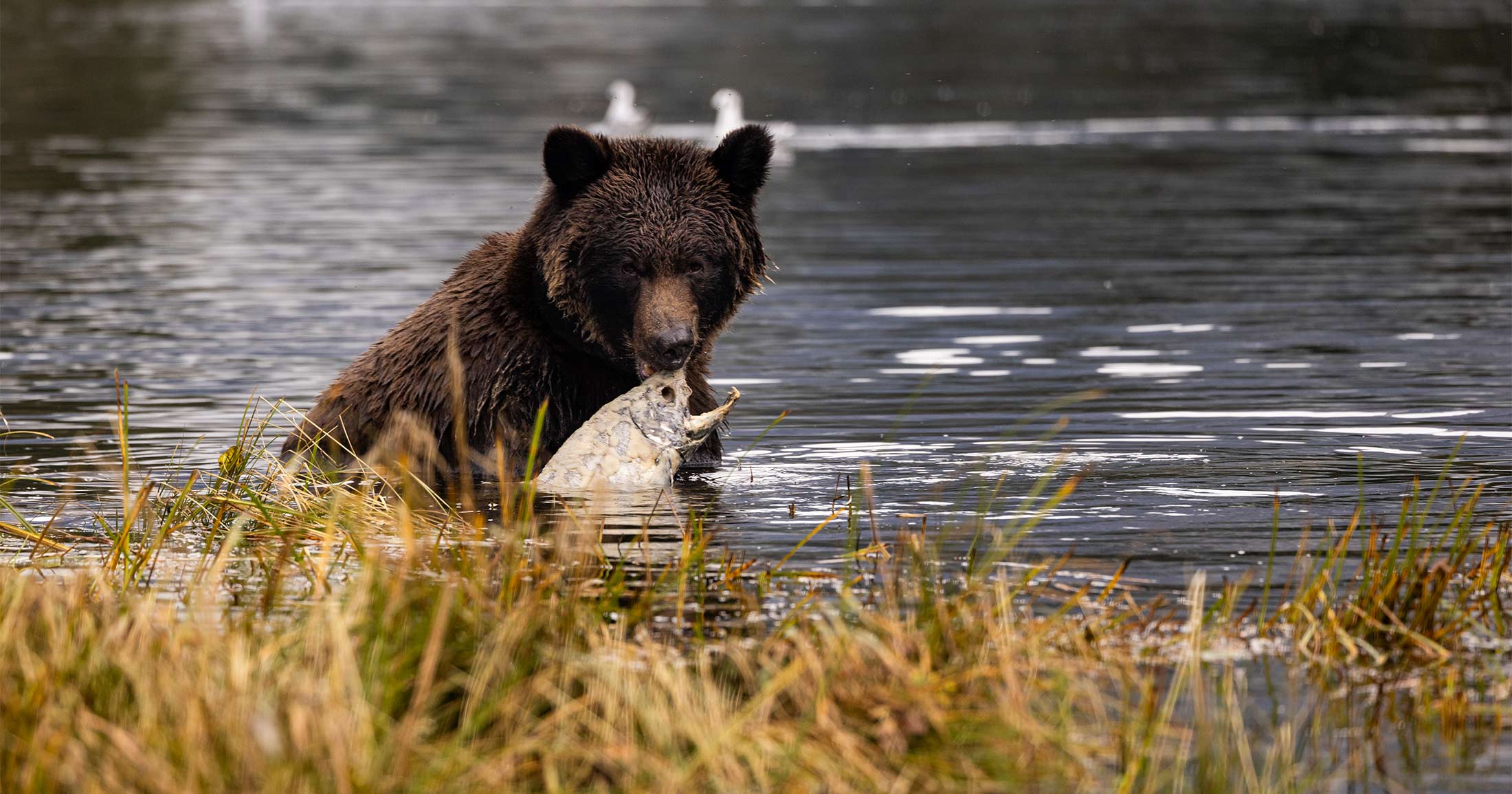
- Set salmon harvest at levels that optimize the benefits of spawning salmon to watersheds and wildlife.
- Shift away from historic management paradigms that minimize the number of spawning salmon reaching rivers and maximize harvest (called Maximum Sustainable Yield). Move towards fisheries management that meets salmon spawning targets that are ecologically based, not harvest-based.
- Shift harvest toward selective terminal fisheries (conducted in or near the rivers of origin) that respect the ‘place-based’ nature of salmon, and optimize the benefits to ecosystems, Indigenous cultures, and local communities.
2. Implement ecological-based governance
- Conservation planning and a commitment to sustainability that looks 7 generations ahead.
- A “whole-of-government” approach that implements shared solutions by Indigenous, federal, provincial, and municipal governments to achieve salmon recovery from inland watersheds and rivers, to the open ocean.
- Governance that honours Aboriginal rights and title, inherent Indigenous jurisdiction and law, and the United Nations Declaration on the Rights of Indigenous Peoples (UNDRIP) and the Declaration on the Rights of Indigenous Peoples Act (DRIPA).
- Sustainable funding strategies for watershed-scale restoration and planning.
3. Advance land-use policies that prioritize the health of wild salmon and biodiversity
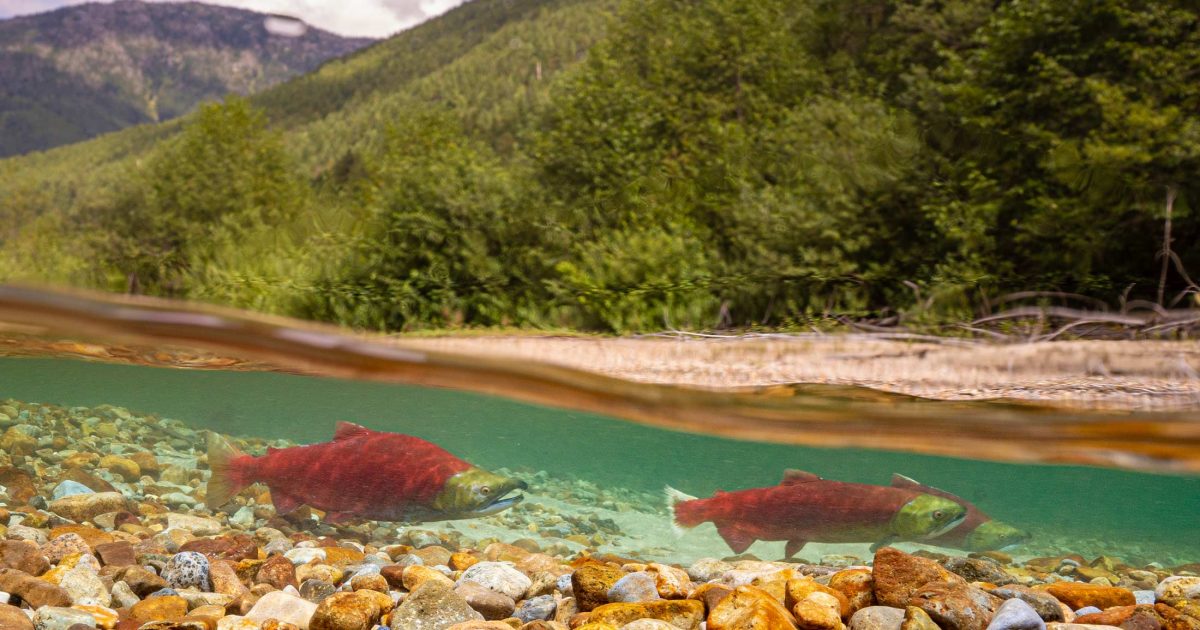
- Zoning that bolsters functioning watersheds and riparian habitat (i.e.protect natural features, limit impervious surfaces, reduce urban sprawl, adopt nature-based solutions).
- Forestry policy that prioritizes salmon health by restricting clear-cutting in salmon watersheds, and incentivizes a sustainable, second or third-growth forest economy.
- Climate adaptation policy that incentivizes nature-based solutions including natural shorelines, intact riparian areas, unrestricted floodplains, managed retreat, and use of rain-gardens in urban areas.
Our recent reports
Recent articles

Stop Terminal 2 expansion: Protect Southern Resident killer whales and their prey, Fraser River Chinook salmon
We have released a new video about the impacts of the Port of Vancouver’s Terminal 2 expansion on Southern Resident killer whales and Fraser River Chinook salmon.

Join us for a webinar on salmon as a foundation species on the coast
Join us on this week’s Coastal Insights as we take a look at the pivotal role salmon play in our world while considering the challenges to the long-term resilience of salmon populations.

Carbon stewardship workshop focusing on Gulf Islands forests and coasts
Later this month, Raincoast, along with partners, will be hosting a workshop exploring the feasibility of implementing carbon stewardship projects on the Gulf Islands and across the Coastal Douglas-fir (CDF) zone in the Salish Sea. This workshop aims to establish a civic and Indigenous community of learners. Our goal is to collaboratively develop a nature-based climate project financed from conservation, restoration and improved ecosystem management.

Join us for a webinar examining the concept of Two-Eyed Seeing
In this week’s episode of Coastal Insights, join us as we visit with Albert Marshall, the creator of the two-eyed seeing concept, balancing Indigenous knowledge and contemporary science. We will also be joined by Indigenous fisheries scientist, Andrea Jane Reid, as we examine how this concept is being used today.

How art will help protect S,DÁYES Flycatcher Forest
We are incredibly grateful to every person who transformed this initiative from the hopes of one person into reality, and because we cannot thank each of you individually, we wanted to recognize a few of the artists who have donated their time and talent to the permanent protection of local ecosystems.

You did it: 13 acres in 3 months!
We are excited to announce that together with the Pender Islands Conservancy, we have raised the funds required to purchase and permanently protect S,DÁYES Flycatcher Forest on North Pender Island…