
Living Economies

Raincoast’s Living Economies Program explores how healthy ecosystems can support thriving local economies. We quantify the economic value of ecosystem services, habitat restoration, and conservation initiatives, while developing innovative approaches to finance and the delivery of conservation in salmon-bearing watersheds. By integrating economics, western science, conservation finance, and policy, we work to create solutions that generate employment, strengthen local economies, and support resilient communities across British Columbia. 

Building on a decade years of habitat restoration and job creation

The Living Economies Program builds on the success of Raincoast’s decade-long habitat restoration and conservation work in the Lower Fraser River. Over the past 10 years, our projects have removed barriers to fish passage, controlled invasive species, and restored critical habitat for wild Pacific salmon.

This work created employment for 50 people, with more than $885,576.48 in grant funding directly supporting local jobs. The projects brought together a diverse range of expertise, including biologists, Indigenous Knowledge Keepers, First Nations youth, environmental monitors, engineers,  heavy machinery operators, construction consultants, archaeologists, and graduate students. 

By investing in habitat restoration, this initiative has contributed to the recovery of endangered Pacific salmon while demonstrating that conservation can create meaningful employment opportunities – even within one of the most urbanized and highly modified landscapes in British Columbia.

Aerial photo of tiny, distant workers with hard hats walking around the Fraser River Estuary, surrounded by grasses and water.
Misty MacDuffee, Noah Kussin-Bordo, David Scott, and Peter Kidd in the Fraser River estuary.
Photo by Alex Harris.

Conservation Economy Pilot  

In 2026, we are launching a Conservation Economy Pilot that pairs innovative conservation finance mechanisms with habitat restoration to create a scalable model for nature-positive economic development in rural communities. The pilot will demonstrate how investments in ecosystem recovery can generate long-term employment, attract private and public capital, strengthen local economies, and improve outcomes for fish, wildlife, and people.

By bringing together diverse skill sets – from restoration practitioners and foresters to economists, Indigenous partners, engineers, and community organizations – the pilot aims to test a new model for delivering shared environmental and economic benefits that can be replicated across British Columbia.

Recent, from Raincoast

J50 swims toward San Juan Island: a group of people stand by the lighthouse waiting and watching.

Fisheries closures needed for killer whales
The Southern Resident killer whale population needs your voice to demand that the new federal Fisheries Minister, Jonathan Wilkinson, issue an emergency order that also includes the following actions…
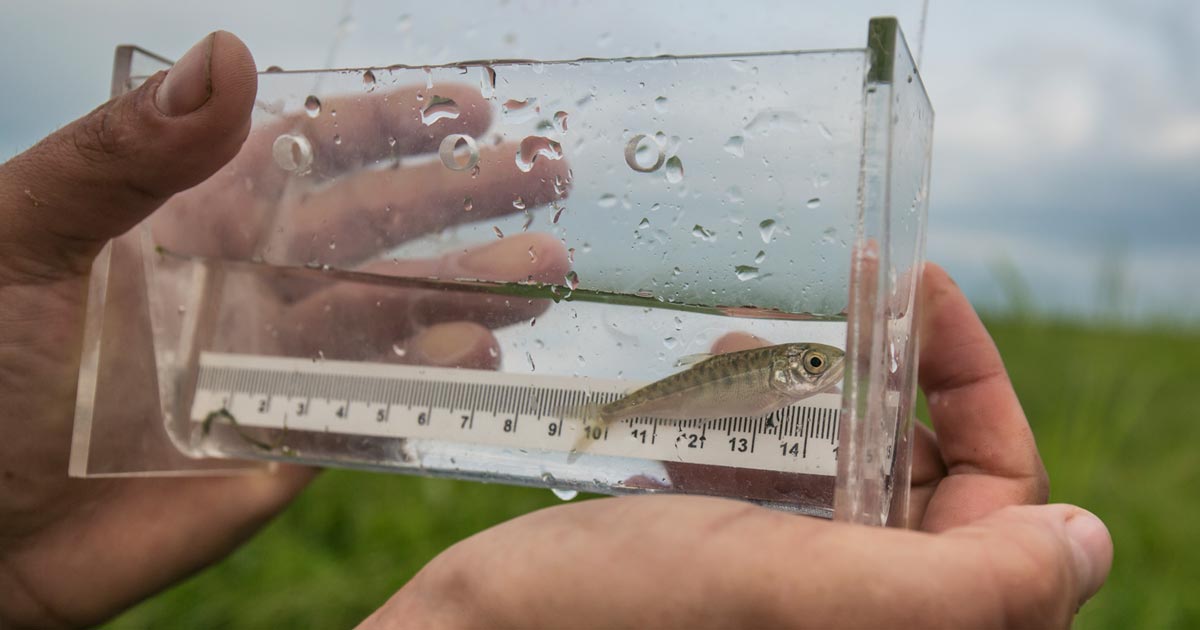
Dave Scott holds a small salmon fry in a measuring device on the Lower Fraser.

New report: Wild Salmon, Pipelines, and the Trans Mountain Expansion

This report that highlights the risks posed to wild salmon in the Lower Fraser River from a Trans Mountain pipeline or tanker spill. The report details the year-round presence of different salmon species, the river’s unique features, the nature of diluted bitumen, and the failures of Trans Mountain’s environmental assessment, as well as the inadequacy of the National Energy Board review. ..
The dead calf of J35 floats in the waters of the Salish Sea.

Misty MacDuffee on CFAX 1070 on fishery closures, Chinook salmon and Southern Resident killer whales

Southern Resident killer whales need systemic solutions that reverse the increase in noise and interference with feeding, and that protect Chinook salmon populations. Listen to two prescient interviews that Misty MacDuffee, Wild Salmon Program Director with Raincoast Conservation Foundation, has given with CFAX 1070…
FACETS, Canadian Science Publishing, Patagonia Provisions, University of Montana and Raincoast: salmon research.

Criteria for a good catch: A conceptual framework to guide sourcing of sustainable salmon fisheries

The proposed new framework for identifying sustainably harvested salmon suggests that individual retailers develop criteria (or adopt others) that comply with this place-based foundation. Patagonia Provisions is one retailer requesting this high standard of certification because their customers want higher standards than are currently available…
Sockey Salmon swim in a tight formation, with bright red bodies.

Raising the bar on fisheries certification and sustainably harvested salmon

Do you rely on labels like the blue checkmark (i.e. the Marine Stewardship Council) or other certification stamps to guide your purchase of sustainable salmon? Most people do, but few consumers know that when it comes to salmon, these certifiers generally fail to consider ecosystem science…
Dave Scott holds up a tiny salmon in the Fraser rive while he takes measurements

A jetty runs through it: restoring lost connectivity in the Fraser River estuary
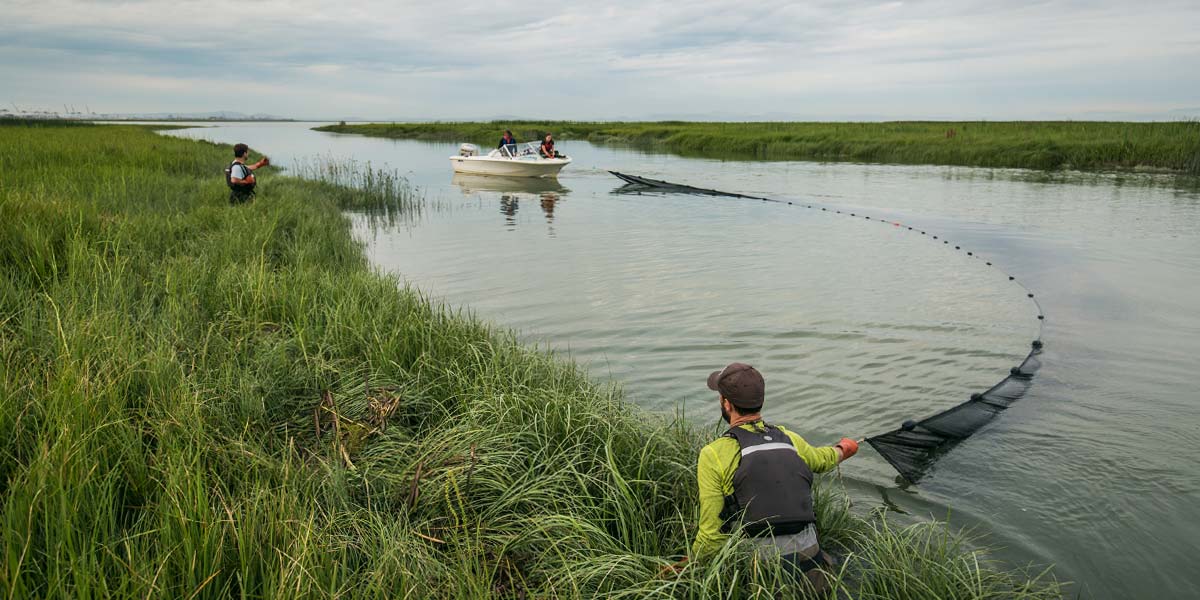
An amazing spring research season has begun. There was snow, and then suddenly we were in our boats with nets and buckets catching the year’s first juvenile salmon. This year brings renewed enthusiasm as we embark on a big plan to restore connectivity and natural processes on the delta of the Fraser River estuary… 
Misty MacDuffee and Wiet van Bragt survey the Fraser River in the lower mainland.

How a Dutchman found himself knee-deep in Fraser River mud

We used several techniques to catch the tiny salmon. We purse seined for them on the flats of the estuary in Georgia Strait, we beach seined along the shoreline of the river delta, and we set up fyke nets in the side channels of the river mouth…
Measuring a Chinook salmon on the lower Fraser river.

Alaskans close fisheries to protect BC Chinook salmon, while Canada fishes on

There are just as many warning signs that Chinook (spring) salmon in British Columbia are also returning in poor numbers. So why does Canada take a much greater risk with its salmon fisheries than Alaska? Fisheries on the Nass, Skeena and Fraser Rivers…