Living Economies

Raincoast’s Living Economies Program explores how healthy ecosystems can support thriving local economies. We quantify the economic value of ecosystem services, habitat restoration, and conservation initiatives, while developing innovative approaches to finance and the delivery of conservation in salmon-bearing watersheds. By integrating economics, western science, conservation finance, and policy, we work to create solutions that generate employment, strengthen local economies, and support resilient communities across British Columbia. 

Building on a decade years of habitat restoration and job creation

The Living Economies Program builds on the success of Raincoast’s decade-long habitat restoration and conservation work in the Lower Fraser River. Over the past 10 years, our projects have removed barriers to fish passage, controlled invasive species, and restored critical habitat for wild Pacific salmon.

This work created employment for 50 people, with more than $885,576.48 in grant funding directly supporting local jobs. The projects brought together a diverse range of expertise, including biologists, Indigenous Knowledge Keepers, First Nations youth, environmental monitors, engineers,  heavy machinery operators, construction consultants, archaeologists, and graduate students. 

By investing in habitat restoration, this initiative has contributed to the recovery of endangered Pacific salmon while demonstrating that conservation can create meaningful employment opportunities – even within one of the most urbanized and highly modified landscapes in British Columbia.

Aerial photo of tiny, distant workers with hard hats walking around the Fraser River Estuary, surrounded by grasses and water.
Misty MacDuffee, Noah Kussin-Bordo, David Scott, and Peter Kidd in the Fraser River estuary.
Photo by Alex Harris.

Conservation Economy Pilot  

In 2026, we are launching a Conservation Economy Pilot that pairs innovative conservation finance mechanisms with habitat restoration to create a scalable model for nature-positive economic development in rural communities. The pilot will demonstrate how investments in ecosystem recovery can generate long-term employment, attract private and public capital, strengthen local economies, and improve outcomes for fish, wildlife, and people.

By bringing together diverse skill sets – from restoration practitioners and foresters to economists, Indigenous partners, engineers, and community organizations – the pilot aims to test a new model for delivering shared environmental and economic benefits that can be replicated across British Columbia.

Recent, from Raincoast

Figures from a research paper an assessing conservation progress in British Columbia

Canada’s Wild Salmon Policy: an assessment of conservation progress in British Columbia

This paper, lead by scientists at Simon Fraser University and co-authored by two Raincoast biologists, finds that Canada’s Wild Salmon Policy has failed to improve the conservation of Pacific salmon since its adoption in 2005…
Misty MacDuffee looks over the front of a boat on the Lower Fraser River.

Misty MacDuffee explains the lethal consequences of oil spills, tanker traffic and pipelines

Hear Misty MacDuffee on CFAX 1070 with Pamela McCall discussing oil spill risks to marine mammal conservation including Southern Resident killer whales…
Work with Raincoast scientists in the Fraser Delta estuary

Opportunity: Student Research Assistant – Lower Fraser Salmon Program (closed)
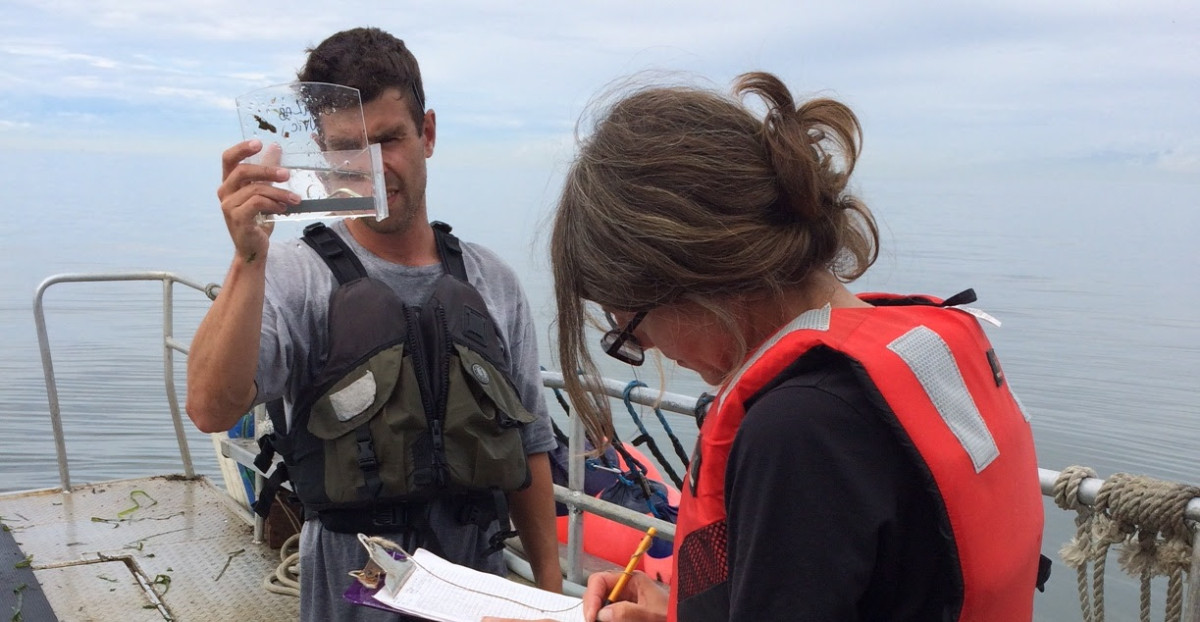
We are seeking a research assistant to join our our team for a temporary (3-month) summer contract to assist in engaging with local stewardship groups and to map salmon habitat in ArcGIS. This contract will be focused on identifying the potential for salmon habitat…
Dave & Misty measuring fry on the on Bella Rose

A fyke net, Steve, killer whales and the Bella Rose   
It takes this and more as we begin our second season of juvenile salmon research on the Fraser Estuary…
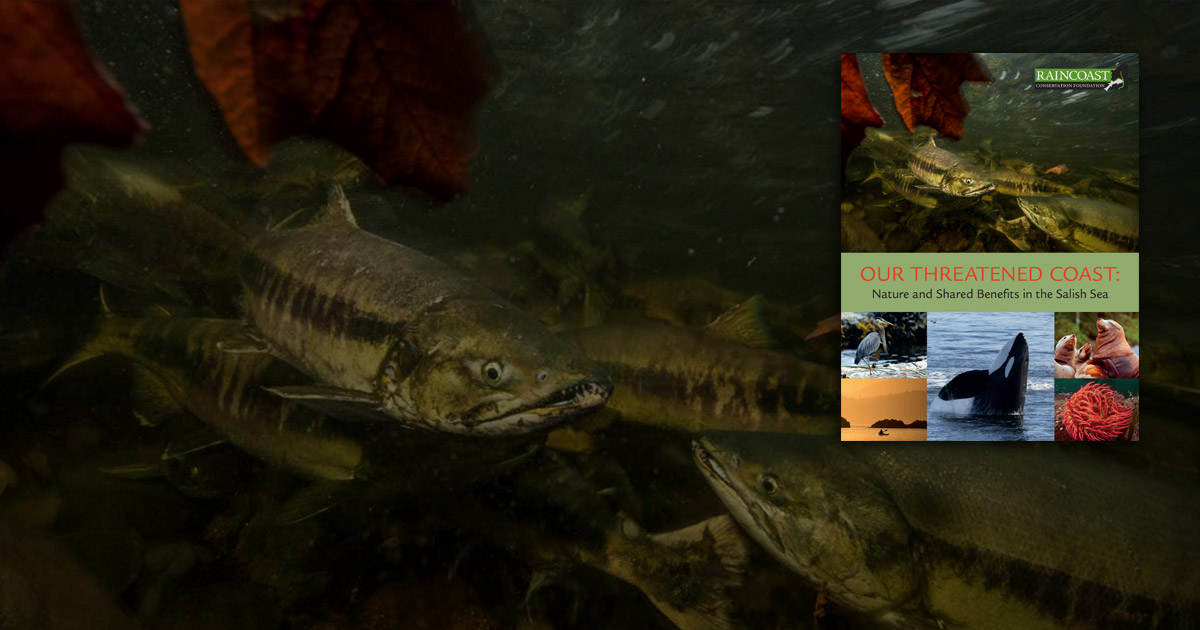
Our threatened coast report cover over some salmon.

Our Threatened Coast

Raincoast’s latest report demonstrates how the region’s biological diversity is captured in our values, has shaped our cultural identity and is linked to economic benefits in the billions of dollars. It is not a place for oil tankers or a carbon energy corridor.
Sunset over Fraser River estuary, showing important fish and wildlife habitat

Three months in the Fraser River estuary

We have been out on the vast flats of the Fraser River estuary with purse seine and beach seine nets to document the arrival and use of different habitats by juvenile salmon.
Southern Resident killer whale pokes head above water, displaying a classic spyhop behaviour

Will hatchery Chinook reared in net pens actually help recover killer whales? Probably not
There is also no evidence that enhancing late-timed Chinook from Nitinat hatchery will help Southern Resident killer whales.
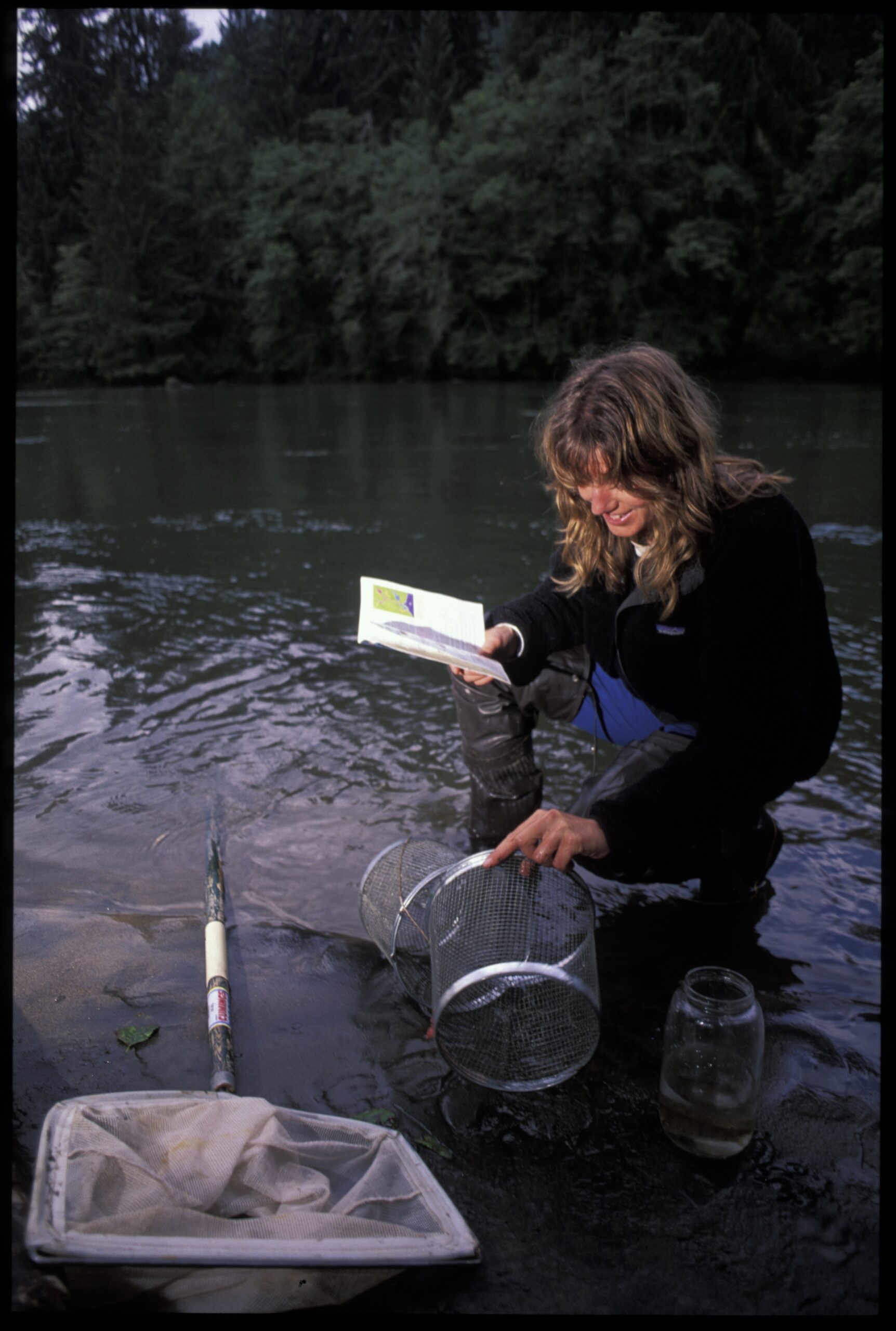
Raincoast researcher studies a salmon bearing stream

Juvenile salmon & small streams

The Great Bear Rainforest is home to over 2,500 salmon runs from more than 5,000 spawning populations. Many of these rivers are still intact, offering a unique opportunity to study the linkages between salmon and the larger food web. However, salmon in this region are faced with increasing threats, many of which have depressed and extirpated salmon populations throughout the Pacific Northwest. Some of our previous work to understand ecology, status of, and threats to coastal salmon populations is linked below.