
Living Economies

Raincoast’s Living Economies Program explores how healthy ecosystems can support thriving local economies. We quantify the economic value of ecosystem services, habitat restoration, and conservation initiatives, while developing innovative approaches to finance and the delivery of conservation in salmon-bearing watersheds. By integrating economics, western science, conservation finance, and policy, we work to create solutions that generate employment, strengthen local economies, and support resilient communities across British Columbia. 

Building on a decade years of habitat restoration and job creation

The Living Economies Program builds on the success of Raincoast’s decade-long habitat restoration and conservation work in the Lower Fraser River. Over the past 10 years, our projects have removed barriers to fish passage, controlled invasive species, and restored critical habitat for wild Pacific salmon.

This work created employment for 50 people, with more than $885,576.48 in grant funding directly supporting local jobs. The projects brought together a diverse range of expertise, including biologists, Indigenous Knowledge Keepers, First Nations youth, environmental monitors, engineers,  heavy machinery operators, construction consultants, archaeologists, and graduate students. 

By investing in habitat restoration, this initiative has contributed to the recovery of endangered Pacific salmon while demonstrating that conservation can create meaningful employment opportunities – even within one of the most urbanized and highly modified landscapes in British Columbia.

Aerial photo of tiny, distant workers with hard hats walking around the Fraser River Estuary, surrounded by grasses and water.
Misty MacDuffee, Noah Kussin-Bordo, David Scott, and Peter Kidd in the Fraser River estuary.
Photo by Alex Harris.

Conservation Economy Pilot  

In 2026, we are launching a Conservation Economy Pilot that pairs innovative conservation finance mechanisms with habitat restoration to create a scalable model for nature-positive economic development in rural communities. The pilot will demonstrate how investments in ecosystem recovery can generate long-term employment, attract private and public capital, strengthen local economies, and improve outcomes for fish, wildlife, and people.

By bringing together diverse skill sets – from restoration practitioners and foresters to economists, Indigenous partners, engineers, and community organizations – the pilot aims to test a new model for delivering shared environmental and economic benefits that can be replicated across British Columbia.

Recent, from Raincoast
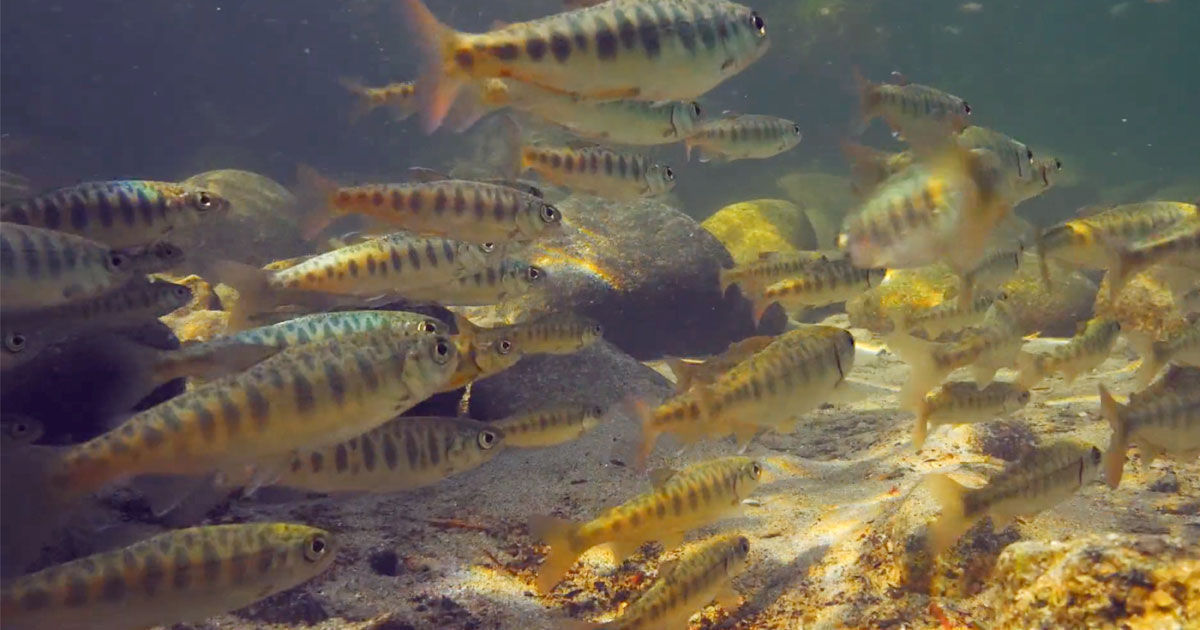
Salmon fry pool in the estuaries of the Fraser River.

The Fraser River estuary is fragmented by structures that alter the flow of water

The first phase in Raincoast’s five-year restoration project in the Fraser estuary was making breaches in the Steveston jetty to allow young salmon access to Sturgeon Bank, a safe, marshy habitat that gives them an easier transition from river to ocean…
Raincoast Fraser River crew sampling juvenile salmon in the east breach.

Great news: juvenile salmon moving through habitats reconnected after 100 years

Since the removal of sections of the Steveston jetty in February, we have been sampling our new jetty ‘breaches’ and have consistently caught juvenile salmon moving through them! This is a huge success and was realized just weeks after…
Steveston Jetty on a grey day, with overset diagrams showing some of the work we're doing.

Breaking new estuary ground on the Steveston Jetty

When we began our research in the Fraser estuary in 2016, the presence of multiple barriers, including the Steveston Jetty, became a significant concern. With the announcement of the Coastal Restoration Fund in 2017, an opportunity to begin addressing these barriers appeared…
A salmon swims in to the current on the bottom of the Lower Fraser river: closeup of a salmon nose.

Provincial Wild Salmon Secretariat needs a focus on habitat
In order to recover and sustainably manage depleted wild salmon populations, place-based management and the restoration of salmon watersheds is the best way forward given the changing environmental conditions that confront these fish and the value that British Columbians place on them.
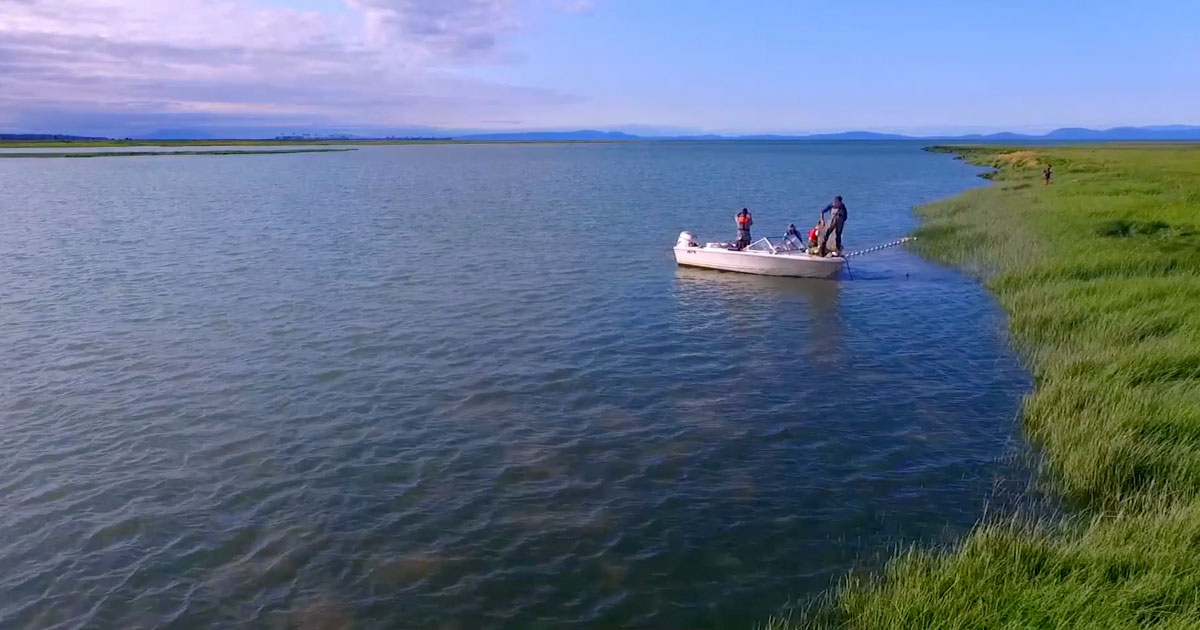
Raincoast scientists aboard their boat on the Fraser River getting the seine nets ready to do their summer research.

Fraser estuary research completed for 2018

After a long five months we have now wrapped up our 2018 field season in the Fraser estuary, our best year yet! This year our team spent 76 days in the field and we captured more than 35,000 fish, including over 6,400 juvenile salmon. While it has been a long and hot season with a…
An aerial photo of the stunning vista and sunset over the Heart of the Fraser.

Heart of the Fraser: Ecological stronghold faces imminent threat

The Fraser River is an incredibly productive and important ecosystem which has supported abundant populations of salmon and sturgeon for thousands of years. However, in a few short centuries humans have drastically modified habitats throughout the watershed…
Misty MacDuffee and Bob McDonald on the Fraser River.

Endangered species, decline of biodiversity, and more on Quirks and Quarks

This episode of Quirks & Quarks explores pressing conservation issues facing endangered species…
A quiet sunny day on the The Fraser River.

Wild Salmon, Pipelines and the Trans Mountain Expansion

As the endangered Southern Resident killer whale population continues to struggle from the combined forces of noise, pollution and food (i.e. Chinook) availability, Raincoast Conservation Foundation has released a report that highlights the risks posed to wild salmon in the Lower Fraser River from an expanded Trans Mountain pipeline…