
Climate change

We use a comprehensive approach to inform actions that benefit salmon ecosystems in a changing climate.

Photo by Fernando Tessa.

Climate change is causing severe hydrological shifts in salmon streams through long-term reductions in snowpack, earlier spring melts, increased frequency of heat waves, atmospheric rivers and flood events, and increased drought frequency. These impacts create conditions unsuitable for wild salmon to recover and thrive.

Juvenile salmon in a fish viewfinder.
Photo by Alex Harris / Raincoast Conservation Foundation.
School of coho in a river.
Photo by Fernando Lessa.

Unsustainable land use is compounding the impacts of climate change

Unsustainable land use occurring throughout the province is making these conditions even worse. Clear-cut logging, mining, and water withdrawal for industry and agriculture alter salmon habitat, reduce streamflow, and increase water temperatures. Stream-type Chinook and coho salmon that spend a year in freshwater before migrating to the ocean are particularly vulnerable to degraded freshwater habitat caused by logged forests, fires, droughts, and floods.

Forestry degrades salmon habitat

Logging can alter the delivery and storage of water, nutrients, wood, and sediment in streams. This results in changes to the habitat, growth, and survival of juvenile salmon. Clear-cut logging can increase turbidity in salmon-bearing streams affecting survival of eggs and fry, while the conversion of old growth forest into plantation monocultures can lower summer stream flow and increase temperatures. The legacies of antiquated forest management that prioritizes harvestable timber above all other values confounds the effects of climate change on freshwater habitat quality and quantity for salmon.

A rivers running through the forest right next to a large clearcut area.
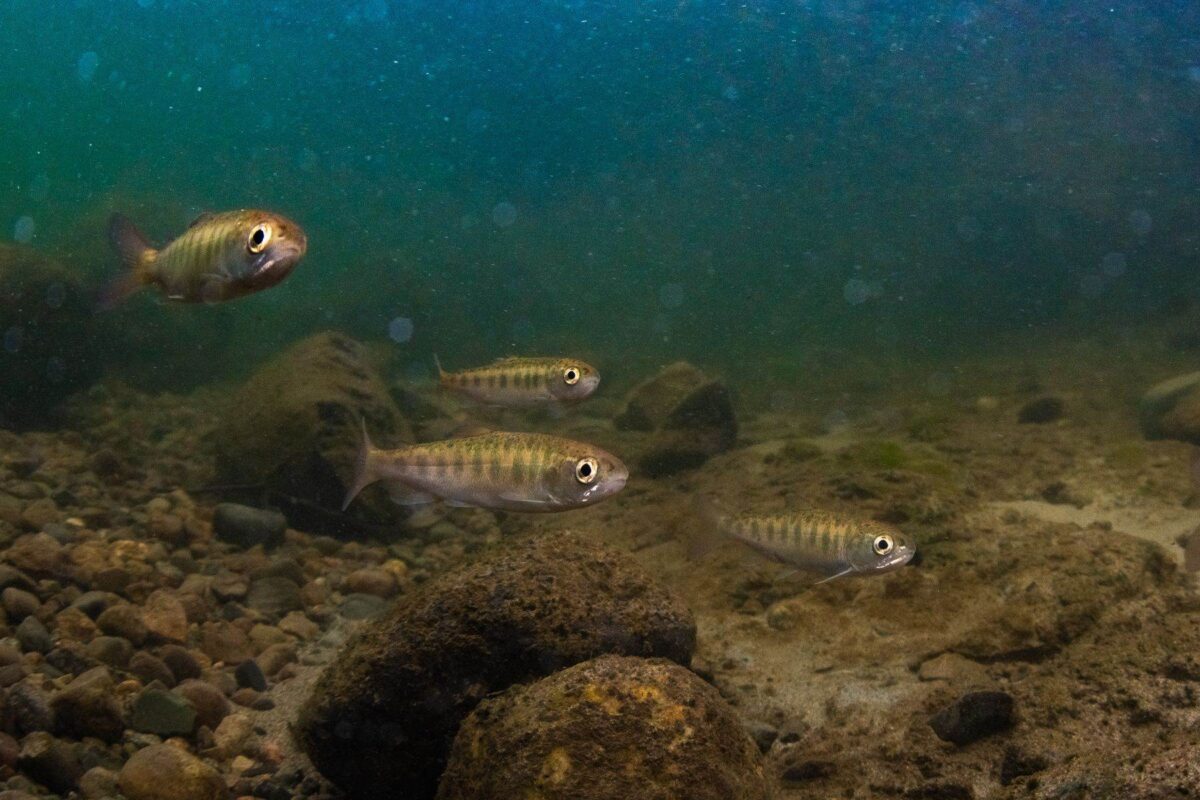
Four small salmon swimming near the bottom of the water.
Photo by Fernando Lessa.

Wildfires impact salmon

Recent wildfires in BC have brought climate-change related effects into focus: wildfires are getting larger, more intense, and more frequent. The suppression of wildfires can increase fuel load and the corresponding severity of wildfires, particularly in the drier and hotter regions of the province.

The loss of vegetation and alteration of soil properties from hot wildfires can dramatically change the way rainfall permeates soil, and can cause increased runoff, sedimentation, and landslides that can smother incubating salmon eggs. Additionally, fire retardants used to suppress fires contain compounds that are toxic to aquatic life and can increase fish mortality, particularly for young Chinook salmon. 

Floods impacting salmon

The forest management paradigm of British Columbia has increased the magnitude of and frequency of the biggest floods. In snow-dominant watersheds, such as those of the BC interior, reduced forest cover from logging leads to faster snowmelt and larger floods. Increased flood risk can degrade water quality through increased sedimentation and contaminants, and can kill incubating salmon eggs from riverbed scouring.

Underwater image of salmon swimming.
Photo by Fernando Lessa.
Coho salmon swimming in a river.
Photo by Fernando Lessa.

Engaging with decision-makers

Now is the time to improve federal and provincial land-use policies for the health and climate resiliency of ecosystems and to advance the recovery of at-risk salmon populations. These policies must support freshwater security at the community level and uplift the rights and priorities of Indigenous peoples.

Raincoast is engaging with decision-makers at all levels of government to advocate for science-based policy solutions that ensure wild salmon are resilient in a changing climate.   

Recent reports

Recent articles

A black bear turns their head a little while sitting down comfortably.

Problem humans and the ecology of bear-human conflict

Last month, in Penticton, BC a group of five black bears – three males and two younger females – had been spotted feasting on residents’ garbage. Conservation authorities were called in, and the five bears were shot dead. This came just a week after six bears were shot in over a three day period near…
Chris Genovali looks out over the water and land with binoculors.

Tracking Raincoast, past, present, and future

As this decade closes, it’s timely to celebrate what we have collectively achieved for BC’s coast.  Raincoast’s past in the Kitlope takes us back three decades to 1990, when Brian Falconer first visited at the invitation of the Haisla and Xenaksiala. The Nations were working to save the Kitlope from clearcut logging, which they ultimately…
A wolf trots across the eel grass in the estuary.

A gift to end commercial trophy hunting of coastal carnivores
#GivingTuesday is a global movement of generosity that has a huge impact on smaller charitable organizations like Raincoast. Raincoast is funded by donations from people like you and those donations allow us to continue our work of protecting the wildlife of BC’s coast, the Salish Sea, Great Bear Rainforest and beyond. 100% of your donations…
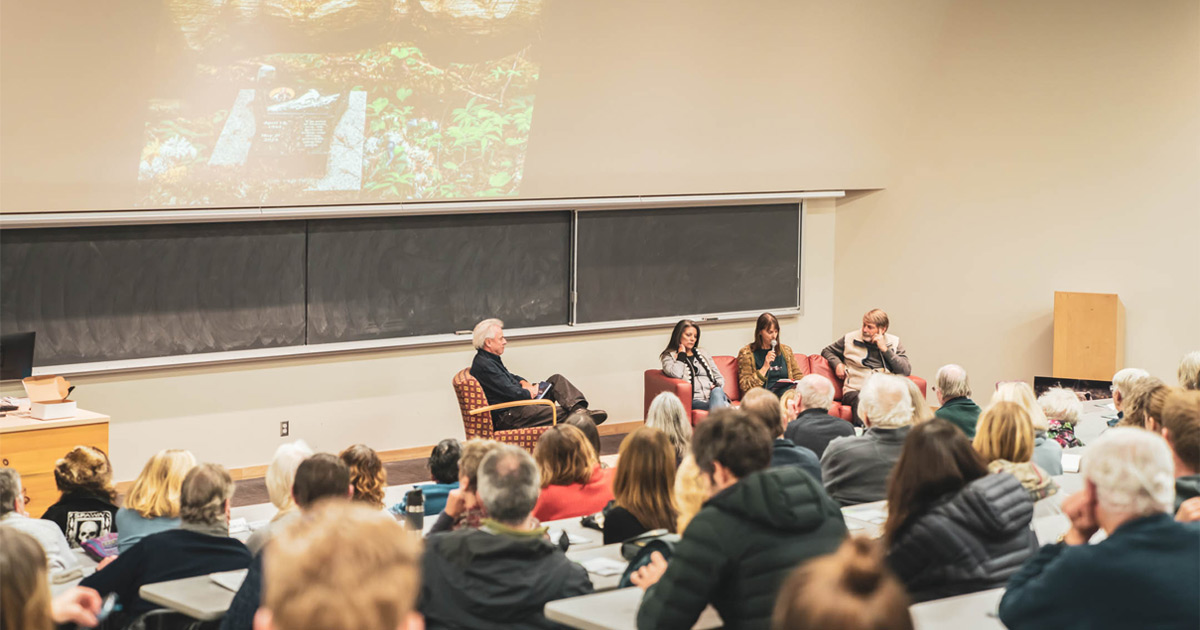
Bob McDonald sits on stage with Briony Penn, Brian Falconer, and

Stories from the Magic Canoe – An Update on the Kitlope Tenure
Last Thursday, Raincoast hosted a sold out event in Victoria about the legacy of the Kitlope and Xenaxiala elder, Cecil Paul. Cecil was the last person born in the Kitlope and led the efforts to protect the Kitlope from extractive industries. Although Cecil could not join us, we were privileged to be joined by three…
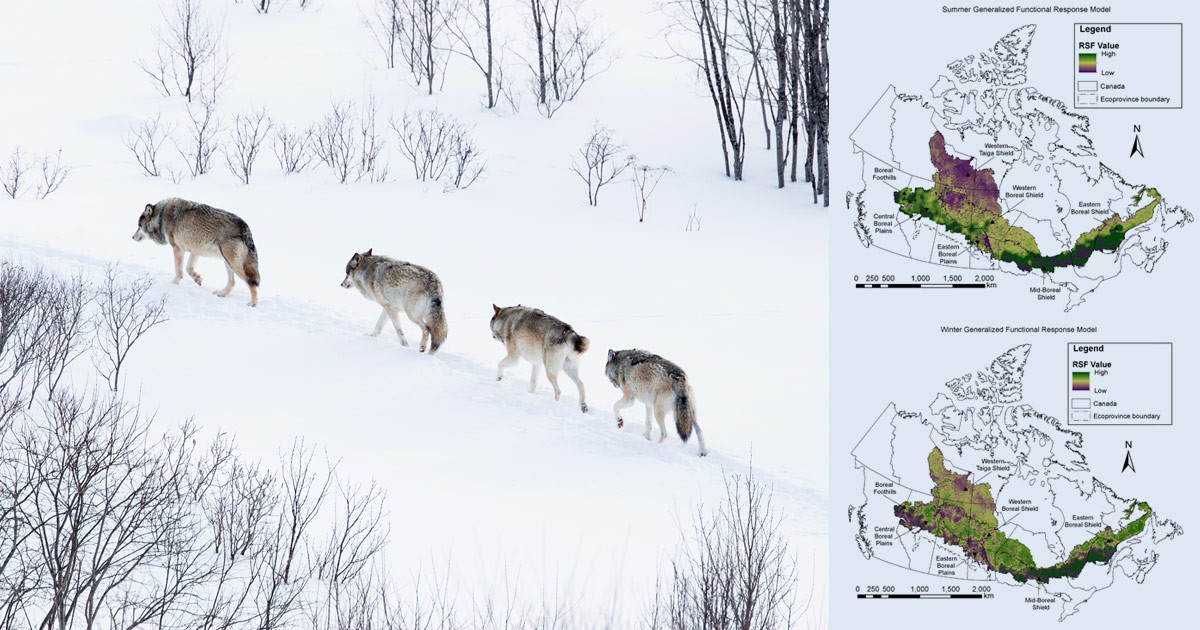
Four wolves walk up a hill following a narrow path, research maps superimposed on top.

Ecology and Evolution: Functional response of wolves to human development across boreal North America
Previous research on how wolves are affected by human development have been limited in scope and location and the results were mixed. Wolves adapted in a range of ways depending on contextual factors like road or cutblock density. Research undertaken by a team of conservation scientists, including Paul Paquet of Raincoast Conservation Foundation, endeavoured to…
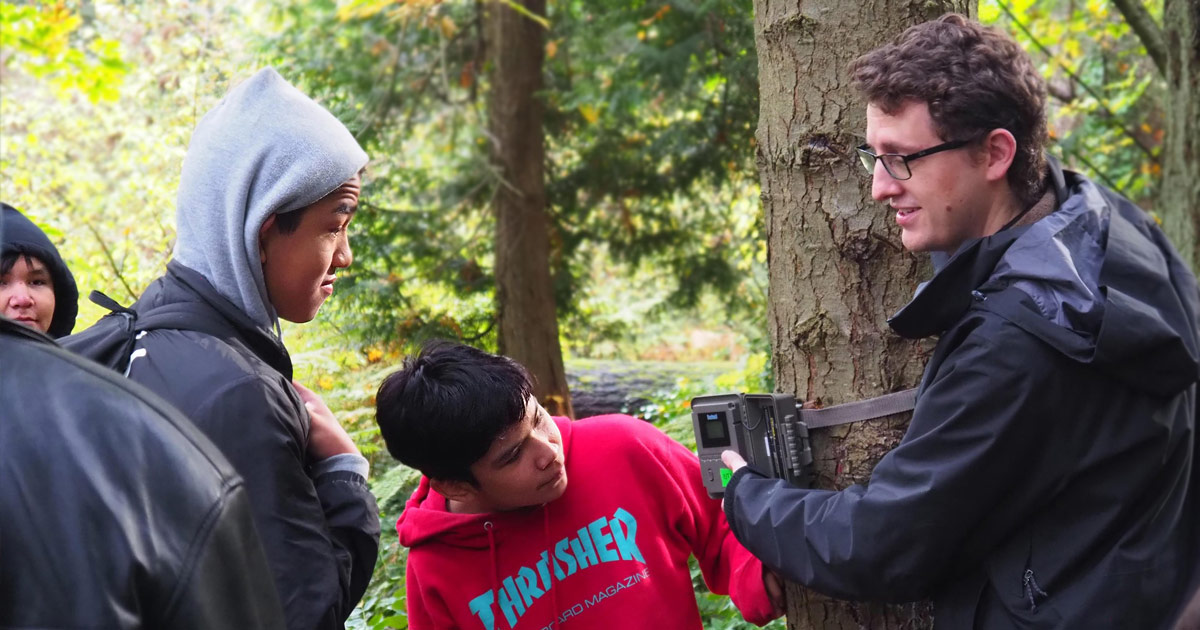
Tyler Jessen helps some young Salish Sea Emerging Stewards on campus to examine a remote sensing device.

Collaborating with the next generation
As I walk onto campus at the University of Victoria, I am surrounded by the hustle and bustle of students scurrying off to their classes. For the students, their familiarity with the area makes their travel effortless as they weave and bob through the buildings and walkways. As a visitor, the school is a giant…
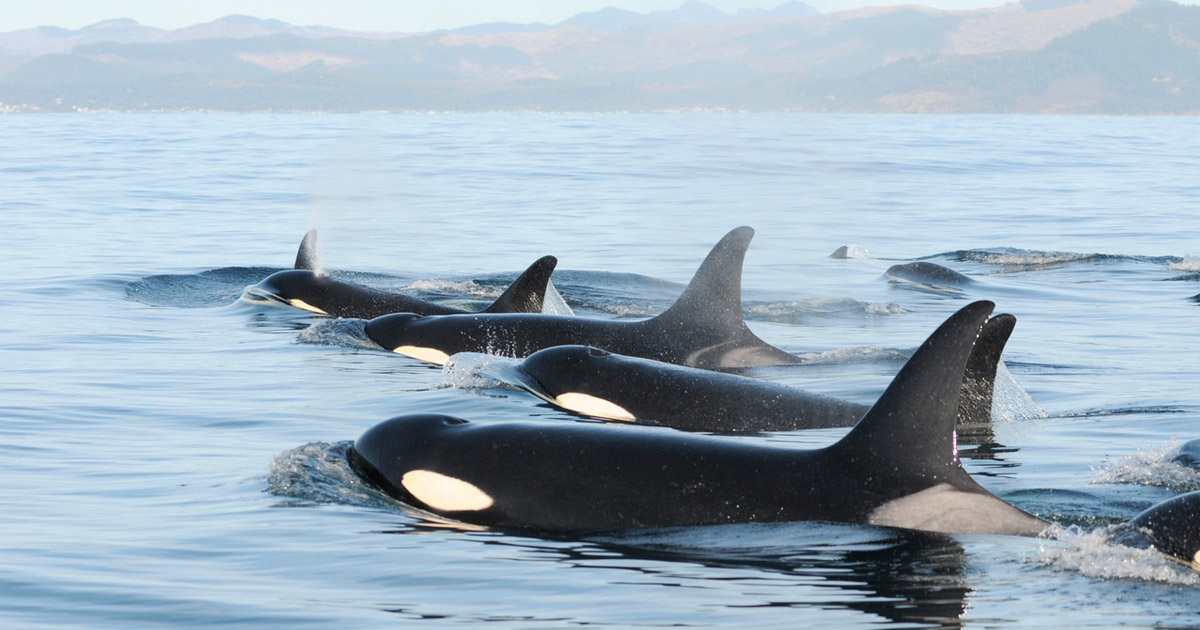
Southern Resident killer whales on the surface of the blue Salish Sea.

We are headed to the Supreme Court for Southern Resident killer whales

Today, Raincoast takes our work to protect Southern Resident killer whales from the Trans Mountain pipeline expansion all the way to the Supreme Court of Canada. Working with Living Oceans Society and our legal team at Ecojustice, we have filed an application for leave to appeal to the Supreme Court. We are arguing that the…
J50 and J42, Southern Resident Killer Whales swim in the Salish Sea.

Trans Mountain Expansion & Southern Resident killer whales: Project timeline

Raincoast Conservation Foundation represented by Ecojustice have worked through the courts to protect Southern Resident killer whales from the threats posed by the Trans Mountain Expansion project.  Timeline 2013 – Raincoast and Living Oceans, legally represented by Ecojustice, file as formal intervenors in the National Energy Board’s review of Kinder Morgan’s Trans Mountain Expansion (TMX)….