Wolves, tools, and intelligence
New evidence of complex problem-solving in wolves expands our understanding of their intelligence and underscores the need for ethical, evidence-based conservation.
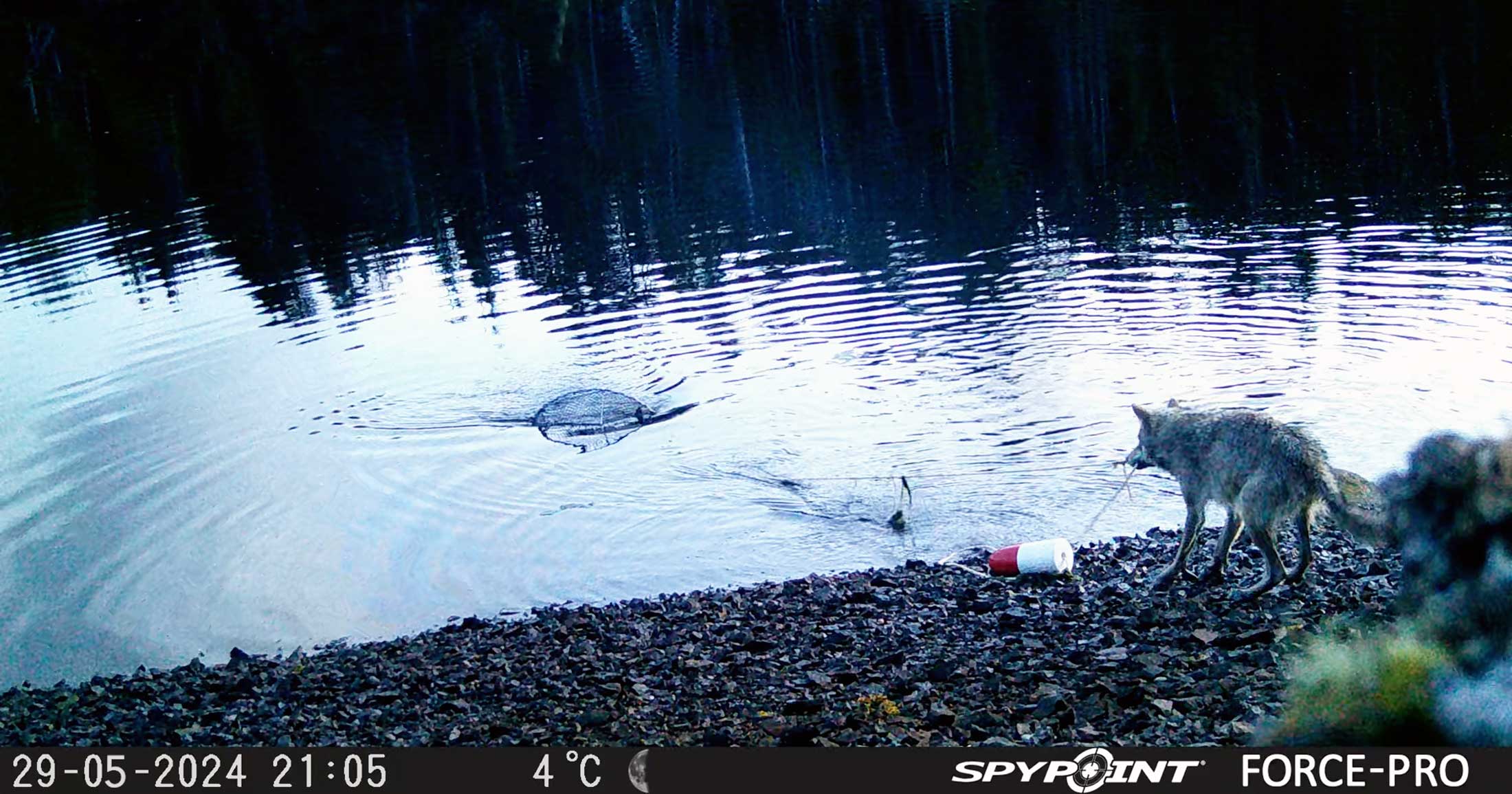
It’s a cool evening in May of 2024 on a beach near Bella Bella, British Columbia, the traditional territory of the Haíɫzaqv (Heiltsuk) First Nation. A wildlife camera trap is stationed facing the water, waiting to catch a culprit who has been causing issues for Haíɫzaqv resource management within the territory. In three extraordinary minutes, the camera trap solves the question and captures remarkable behaviour never observed before.
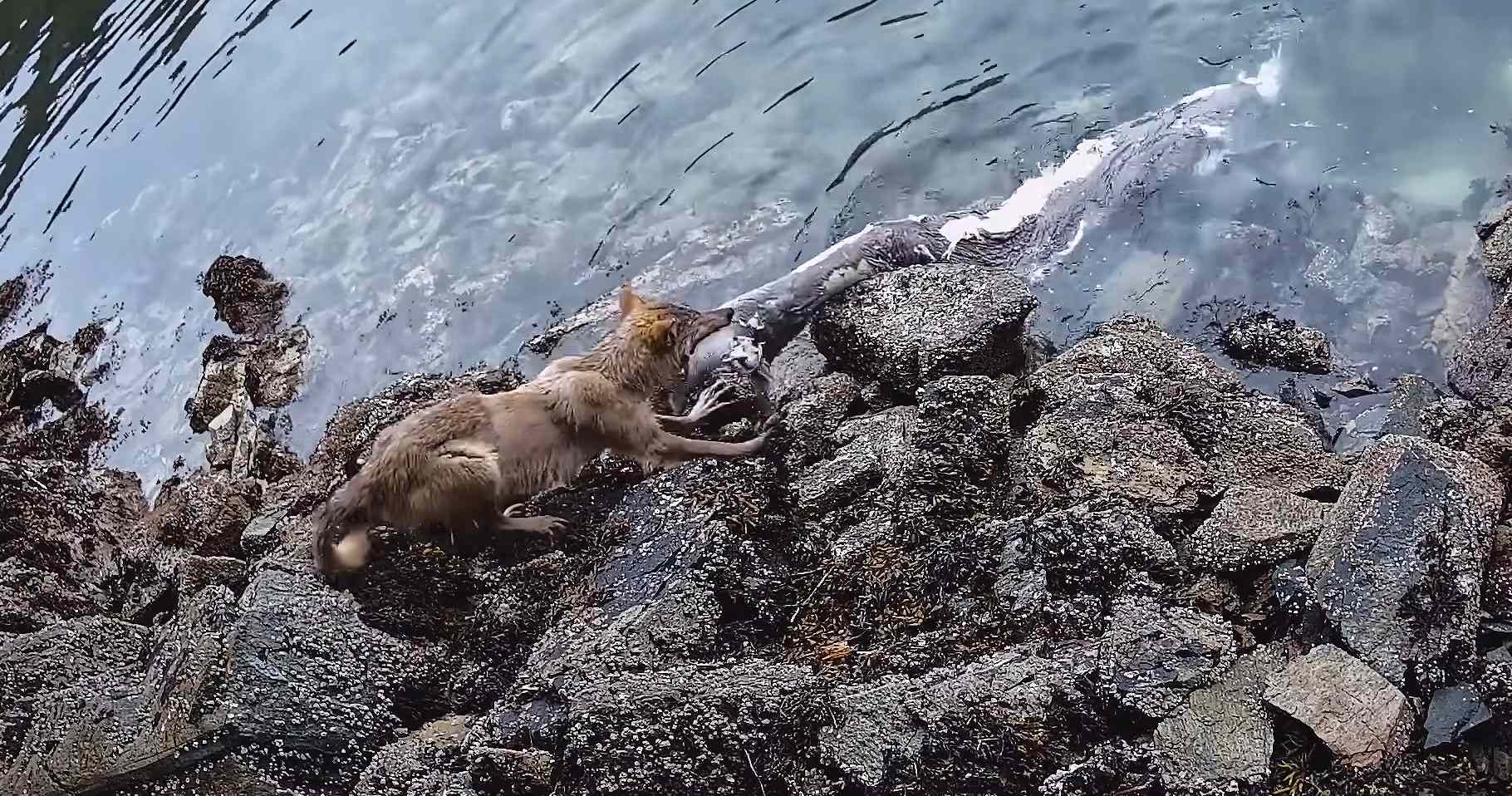
The camera records a female coastal wolf swimming back to shore with a buoy in her mouth and dropping it on the rocky beach. After a big shake-off, she steps back into the water to pull in the rope leading to a crab trap, which is part of efforts from the Heiltsuk Integrated Resource Management Department (HIRMD) to control invasive European green crab populations in these sensitive coastal ecosystems. Once she drags the trap to shallow water, she begins biting and tearing at the mesh to reach the prize that lies inside – a bright orange cup filled with crab bait. She successfully retrieves the cup and enjoys a quick snack, licking and chomping on the herring and sea lion bait inside. Then, as quickly as it began, the wolf walks off into the night, leaving Haíɫzaqv Guardians and researchers stunned and reeling to know more.
But this wasn’t the only occurrence of this behaviour captured on camera. A similar scenario was recorded during this investigation in Haíɫzaqv territory later in February of 2025, where another wolf was seen pulling on a rope attached to a submerged green crab trap, then after an 8 minute delay, two traps can be seen on the rocky beach while the wolf tugs away at the mesh of one trap and sniffs at the seemly empty bait cup of the other trap before walking away.
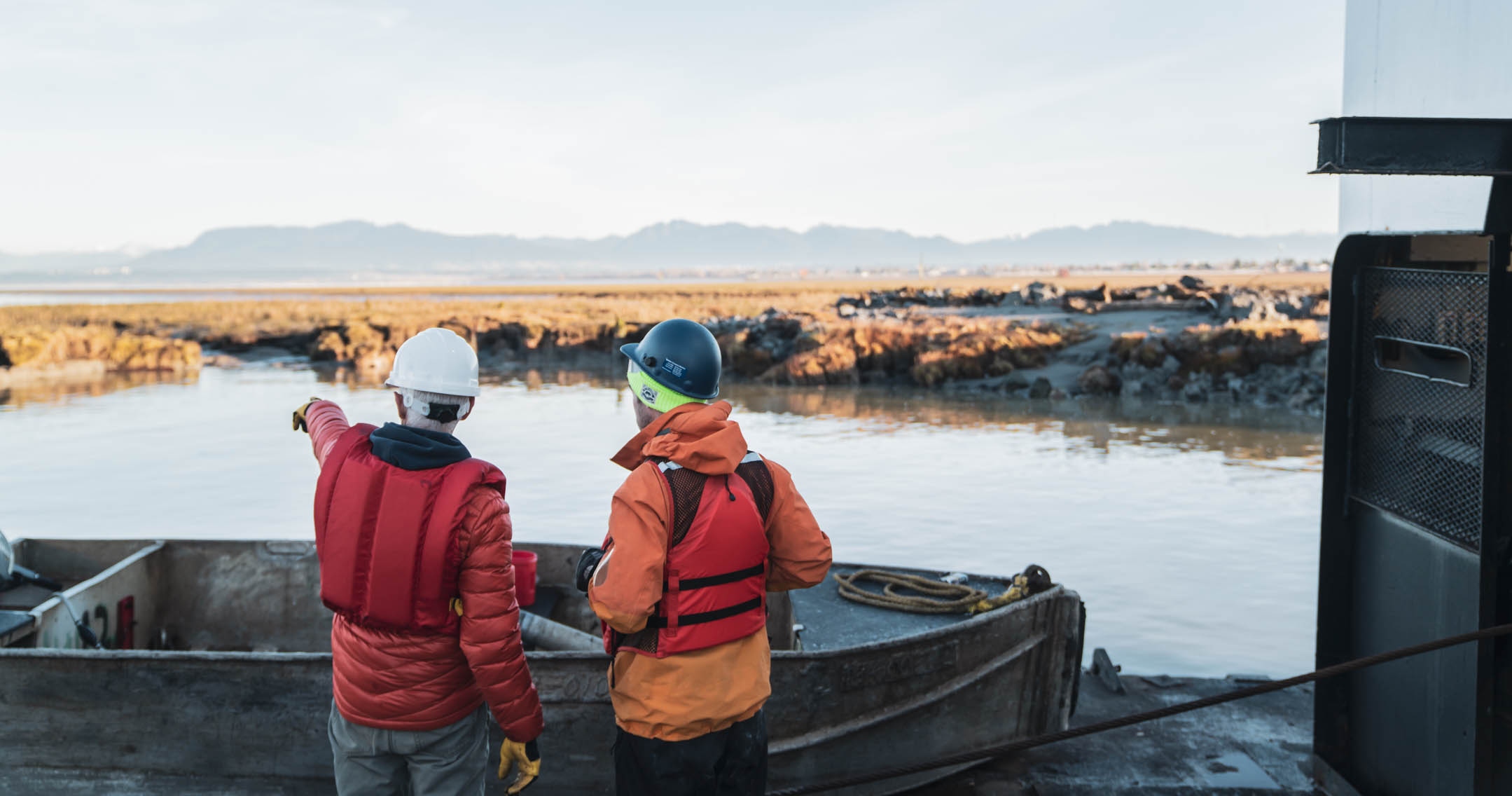
The success in capturing this never-before-seen behaviour stemmed from the desire to know what was tampering with these green crab traps. Several traps had been damaged and dragged out of the water, and HIRMD needed to find out what was disrupting their invasive species management. Through collaborative efforts with Haíɫzaqv Guardians, researchers and students from State University of New York College of Environmental Science and Forestry and the University of Alberta, and one of Raincoast’s lead scientists, renowned carnivore ecologist, Dr. Paul Paquet, the mystery was finally solved.
Read the open access article
Artelle KA, Paquet PC. 2025. Potential Tool Use by Wolves ( Canis lupus ): Crab Trap Pulling in Haíɫzaqv Nation Territory. Ecology and Evolution. 15(11). doi:https://doi.org/10.1002/ece3.72348 .
The observed sequence of actions by the female wolf suggests a sophisticated, well-thought-out process that may qualify as tool use, and offers profound insights into canid intelligence, particularly that of wolves. From recognizing the buoy floating in the water, to knowing that if she takes the calculated steps using the rope to bring the trap to shore, she will be rewarded with sustenance. Even if one views it as advanced problem-solving rather than classical “tool use,” the sequence shows cause-and-effect awareness, persistence, and adaptability, underscoring wolves’ behavioural flexibility and sophisticated cognition.
In this op-ed, Raincoast wanted to do a deep dive into the specific cognitive abilities of wolves that are expressed through trap-pulling. This behaviour highlights several key cognitive abilities indicative of advanced animal intelligence, including problem-solving skills, tool use, learning and adaptation, memory and planning, and physical dexterity and coordination:
- Problem-Solving Skills: The wolf’s ability to identify a crab trap as a potential food source and determine an effective method to retrieve it from underwater showcases sophisticated problem-solving capabilities. Recognizing the connection between the buoy, the attached line, and the submerged trap implies an understanding of cause-and-effect relationships.
- Tool Use: This behaviour could represent the first documented case of tool use in wild wolves. While the wolf isn’t using a crafted tool, manipulating environmental objects (buoys and lines) to achieve a goal aligns with broader definitions of tool use. This challenges previous assumptions about the cognitive boundaries of canids.
- Learning and Adaptation: The precise, deliberate sequence of actions – swimming with the buoy, pulling the line, and extracting the trap – suggests that the wolf either learned this behaviour through observation, trial and error, or social learning within the pack. This adaptability highlights their capacity to adjust behaviours in response to environmental challenges.
- Memory and Planning: Successfully executing such a choreographed sequence requires memory of prior interactions with similar objects and situations. The wolf’s ability to plan its actions – starting from identifying the buoy’s significance to ultimately accessing the bait – indicates foresight and cognitive mapping.
- Physical Dexterity and Coordination: Beyond cognitive prowess, the physical coordination required to manage the buoy, line, and trap showcases a high level of motor skills, complementing their mental faculties.
Though the researchers don’t know how the wolves developed this behaviour, or whether this tool use is unique to wolf populations living in Haíɫzaqv Territory, this observation leaves fascinating questions about how wolves learn and innovate within their environments. Did this individual discover the technique by encountering traps exposed at low tide? Was it learned through trial-and-error, or perhaps by watching Haíɫzaqv Guardians service the traps? Are these individual wolves passing on this knowledge to pack members? It can’t be said for certain – but these possibilities highlight just how much remains to be uncovered about wolf cognition and cultural learning.

It’s important to note that the remarkable trap-pulling behaviour likely stood out to human observers because the wolves interacted with familiar human-made objects such as ropes, traps, and buoys. These objects naturally drew our attention. However, it’s reasonable to suspect that wild wolves regularly engage in similar problem-solving activities within their natural environments – activities that often go unnoticed by humans. This oversight may stem from psychological blindness to the everyday problems faced by wolves, as these activities occur within an ecological context unfamiliar to humans.
In essence, we might be observing without truly perceiving, a limitation influenced by our lack of familiarity with the wolves’ environment. This idea resonates with the lessons learned from Jane Goodall’s pioneering observations of wild chimpanzees, which revealed complex behaviours previously unrecognized simply because they had not been thoroughly observed in their natural habitats.
A discovery of this kind has important implications for both wolf research and conservation. Demonstrating potential tool use – or at minimum, complex, multi-step problem-solving – expands the understanding of wolf cognition beyond what has traditionally been assumed for wild canids. It suggests that wolves possess a higher degree of behavioural flexibility, creativity, and environmental awareness than previously documented, which opens new avenues for studying how they learn, innovate, and adapt in rapidly changing landscapes.
From a conservation perspective, recognizing wolves as intelligent, adaptable animals strengthens the case for management approaches that account for their cognitive needs, social complexity, and capacity to respond to novel human-made challenges. Moving forward, continued monitoring and careful documentation will be essential to understanding how widespread this behaviour may be, how wolves share knowledge within packs, and what other problem-solving abilities we may be overlooking.
Ultimately, findings like this support more ethical, evidence-based conservation strategies that respect wolves not only as ecological actors, but as intelligent beings adapting in real time to human-altered landscapes – an insight that calls for thoughtful stewardship and must be taken seriously in research and conservation.