A bond through salmon, language and grandmothers
The book was produced to accompany the Royal BC Museum’s 2020 feature exhibition Orcas: Our Shared Future which, due to the pandemic, is rescheduled to now open in May 2021…



The book was produced to accompany the Royal BC Museum’s 2020 feature exhibition Orcas: Our Shared Future which, due to the pandemic, is rescheduled to now open in May 2021…
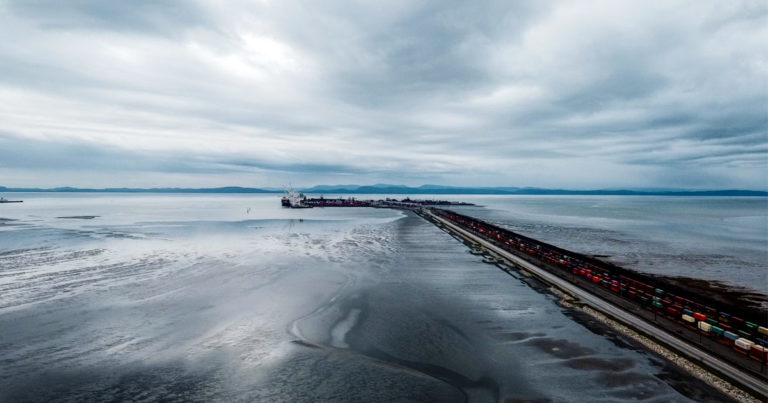
The Port of Vancouver is proposing to double the size of its shipping terminal beside the Tsawwassen Ferry Terminal, putting further stress on an estuary that has already lost more than 70% of its natural habitat…
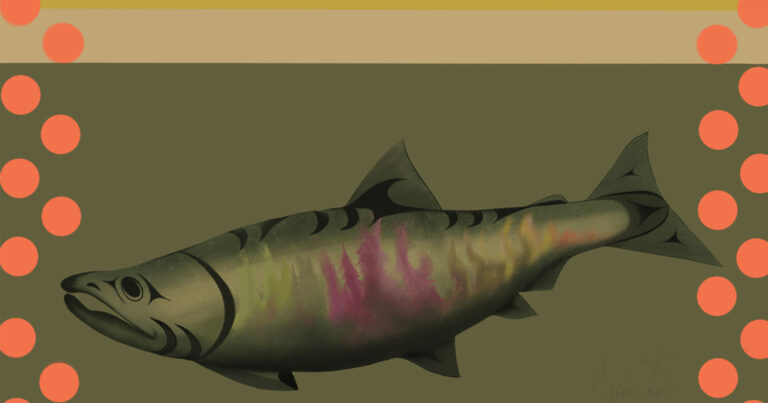
Our new report, Toward a Vision for Salmon Habitat in the Lower Fraser River sets bold recommendations to address the loss of salmon habitat that has been identified as a key factor in the crisis many recognize for Fraser River salmon…
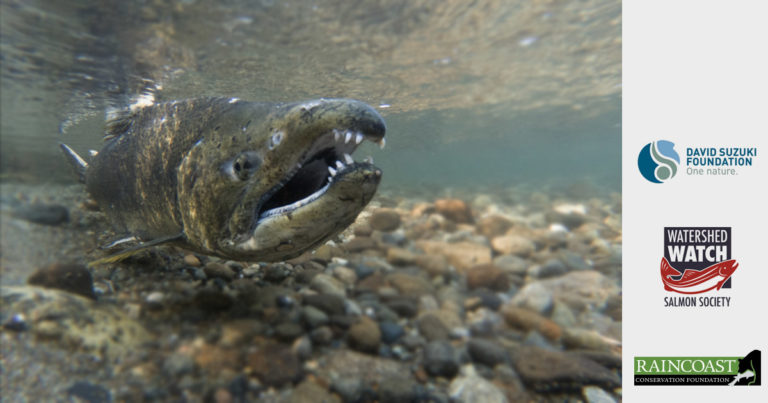
This backgrounder on endangered Fraser Chinook has been produced by Raincoast Conservation Foundation, David Suzuki Foundation, and Watershed Watch…

What is the Marine Stewardship Council? The Marine Stewardship Council, or “MSC”, is an international, independent non-profit organization which sets a standard for sustainable fishing. Fisheries that wish to demonstrate they are well-managed and sustainable compared to the science-based MSC standards are assessed by a team of experts who are independent of both the fishery…
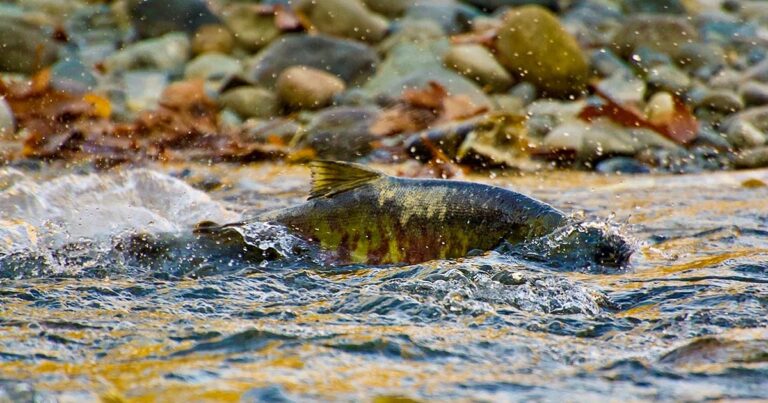
As I crouch on the riverbank taking measurements of the salmon carcass, the ever-telling sensation of being watched creeps up my neck. I look up to see a mother black bear and her two cubs across the river, staring right at me. Our eyes meet, and time slows. In this moment of connected eyes and…

Raincoast biologist Misty MacDuffee joined Mark Brennae on CFAX 1070 to talk about the Fraser River and the fish that rely on its distinct and interconnected habitat. The Fraser Estuary supports more than 100 species that are recognized as “at-risk” (threatened, endangered or of concern) either provincially or federally.1 Misty MacDuffee is part of a…

Pacific salmon, especially Chinook and Chum, reside and feed in estuaries during downstream migrations. But the extent to which they rely on estuaries, and which habitats within estuaries, is not well understood. We need to understand this complexity if we are going to enact effective conservation policies. This is especially important in urban systems where habitat loss is ongoing, and at different rates across the estuarine mosaic. The Fraser River estuary, for example, supports a multitude of fish species…

Hatcheries have failed to protect or restore the old ages, big sizes, range of migration times and diversity of wild Chinook salmon. For Southern Residents to recover, the age structure and run timing of wild Chinook runs, along with abundance, need to be restored. This is not the objective of hatcheries…

There is currently renewed interest in locating historical streams that have long been paved over and lost in Vancouver and the Lower Mainland. Mapping these historical landscape features offers a connection to the land that has been lost through urbanization and highlights opportunities for restoration…

The Fraser River in British Columbia remains one of the world’s most productive salmon rivers. Equally significant is the Fraser River’s estuary, which serves as vital habitat for fish, bird, and mammal species that are linked across thousands of kilometers of the Northeast Pacific Ocean. All Fraser River populations of salmon…
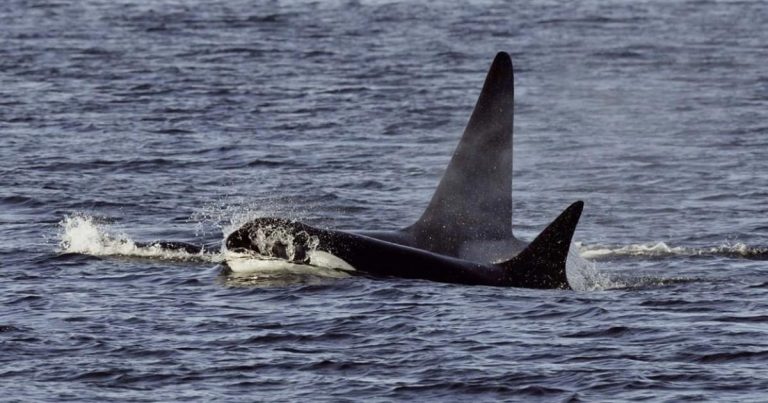
The day after the federal government approved the Trans Mountain Pipeline yet again, Raincoast’s Wild Salmon Program Director, Misty MacDuffee spoke with Mark Brennae on CFAX 1070 to talk pipelines, whales, and how humans are implicated in the disappearance of species. There is, of course, the risk of an oil spill or a vessel strike, but the noise and disturbance on both inbound and outbound tankers is always a certainty. And that noise can reduce the whales ability to echolocate and communicate…