Oil and chemical spill tracking

Spills of oil and chemicals into freshwater and ocean environments have killed fish, degraded habitat, and led to closures of commercial, recreational, and Indigenous fisheries. Raincoast’s Healthy Waters Program is positioned to collect data at the scene of a spill and collaborate with various organizations and First Nations to understand the impact of a spill. 

Tracker will host a number of rugged analytical instruments, and enable the measurement of several contaminants in the field, including coliform bacteria, nutrients, metals, pesticides, and tracers of wastewater effluent.
Photo by Peter Ross.
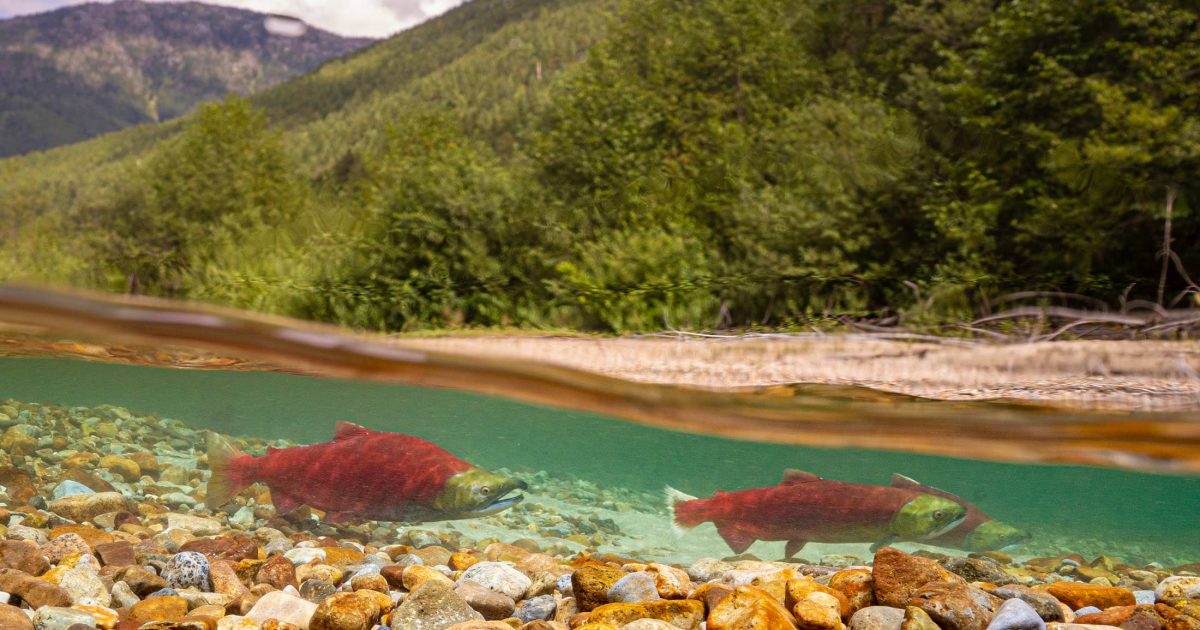
Two sockeye salmon swimming in a river.
Photo by Fernando Lessa.

Spills happen

Spills originate from all manner of accidents. The 2005 train derailment that spilled caustic soda into the Cheakamus River that killed 500,000 fish, The 2015 spill of 3,000 L of Bunker C oil from the MV Marathassa into English Bay. The 2020 fire aboard the MV ZIM Kingston in Juan de Fuca Strait that resulted in the loss of 104 mixed cargo shipping containers into the ocean. Each and every accident is bad news, and threatens the health of fish and whales, and contributes to the degradation of their habitats.

Being prepared is key

Given the sudden and unpredictable nature of oil and chemical spills, our oil and chemical spill response work entails being agile and available for support to First Nations, government agencies, and industry during a major spill. We are developing science protocols, and acquiring sampling kits, field equipment, and safety gear, and are poised to deploy our team to the scene of a spill. 

Being prepared on all fronts is key to limiting the damage from a spill. We recognize that with spills, it’s not a matter of if, but when. Research and monitoring to confirm the origin of the spill, track the fate of the spilled product, and monitor the recovery of ecosystem components routinely fails to be a priority. We will deploy expert capacity where and when needed, and work to prevent harm to valued ecosystem components.
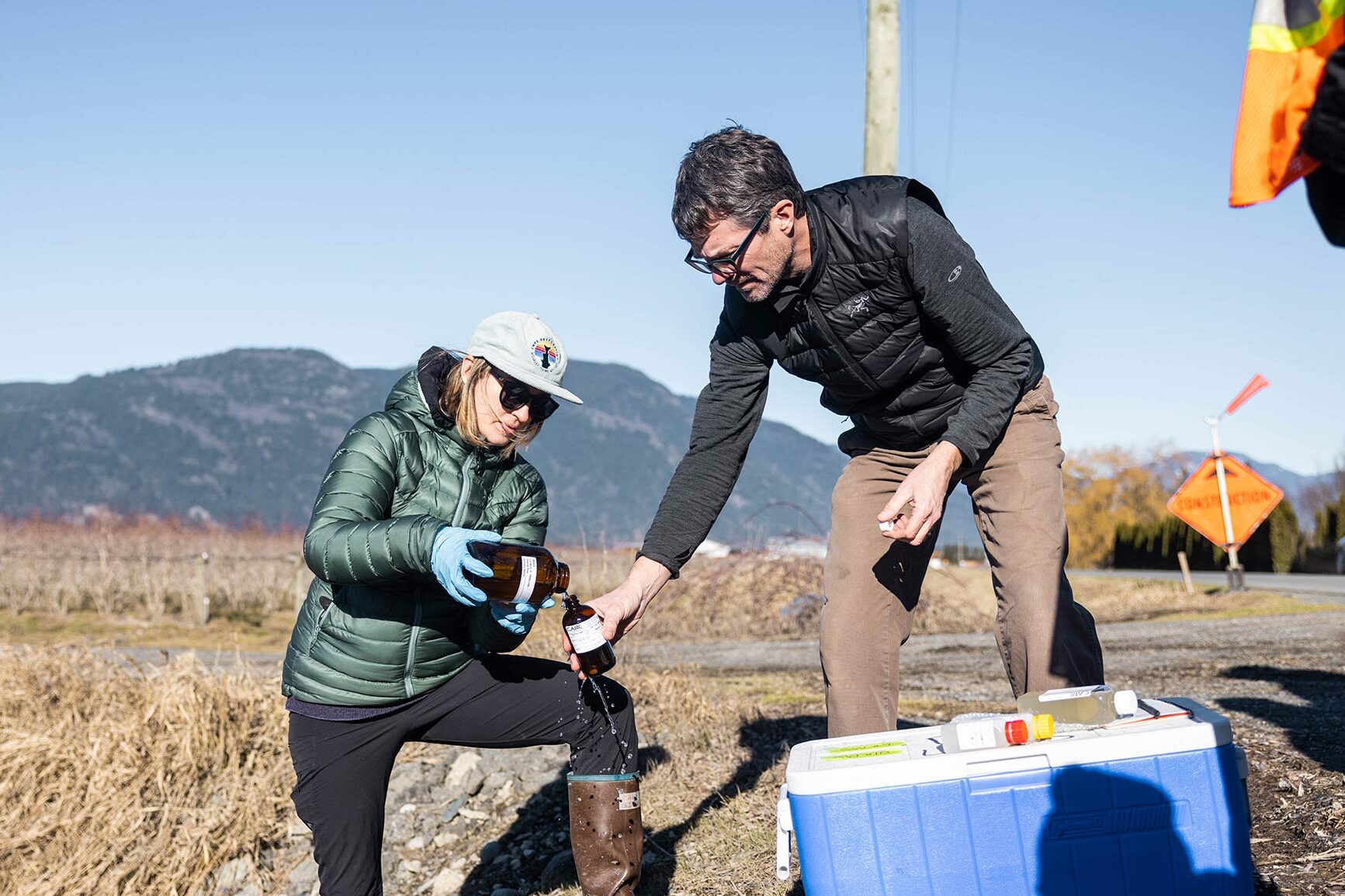
Two people working together to collect water samples in a farm field with the mountains in the background.
Photo by Alex Harris.
https://www.raincoast.org/reports/flood

Semá:th X̱ó:tsa (Sumas Lake) Floods of 2021

The catastrophic floods of late 2021 in southern British Columbia (Canada) and neighbouring Washington State (USA) destroyed homes, farms and businesses, with excess water spilling debris, animal carcasses and diesel fuel into historically productive fish habitat. 

We assembled a team to assess water quality in the former Semá:th X̱ó:tsa (Sumas Lake) area of the Fraser Valley over a seven-week period after the floods. We collected water samples from 11 surface water sites and four groundwater sites for comprehensive contaminant analysis and a subsequent risk-based evaluation. We measured 379 analytes (chemical components and bacteria), including 262 anthropogenic contaminants. We examined excess nutrients, metals, fecal coliform, hydrocarbons, pesticides, pharmaceuticals, and personal care products, perfluorinated compounds, sucralose, and tire-related chemicals.

Recent articles
A heron standing in the water at sunrise.

Harold the Heron

I promised you a story about bears…it’s coming.  First I want to share with you one of the less mammalian experiences that treat our team up at the field station each year. Almost daily we observe Harold the (Great Blue) Heron, who includes our dock in his territory. Great fish habitat for this piscivore (fish…
The best modern technology, just edwards.

Is America’s Chernobyl in Canada’s future?

Guest comment by Chris Genovali Many Canadians have been anxiously following the unfolding Gulf of Mexico oil spill disaster and are experiencing a deep sense of unease as they scan the daily media reports.
Two orca whales swimming in the water.

Doug’s Orcas

We promised a picture of Doug’s birthday Orcas…here they are! One male and one female. Photo ID records helped us identify them as known individuals in the transient (marine mammal-eating) population. They stuck around the field station for about half an hour before zooming down Lama Pass towards Hunter Island.  Wolfman Doug and crew was…
The best modern technology, just edwards.

Oil and water

Is America’s Chernobyl in Canada’s future? Monday Magazine Many Canadians have been anxiously following the unfolding Gulf of Mexico oil spill disaster and are experiencing a deep sense of unease as they scan the daily media reports. Such foreboding is clearly understandable as one can’t help thinking this might be a nightmarish peek into one…
dummy-img

Royal Victoria Marathon 2010

Charity Pledge Program Location: Victoria BC Canada Date: October 10 2010 Raincoast is an Official Pledge Charity of the 31st Annual Royal Victoria Marathon! Did you know that some Fraser River sockeye salmon swim upstream the equivalent of 12 full marathons? Join our Raincoast Salmon Run team, and help us reach our goal of walking…
Fish farms on the BC coast threaten wild salmon.

Is salmon farming sustainable?

By Chris Genovali, Special to the Vancouver Sun Mary Ellen Walling’s opinion piece ( Farmed salmon is more than just another meal option, May 10) conveniently skips over every single substantive problem salmon aquaculture presents to the marine environment, both locally and globally.
The best modern technology, just edwards.

Is America’s Chernobyl in Canada’s future?

Guest Commentary by Chris Genovali for Buzzflash Many Canadians have been anxiously following the unfolding Gulf of Mexico oil spill disaster and are experiencing a deep sense of unease as they scan the daily media reports.
A humbpack feeds

Big oil eyes B.C. coast

Marine mammals have made a remarkable recovery in this province, but that could be erased by a catastrophic oil spill. Georgia Straight By Charlie Smith Since 2004, scientists have been travelling up and down the B.C. coast on the Achiever, a steel-hulled, 22-metre sloop owned by the Raincoast Conservation Foundation. In this time, they have…