

Shifting salmon policy
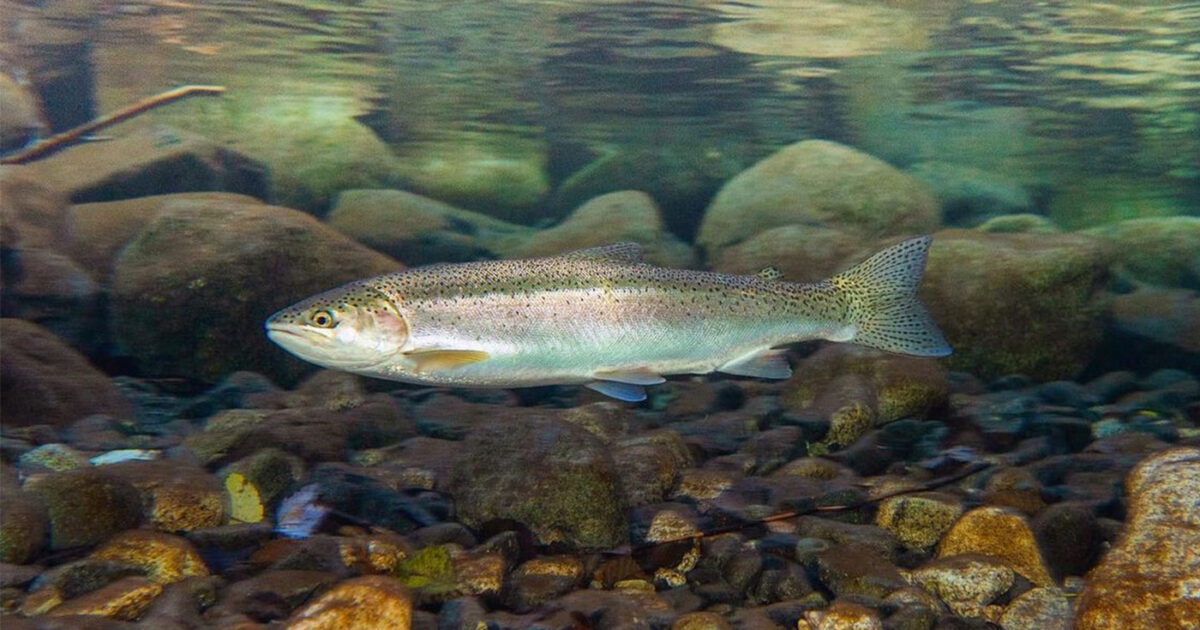
Photo by Alex Harris.
Ecosystems are complex. They are communities of living organisms connected through interacting processes and features on the land, in water, and between the two. Yet BC’s antiquated environmental policy doesn’t reflect this. Colonial society governs ecosystems by siloing them into distinct ministries and resources instead of reflecting the interconnected nature of habitats that make them function in the living world. This “siloed decision making”is the root cause of many of the ecological challenges we face today.
Our policy goals
1. Manage fisheries for ecosystems
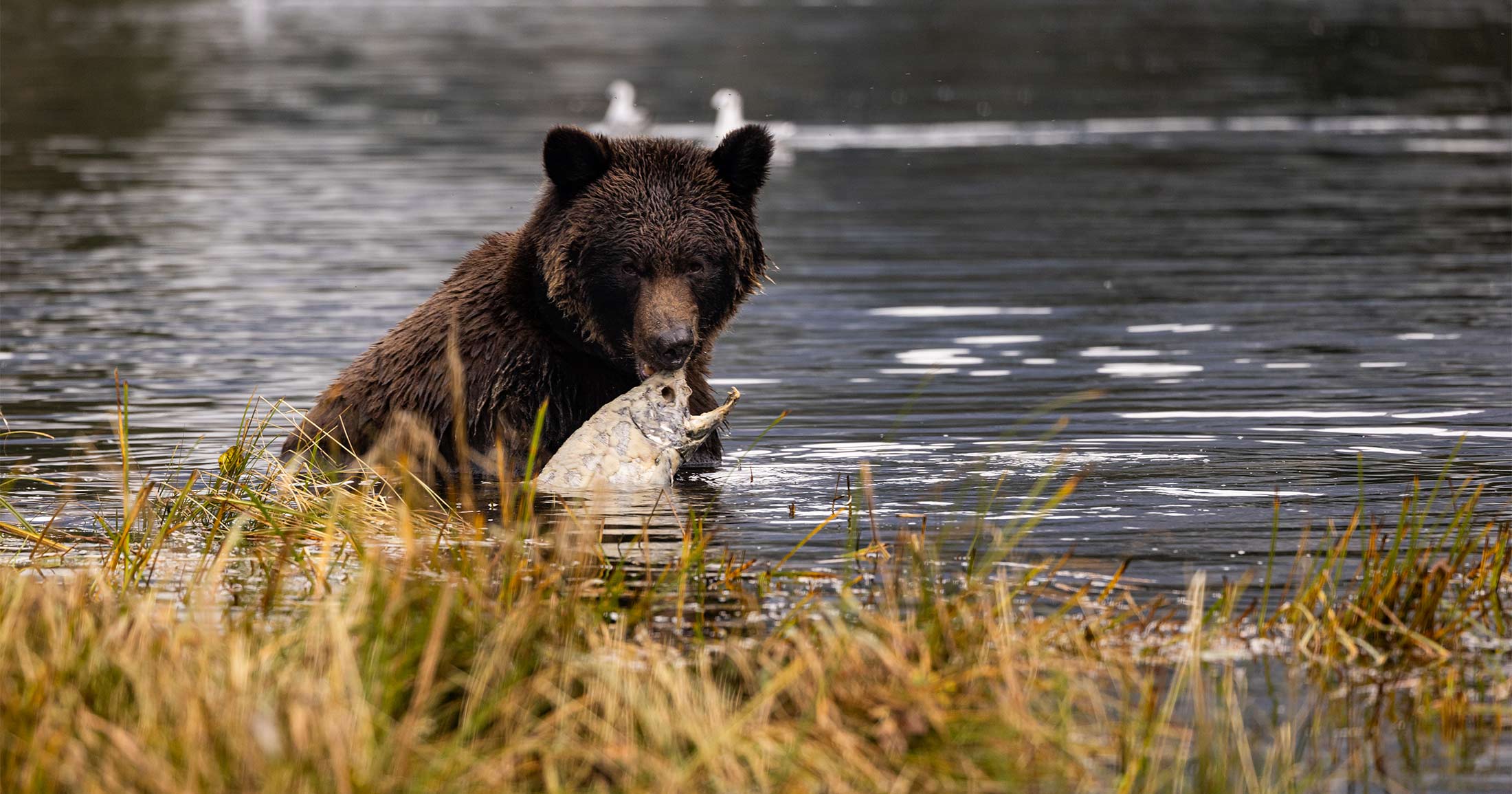
- Set salmon harvest at levels that optimize the benefits of spawning salmon to watersheds and wildlife.
- Shift away from historic management paradigms that minimize the number of spawning salmon reaching rivers and maximize harvest (called Maximum Sustainable Yield). Move towards fisheries management that meets salmon spawning targets that are ecologically based, not harvest-based.
- Shift harvest toward selective terminal fisheries (conducted in or near the rivers of origin) that respect the ‘place-based’ nature of salmon, and optimize the benefits to ecosystems, Indigenous cultures, and local communities.
2. Implement ecological-based governance
- Conservation planning and a commitment to sustainability that looks 7 generations ahead.
- A “whole-of-government” approach that implements shared solutions by Indigenous, federal, provincial, and municipal governments to achieve salmon recovery from inland watersheds and rivers, to the open ocean.
- Governance that honours Aboriginal rights and title, inherent Indigenous jurisdiction and law, and the United Nations Declaration on the Rights of Indigenous Peoples (UNDRIP) and the Declaration on the Rights of Indigenous Peoples Act (DRIPA).
- Sustainable funding strategies for watershed-scale restoration and planning.
3. Advance land-use policies that prioritize the health of wild salmon and biodiversity
- Zoning that bolsters functioning watersheds and riparian habitat (i.e.protect natural features, limit impervious surfaces, reduce urban sprawl, adopt nature-based solutions).
- Forestry policy that prioritizes salmon health by restricting clear-cutting in salmon watersheds, and incentivizes a sustainable, second or third-growth forest economy.
- Climate adaptation policy that incentivizes nature-based solutions including natural shorelines, intact riparian areas, unrestricted floodplains, managed retreat, and use of rain-gardens in urban areas.
Our recent reports
Recent articles
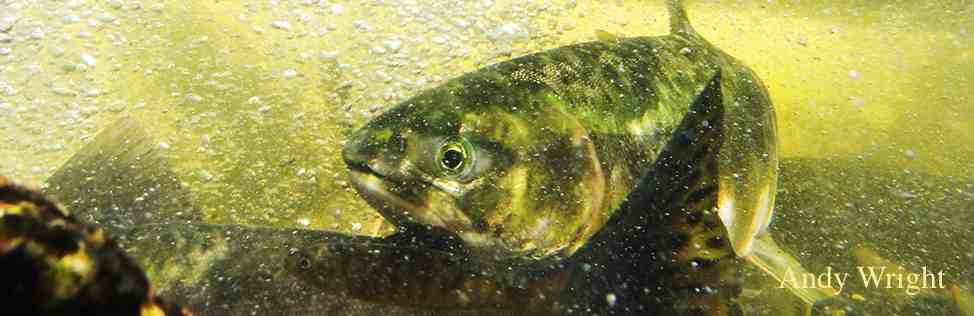
Small streams surveys
Our interest in small streams stems from their importance to genetic diversity, as nutrient corridors for riparian habitats, food and access sources for bears and other predators, evolutionary opportunities, and fresh water rearing habitat for juvenile salmon, especially coho. When combined, small streams can also provide moderate salmon production which can be important for subsistence fisheries.

Open-net fish farms sell out the future
Times Colonist Thursday, May 17, 2007 Re: “The coastal economy: Let’s keep options open,” May 14. I am a fourth-generation Vancouver Islander and have lived long enough to recognize an outdated ideology. Dan Miller is privileged to have held such responsible positions as minister of forests, energy, mines and premier. Yet under his watch, coastal…
Grizzly viewing beats hunting
by Chris Genovali letters – Victoria Times Colonist and Vancouver Province Published: Sunday, June 15, 2008 Re: ” Poll: Ban grizzly hunting in B.C.,” June 11. British Columbians have been strongly opposed to the grizzly hunt for several years. In 2001, the International Fund for Animal Welfare commissioned Strategic Communications to conduct a province wide…
Fear and Loathing: Is it better to be a wolf in Canada than the U.S.?
By CHRIS GENOVALI Monday Magazine May 28 2008 Having recently attended the 20th annual North American Wolf Conference in Pray, Montana, it has been particularly dismaying to learn that literally days after the gray wolf was de-listed from the Endangered Species Act in the United States, trophy hunters in Wyoming had already shot numerous wolves.
No thanks….. dirty oil not wanted
Calgary Herald Published: Saturday, May 17, 2008 Re: “Premier counters dirty oil threat,” May 9. Premier Ed Stelmach is in for a rude awakening if he thinks he’s going to snap his fingers and build a pipeline to the north coast of British Columbia in order to send oilsands products to Asia.
A Lousey Time in Clayoquot Sound
By Mike Price, Biologist, Raincoast Wild Salmon Project Clayoquot Sound; the name conjures up images of mist-shrouded emerald forests, islands of volcanic shapes, wave-pounded shorelines blessed with white-sand beaches, and the site of massive civil uprising against natural destruction; a World Heritage Biosphere Reserve.