

Shifting salmon policy
Photo by Alex Harris.
Ecosystems are complex. They are communities of living organisms connected through interacting processes and features on the land, in water, and between the two. Yet BC’s antiquated environmental policy doesn’t reflect this. Colonial society governs ecosystems by siloing them into distinct ministries and resources instead of reflecting the interconnected nature of habitats that make them function in the living world. This “siloed decision making”is the root cause of many of the ecological challenges we face today.
Our policy goals
1. Manage fisheries for ecosystems
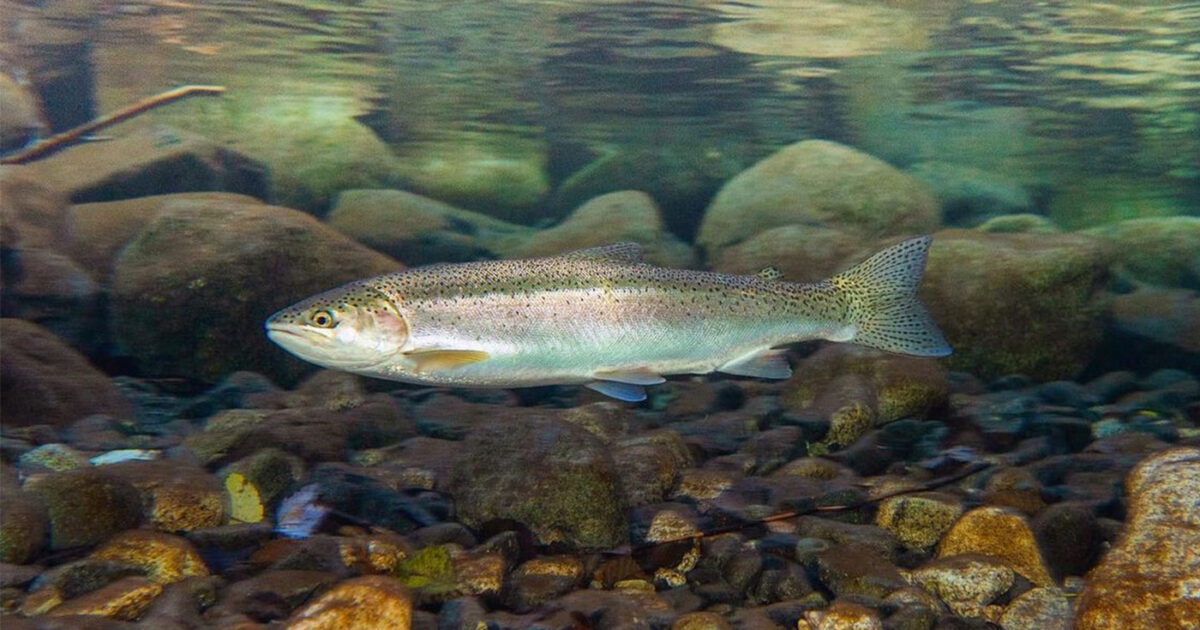
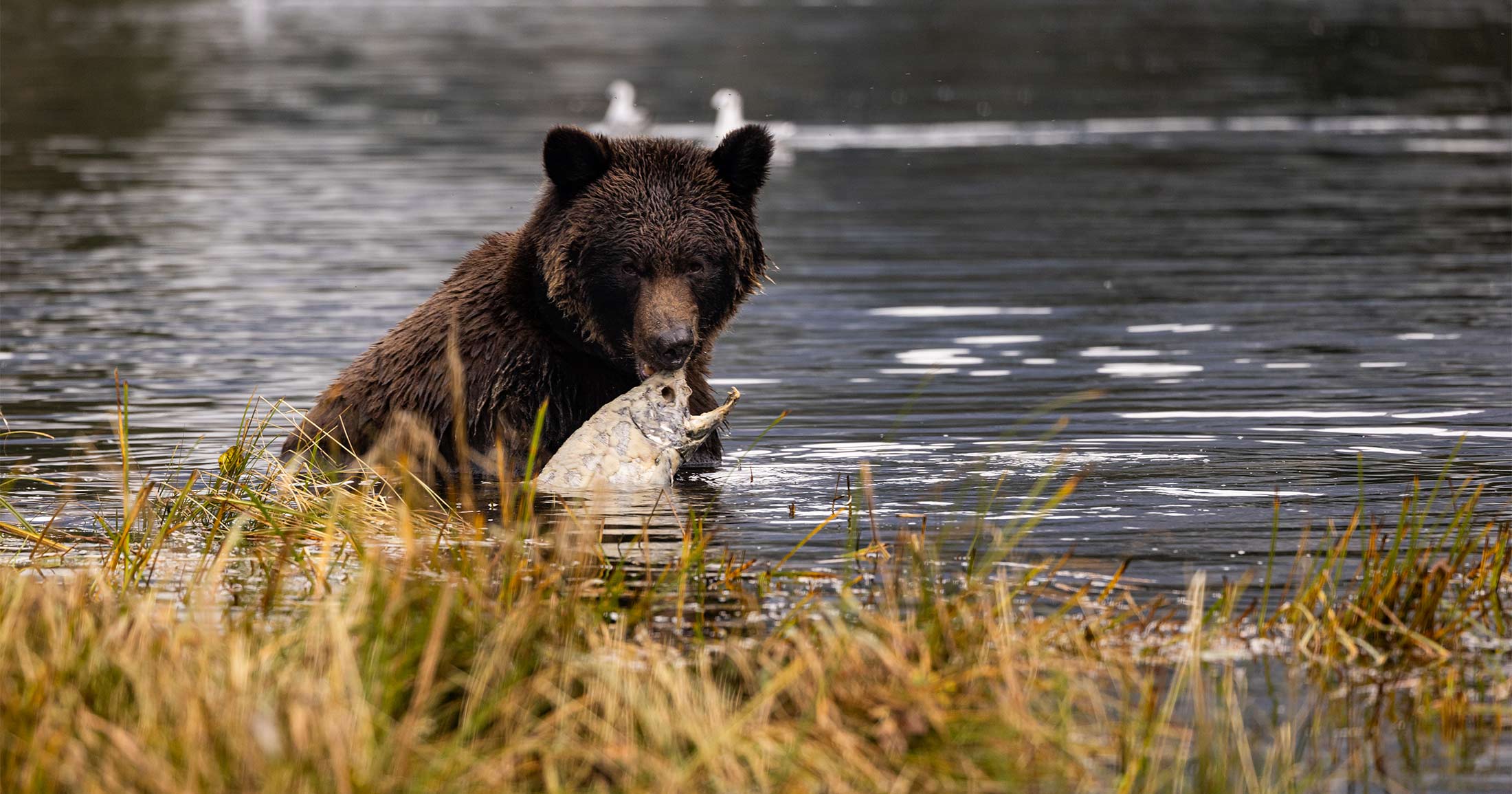
- Set salmon harvest at levels that optimize the benefits of spawning salmon to watersheds and wildlife.
- Shift away from historic management paradigms that minimize the number of spawning salmon reaching rivers and maximize harvest (called Maximum Sustainable Yield). Move towards fisheries management that meets salmon spawning targets that are ecologically based, not harvest-based.
- Shift harvest toward selective terminal fisheries (conducted in or near the rivers of origin) that respect the ‘place-based’ nature of salmon, and optimize the benefits to ecosystems, Indigenous cultures, and local communities.
2. Implement ecological-based governance
- Conservation planning and a commitment to sustainability that looks 7 generations ahead.
- A “whole-of-government” approach that implements shared solutions by Indigenous, federal, provincial, and municipal governments to achieve salmon recovery from inland watersheds and rivers, to the open ocean.
- Governance that honours Aboriginal rights and title, inherent Indigenous jurisdiction and law, and the United Nations Declaration on the Rights of Indigenous Peoples (UNDRIP) and the Declaration on the Rights of Indigenous Peoples Act (DRIPA).
- Sustainable funding strategies for watershed-scale restoration and planning.
3. Advance land-use policies that prioritize the health of wild salmon and biodiversity
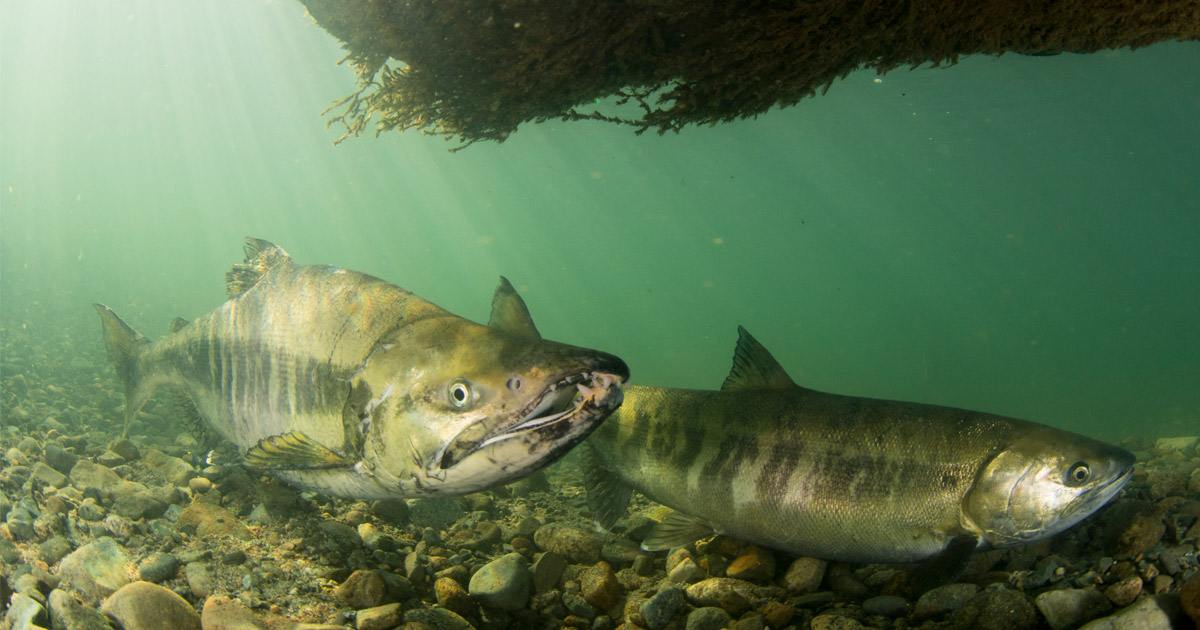
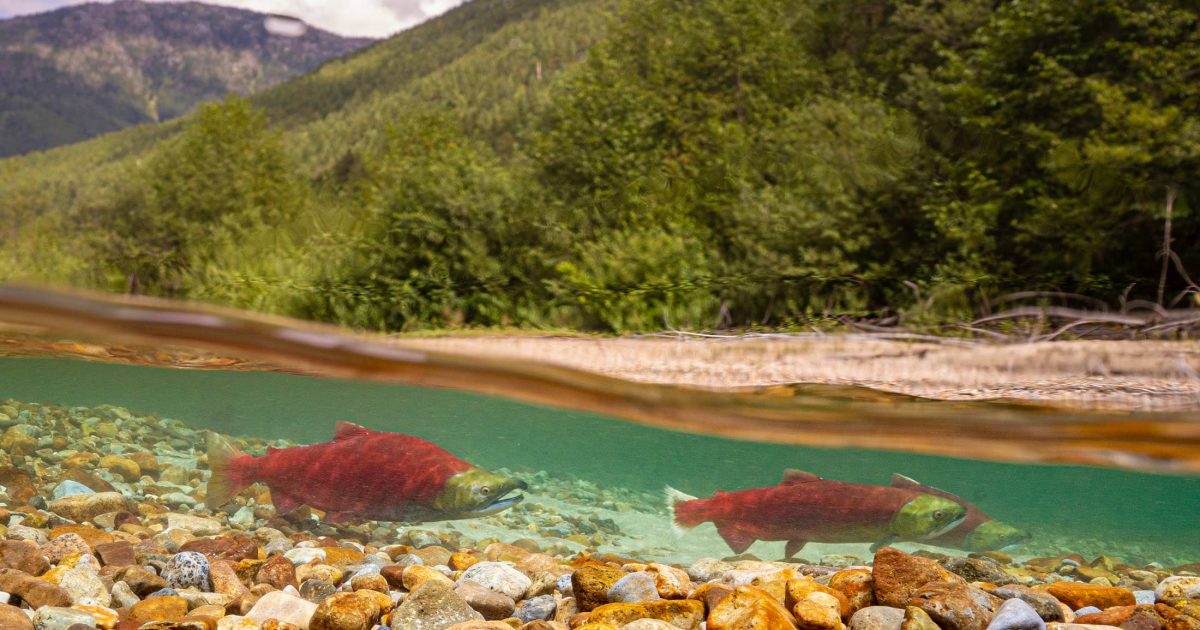
- Zoning that bolsters functioning watersheds and riparian habitat (i.e.protect natural features, limit impervious surfaces, reduce urban sprawl, adopt nature-based solutions).
- Forestry policy that prioritizes salmon health by restricting clear-cutting in salmon watersheds, and incentivizes a sustainable, second or third-growth forest economy.
- Climate adaptation policy that incentivizes nature-based solutions including natural shorelines, intact riparian areas, unrestricted floodplains, managed retreat, and use of rain-gardens in urban areas.
Our recent reports
Recent articles

The Last Wild Wolves (2007)
The last wild Wolves: Ghosts of the Great Bear Rainforest (2007). By Ian McAllister and Raincoast’s Dr. Chris Darimont, with foreword by Raincoast’s Dr. Paul Paquet. Published by Greystone Books. 100% of Darimont and Paquet’s revenues were donated to the Qqs Society in support of science and cultural youth camps at Koeye.
Write letters
Contacting provincial and federal elected officials, as well as members of the opposition and newspapers, is an effective and important way to communicate your thoughts on an issue. Here are some key contacts. Provincial BC Premier Hon. Gordon Campbell (and MLA Vancouver-Point Grey)Mailing address: PO Box 9041 Stn Prov Govt Victoria, BC V8W 9E2Email: Gordon…
Cetacean sightings with Des Kawai
Cetacean sightings with Des Kawai – printable version
 By Des Kawai
Marine Mammal Biologist
Grenville Channel, August 2008
It was not a humpback whale. But if not, then what? We were in the middle of Grenville Channel, conducting our summer survey for marine mammals and birds. Usually, the large whales we see in…
By Des Kawai
Marine Mammal Biologist
Grenville Channel, August 2008
It was not a humpback whale. But if not, then what? We were in the middle of Grenville Channel, conducting our summer survey for marine mammals and birds. Usually, the large whales we see in…
By Des Kawai
Marine Mammal Biologist
Grenville Channel, August 2008
It was not a humpback whale. But if not, then what? We were in the middle of Grenville Channel, conducting our summer survey for marine mammals and birds. Usually, the large whales we see in…
Wolves prefer seafood to steak
In a remote neck of Canada’s backwoods the deer catch a break during the fall. That’s when the wolves go fishing. “Although most people imagine wolves chasing deer and other hoofed animals …
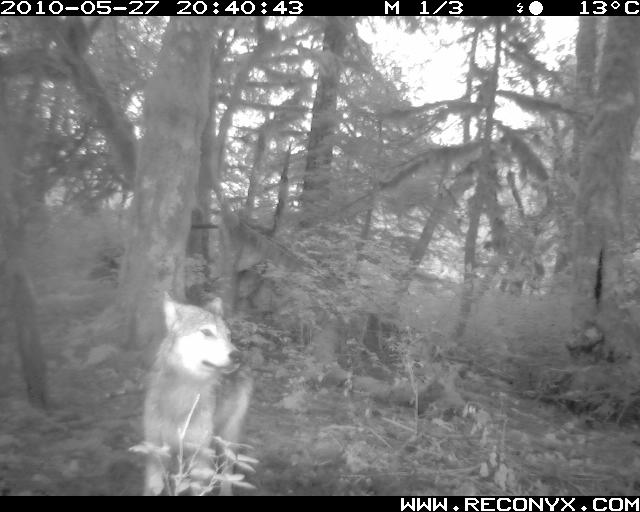
Wolves prefer fish over meat
Researchers found that the Timber wolf prefers salmon when it is available, although it has traditionally been viewed as a ferocious pack animal that hunts and kills deer. A team who looked at the feeding habits of wolves in a remote area of British Columbia in Canada found …
Fearsome deer hunters? No, wolves would rather dine on a dainty fish dish
By Daily Mail Reporter September 2, 2008 Wolves have a reputation as fearsome meat-eating hunters, but given the choice they would rather have a tasty salmon, scientists have found. This is because a leisurely fishing trip is safer and less exhausting than chasing deer. Salmon also provides an excellent source of nutrition.