

Shifting salmon policy
Photo by Alex Harris.
Ecosystems are complex. They are communities of living organisms connected through interacting processes and features on the land, in water, and between the two. Yet BC’s antiquated environmental policy doesn’t reflect this. Colonial society governs ecosystems by siloing them into distinct ministries and resources instead of reflecting the interconnected nature of habitats that make them function in the living world. This “siloed decision making”is the root cause of many of the ecological challenges we face today.
Our policy goals
1. Manage fisheries for ecosystems
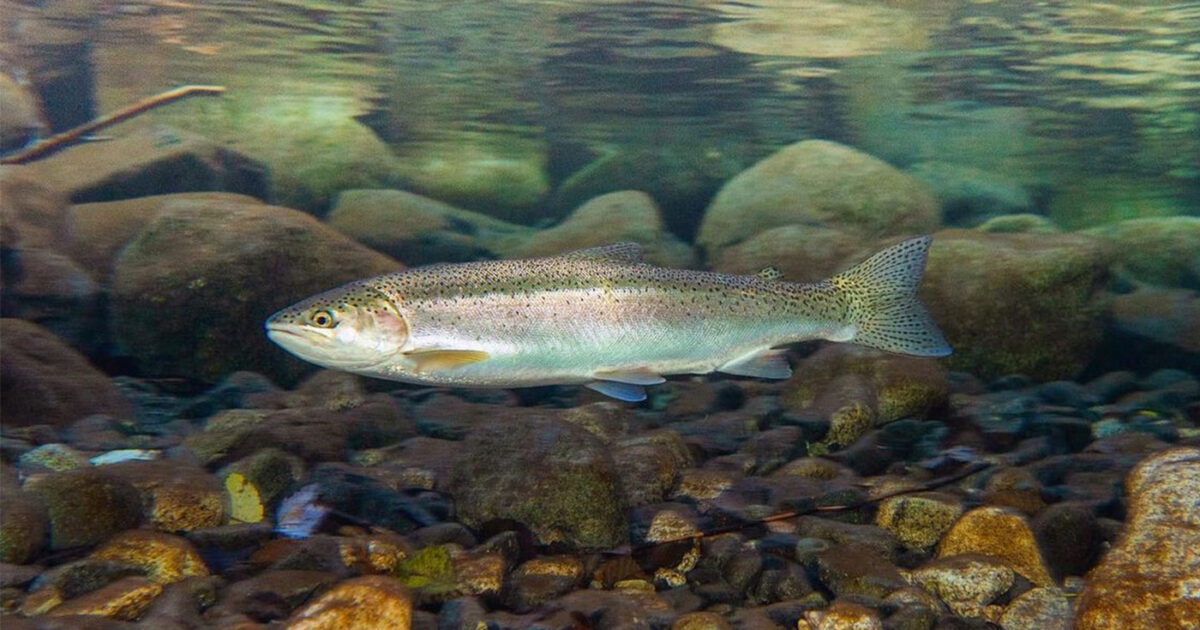
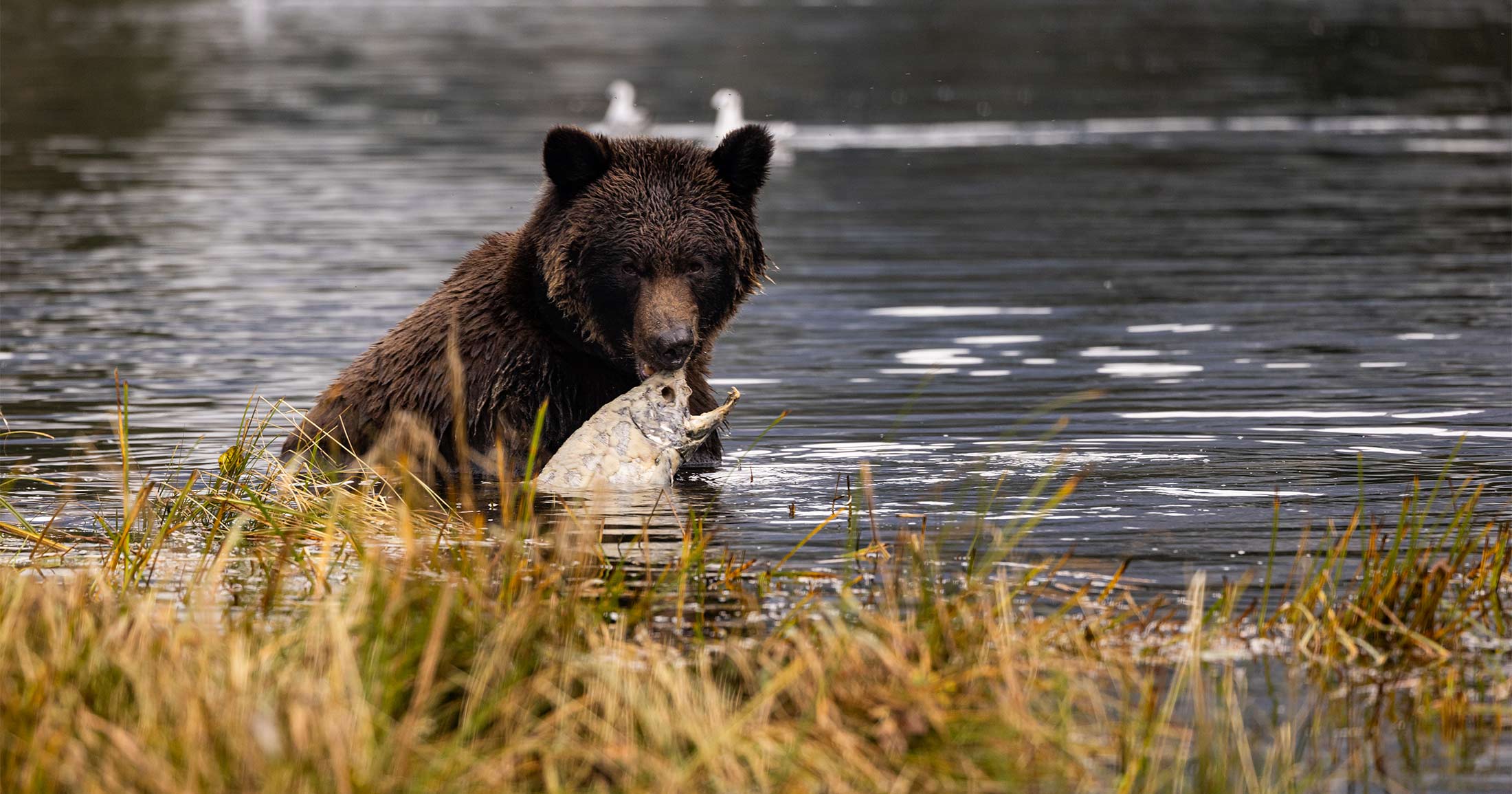
- Set salmon harvest at levels that optimize the benefits of spawning salmon to watersheds and wildlife.
- Shift away from historic management paradigms that minimize the number of spawning salmon reaching rivers and maximize harvest (called Maximum Sustainable Yield). Move towards fisheries management that meets salmon spawning targets that are ecologically based, not harvest-based.
- Shift harvest toward selective terminal fisheries (conducted in or near the rivers of origin) that respect the ‘place-based’ nature of salmon, and optimize the benefits to ecosystems, Indigenous cultures, and local communities.
2. Implement ecological-based governance
- Conservation planning and a commitment to sustainability that looks 7 generations ahead.
- A “whole-of-government” approach that implements shared solutions by Indigenous, federal, provincial, and municipal governments to achieve salmon recovery from inland watersheds and rivers, to the open ocean.
- Governance that honours Aboriginal rights and title, inherent Indigenous jurisdiction and law, and the United Nations Declaration on the Rights of Indigenous Peoples (UNDRIP) and the Declaration on the Rights of Indigenous Peoples Act (DRIPA).
- Sustainable funding strategies for watershed-scale restoration and planning.
3. Advance land-use policies that prioritize the health of wild salmon and biodiversity
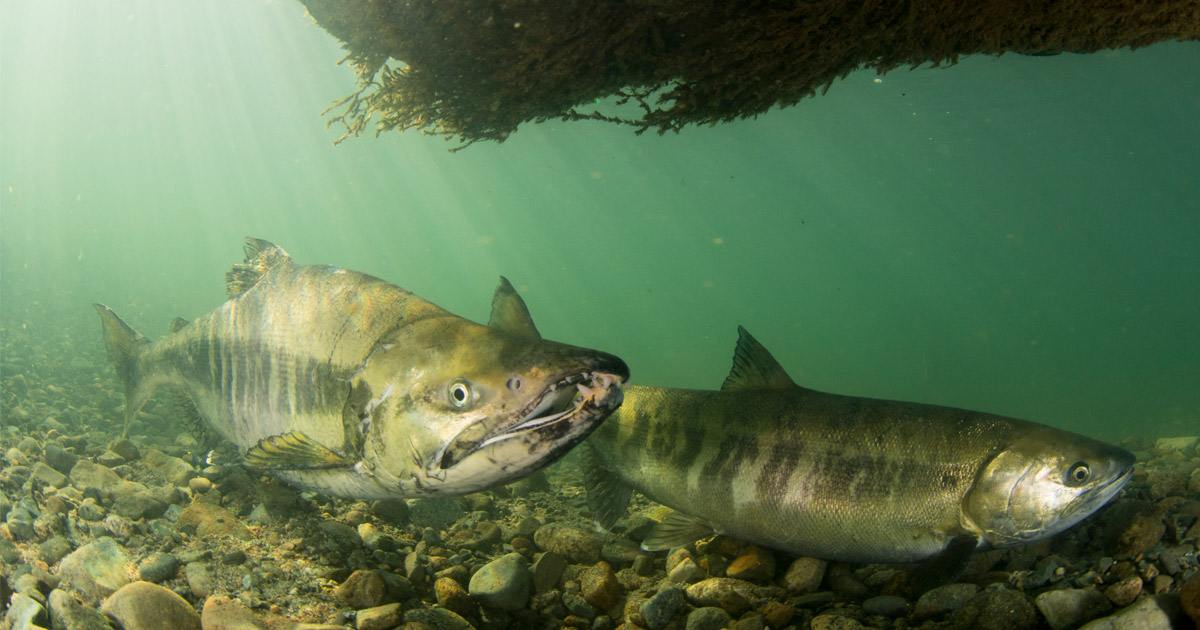
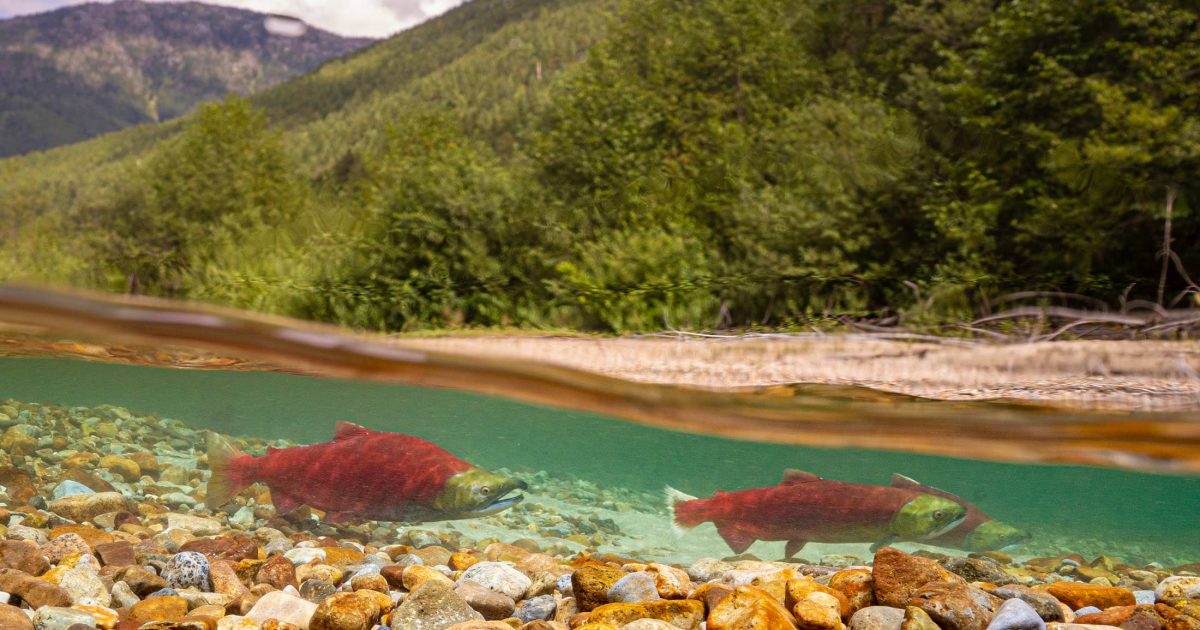
- Zoning that bolsters functioning watersheds and riparian habitat (i.e.protect natural features, limit impervious surfaces, reduce urban sprawl, adopt nature-based solutions).
- Forestry policy that prioritizes salmon health by restricting clear-cutting in salmon watersheds, and incentivizes a sustainable, second or third-growth forest economy.
- Climate adaptation policy that incentivizes nature-based solutions including natural shorelines, intact riparian areas, unrestricted floodplains, managed retreat, and use of rain-gardens in urban areas.
Our recent reports
Recent articles

Howling with happiness for Alberta’s wolves
Calgary Herald Editorial Tuesday, October 28, 2008 It’s always heartening when government bows to the advice of experts like Paul Paquet, one of the foremost wolf experts in North America, instead of forging on blindly ahead regardless.
Tar (sands) and Feathers
By Caroline Fox, Ornithologist, Marine Conservation Program Nepean Sound, BC North Coast, October, 2008 In the fall, the skies, lands and waters of the Great Bear Rainforest teem with marine and coastal birds. While some will overwinter here, many millions are in the midst of a major migration south.
Controversial wolf sterilization plan scrapped
By Cathy Ellis Rocky Mountain Outlook October 23, 2008 7:00 AM A controversial government-endorsed University of Alberta experiment to sterilize adult wolves and kill off other members of the packs in order to boost elk numbers has been scrapped.
Keep coast free of oil rigs
Winnipeg Free Press Oct. 22, 2008 by Chris Genovali Re: Ex-premiers sing praises of BC offshore oil development; Campbell nixes notion, (Free Press, Oct. 21). It is unfortunate that former interim premier turned industry consultant Dan Miller is once again advocating for industry to open up British Columbia’s coast to oil rigs,
Drill Baby Drill
Alaska governor Sarah Palin is really more frightening than fiesty CounterPunch, October 20, 2008 Monday Magazine,’a0 October 15, 2008 By Chris Genovali Victoria’s Times-Colonist writer Iain Hunter’s recent column on John McCain’s vice-presidential pick Sarah Palin (“Our election needs Palin’s feistiness,” September 8, 2008) exemplifies the type of feckless punditry plaguing so much of the…
Marine Conservation Workshop
Strengthening Marine and Freshwater Conservation in BC A workshop to share knowledge, expertise and experiences among marine and freshwater conservation groups in BC. When: November 21, 2008, Vancouver 9 am-5:00 pm Where: Empire Landmark Hotel, 1400 Robson Street, Vancouver, BC