

Shifting salmon policy
Photo by Alex Harris.
Ecosystems are complex. They are communities of living organisms connected through interacting processes and features on the land, in water, and between the two. Yet BC’s antiquated environmental policy doesn’t reflect this. Colonial society governs ecosystems by siloing them into distinct ministries and resources instead of reflecting the interconnected nature of habitats that make them function in the living world. This “siloed decision making”is the root cause of many of the ecological challenges we face today.
Our policy goals
1. Manage fisheries for ecosystems
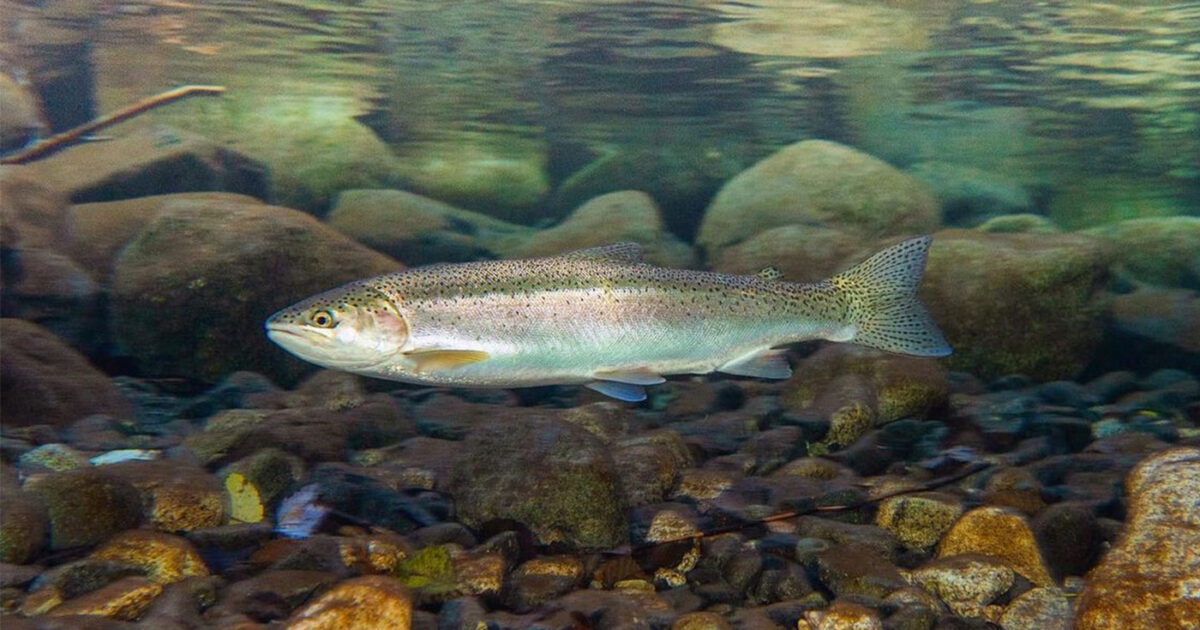
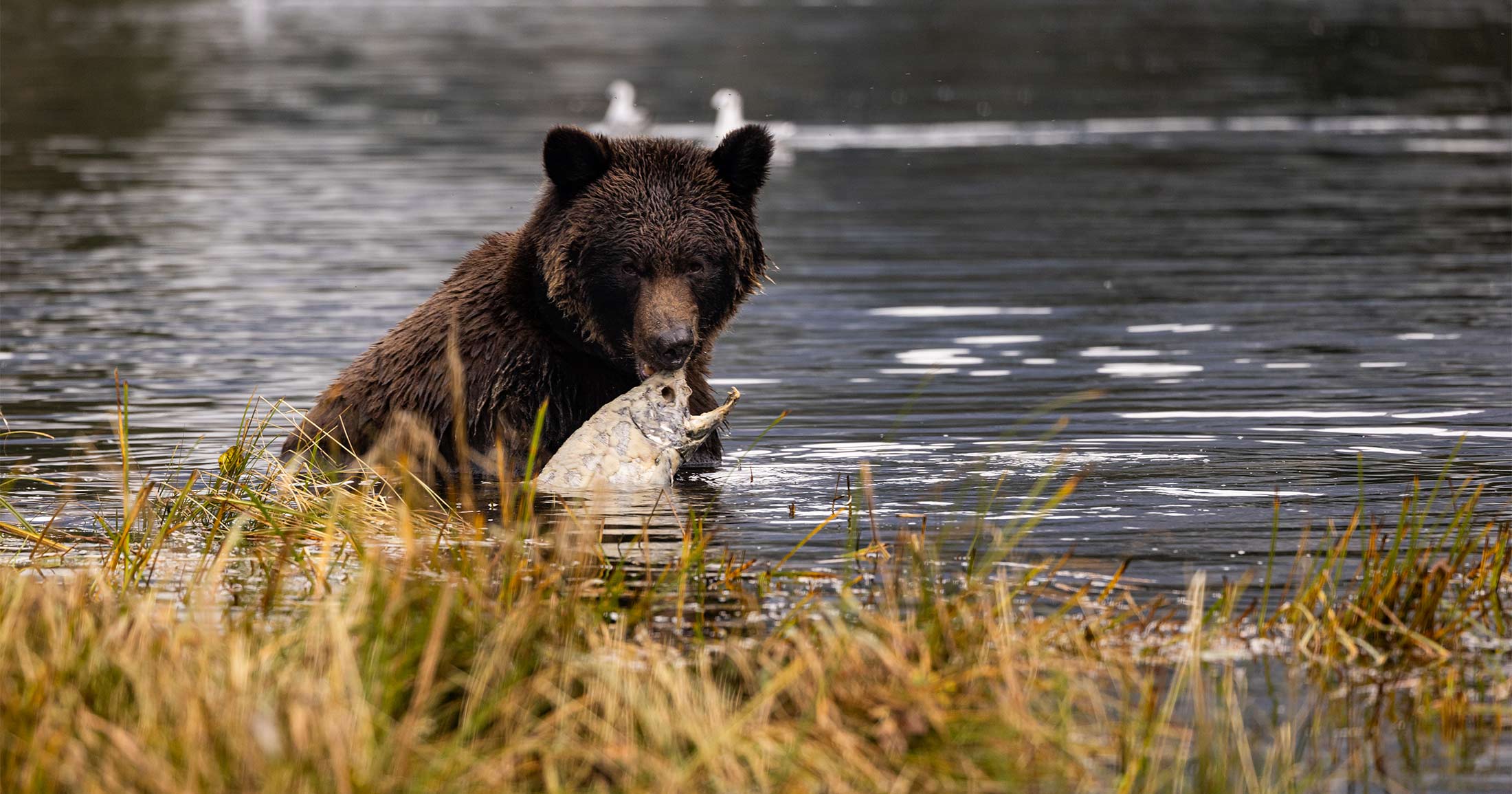
- Set salmon harvest at levels that optimize the benefits of spawning salmon to watersheds and wildlife.
- Shift away from historic management paradigms that minimize the number of spawning salmon reaching rivers and maximize harvest (called Maximum Sustainable Yield). Move towards fisheries management that meets salmon spawning targets that are ecologically based, not harvest-based.
- Shift harvest toward selective terminal fisheries (conducted in or near the rivers of origin) that respect the ‘place-based’ nature of salmon, and optimize the benefits to ecosystems, Indigenous cultures, and local communities.
2. Implement ecological-based governance
- Conservation planning and a commitment to sustainability that looks 7 generations ahead.
- A “whole-of-government” approach that implements shared solutions by Indigenous, federal, provincial, and municipal governments to achieve salmon recovery from inland watersheds and rivers, to the open ocean.
- Governance that honours Aboriginal rights and title, inherent Indigenous jurisdiction and law, and the United Nations Declaration on the Rights of Indigenous Peoples (UNDRIP) and the Declaration on the Rights of Indigenous Peoples Act (DRIPA).
- Sustainable funding strategies for watershed-scale restoration and planning.
3. Advance land-use policies that prioritize the health of wild salmon and biodiversity
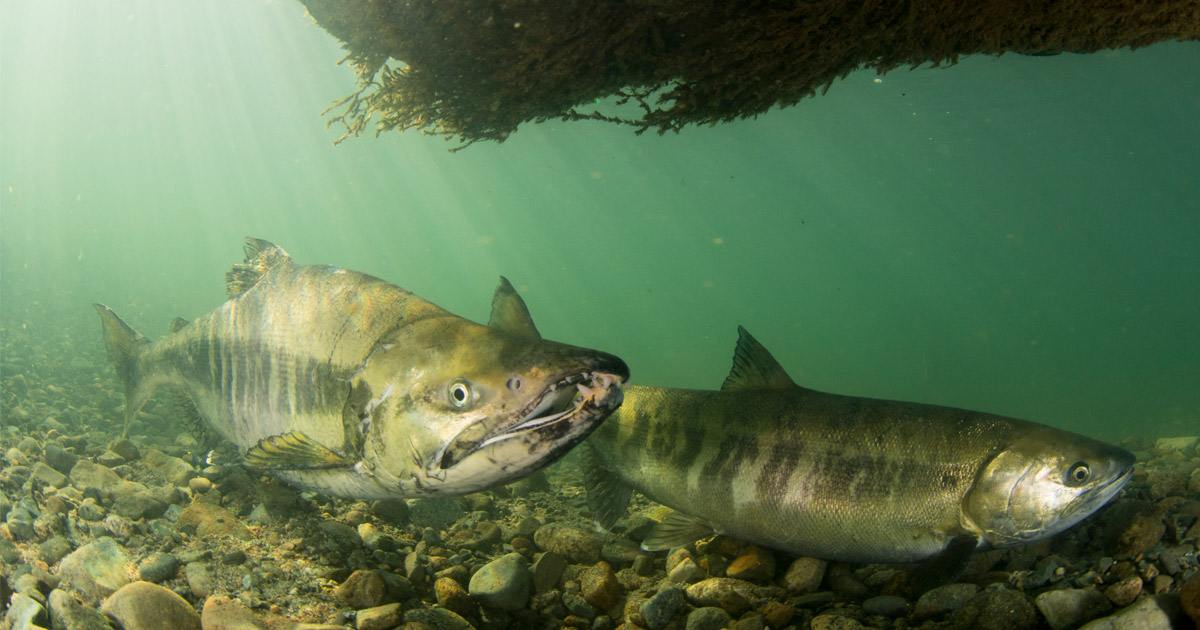
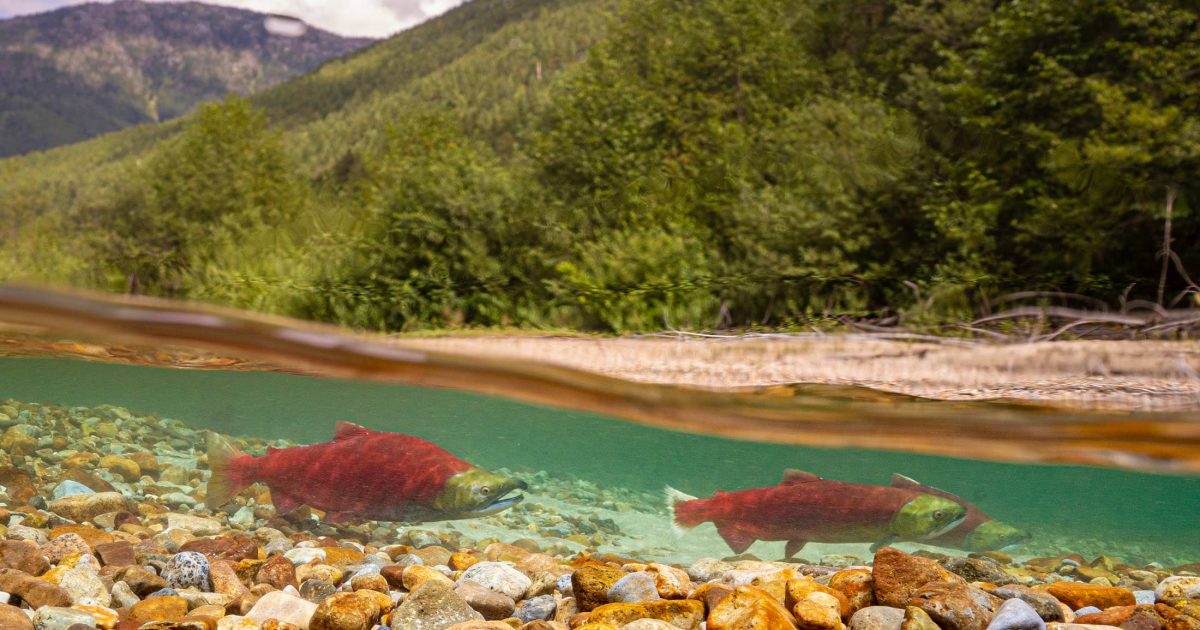
- Zoning that bolsters functioning watersheds and riparian habitat (i.e.protect natural features, limit impervious surfaces, reduce urban sprawl, adopt nature-based solutions).
- Forestry policy that prioritizes salmon health by restricting clear-cutting in salmon watersheds, and incentivizes a sustainable, second or third-growth forest economy.
- Climate adaptation policy that incentivizes nature-based solutions including natural shorelines, intact riparian areas, unrestricted floodplains, managed retreat, and use of rain-gardens in urban areas.
Our recent reports
Recent articles

Overfishing pushing salmon stocks near collapse, study warns
MARK HUME Globe and Mail December 3, 2008 VANCOUVER – Salmon stocks in British Columbia are on the brink of collapse largely because the federal Department of Fisheries and Oceans has consistently allowed too many fish to be killed in commercial and recreational fisheries, according to a new research paper.

Ghost Runs: Management and status assessment of Pacific salmon returning to British Columbia’s central and north coasts
Price, M.H.H., C.T. Darimont, N.F. Temple, and S.M. MacDuffee. 2008. Ghost Runs: Management and status assessment of Pacific salmon returning to British Columbia’s central and north coasts. Canadian Journal of Fisheries and Aquatic Sciences 65:2712-2718 https://doi.org/10.1139/F08-174 Ghost Runs in pdf
Faecal-centric approaches to wildlife ecology and conservation
Darimont, C.T., T.E. Reimchen, H. Bryan, and P.C. Paquet. 2008. Faecal-centric approaches to wildlife ecology and conservation; methods, data and ethics. Wildlife Biology in Practice 4: 73-87. Faecal-centric approaches in pdf
Pumping offshore oil and gas
BC Business Examiner – Vancouver Island Edition Letters December 01, 2008 Re: “Pumping offshore oil and gas” (Business Examiner, Nov 3), it is unfortunate that former, interim premier-turned-industry-consultant Dan Miller is once again advocating for industry to open up British Columbia’s coast to oil rigs, tankers, pipelines and the risk of an Exxon Valdez-style catastrophe.
Silent Fall
Monday Magazine The silence along the river was almost deafening. No birds, bears or wolves appeared along the banks. The reason soon became obvious: not a single salmon was to be seen in the glacial-fed water. Not a single salmon carcass lay on the ground, not in the estuary or the forest. There was no…
Spawning salmon disrupt tight trophic coupling between wolves and ungulate prey in coastal British Columbia
Darimont, C.T., P.C. Paquet, and T.E. Reimchen. 2008. Spawning salmon disrupt tight trophic coupling between wolves and ungulate prey in coastal British Columbia. BMC Ecology 8:14 Salmon and Wolves in pdf