
Shifting salmon policy
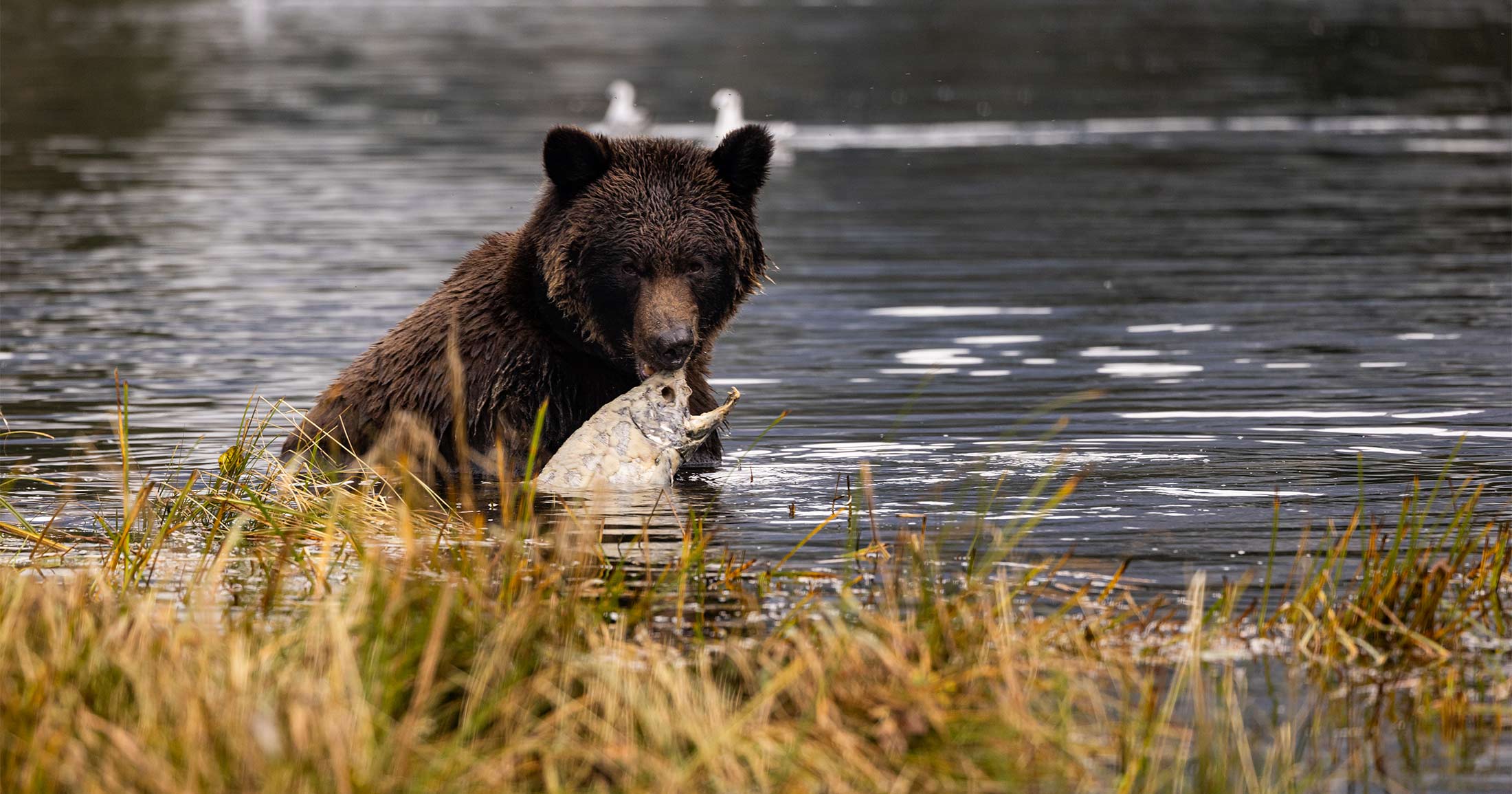
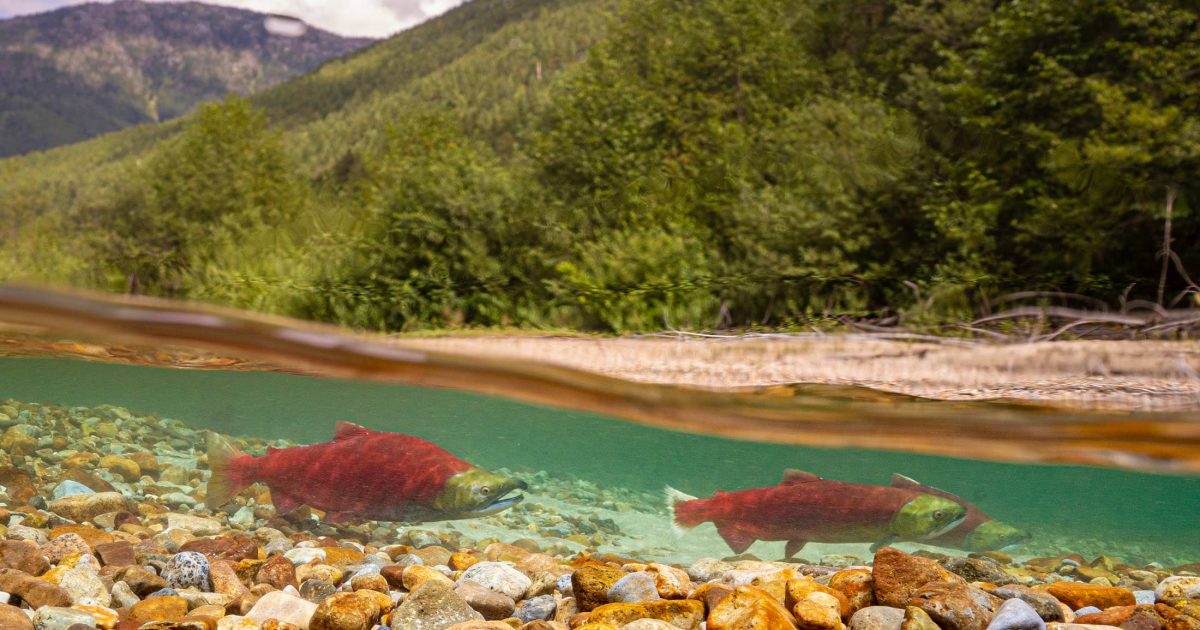
Photo by Alex Harris.
Ecosystems are complex. They are communities of living organisms connected through interacting processes and features on the land, in water, and between the two. Yet BC’s antiquated environmental policy doesn’t reflect this. Colonial society governs ecosystems by siloing them into distinct ministries and resources instead of reflecting the interconnected nature of habitats that make them function in the living world. This “siloed decision making”is the root cause of many of the ecological challenges we face today.
Our policy goals
1. Manage fisheries for ecosystems
- Set salmon harvest at levels that optimize the benefits of spawning salmon to watersheds and wildlife.
- Shift away from historic management paradigms that minimize the number of spawning salmon reaching rivers and maximize harvest (called Maximum Sustainable Yield). Move towards fisheries management that meets salmon spawning targets that are ecologically based, not harvest-based.
- Shift harvest toward selective terminal fisheries (conducted in or near the rivers of origin) that respect the ‘place-based’ nature of salmon, and optimize the benefits to ecosystems, Indigenous cultures, and local communities.
2. Implement ecological-based governance
- Conservation planning and a commitment to sustainability that looks 7 generations ahead.
- A “whole-of-government” approach that implements shared solutions by Indigenous, federal, provincial, and municipal governments to achieve salmon recovery from inland watersheds and rivers, to the open ocean.
- Governance that honours Aboriginal rights and title, inherent Indigenous jurisdiction and law, and the United Nations Declaration on the Rights of Indigenous Peoples (UNDRIP) and the Declaration on the Rights of Indigenous Peoples Act (DRIPA).
- Sustainable funding strategies for watershed-scale restoration and planning.
3. Advance land-use policies that prioritize the health of wild salmon and biodiversity
- Zoning that bolsters functioning watersheds and riparian habitat (i.e.protect natural features, limit impervious surfaces, reduce urban sprawl, adopt nature-based solutions).
- Forestry policy that prioritizes salmon health by restricting clear-cutting in salmon watersheds, and incentivizes a sustainable, second or third-growth forest economy.
- Climate adaptation policy that incentivizes nature-based solutions including natural shorelines, intact riparian areas, unrestricted floodplains, managed retreat, and use of rain-gardens in urban areas.
Our recent reports
Recent articles

Isn’t there a better way to manage bears?
SPRING HUNT 2010 By Chris Genovali A new decade has dawned, but this month yet another year of grizzly bear hunting will commence in British Columbia. The B.C. grizzly bear hunt has been a source of unrelenting controversy. Both sides are stuck in a continual expert-driven argument in which each camp claims science supports their…

Royal Victoria Marathon 2010
Raincoast is an official charity of the charity pledge program of the Royal Victoria Marathon. We are looking for runners for the October 2010 race. Its a beautiful time of year to run the waterfront streets of Victoria and this a qualifier for the Boston Marathon. The salmon and bears need you! Sign up…
What’s at stake? Canada’s west coast
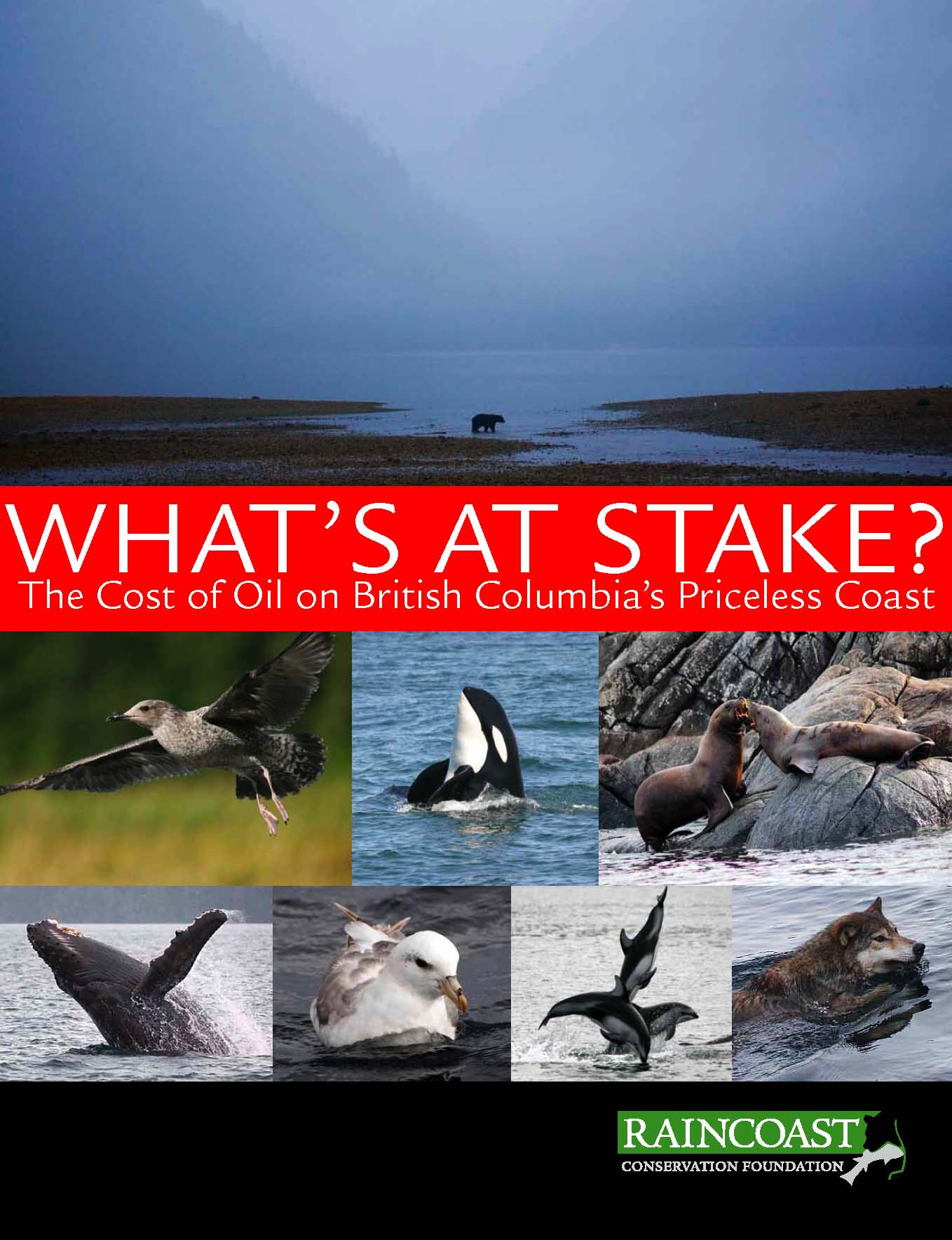
[youtube =http://www.youtube.com/watch?v=rU3emD_0HLk] The Canadian Federal government is pushing a proposal to ship tar sands oil by tanker through Canada’s Inside Passage . These tankers must navigate dog leg channels, rocky courses, unpredictable and sometimes violent weather after leaving the proposed terminal in Kitimat, BC. These routes would bring tankers into BC’s productive, diverse and fragile…
Last Stand of the Great Bear
Done in production with National Geographic, this trailer highlights the full length feature on large carnivores and Raincoast’s work to protect them in the Great Bear Rainforest.

Courting the Next Exxon Valdez
Counterpunch,
By Chris Genovali, Paul Paquet and Misty MacDuffee
The BC coast is a fragile archipelago with a boundary between land and ocean that changes by the hour, by the season and over millennia.

British Columbia’s coast in the balance
Island Tides, Apr 1, 2010 Chris Genovali, Paul Paquet and Misty MacDuffee In this part of the world March 24 will, to borrow a phrase from Franklin Delano Roosevelt, live in infamy; it’s the anniversary of the Exxon Valdez oil spill disaster that took place in Alaska’s Prince William Sound in 1989.