
Shifting salmon policy
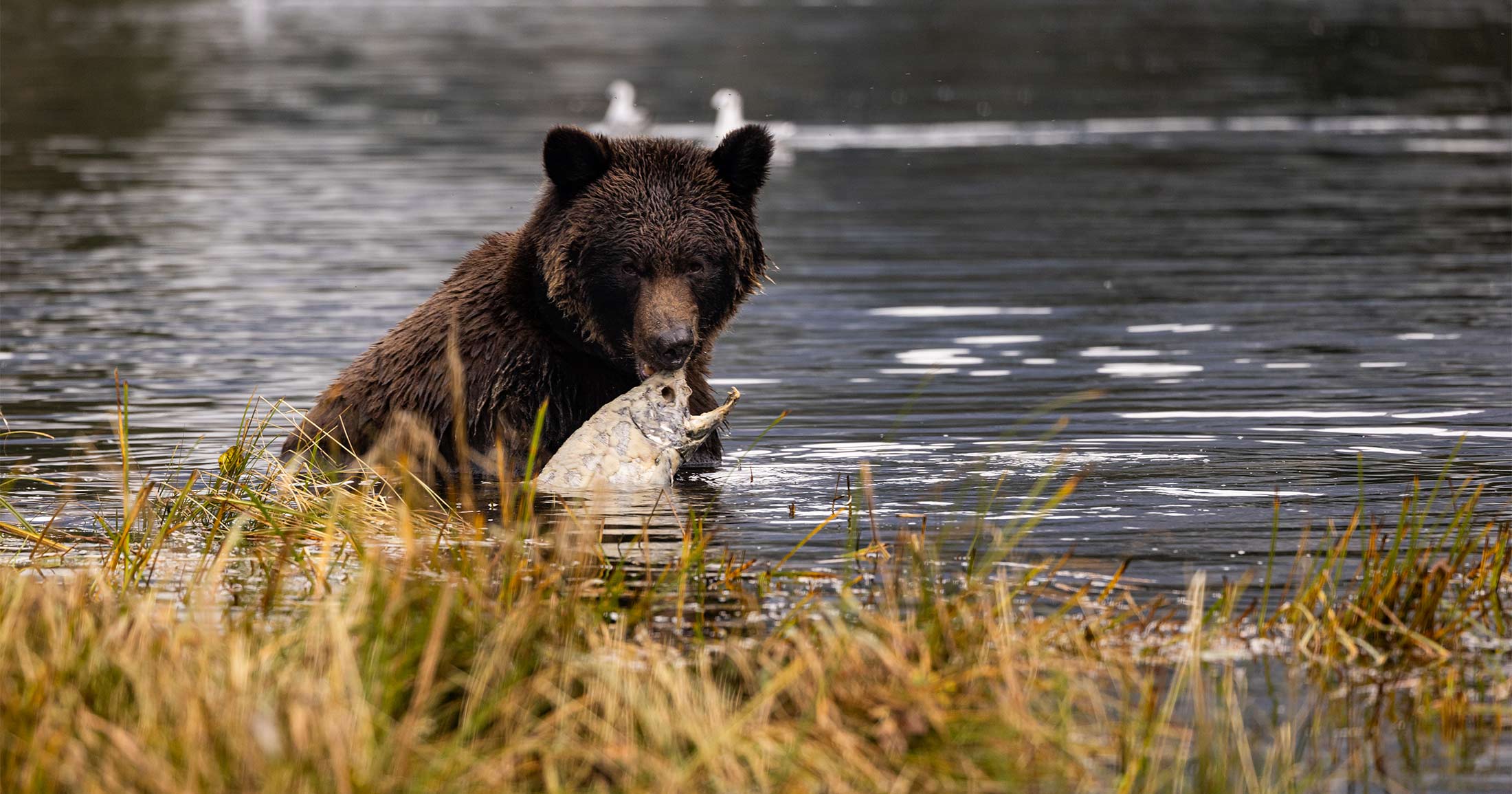
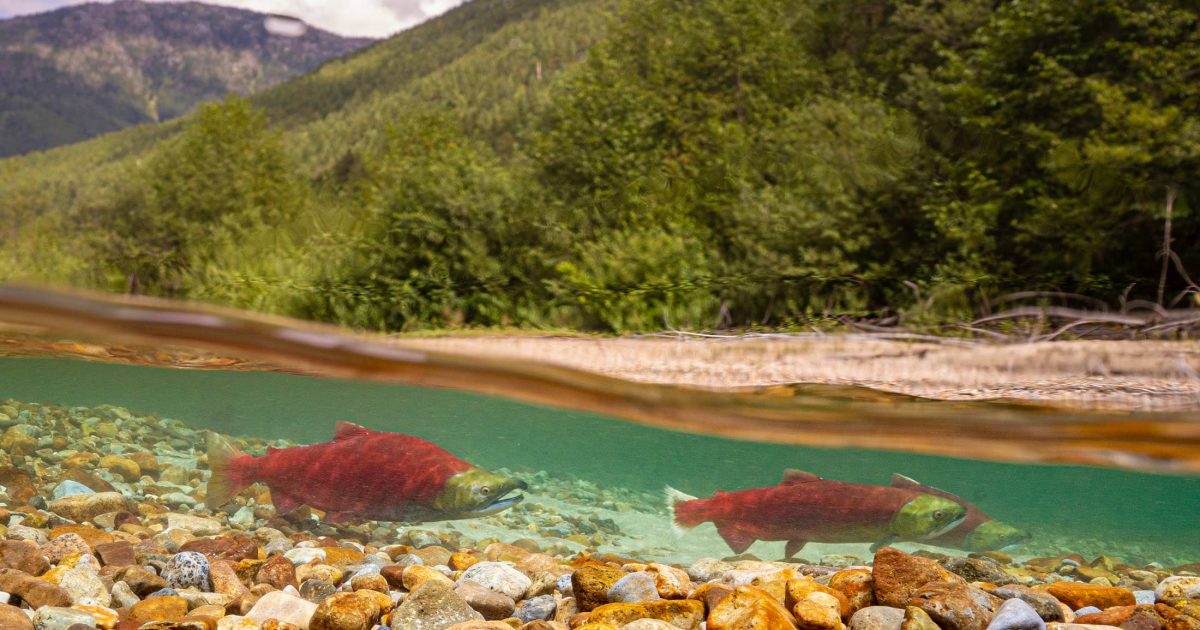
Photo by Alex Harris.
Ecosystems are complex. They are communities of living organisms connected through interacting processes and features on the land, in water, and between the two. Yet BC’s antiquated environmental policy doesn’t reflect this. Colonial society governs ecosystems by siloing them into distinct ministries and resources instead of reflecting the interconnected nature of habitats that make them function in the living world. This “siloed decision making”is the root cause of many of the ecological challenges we face today.
Our policy goals
1. Manage fisheries for ecosystems
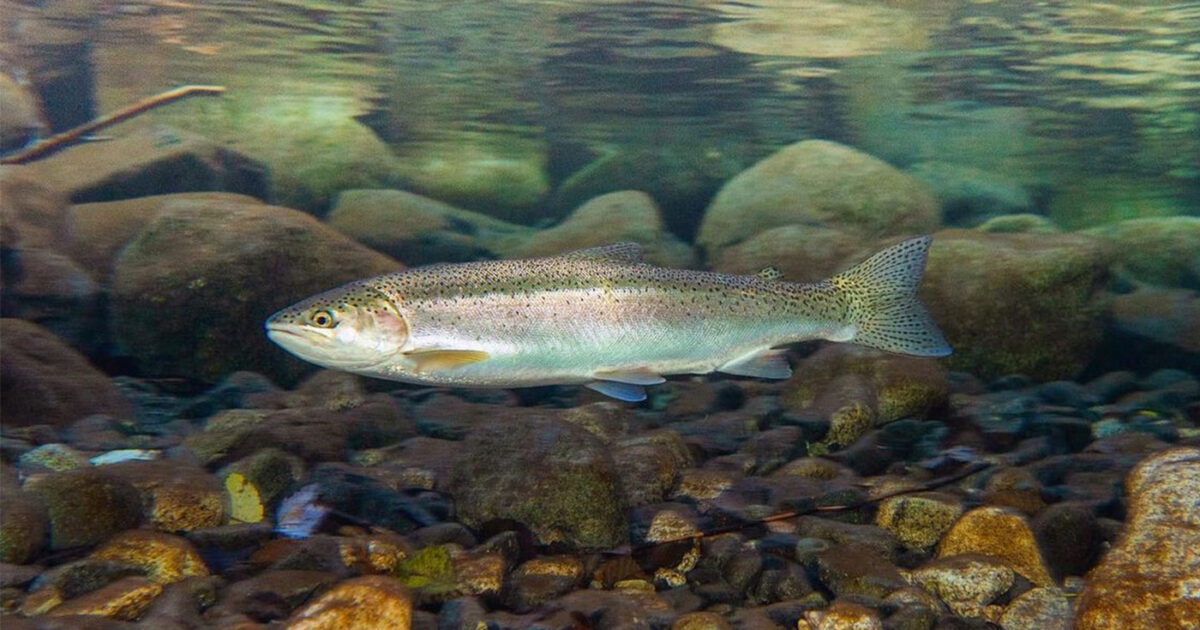
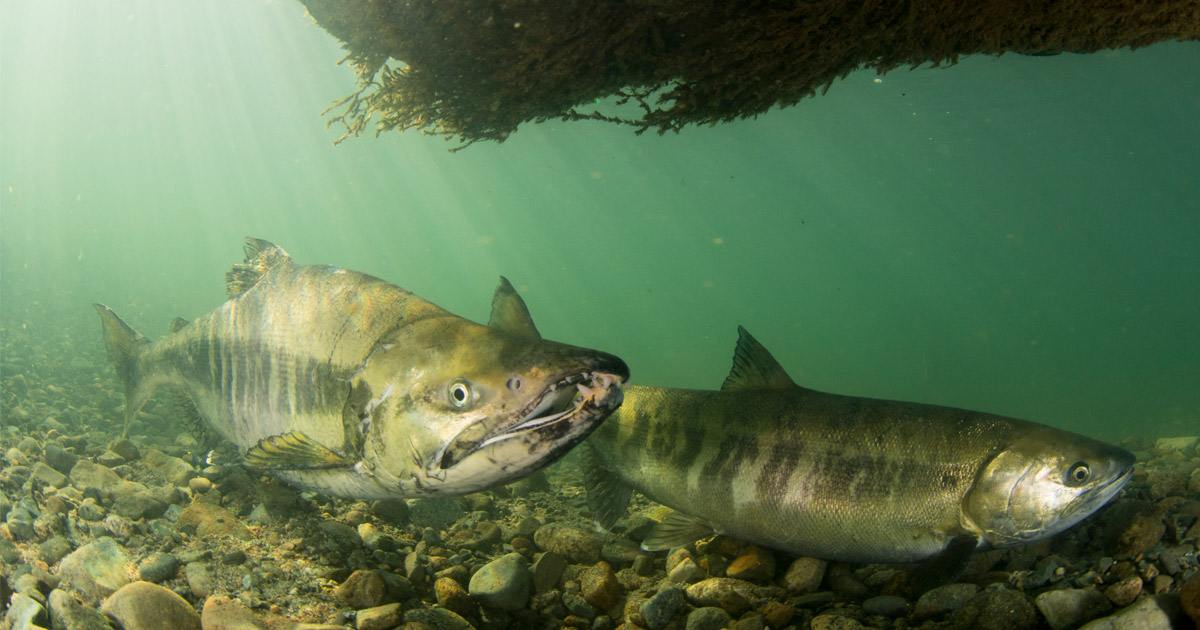
- Set salmon harvest at levels that optimize the benefits of spawning salmon to watersheds and wildlife.
- Shift away from historic management paradigms that minimize the number of spawning salmon reaching rivers and maximize harvest (called Maximum Sustainable Yield). Move towards fisheries management that meets salmon spawning targets that are ecologically based, not harvest-based.
- Shift harvest toward selective terminal fisheries (conducted in or near the rivers of origin) that respect the ‘place-based’ nature of salmon, and optimize the benefits to ecosystems, Indigenous cultures, and local communities.
2. Implement ecological-based governance
- Conservation planning and a commitment to sustainability that looks 7 generations ahead.
- A “whole-of-government” approach that implements shared solutions by Indigenous, federal, provincial, and municipal governments to achieve salmon recovery from inland watersheds and rivers, to the open ocean.
- Governance that honours Aboriginal rights and title, inherent Indigenous jurisdiction and law, and the United Nations Declaration on the Rights of Indigenous Peoples (UNDRIP) and the Declaration on the Rights of Indigenous Peoples Act (DRIPA).
- Sustainable funding strategies for watershed-scale restoration and planning.
3. Advance land-use policies that prioritize the health of wild salmon and biodiversity
- Zoning that bolsters functioning watersheds and riparian habitat (i.e.protect natural features, limit impervious surfaces, reduce urban sprawl, adopt nature-based solutions).
- Forestry policy that prioritizes salmon health by restricting clear-cutting in salmon watersheds, and incentivizes a sustainable, second or third-growth forest economy.
- Climate adaptation policy that incentivizes nature-based solutions including natural shorelines, intact riparian areas, unrestricted floodplains, managed retreat, and use of rain-gardens in urban areas.
Our recent reports
Recent articles

Victoria Marathon pledge program celebrates five years
Victoria News By Travis Paterson The run for $250,000 is on. Last week, the team behind the GoodLife Fitness Victoria Marathon announced a total of 18 charities have been selected to the event’s 2010 Charity Pledge Program (CPP). That’s already seven more charities than last year, said GFVM general manager Cathy Noel. “We have so…

BC’s killer whales get their day in court
The Georgia Straight – Commentary By Misty MacDuffee and Chris Genovali As British Columbia’s southern resident killer whales return to local waters, many scientists and citizens are growing increasingly concerned for their future. Even with new arrivals in local pods, the population still needs to show clear signs of recovery.

Feds sued over failure to protect killer whales
Case could determine future of Canada’s at-risk species MEDIA RELEASE June 15, 2010 VANCOUVER – Conservation groups, represented by Ecojustice, are back in Federal Court today after launching a lawsuit against Canada’s Department of Fisheries and Oceans (DFO) over the protection of B.C.’s resident killer whales. If successful, the case will ensure stronger legal protection…
Canada’s killer whales get their day in court
Guest Commentary Misty MacDuffee and Chris Genovali for BUZZFLASH As British Columbia’s southern-resident killer whales are welcomed back to local waters, many scientists and citizens are growing increasing concerned for their future. Even with new arrivals to our local pods, the population still needs to show clear signs of recovery. One action we hope will…
Environmentalists in court to extend protection for killer whales
By Judith Lavoie, Victoria Times Colonist VICTORIA – Environmental groups will be in court this week arguing the federal government is failing to adequately protect critical habitat for endangered and threatened pods of killer whales. Ecojustice lawyer Margot Venton is asking the Federal Court of Canada for a judicial review, claiming the government is acting…
Law suit begins for protection of resident killer whales
Murray Langdon interviews Raincoast’s Misty MacDuffee about the federal government’s failure to protect the critical habitat of BC’s resident killer and the upcoming court case.