

Shifting salmon policy
Photo by Alex Harris.
Ecosystems are complex. They are communities of living organisms connected through interacting processes and features on the land, in water, and between the two. Yet BC’s antiquated environmental policy doesn’t reflect this. Colonial society governs ecosystems by siloing them into distinct ministries and resources instead of reflecting the interconnected nature of habitats that make them function in the living world. This “siloed decision making”is the root cause of many of the ecological challenges we face today.


Our policy goals
1. Manage fisheries for ecosystems
- Set salmon harvest at levels that optimize the benefits of spawning salmon to watersheds and wildlife.
- Shift away from historic management paradigms that minimize the number of spawning salmon reaching rivers and maximize harvest (called Maximum Sustainable Yield). Move towards fisheries management that meets salmon spawning targets that are ecologically based, not harvest-based.
- Shift harvest toward selective terminal fisheries (conducted in or near the rivers of origin) that respect the ‘place-based’ nature of salmon, and optimize the benefits to ecosystems, Indigenous cultures, and local communities.
2. Implement ecological-based governance
- Conservation planning and a commitment to sustainability that looks 7 generations ahead.
- A “whole-of-government” approach that implements shared solutions by Indigenous, federal, provincial, and municipal governments to achieve salmon recovery from inland watersheds and rivers, to the open ocean.
- Governance that honours Aboriginal rights and title, inherent Indigenous jurisdiction and law, and the United Nations Declaration on the Rights of Indigenous Peoples (UNDRIP) and the Declaration on the Rights of Indigenous Peoples Act (DRIPA).
- Sustainable funding strategies for watershed-scale restoration and planning.


3. Advance land-use policies that prioritize the health of wild salmon and biodiversity
- Zoning that bolsters functioning watersheds and riparian habitat (i.e.protect natural features, limit impervious surfaces, reduce urban sprawl, adopt nature-based solutions).
- Forestry policy that prioritizes salmon health by restricting clear-cutting in salmon watersheds, and incentivizes a sustainable, second or third-growth forest economy.
- Climate adaptation policy that incentivizes nature-based solutions including natural shorelines, intact riparian areas, unrestricted floodplains, managed retreat, and use of rain-gardens in urban areas.
Our recent reports
Recent articles
April conservation expedition with Raincoast’s Dr. Paul Paquet
As Raincoast’s Senior Scientist, and a world renowned large carnivore expert, Paul’s input is key to guiding our research and conservation programs in both the Great Bear Rainforest and the Salish Sea. Paul will provide insight into key conservation issues on BC’s coast including…

Advancing non-invasive approaches for monitoring wildlife: considering the ethics of developing new techniques
A theme that underlies our research in the Applied Conservation Lab is that we aim to apply methods that are minimally invasive to wildlife. This ethos emerges in large part from our partners in First Nations communities, who have taught us many important lessons about respecting the people, places, and animals where we work. Our…

Meet the team of applied conservation scientists at the University of Victoria
Last year the Raincoast lab at UVic marked an important new milestone with the creation of the Raincoast Chair in Applied Conservation Science at the University of Victoria. This five year Chaired Professorship allows us to expand our research, teaching and outreach programs in community-driven applied conservation science. Our long-term vision is to train next…

Southern Resident killer whales need more than luck
The reality is that calves like Lucky only have a 40% chance of survival. More sobering still is the fact that no calves have survived in this population in the last three years. This is why we have stopped using images…

L124 is the newest member of the Southern Resident killer whales
Listen to Misty MacDuffee explain some of the context around the recent birth of L124 in the Salish Sea. Declines in Chinook abundance, especially to the Fraser, are affecting killer whale behaviour patterns, fertility and survival…
Why Southern Resident killer whales, and the Salish Sea, need your help
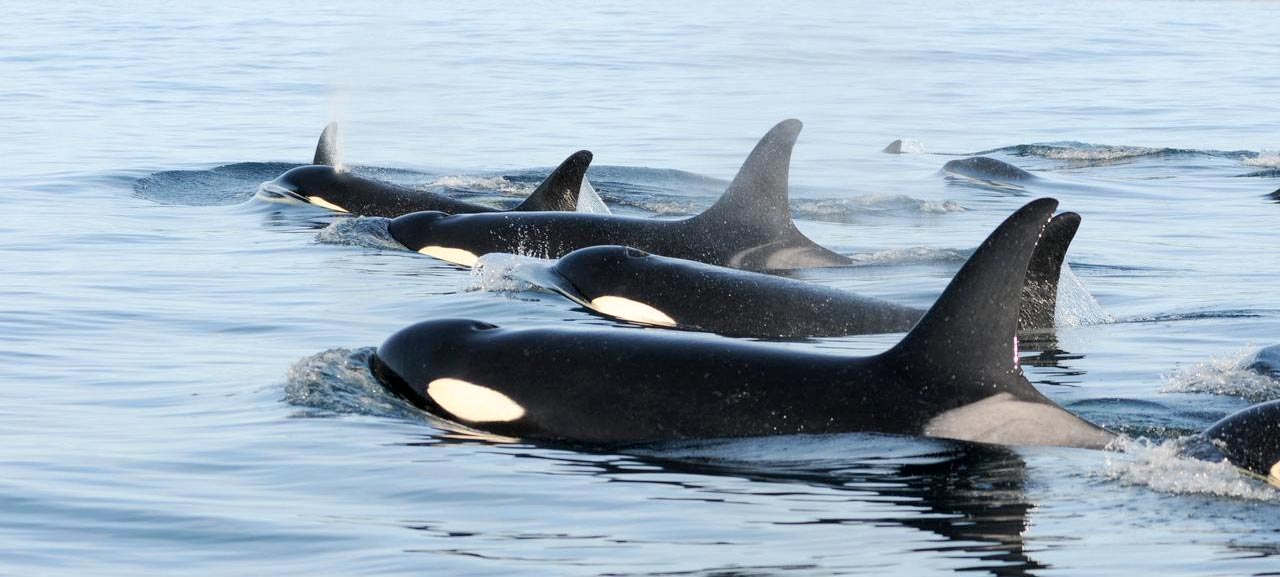
The Southern Resident killer whales are critically endangered. 1 2 After years of legal, scientific, and public outreach efforts requesting concrete action from federal agencies, Raincoast Conservation Foundation, David Suzuki Foundation, Georgia Strait Alliance, Natural Resources Defense Council and World Wildlife Fund-Canada, represented by Ecojustice, filed a lawsuit in September 2018 to compel the government…