

Shifting salmon policy
Photo by Alex Harris.
Ecosystems are complex. They are communities of living organisms connected through interacting processes and features on the land, in water, and between the two. Yet BC’s antiquated environmental policy doesn’t reflect this. Colonial society governs ecosystems by siloing them into distinct ministries and resources instead of reflecting the interconnected nature of habitats that make them function in the living world. This “siloed decision making”is the root cause of many of the ecological challenges we face today.


Our policy goals
1. Manage fisheries for ecosystems
- Set salmon harvest at levels that optimize the benefits of spawning salmon to watersheds and wildlife.
- Shift away from historic management paradigms that minimize the number of spawning salmon reaching rivers and maximize harvest (called Maximum Sustainable Yield). Move towards fisheries management that meets salmon spawning targets that are ecologically based, not harvest-based.
- Shift harvest toward selective terminal fisheries (conducted in or near the rivers of origin) that respect the ‘place-based’ nature of salmon, and optimize the benefits to ecosystems, Indigenous cultures, and local communities.
2. Implement ecological-based governance
- Conservation planning and a commitment to sustainability that looks 7 generations ahead.
- A “whole-of-government” approach that implements shared solutions by Indigenous, federal, provincial, and municipal governments to achieve salmon recovery from inland watersheds and rivers, to the open ocean.
- Governance that honours Aboriginal rights and title, inherent Indigenous jurisdiction and law, and the United Nations Declaration on the Rights of Indigenous Peoples (UNDRIP) and the Declaration on the Rights of Indigenous Peoples Act (DRIPA).
- Sustainable funding strategies for watershed-scale restoration and planning.


3. Advance land-use policies that prioritize the health of wild salmon and biodiversity
- Zoning that bolsters functioning watersheds and riparian habitat (i.e.protect natural features, limit impervious surfaces, reduce urban sprawl, adopt nature-based solutions).
- Forestry policy that prioritizes salmon health by restricting clear-cutting in salmon watersheds, and incentivizes a sustainable, second or third-growth forest economy.
- Climate adaptation policy that incentivizes nature-based solutions including natural shorelines, intact riparian areas, unrestricted floodplains, managed retreat, and use of rain-gardens in urban areas.
Our recent reports
Recent articles

Exploring human dimensions of hunting via social science, evolutionary ecology, and personal experience
In episode 140 of The Hunting Collective podcast, Ben O’Brien does a fascinating and good-natured follow up interview with Dr. Barrie Gilbert. Dr. Gilbert is a prominent bear biologist, friend of Raincoast, and previous verbal sparring-partner with Ben (at least when it comes to the hunting of predators). Ben invited Dr. Gilbert back for another interview, and they made productive amends…

Join us for episode 4 of Wolf School with Cristina Mittermeier
Many of you will recognize Cristina’s iconic images of coastal wolves and wildlife around the world. Cristina is also a pioneer in the field of conservation photography. She was a founding member of the International League of Conservation Photographers and also established conservation charity SeaLegacy…

Big tree hunting on Salt Spring Island
Earlier this month I spent two beautiful days on the coast of the Salish Sea, hunting for big trees. I was fortunate to join a research group of passionate “tree people” including Dr. Tara Martin, head of the Conservation Decisions Lab in the Faculty of Forestry at UBC; her Research Assistant, Cassandra Holt; Tony MacLeod from the Salt Spring Conservancy, and Jeff Shatford from the Ministry of Forests, Lands, Natural Resource Operations and Rural Development to measure some of the tallest trees on Salt Spring Island…

Wolf School Episode 3 with biologist Dr. Heather Bryan
After our fantastic second episode with the Wolf Conservation Center’s Regan Downey last week, our next wolf school session will feature another inspiring scientist and educator, Dr. Heather Bryan. Now an Assistant Professor in Ecosystem Science and Management at the University of Northern BC, Heather has played a critical role in Raincoast’s work on coastal wolves and bears for many years…

US organizations call on Washington State to oppose Canada’s Terminal 2 expansion in the Salish Sea
41 environmental and sustainability organizations in Washington State have written Governor Jay Inslee (PDF) asking him to oppose RBT2 on behalf of Washingtonians and the environmental, cultural and economic resources of Washington state…
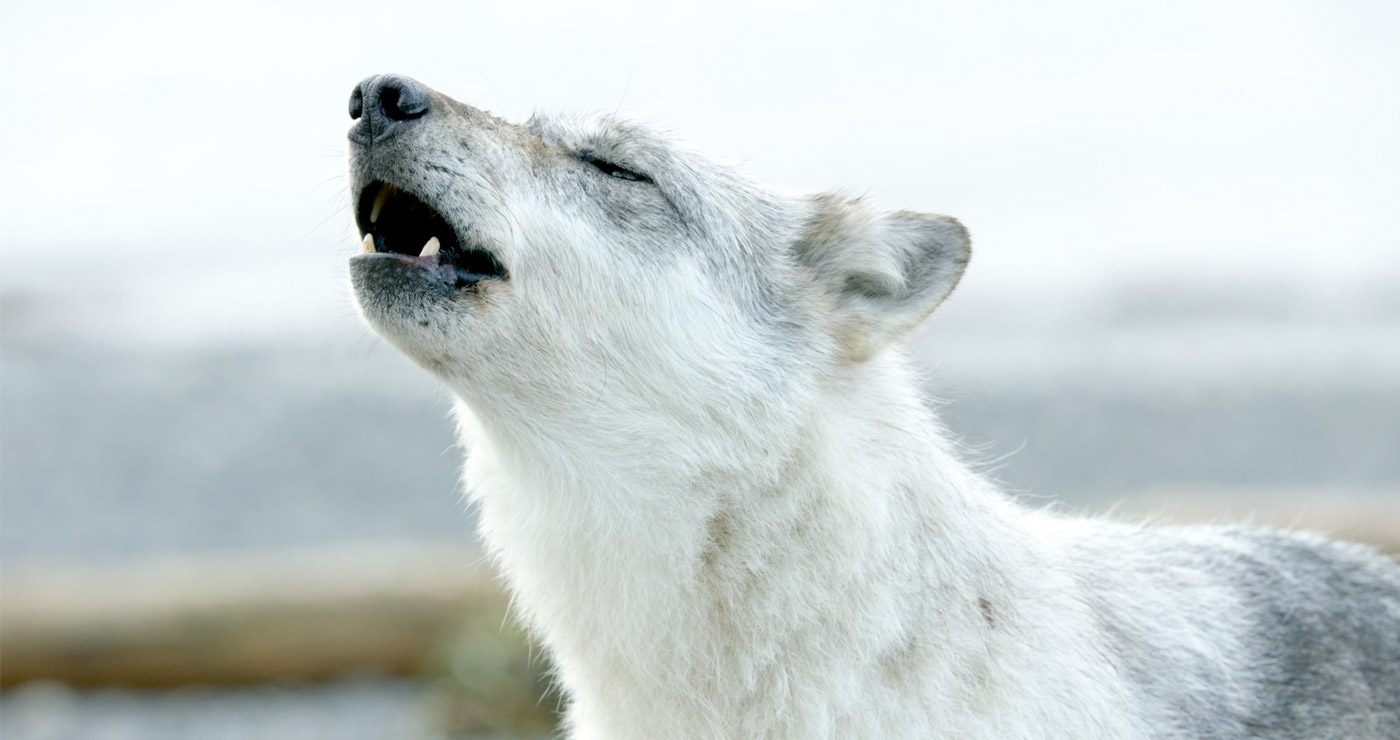
Your invitation to Wolf School
With close family ties and complex communication, wolves live lives that humans can easily empathize with across cultures. Yet, the wolf is still persecuted, including here in BC…