
Plastic pollution

Photo by April Benze.

Plastic pollution is choking our waterways and threatening the health of fish and wildlife. We are collecting plastic and microplastic data as part of our community-oriented water pollution monitoring program. We are collaborating on research projects with universities, governments and experts in the field. We are providing advice to local, regional and federal governments on plastic science, policies, and regulations. We are working with Ocean Diagnostics to support a strong science-based foundation for solutions.


Lots of garbage on a beach.
Photo by Simon Ager.
People working together to take samples of water in jars.
Photo by Alex Harris / Raincoast Conservation Foundation.

Our approach

  • Design a source identification toolbox for plastic pollution; 
  • Working with Indigenous and coastal communities to document plastic pollution and track this back to its source;
  • Conduct research on the source, transport and fate of micro and macroplastics in the environment;
  • Engage in outside-the-box dialogue with industry and governments to support more sustainable design, manufacturing and processes that stem the release of plastics during the life cycle of a product;
  • Support community-oriented outreach and training to support solution-oriented actions and capacity building.

Plastics are everywhere

Plastics from just about every sector can now be found all over the world – from mountain tops to the seafloor, from the Arctic to the Antarctic, and from our homes to the ocean. A modern-day scourge that is blighting remote beaches and shorelines, getting mistaken for food by wildlife, and getting into the foods that nourish us. Whether it’s the structural features of plastic products that suffocate, entangle, or create intestinal blockages – or the endocrine disrupting-contaminants that serve as ingredients of the product (e.g. Bisphenol A or phthalate esters) or as hitchhikers soaked up by plastics in the environment (e.g. PCBs or metals) – plastics are harmful.

Underwater photo of plastic floating near the top of the water.
Chinook salmon swim in a river as seen from head on; epic.
Photo by Fernando Lessa.

The impact on the environment

Without a dramatic re-think, the plastic crisis is here to stay. Despite the best intentions of governments, industry, and consumers to reduce, recycle or re-use, global plastic production continues to enjoy exponential growth. And the unintentional loss to the environment of plastic products and byproducts will continue – plastic bags, bottles, and fishing gear, as well as the discharge of microplastics through domestic and industrial waste. With that will come a constant stream of items that will be mistaken for food but offer zero nutrition, that will entangle wildlife, and will deliver endocrine disruptors to our aquatic food webs. We will document impacts, share findings, and work for change through science, community engagement, and expert advice.

Recent articles

A stuffed wolf lying on the floor.

Discovery Week at Bella Bella Community School

In addition to our research questions, fieldwork provides many other opportunities for learning. Last week, our bear field crew had the inspiring experience of participating in Discovery Week at Bella Bella Community School. During this week, youth discover culture, science, health and the environment through hand-on activities as diverse as seaweed picking, crab fishing, cheese…
A white bear pokes out from behind a bush in the Great Bear Rainforest.

BC’s coastal biodiversity: the highest in North America

In an effort to confirm or challenge the statement that coastal BC has a greater species diversity than anywhere else in North America, we have begun to compile statistics.
A man is holding a drum in front of a group of people.

Gathering Coastal Voices Festival

This weekend, May 20-22, members of the Heiltsuk community in Bella Bella, BC are hosting a Gathering of Coastal Voices.  The festival is bringing together artists who work in a range of media to showcase the raw beauty and power of their home, and to raise awareness of what’s at stake when industry knocks at their door.
A bird is walking on a log in the water.

First day of fieldwork for the Bear Scene Investigation (BSI) team
After an almost 24-hour trip from Victoria to Bella Bella and a 3-day stint of preparation and decompression, today was the first day back in the field for the BSI (Bear Scene Investigation) crew. Today’s doses of sun followed yesterday’s 50+ mm of rain quite nicely, and made for a great reintroduction to our coastal…
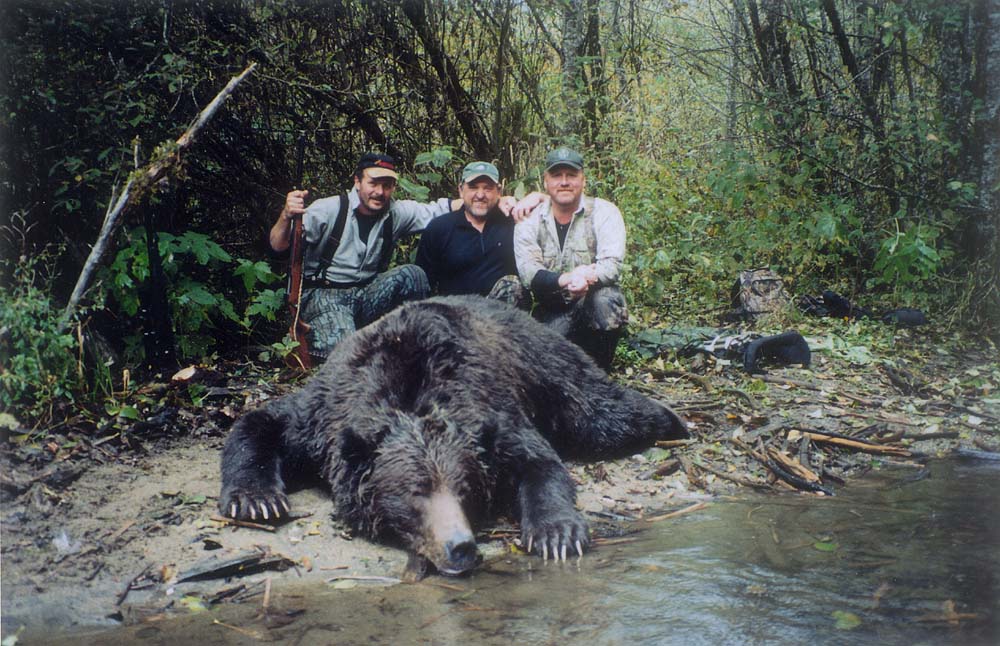
3 smiling trophy hunters kneel behind the dead grizzly they have killed.

The cruelest month for British Columbia’s coastal carnivores

For large carnivores in British Columbia’s Great Bear Rainforest April marks the start of the spring recreational hunting season, and signals a time to start dodging bullets from “sportsmen” wielding high-powered rifles in search of “trophies.”
A pile of trash on a beach with a stormy sky.

Marine Debris in BC Coastal Waters

Researchers from Raincoast, the University of St. Andrews, Oceans Initiative and Environment Canada teamed up to assess the presence and potential threats from marine garbage to BC’s marine animals…
Aerial view of the tar sands.

Canada’s tar sands: bringing pipelines, tankers and climate disruption to an ecosystem near you
Enbridge’s Northern Gateway project invites the world’s largest supertankers and dirtiest oil to the unspoiled waters of coastal British Columbia.  Similarly, Kinder Morgan’s Trans-Mountain pipeline expansion would dramatically raise the level of tanker traffic traversing through Vancouver, the Fraser estuary and the Gulf Islands.  For more on Kinder Morgan proposal click here. Read below for a…
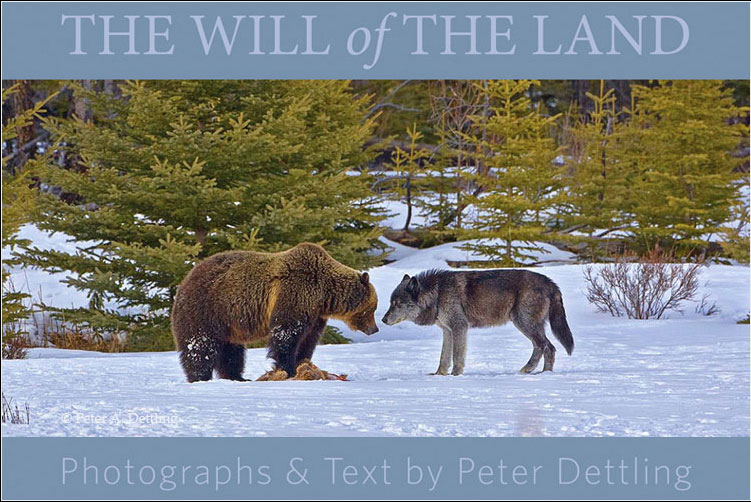
The will of the land photography and text by peter delting.

The Will of the Land

Peter Dettling’s new book “The Will of the Land” takes an important look at wolves and grizzlies in the region of Banff National Park. Peter is a remarkable photographer and advocate for wildlife. The foreward is written by Raincoast’s Dr. Paul Paquet…