Plastic pollution

Photo by April Benze.

Plastic pollution is choking our waterways and threatening the health of fish and wildlife. We are collecting plastic and microplastic data as part of our community-oriented water pollution monitoring program. We are collaborating on research projects with universities, governments and experts in the field. We are providing advice to local, regional and federal governments on plastic science, policies, and regulations. We are working with Ocean Diagnostics to support a strong science-based foundation for solutions.


Lots of garbage on a beach.
Photo by Simon Ager.
People working together to take samples of water in jars.
Photo by Alex Harris / Raincoast Conservation Foundation.

Our approach

  • Design a source identification toolbox for plastic pollution; 
  • Working with Indigenous and coastal communities to document plastic pollution and track this back to its source;
  • Conduct research on the source, transport and fate of micro and macroplastics in the environment;
  • Engage in outside-the-box dialogue with industry and governments to support more sustainable design, manufacturing and processes that stem the release of plastics during the life cycle of a product;
  • Support community-oriented outreach and training to support solution-oriented actions and capacity building.

Plastics are everywhere

Plastics from just about every sector can now be found all over the world – from mountain tops to the seafloor, from the Arctic to the Antarctic, and from our homes to the ocean. A modern-day scourge that is blighting remote beaches and shorelines, getting mistaken for food by wildlife, and getting into the foods that nourish us. Whether it’s the structural features of plastic products that suffocate, entangle, or create intestinal blockages – or the endocrine disrupting-contaminants that serve as ingredients of the product (e.g. Bisphenol A or phthalate esters) or as hitchhikers soaked up by plastics in the environment (e.g. PCBs or metals) – plastics are harmful.

Underwater photo of plastic floating near the top of the water.
Chinook salmon swim in a river as seen from head on; epic.
Photo by Fernando Lessa.

The impact on the environment

Without a dramatic re-think, the plastic crisis is here to stay. Despite the best intentions of governments, industry, and consumers to reduce, recycle or re-use, global plastic production continues to enjoy exponential growth. And the unintentional loss to the environment of plastic products and byproducts will continue – plastic bags, bottles, and fishing gear, as well as the discharge of microplastics through domestic and industrial waste. With that will come a constant stream of items that will be mistaken for food but offer zero nutrition, that will entangle wildlife, and will deliver endocrine disruptors to our aquatic food webs. We will document impacts, share findings, and work for change through science, community engagement, and expert advice.

Recent articles

A lake surrounded by mountains.

My visit with Raincoast in the Great Bear – guest blog from Dean Azim
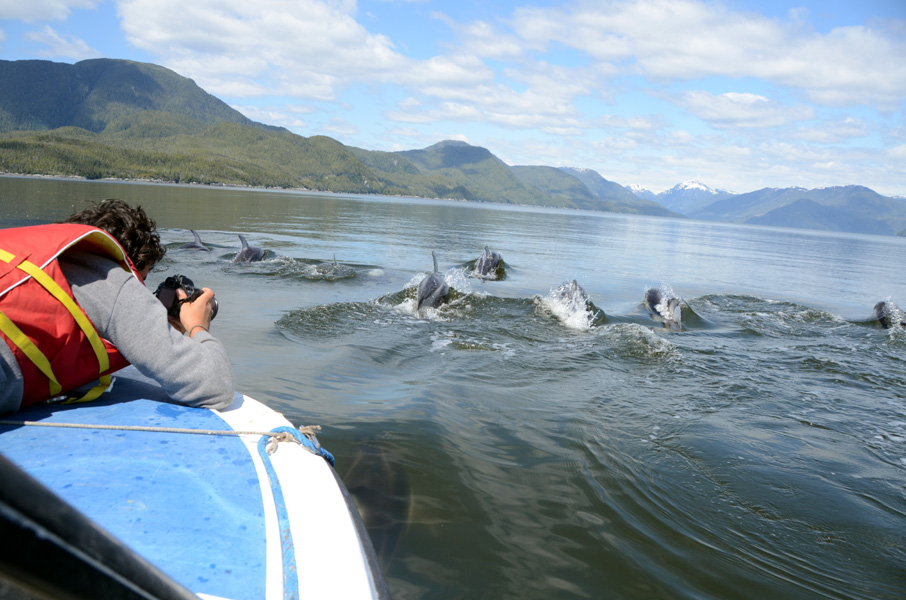
Amazing. The most overused word in my current vocabulary. Every day at the Raincoast Field Station has been absolutely amazing. I feel as though every Canadian should have a right of passage of sorts, to experience this coast in person. It’s a place near impossible to translate through photos or words. Its a wonderland of…
A man is taking a picture of a group of dolphins in the water.

Sharing the love for the coast

Apart from our passion for science, one of Raincoast’s aims is to inspire a wide audience about this very special area of the BC’s coast. In pursuit of this goal, every year we invite a range of guests to come stay with us to experience the area and our work first hand. Some of these…
A humpback whale jumping out of the water.

Saving Canada’s Pacific Coast

CounterPunch June 6, 2011 The growing emphasis on B.C.’s coast as an energy corridor has spurred substantial concerns from coastal communities and the public about the impacts and risks associated with large-scale oil operations and spills…
A black bear standing on a rock.

Two days of ‘wildlife gone wild’!

Often the best gifts are those received when you least expect them. I have been known to be comically talented at not seeing wildlife– when I explicitly set out to view carnivores and other wildlife I am remarkably good at JUST missing them. As such, being lucky enough to be blessed with wildlife encounters when…
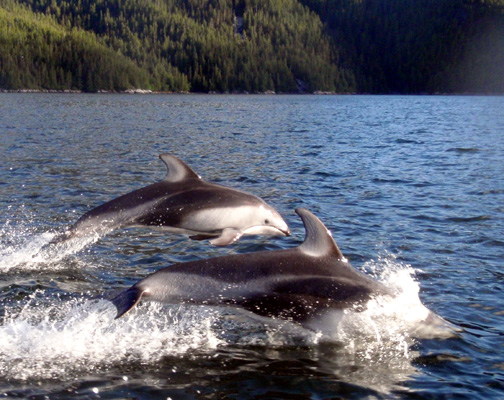
Two dolphins jumping out of the water in front of a forest.

British Columbia’s Coast: Priceless And Irreplaceable

Island Tides June 2-15, 2011 BC’s Coast: Priceless And Irreplaceable By Chris Genovali, Paul C. Paquet and Misty MacDuffee With the conclusion of the international Marine Conservation Congress, recently held in Victoria, we cannot help but reflect on the current, and future, status of British Columbia’s coast…
Heather Bryan stands beside a large tree.

A woman who runs with wolves

Seaside Times June 2011 A Woman Who Runs With Wolves By Chris Genovali Biologist Heather Bryan is one of the lead scientists for Raincoast’s grizzly-salmon project and monitoring of carnivore systems in British Columbia’s Great Bear Rainforest…
4 dolphins leaping out of the water

Canada’s Pacific coast: priceless and irreplaceable

The distinct assembly of iconic animals such as whales, dolphins, wolves, and bears make the coast of British Columbia qualitatively different from most other exceptional places in the world…
Momma bear and her thee little cubs spend a few minutes at our hair station. Captured by remote camera, June 2010.

My – how they’ve grown!

As many parents will agree, youngsters have a way about growing up fast. One day, they are tiny; the next day they are taller than you. One day, they seem so new to the world; the next it seems like they run the world.  The research crew had one of those observations this week in…