
Plastic pollution

Photo by April Benze.

Plastic pollution is choking our waterways and threatening the health of fish and wildlife. We are collecting plastic and microplastic data as part of our community-oriented water pollution monitoring program. We are collaborating on research projects with universities, governments and experts in the field. We are providing advice to local, regional and federal governments on plastic science, policies, and regulations. We are working with Ocean Diagnostics to support a strong science-based foundation for solutions.


Lots of garbage on a beach.
Photo by Simon Ager.
People working together to take samples of water in jars.
Photo by Alex Harris / Raincoast Conservation Foundation.

Our approach

  • Design a source identification toolbox for plastic pollution; 
  • Working with Indigenous and coastal communities to document plastic pollution and track this back to its source;
  • Conduct research on the source, transport and fate of micro and macroplastics in the environment;
  • Engage in outside-the-box dialogue with industry and governments to support more sustainable design, manufacturing and processes that stem the release of plastics during the life cycle of a product;
  • Support community-oriented outreach and training to support solution-oriented actions and capacity building.

Plastics are everywhere

Plastics from just about every sector can now be found all over the world – from mountain tops to the seafloor, from the Arctic to the Antarctic, and from our homes to the ocean. A modern-day scourge that is blighting remote beaches and shorelines, getting mistaken for food by wildlife, and getting into the foods that nourish us. Whether it’s the structural features of plastic products that suffocate, entangle, or create intestinal blockages – or the endocrine disrupting-contaminants that serve as ingredients of the product (e.g. Bisphenol A or phthalate esters) or as hitchhikers soaked up by plastics in the environment (e.g. PCBs or metals) – plastics are harmful.

Underwater photo of plastic floating near the top of the water.
Chinook salmon swim in a river as seen from head on; epic.
Photo by Fernando Lessa.

The impact on the environment

Without a dramatic re-think, the plastic crisis is here to stay. Despite the best intentions of governments, industry, and consumers to reduce, recycle or re-use, global plastic production continues to enjoy exponential growth. And the unintentional loss to the environment of plastic products and byproducts will continue – plastic bags, bottles, and fishing gear, as well as the discharge of microplastics through domestic and industrial waste. With that will come a constant stream of items that will be mistaken for food but offer zero nutrition, that will entangle wildlife, and will deliver endocrine disruptors to our aquatic food webs. We will document impacts, share findings, and work for change through science, community engagement, and expert advice.

Recent articles
The Achiever with a misty mountain in the background.

April conservation expedition with Raincoast’s Dr. Paul Paquet

As Raincoast’s Senior Scientist, and a world renowned large carnivore expert, Paul’s input is key to guiding our research and conservation programs in both the Great Bear Rainforest and the Salish Sea. Paul will provide insight into key conservation issues on BC’s coast including…
Hair samples in the field of bears.

Advancing non-invasive approaches for monitoring wildlife: considering the ethics of developing new techniques

A theme that underlies our research in the Applied Conservation Lab is that we aim to apply methods that are minimally invasive to wildlife. This ethos emerges in large part from our partners in First Nations communities, who have taught us many important lessons about respecting the people, places, and animals where we work. Our…
Chris Darimont looking off into the distance on the river with the sun coming through trees in the background.

Meet the team of applied conservation scientists at the University of Victoria

Last year the Raincoast lab at UVic marked an important new milestone with the creation of the Raincoast Chair in Applied Conservation Science at the University of Victoria. This five year Chaired Professorship allows us to expand our research, teaching and outreach programs in community-driven applied conservation science. Our long-term vision is to train next…
Southern Resident killer whales swim by in the Salish Sea.

Southern Resident killer whales need more than luck

The reality is that calves like Lucky only have a 40% chance of survival. More sobering still is the fact that no calves have survived in this population in the last three years. This is why we have stopped using images…
A Southern Resident killer whale slaps their tail in the Salish Sea.

L124 is the newest member of the Southern Resident killer whales
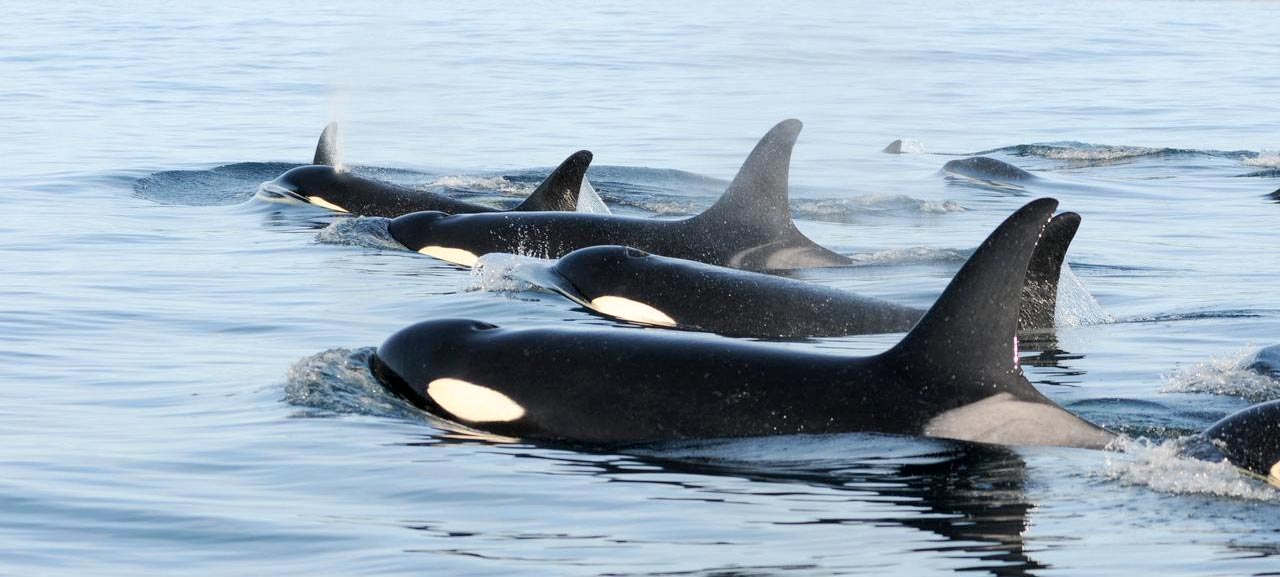
Listen to Misty MacDuffee explain some of the context around the recent birth of L124 in the Salish Sea. Declines in Chinook abundance, especially to the Fraser, are affecting killer whale behaviour patterns, fertility and survival…
Southern Resident Killer Whales in the Salish Sea.

Why Southern Resident killer whales, and the Salish Sea, need your help

The Southern Resident killer whales are critically endangered. 1 2 After years of legal, scientific, and public outreach efforts requesting concrete action from federal agencies, Raincoast Conservation Foundation, David Suzuki Foundation, Georgia Strait Alliance, Natural Resources Defense Council and World Wildlife Fund-Canada, represented by Ecojustice, filed a lawsuit in September 2018 to compel the government…
A collage of images and graphs from a published peer reviewed article on salmonid species diversity and bear health: Hakai, Raincoast, University of Victoria, and Spirit Bear Foundation logos at the bottom.

Salmon species diversity predicts salmon consumption by terrestrial wildlife
Research by scientists at Spirit Bear Research Foundation, Raincoast Conservation Foundation, and the University of Victoria, led by Christina Service, shows that salmon species diversity – the number of spawning salmon species available – is far more important and positively related to salmon consumption in coastal black bears than biomass abundance…
J50 and J42 in the Salish Sea.

Canada should rethink unproven, dangerous chemical ‘cleanup’ of marine oil spills

As noted, Corexit can also be toxic to wildlife. For some species, such as herring embryos, toxicity occurs because Corexit does what it was designed to do: increase the concentration of petroleum hydrocarbons in the water column. However, there is also a growing body of research, much of it conducted in response to the Deepwater Horizon disaster in 2010…