
Plastic pollution

Photo by April Benze.

Plastic pollution is choking our waterways and threatening the health of fish and wildlife. We are collecting plastic and microplastic data as part of our community-oriented water pollution monitoring program. We are collaborating on research projects with universities, governments and experts in the field. We are providing advice to local, regional and federal governments on plastic science, policies, and regulations. We are working with Ocean Diagnostics to support a strong science-based foundation for solutions.


Lots of garbage on a beach.
Photo by Simon Ager.
People working together to take samples of water in jars.
Photo by Alex Harris / Raincoast Conservation Foundation.

Our approach

  • Design a source identification toolbox for plastic pollution; 
  • Working with Indigenous and coastal communities to document plastic pollution and track this back to its source;
  • Conduct research on the source, transport and fate of micro and macroplastics in the environment;
  • Engage in outside-the-box dialogue with industry and governments to support more sustainable design, manufacturing and processes that stem the release of plastics during the life cycle of a product;
  • Support community-oriented outreach and training to support solution-oriented actions and capacity building.

Plastics are everywhere

Plastics from just about every sector can now be found all over the world – from mountain tops to the seafloor, from the Arctic to the Antarctic, and from our homes to the ocean. A modern-day scourge that is blighting remote beaches and shorelines, getting mistaken for food by wildlife, and getting into the foods that nourish us. Whether it’s the structural features of plastic products that suffocate, entangle, or create intestinal blockages – or the endocrine disrupting-contaminants that serve as ingredients of the product (e.g. Bisphenol A or phthalate esters) or as hitchhikers soaked up by plastics in the environment (e.g. PCBs or metals) – plastics are harmful.

Underwater photo of plastic floating near the top of the water.
Chinook salmon swim in a river as seen from head on; epic.
Photo by Fernando Lessa.

The impact on the environment

Without a dramatic re-think, the plastic crisis is here to stay. Despite the best intentions of governments, industry, and consumers to reduce, recycle or re-use, global plastic production continues to enjoy exponential growth. And the unintentional loss to the environment of plastic products and byproducts will continue – plastic bags, bottles, and fishing gear, as well as the discharge of microplastics through domestic and industrial waste. With that will come a constant stream of items that will be mistaken for food but offer zero nutrition, that will entangle wildlife, and will deliver endocrine disruptors to our aquatic food webs. We will document impacts, share findings, and work for change through science, community engagement, and expert advice.

Recent articles

Steveston Jetty on a grey day, with overset diagrams showing some of the work we're doing.

Breaking new estuary ground on the Steveston Jetty

When we began our research in the Fraser estuary in 2016, the presence of multiple barriers, including the Steveston Jetty, became a significant concern. With the announcement of the Coastal Restoration Fund in 2017, an opportunity to begin addressing these barriers appeared…
J16 spy hops: Southern Resident killer whale.

No mitigation measures can protect Southern Resident killer whales from the noise of Trans Mountain’s tanker traffic
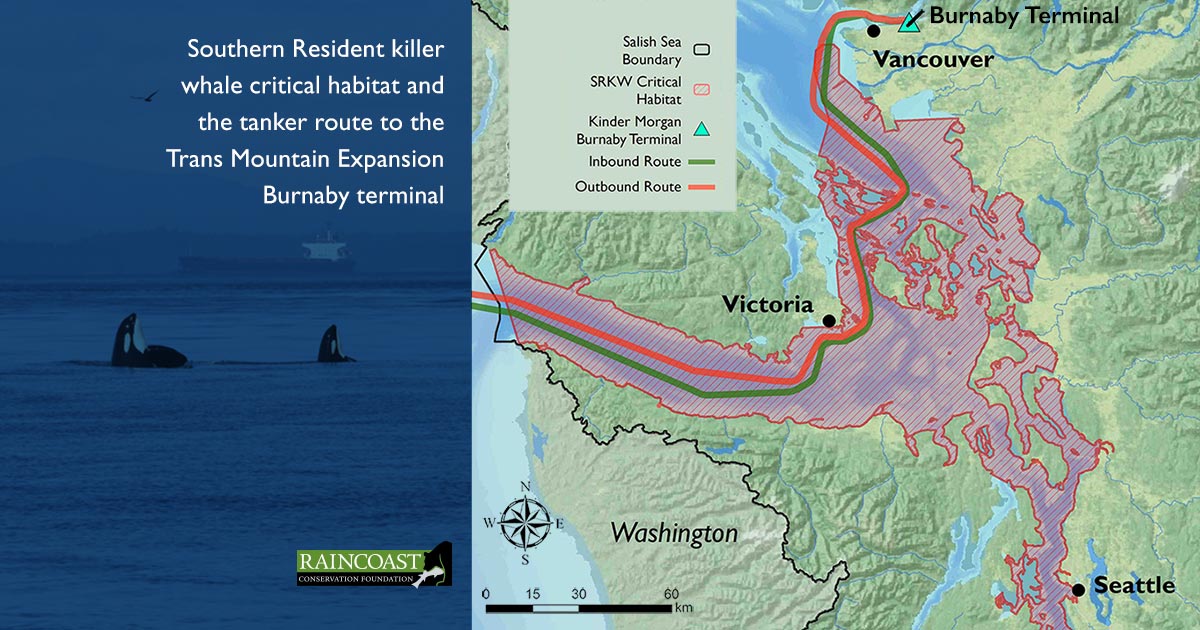
While we disagree with the NEB’s conclusion, we acknowledge that their review of the effects on killer whales accurately portrays the complexity and severity of the situation.
Beam Reach Haro Strait Salish Sea, with a map of the Southern Resident killer whale critical habitat and the tanker route tot he Trans Mountain Expansion Burnaby terminal.

Raincoast’s evidence on Southern Resident killer whales for the National Energy Board’s reconsideration of the Trans Mountain Expansion

The National Energy Board is now preparing its recommendations to cabinet on the Trans Mountain Expansion. When we won our legal case in the federal court of appeal in August 2018, the courts quashed the Trans Mountain permits and required the National Energy Board to reconsider their recommendations…
A salmon swims in to the current on the bottom of the Lower Fraser river: closeup of a salmon nose.

Provincial Wild Salmon Secretariat needs a focus on habitat

In order to recover and sustainably manage depleted wild salmon populations, place-based management and the restoration of salmon watersheds is the best way forward given the changing environmental conditions that confront these fish and the value that British Columbians place on them.
A still, quiet day on the Koeye River watershed.

Converging knowledges to inform and empower conservation
This past summer, I had the opportunity to travel aboard the Raincoast vessel Achiever with several other members of the ACS lab to participate in Koeye camp, a cultural revitalization and education program operated by the Heiltsuk First Nation’s QQS Projects Society. We were there to engage with the youth campers about the research conducted by…
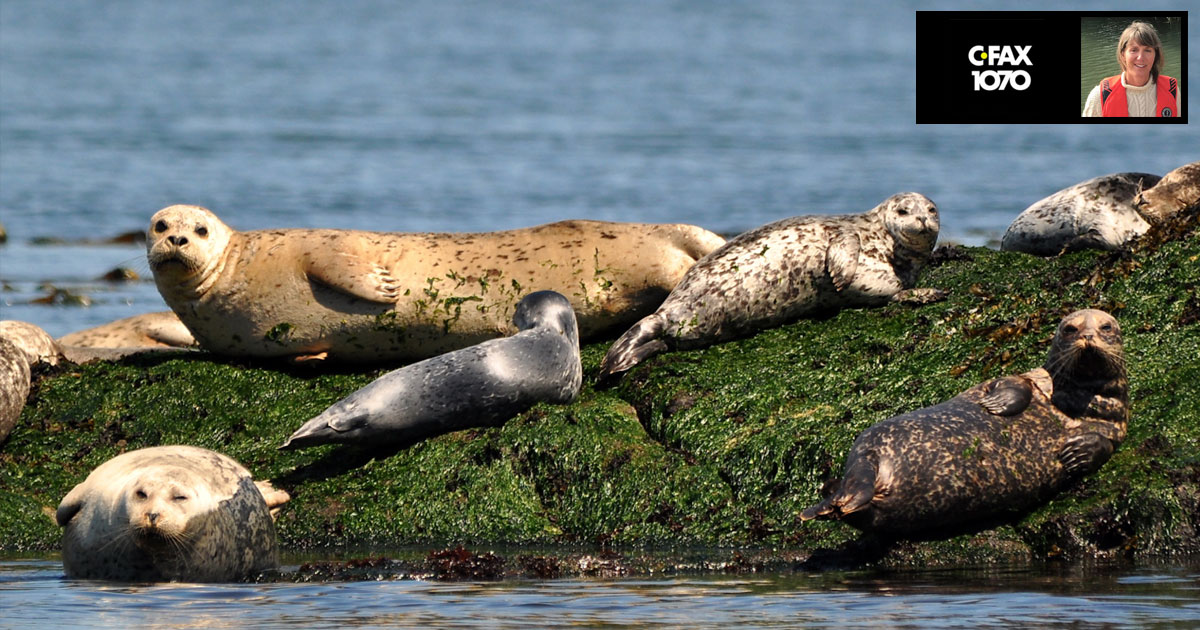
Seals hanging out on a rocky outcropping, soaking up some sunshine.

Seals and sea lions in the Salish Sea are all part of a healthy food web

Since the killing of seals and sea lions ended in the 1970s, pinnipeds in the Salish Sea have been recovering. The recovery of seals slowed by 2000 and for the last fifteen years or so the number of seals in the Salish Sea has been relatively stable. This population of fish eaters has recovered to what was likely historic levels…
A giant pile of bison bones loom over a person standing beside it.

Research: Differentiating between regulation and hunting as conservation interventions

Wildlife conservation literature and public discourse, too often gloss over the important difference between hunting and the regulation of hunting. This is so common that there is a persistent, misinformed idea that extinctions have been avoided through the act of hunting. Historically, the regulation of hunting, not hunting itself, has averted extinction…
Achiever rests on the waters of the Great Bear Rainforest at sunset.

Join us in the Great Bear Rainforest in 2019

We watch as her three little cubs slowly take to the high water and make their way to mom. They graze on roots, and search for salmon carcasses that simply aren’t there. The cub’s curiosity…