
Plastic pollution

Photo by April Benze.

Plastic pollution is choking our waterways and threatening the health of fish and wildlife. We are collecting plastic and microplastic data as part of our community-oriented water pollution monitoring program. We are collaborating on research projects with universities, governments and experts in the field. We are providing advice to local, regional and federal governments on plastic science, policies, and regulations. We are working with Ocean Diagnostics to support a strong science-based foundation for solutions.


Lots of garbage on a beach.
Photo by Simon Ager.
People working together to take samples of water in jars.
Photo by Alex Harris / Raincoast Conservation Foundation.

Our approach

  • Design a source identification toolbox for plastic pollution; 
  • Working with Indigenous and coastal communities to document plastic pollution and track this back to its source;
  • Conduct research on the source, transport and fate of micro and macroplastics in the environment;
  • Engage in outside-the-box dialogue with industry and governments to support more sustainable design, manufacturing and processes that stem the release of plastics during the life cycle of a product;
  • Support community-oriented outreach and training to support solution-oriented actions and capacity building.

Plastics are everywhere

Plastics from just about every sector can now be found all over the world – from mountain tops to the seafloor, from the Arctic to the Antarctic, and from our homes to the ocean. A modern-day scourge that is blighting remote beaches and shorelines, getting mistaken for food by wildlife, and getting into the foods that nourish us. Whether it’s the structural features of plastic products that suffocate, entangle, or create intestinal blockages – or the endocrine disrupting-contaminants that serve as ingredients of the product (e.g. Bisphenol A or phthalate esters) or as hitchhikers soaked up by plastics in the environment (e.g. PCBs or metals) – plastics are harmful.

Underwater photo of plastic floating near the top of the water.
Chinook salmon swim in a river as seen from head on; epic.
Photo by Fernando Lessa.

The impact on the environment

Without a dramatic re-think, the plastic crisis is here to stay. Despite the best intentions of governments, industry, and consumers to reduce, recycle or re-use, global plastic production continues to enjoy exponential growth. And the unintentional loss to the environment of plastic products and byproducts will continue – plastic bags, bottles, and fishing gear, as well as the discharge of microplastics through domestic and industrial waste. With that will come a constant stream of items that will be mistaken for food but offer zero nutrition, that will entangle wildlife, and will deliver endocrine disruptors to our aquatic food webs. We will document impacts, share findings, and work for change through science, community engagement, and expert advice.

Recent articles
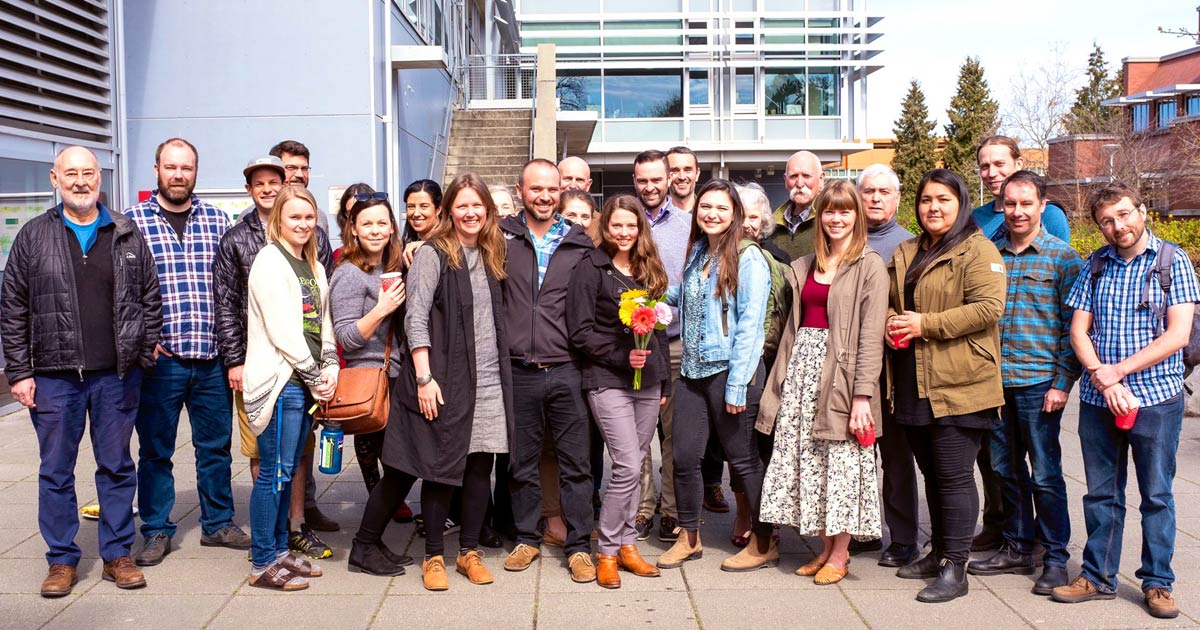
A group of scientists and students converge after Christina Service's dissertation defence.

The future of applied conservation science is bright

This has been a time of remarkable accomplishment for the Raincoast Applied Conservation Science Lab at the University of Victoria. The research that the lab produces is a dynamic mix of population analyses, biogeography, marine-terrestrial interactions and much more, all rooted in a ‘wildlife welfare’ ethic. Collaboration with Indigenous communities forms the hallmark of much of this work, which is being directly applied…
A wolf rests on the beach in the Great Bear Rainforest, with a chart from Figure 1 overlaid.

Research: Publication reform to safeguard wildlife from researcher harm

Scientists from Raincoast Conservation Foundation, University of Victoria, Alpha Wildlife Research & Management, and University of Saskatchewan reviewed more than 200 peer-reviewed academic journals that commonly publish wildlife research, evaluating the presence and comprehensiveness of ‘Animal Care’ requirements of authors. The study, “Publication reform to safeguard wildlife from researcher harm,” published as an open access article…
Chris Darimont speaks at Ocean Awards at the Vancouver Aquarium.

Oceans Awards win – Raincoast’s Dr. Chris Darimont honoured with Murray A. Newman Conservation Award

Darimont was recognized for the significance of his work as well as a career that already includes important and leading contributions, in coastal science and conservation…
Students aboard Achiever, cluster around the bow on the Salish Sea.

Creating transformative experiences for students on the Salish Sea

These experiences are transformative and what we strive to create for young people with the Salish Sea Emerging Stewards program. The program brings students on multi-day journeys aboard Achiever to learn about coastal environments and conservation challenges…
L121 and calf in the Salish Sea.

NEB recommends Trans Mountain proceed despite “significant adverse effects” to Southern Residents
The National Energy Board (NEB) has recommended that the Trans Mountain expansion project should proceed despite the “significant adverse effects” of oil tankers on the critically endangered population of Southern Resident killer whales. Although we disagree with the NEB’s conclusion, their review of the project effects on killer whales is forthright and portrays the severity of the current situation…
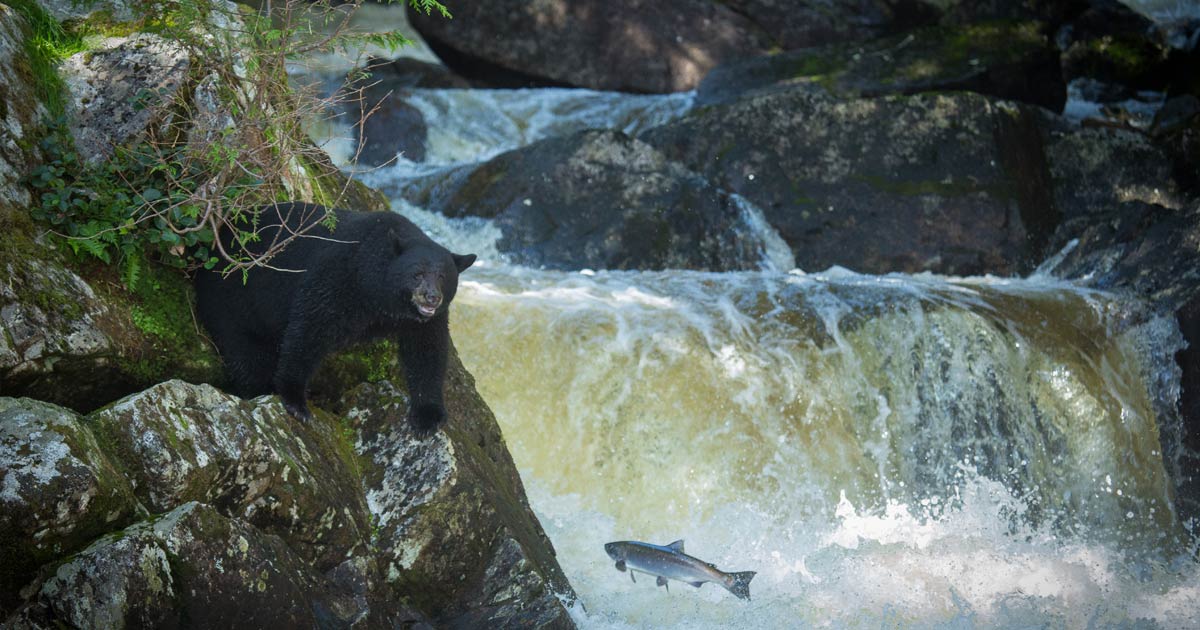
A black bear on the left is standing on large mossy rocks. There is a stream with a small water fall the right, and a salmon is jumping out of the water in the direction of the bear. The bear has its left paw extended. It looks like a sunny day, although the sky is not in the photo.

Diversity of salmon species a necessary metric to understanding how bears feed

Salmon biomass is a measure of the total kilograms of spawning salmon. Many who are in the role of implementing conservation strategies and policies think that when it comes to bears, or terrestrial wildlife, more salmon biomass simply means more eating. However, our recent research published…
Killer Whales in the foreground and text: Victoria April 18 Panel

Panel: the future of killer whale recovery

Through the support of Stream of Consciousness, you can join us on April 18th, either in person or by streaming the event free online. Hosted by CBC’s Bob McDonald, the evening will feature a panel of experts who will be open to questions from the live audience and viewers online.
Killer whales spyhop with a tanker in the background and population viability maps in the foreground.

The National Energy Board and killer whales, on As It Happens

In this interview, Misty outlines that while oil spills remain a clear risk, the effects of increased vessel traffic, i.e. noise and disturbance, are a certainty.