

Cetacean Health: using imagery to understand the health of killer whales
Photo by Lance Barrett-Lennard / Ocean Wise.
Our annual monitoring program, in collaboration with OceanWise Research, assesses the health of whales. Every year we take aerial photos of individually identified resident killer whales with small, minimally invasive drones, and use photogrammetry to accurately measure the whales’ body condition and growth rates, and determine whether they are pregnant. Our measurements provide a direct indication of the whales’ nutritional status and allow us to draw reliable inferences about their overall health. The value of this research is that it allows us to assess the impact of salmon abundance–which is strongly influenced by human fisheries–on the whale’s reproduction and survival.
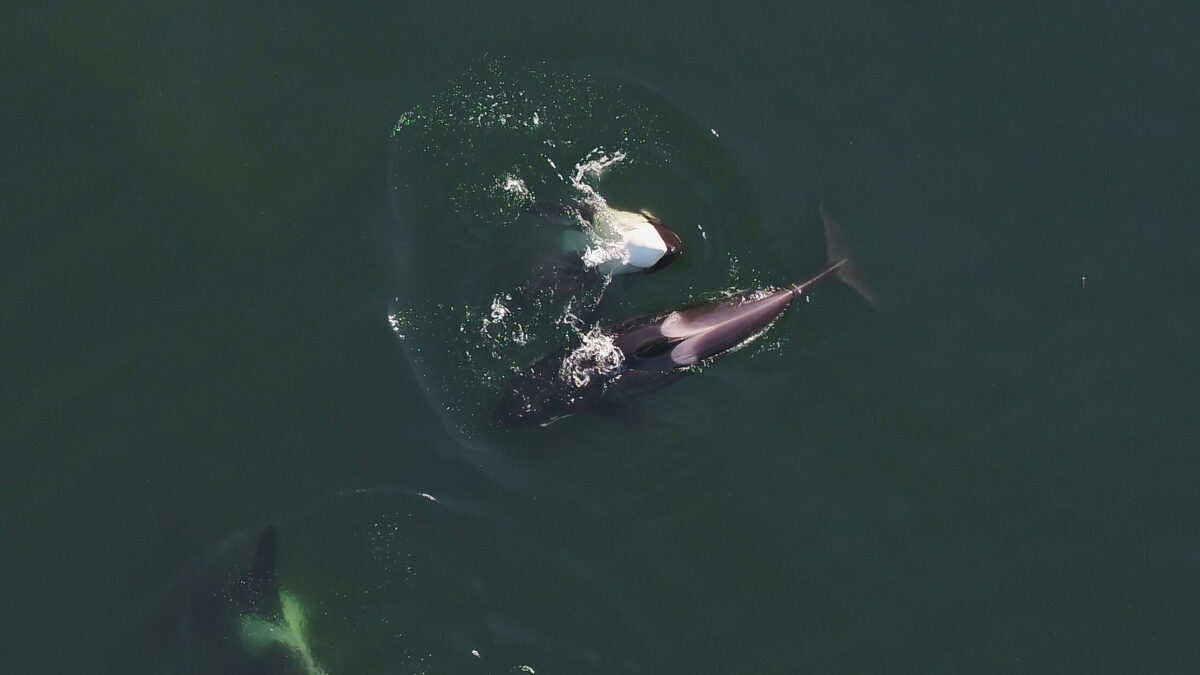
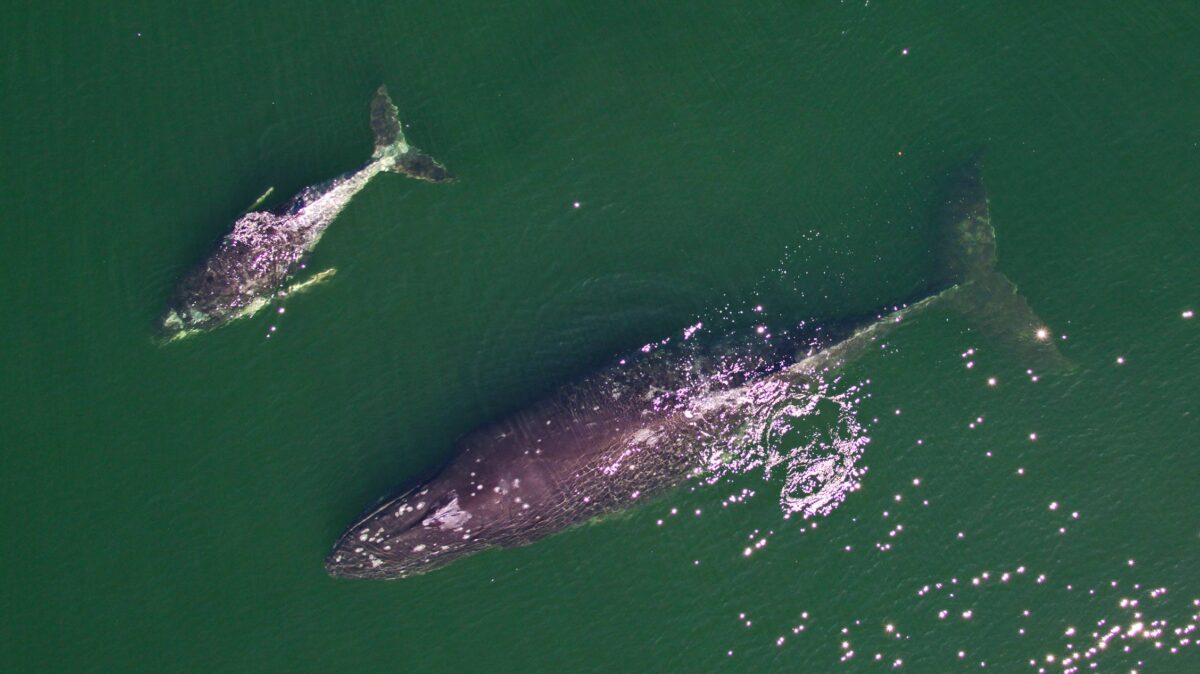
Applied research
Findings from the photogrammetry research thus far helped motivate increased restrictions on sport and commercial fisheries in Canada, as well as the creation of sanctuary zones where the whales can forage without disturbance by boats. It also provided valuable insights into Chinook stocks of greatest importance to Southern Residents–an analysis we plan to begin shortly with Northern Residents. The time series of body condition measurements on both populations becomes more valuable with each passing year.
Project history
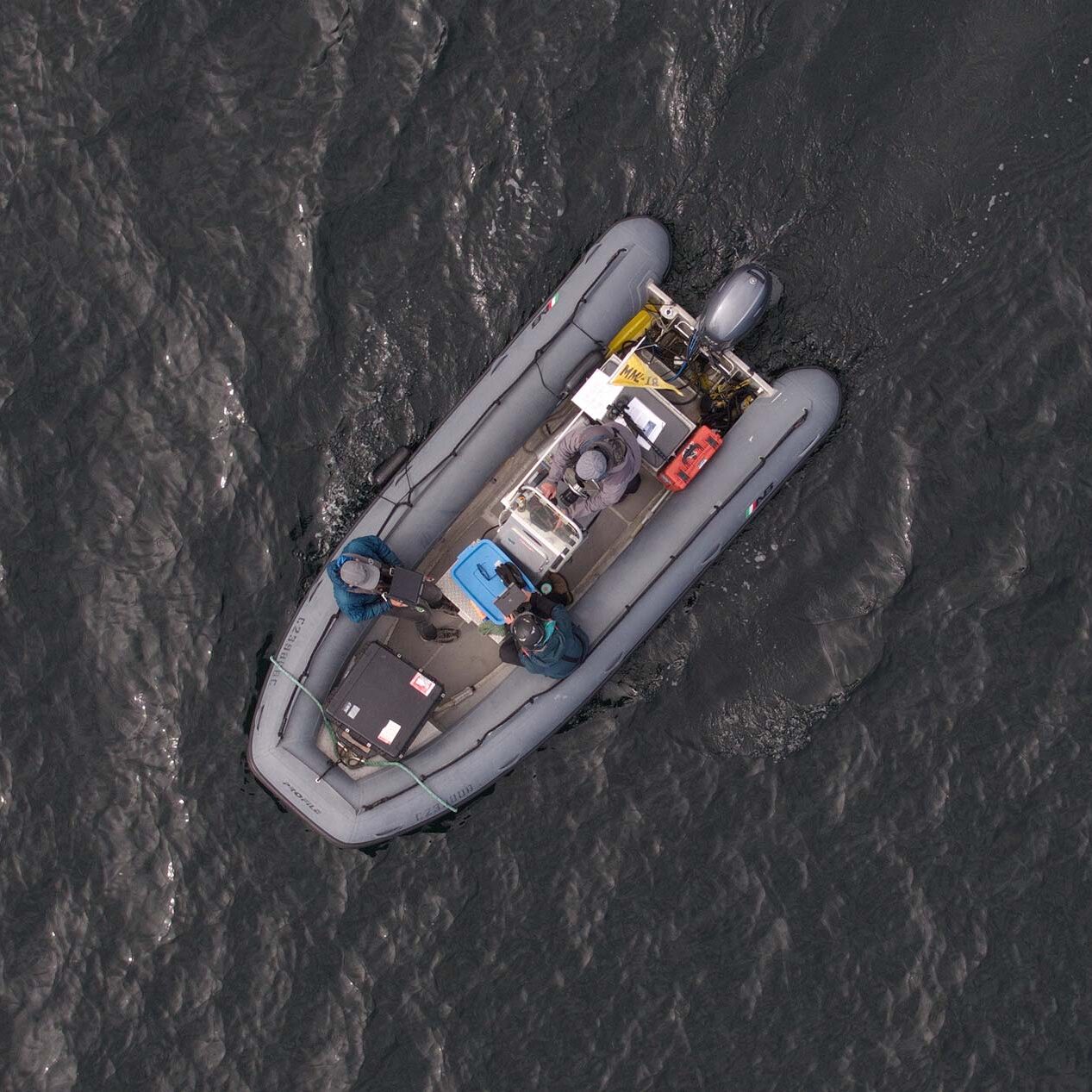
In 2014, Lance Barrett-Lennard worked with Washington-based research colleagues, Drs. John Durban and Holly Fearnbach, to develop a photogrammetry-based method of assessing the body condition of killer whales using aerial photographs from minimally invasive, boat launched drones. The study was a key recommendation of a US/Canadian panel attempting to assess the impact of salmon fisheries on Southern Resident killer whales.
The project grew into an annual monitoring program, monitoring Northern and Southern Resident killer whales and Bigg’s killer whales opportunistically. Comparing the two populations, one in perilous condition and the other recovering, has helped make it possible and practical to determine when killer whales are nutritionally stressed, and to assess the impacts of such stress on survival and reproduction.
Recent articles

Designing line transect surveys for the BC coast
Thomas, L., R. Williams, and D. Sandilands, D. 2007. Designing…
Hibernation associated changes in POP levels and patterns in BC grizzly bears
Christensen, J.R., M. MacDuffee, M.B Yunker, and P.S. Ross. 2007.…

Applications of Paleolimnology to Sockeye Lakes
MacDuffee, M and E. MacIssac. 2009. Applications of paleolimnology to…
Fraser River Sockeye collapse
by Mike Price Biologist, Raincoast Aquaculture Campaign September 2009 The…

Raincoast Kids – Run Walk Cheer
Raincoast is an official pledge charity of the 30th…
Grizzly Bear concerns on central coast
Watch video here. Reporting by CTV. Raincoast believes that the…
Sea lice a drag on their hosts
Biologist suggests the parasites could reduce salmon survival rates By…
It’s a grizzly situation
Edmonton Sun September 2, 2009 Re: “Alberta mulls ban on…