Conservation Genetics Laboratory 

Our conservation genetics research addresses threats to cetaceans, fish, and coastal carnivores. 

The Conservation Genetics Lab is an integral part of Raincoast’s efforts to protect the land, waters and wildlife of coastal BC. The DNA and RNA analysis we perform provides our scientists with reliable insights into the population structure, health, diets, and resilience and genetic isolation of coastal species. The lab works closely with our Cetacean Conservation Research Program and also helps answer important questions for our other conservation initiatives. 
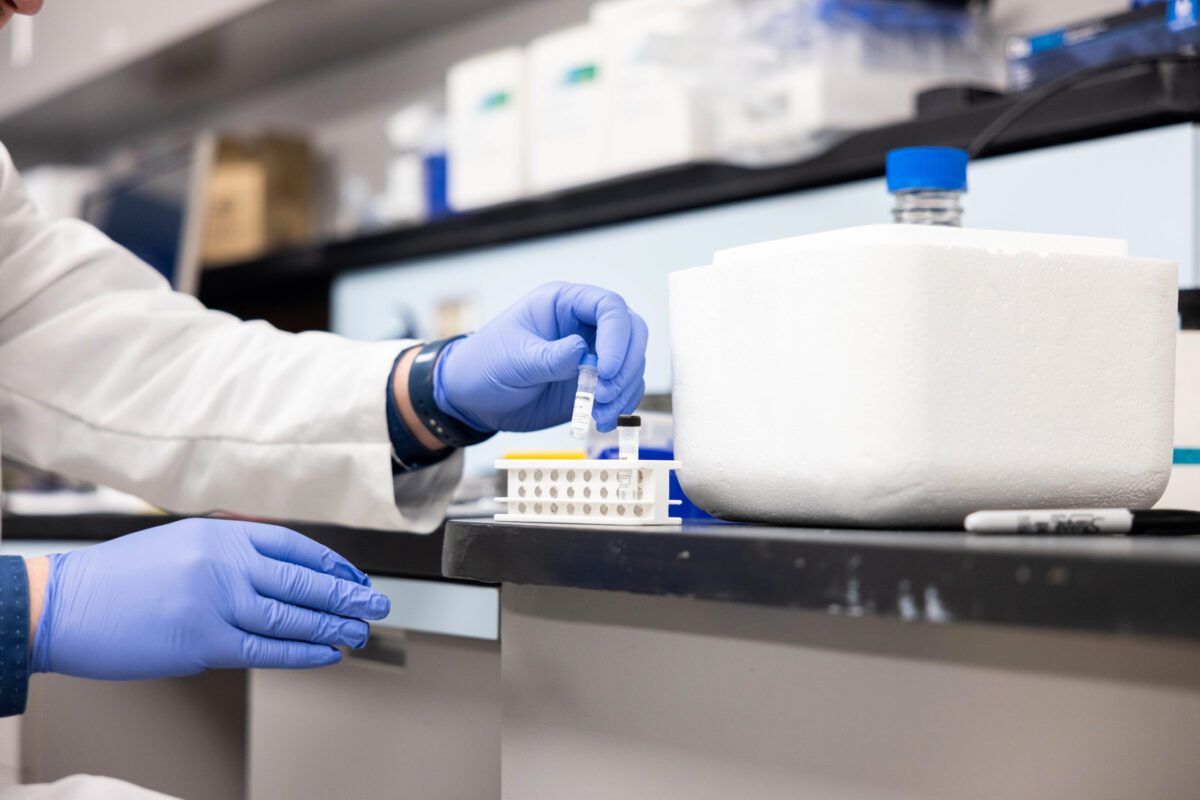
Two hands wearing blue gloves holding and organizing beakers.
Research scientist Adam Warner holding two small beakers while wearing a lab coat in a lab.

Cutting edge genetics and genomics analysis

The Raincoast Conservation Genetics Lab is equipped with a complete set of instrumentation to conduct molecular biology and genetics, including cutting-edge DNA sequencing technology. Our Research Scientist, Dr. Adam Warner, has extensive experience in genetics, genomics and DNA sequencing, has set up our lab space and has begun to carry out this research under the guidance of our Cetacean Research Program directors Dr. Lance Barrett-Lennard and Dr. Valeria Vergara. The lab works alongside Fisheries and Oceans Canada, which is hosting our lab space at the Pacific Science Enterprise Centre.

Understanding killer whale diet

A lack of sufficient Chinook salmon in the diets of Southern and Northern Resident killer whales has been linked to declines in population health. Our lab has the ability to extract and analyze salmon DNA from Resident killer whales feces, to identify the salmon stocks of most importance to the whales. Since we can identify the individual whales that produced fecal material genetically, we can link other health metrics such as stress hormone levels (also found in the fecal material) to individual killer whales. 
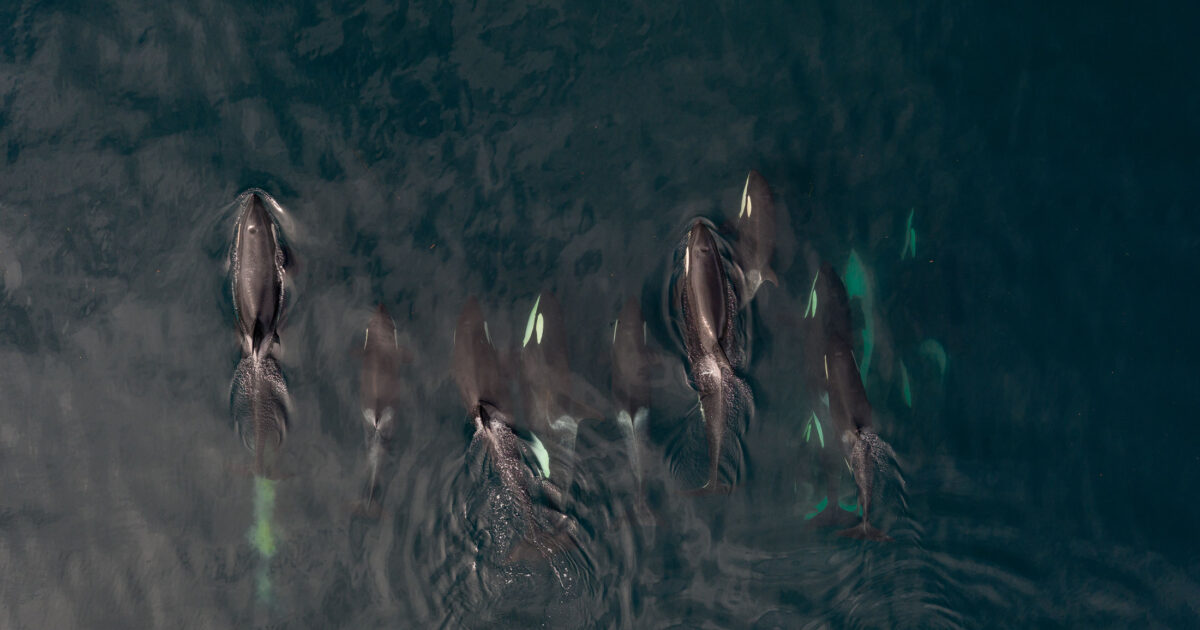
Overhead photo of a pod of killer whales swimming in the ocean.
Photo by Raincoast Conservation Foundation, taken under SARA Research License XMMS-2-2022.
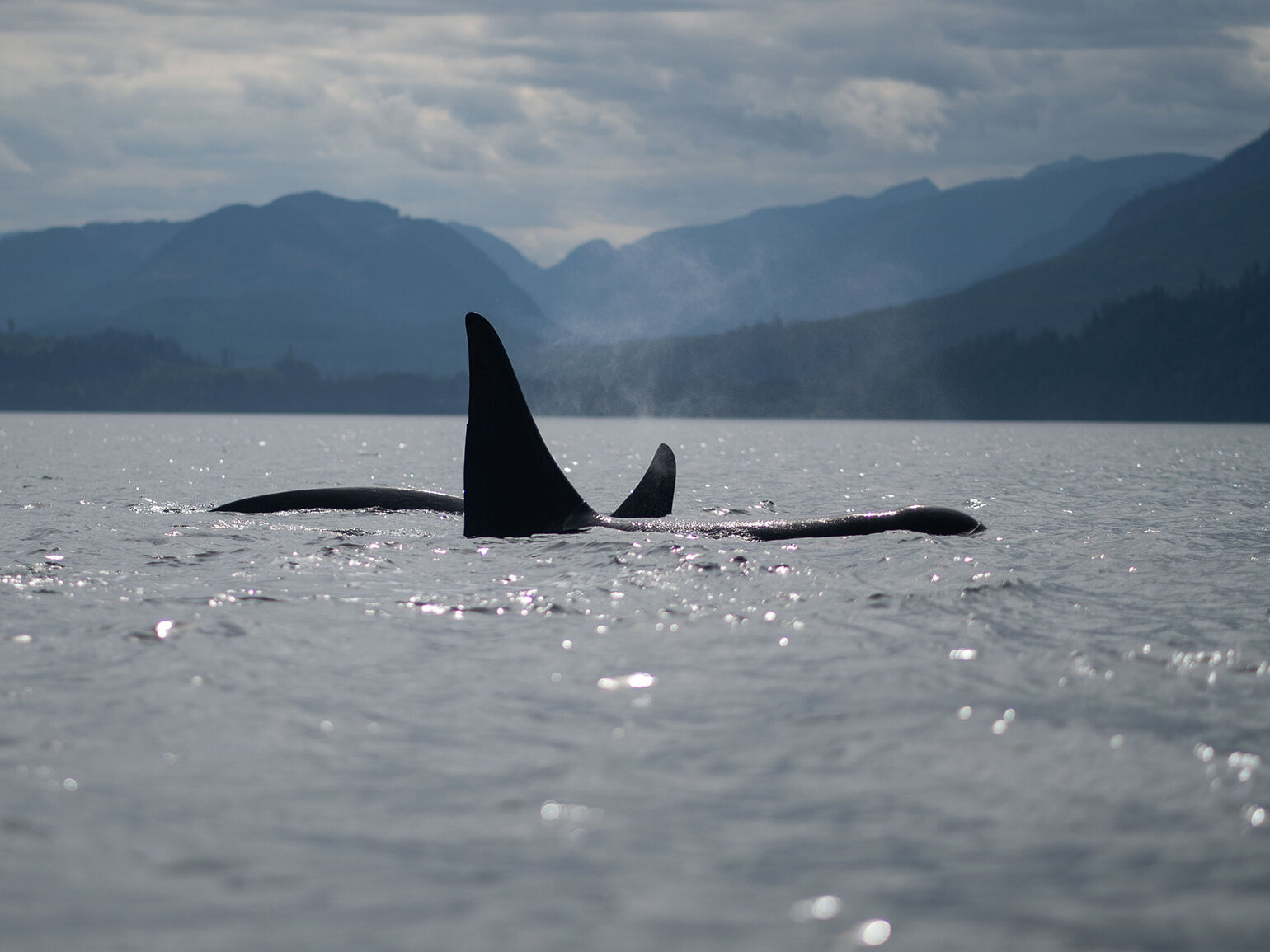
Two killer whales surfacing on the ocean.
Photo by John Kelsey.

Killer whale population health and dynamics

Killer whales live in small populations that from their size alone would appear to be vulnerable to negative effects of inbreeding.  We recently sequenced the entire genomes of 142 members of the Northern Resident population to directly  assess inbreeding, genetic diversity, and immune system strength. We are comparing this information in this dataset to one for Southern Residents compiled by NOAA in the United States. This will help us gain insight into the comparative health of these important fish-eating populations of killer whales. We are also finalizing a study of inbreeding in marine mammal-eating Bigg’s killer whales, which will inform our understanding of similarities and differences between North Pacific killer whale populations.

Environmental DNA to aid research focused on wild salmon and coastal wolves

Our research on wild salmon and coastal wolf populations has the potential to be expanded through the use of environmental DNA (eDNA) monitoring and analysis. Through eDNA, we can track and assess salmon populations and determine abundance and diversity. Using wolf scat samples we can identify specific individuals, their sex, and the prey consumed. By learning more about these important populations, we hope to drive policy change to protect biodiversity.

Research scientist Adam Warner holding two small beakers while wearing a lab coat in a lab.
Photo by Alex Harris / Raincoast Conservation Foundation.

Recent articles

A black bear turns their head a little while sitting down comfortably.

Problem humans and the ecology of bear-human conflict

Last month, in Penticton, BC a group of five black bears – three males and two younger females – had been spotted feasting on residents’ garbage. Conservation authorities were called in, and the five bears were shot dead. This came just a week after six bears were shot in over a three day period near…
Chris Genovali looks out over the water and land with binoculors.

Tracking Raincoast, past, present, and future

As this decade closes, it’s timely to celebrate what we have collectively achieved for BC’s coast.  Raincoast’s past in the Kitlope takes us back three decades to 1990, when Brian Falconer first visited at the invitation of the Haisla and Xenaksiala. The Nations were working to save the Kitlope from clearcut logging, which they ultimately…
A wolf trots across the eel grass in the estuary.

A gift to end commercial trophy hunting of coastal carnivores
#GivingTuesday is a global movement of generosity that has a huge impact on smaller charitable organizations like Raincoast. Raincoast is funded by donations from people like you and those donations allow us to continue our work of protecting the wildlife of BC’s coast, the Salish Sea, Great Bear Rainforest and beyond. 100% of your donations…
Bob McDonald sits on stage with Briony Penn, Brian Falconer, and

Stories from the Magic Canoe – An Update on the Kitlope Tenure
Last Thursday, Raincoast hosted a sold out event in Victoria about the legacy of the Kitlope and Xenaxiala elder, Cecil Paul. Cecil was the last person born in the Kitlope and led the efforts to protect the Kitlope from extractive industries. Although Cecil could not join us, we were privileged to be joined by three…
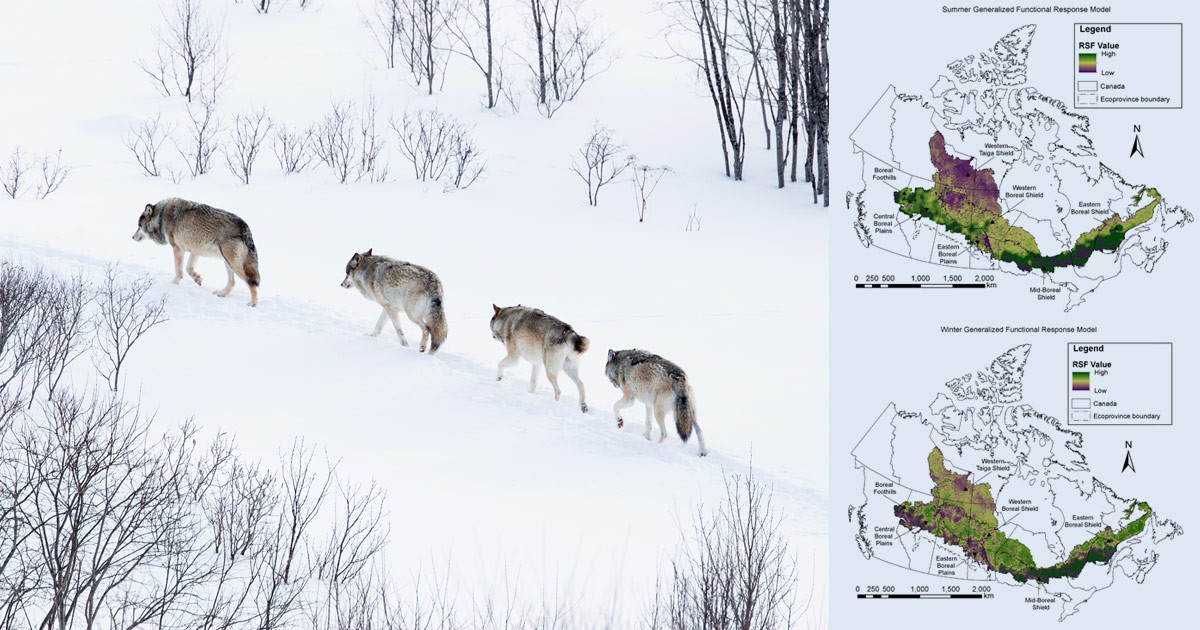
Four wolves walk up a hill following a narrow path, research maps superimposed on top.

Ecology and Evolution: Functional response of wolves to human development across boreal North America
Previous research on how wolves are affected by human development have been limited in scope and location and the results were mixed. Wolves adapted in a range of ways depending on contextual factors like road or cutblock density. Research undertaken by a team of conservation scientists, including Paul Paquet of Raincoast Conservation Foundation, endeavoured to…
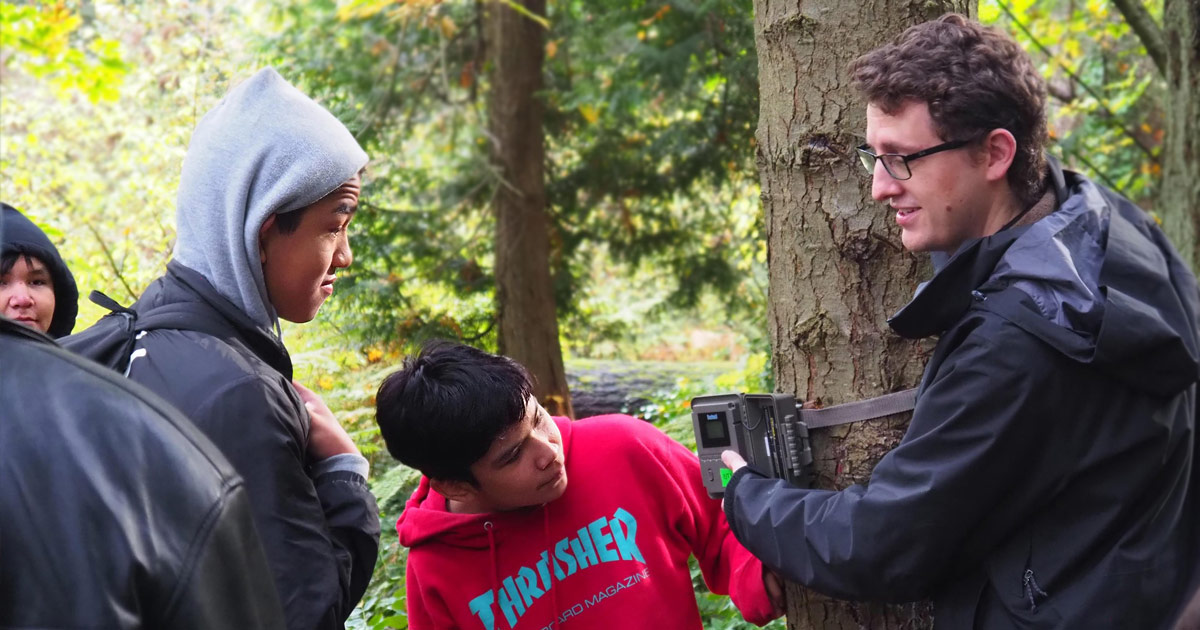
Tyler Jessen helps some young Salish Sea Emerging Stewards on campus to examine a remote sensing device.

Collaborating with the next generation
As I walk onto campus at the University of Victoria, I am surrounded by the hustle and bustle of students scurrying off to their classes. For the students, their familiarity with the area makes their travel effortless as they weave and bob through the buildings and walkways. As a visitor, the school is a giant…
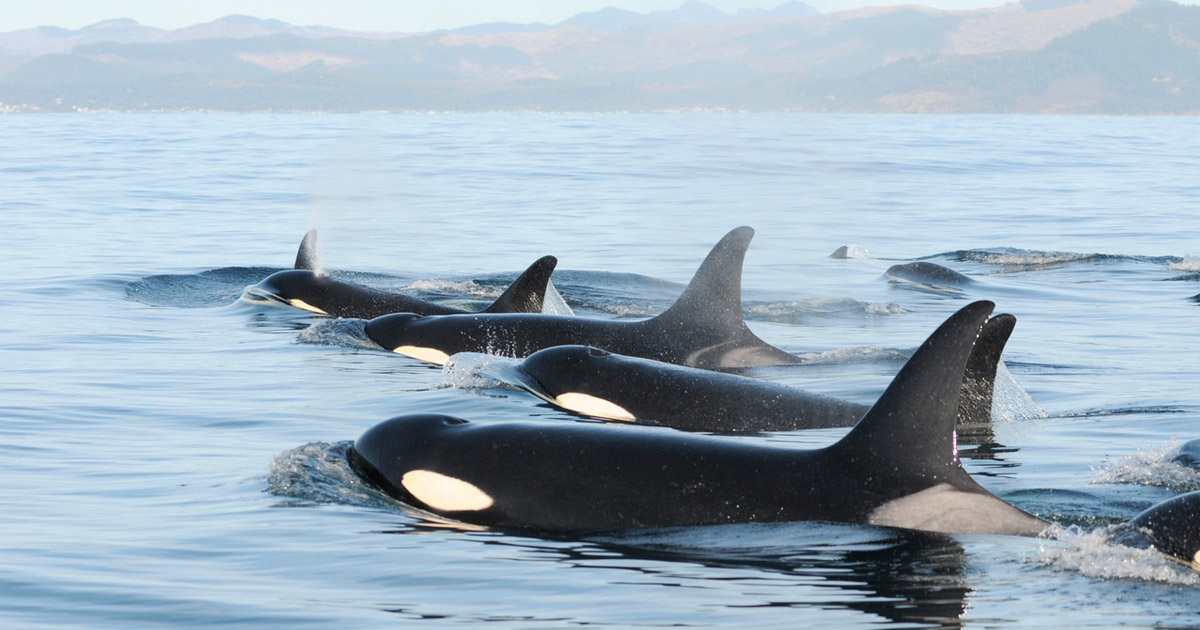
Southern Resident killer whales on the surface of the blue Salish Sea.

We are headed to the Supreme Court for Southern Resident killer whales

Today, Raincoast takes our work to protect Southern Resident killer whales from the Trans Mountain pipeline expansion all the way to the Supreme Court of Canada. Working with Living Oceans Society and our legal team at Ecojustice, we have filed an application for leave to appeal to the Supreme Court. We are arguing that the…
J50 and J42, Southern Resident Killer Whales swim in the Salish Sea.

Trans Mountain Expansion & Southern Resident killer whales: Project timeline

Raincoast Conservation Foundation represented by Ecojustice have worked through the courts to protect Southern Resident killer whales from the threats posed by the Trans Mountain Expansion project.  Timeline 2013 – Raincoast and Living Oceans, legally represented by Ecojustice, file as formal intervenors in the National Energy Board’s review of Kinder Morgan’s Trans Mountain Expansion (TMX)….