Conservation Genetics Laboratory 

Our conservation genetics research addresses threats to cetaceans, fish, and coastal carnivores. 

The Conservation Genetics Lab is an integral part of Raincoast’s efforts to protect the land, waters and wildlife of coastal BC. The DNA and RNA analysis we perform provides our scientists with reliable insights into the population structure, health, diets, and resilience and genetic isolation of coastal species. The lab works closely with our Cetacean Conservation Research Program and also helps answer important questions for our other conservation initiatives. 
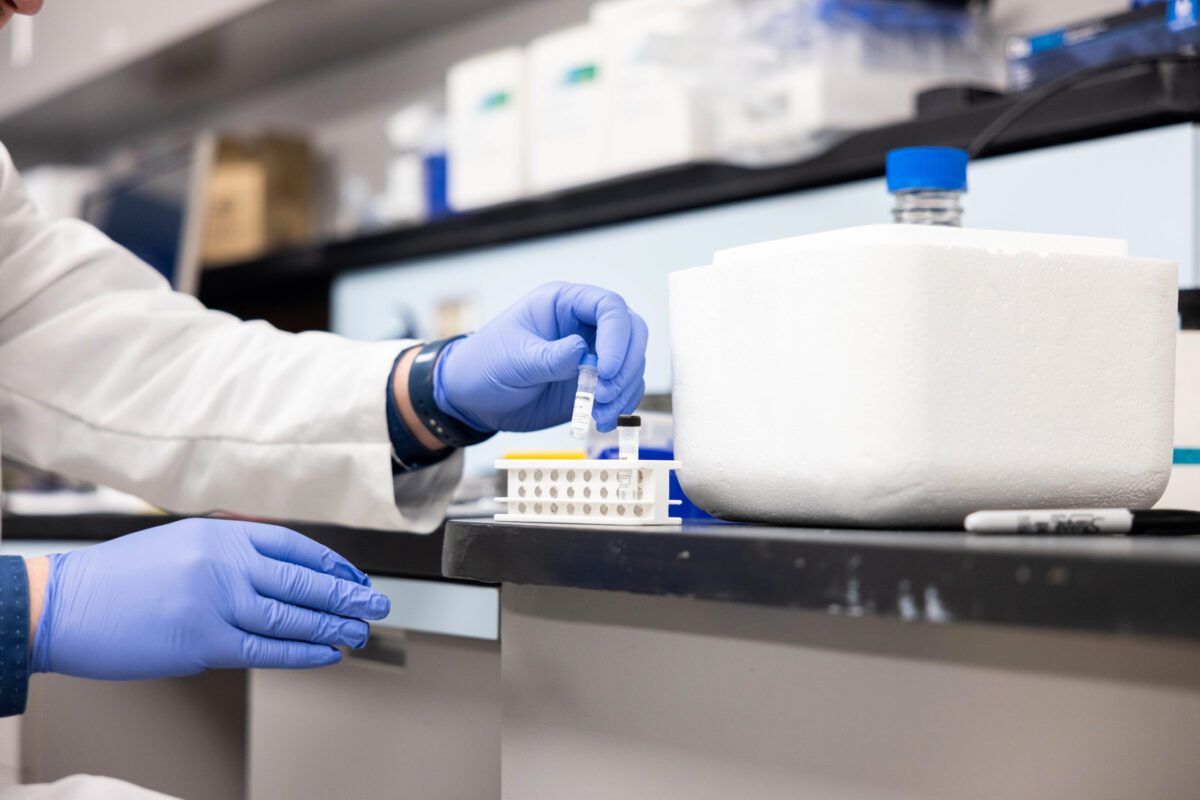
Two hands wearing blue gloves holding and organizing beakers.
Research scientist Adam Warner holding two small beakers while wearing a lab coat in a lab.

Cutting edge genetics and genomics analysis

The Raincoast Conservation Genetics Lab is equipped with a complete set of instrumentation to conduct molecular biology and genetics, including cutting-edge DNA sequencing technology. Our Research Scientist, Dr. Adam Warner, has extensive experience in genetics, genomics and DNA sequencing, has set up our lab space and has begun to carry out this research under the guidance of our Cetacean Research Program directors Dr. Lance Barrett-Lennard and Dr. Valeria Vergara. The lab works alongside Fisheries and Oceans Canada, which is hosting our lab space at the Pacific Science Enterprise Centre.

Understanding killer whale diet

A lack of sufficient Chinook salmon in the diets of Southern and Northern Resident killer whales has been linked to declines in population health. Our lab has the ability to extract and analyze salmon DNA from Resident killer whales feces, to identify the salmon stocks of most importance to the whales. Since we can identify the individual whales that produced fecal material genetically, we can link other health metrics such as stress hormone levels (also found in the fecal material) to individual killer whales. 
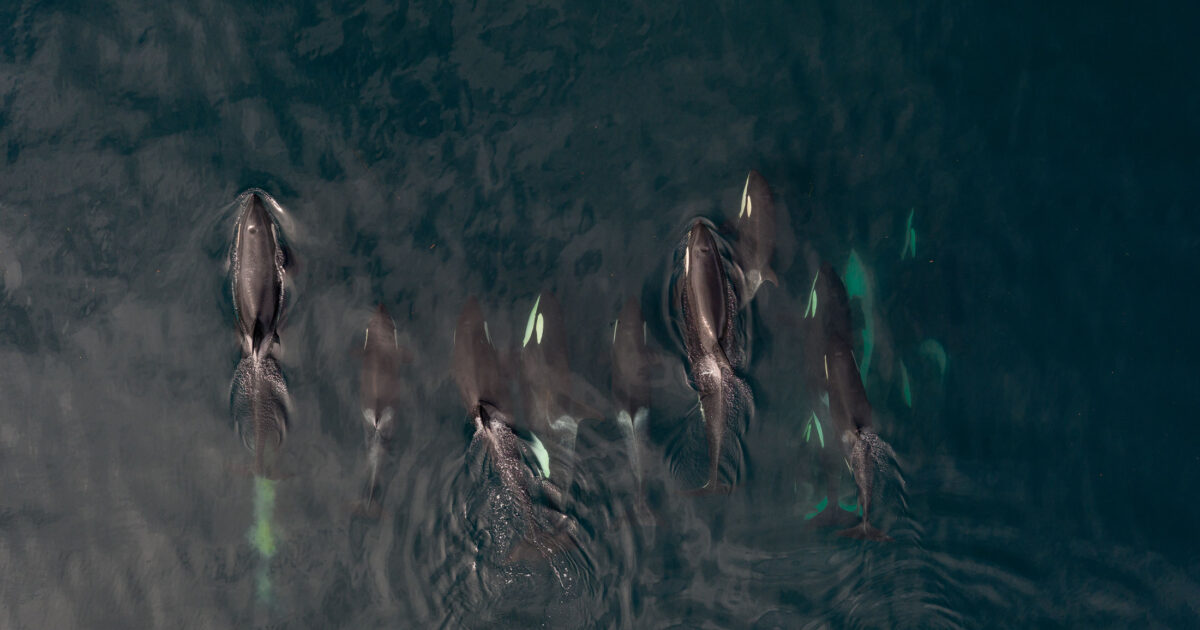
Overhead photo of a pod of killer whales swimming in the ocean.
Photo by Raincoast Conservation Foundation, taken under SARA Research License XMMS-2-2022.
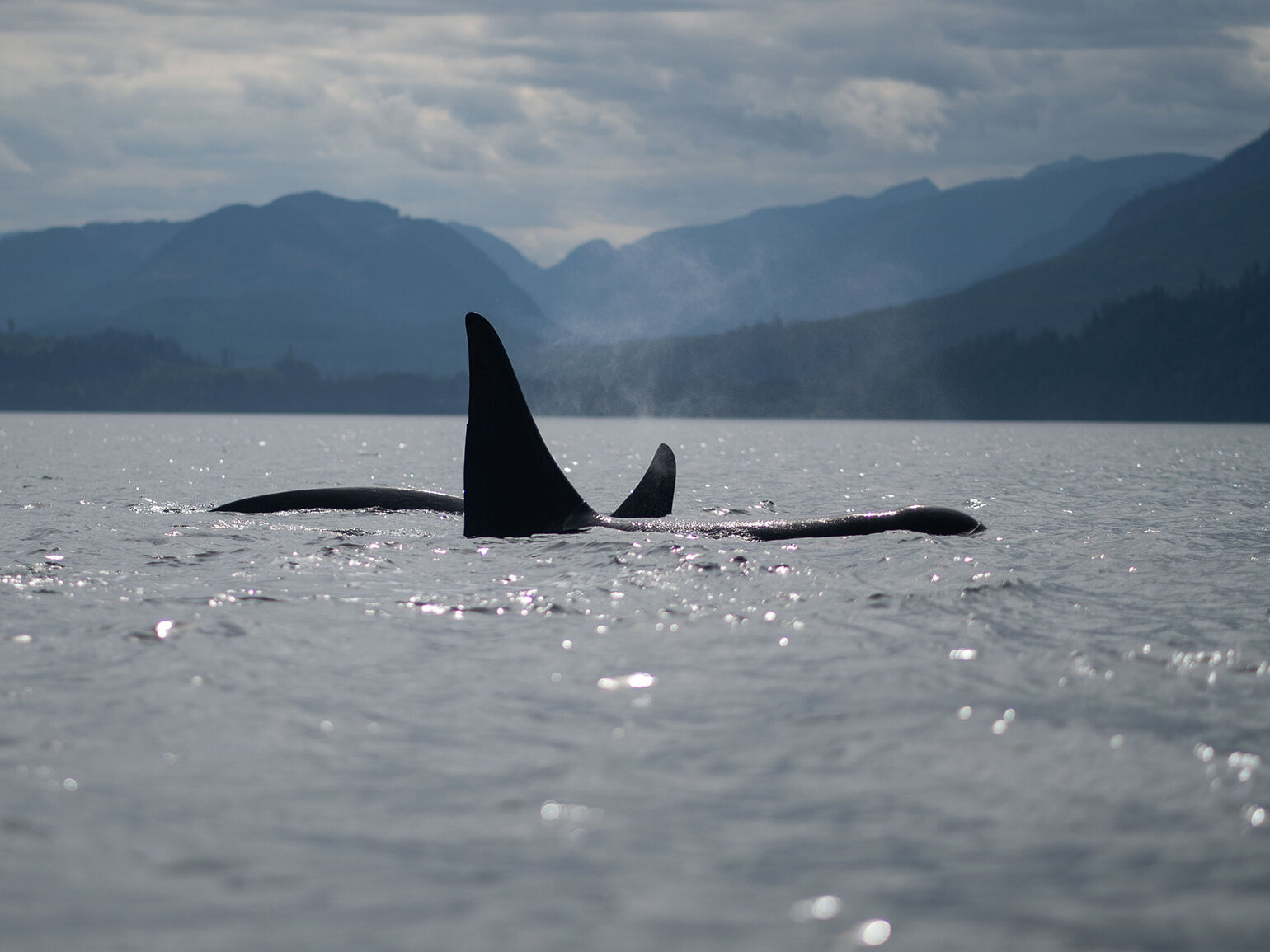
Two killer whales surfacing on the ocean.
Photo by John Kelsey.

Killer whale population health and dynamics

Killer whales live in small populations that from their size alone would appear to be vulnerable to negative effects of inbreeding.  We recently sequenced the entire genomes of 142 members of the Northern Resident population to directly  assess inbreeding, genetic diversity, and immune system strength. We are comparing this information in this dataset to one for Southern Residents compiled by NOAA in the United States. This will help us gain insight into the comparative health of these important fish-eating populations of killer whales. We are also finalizing a study of inbreeding in marine mammal-eating Bigg’s killer whales, which will inform our understanding of similarities and differences between North Pacific killer whale populations.

Environmental DNA to aid research focused on wild salmon and coastal wolves

Our research on wild salmon and coastal wolf populations has the potential to be expanded through the use of environmental DNA (eDNA) monitoring and analysis. Through eDNA, we can track and assess salmon populations and determine abundance and diversity. Using wolf scat samples we can identify specific individuals, their sex, and the prey consumed. By learning more about these important populations, we hope to drive policy change to protect biodiversity.

Research scientist Adam Warner holding two small beakers while wearing a lab coat in a lab.
Photo by Alex Harris / Raincoast Conservation Foundation.

Recent articles

A group of people standing in front of a building with totems painted on it.

Gvukva’áus Haíɫzaqv. House of the Haíɫzaqv, it’s always been here

The Haíɫzaqv (Heiltsuk) community of Waglisla (Bella Bella) who have been our friends, supporters and partners for over a generation, were about to celebrate the historic opening of the stunning new Gvukva’áus Haíɫzaqv (house of the Haíɫzaqv) with a five day potlatch celebration. Over 3000 people were expected. Knowing that accommodations were limited in the…
A bear stands or floats in the water eating a giant salmon.

Where bears, fish, and humans roam

Transitioning between seasons can often push your senses to work overtime. This is especially true in summer and autumn in the Atnarko River corridor, where the river comes alive with Chinook, chum, pink, sockeye, and coho salmon runs. The smell of a river containing spawned-out fish is unforgettable, and one I have grown fond of….
Mountain goat blending in with rocks and moss on the BC west coast.

Searching for sentinels at the top of the world

White on white is hard to see. It is especially difficult when what’s white is a mountain goat tucked into the nooks and crannies at the top of a mountain. These elusive animals cling to the windswept peaks of the coastal mountains of British Columbia where they find relief from warm summer temperatures and the…
Stories From the Magic Canoe of Wa'xaid, by Cecil Paul.

Stories from the Magic Canoe, Victoria on November 21st

This November we are inviting you to an evening conversation with author Briony Penn, Raincoast’s Brian Falconer, and photographer Alex Harris, hosted by CBC’s Bob McDonald. They’ll share stories about one of North America’s most important Indigenous leaders, Wa’xaid, Cecil Paul and the watershed he helped protect. Find this event on Facebook. November 21st, UVic…
A rhinoceros and juvenile rhinoceros stand in the brown grass of the Botswana flats.

Evidence, values, policy, and the advance of science

Last month, a group of scientists published a letter in the journal Science that advocated for trophy hunting, arguing that the practice can help safeguard biodiversity. In today’s issue of Science, there are six response letters, and Raincoast scientists (Drs. Kyle Artelle, Chris Darimont and Paul Paquet), contribute to three.  Our team argues that there…
A small coho salmon fry swim on the bottom of the lake.

Join us at the Salish Sea Ecosystem Conference in Vancouver

Along with the Lower Fraser Fisheries Alliance, Raincoast is chairing a traditional session at the upcoming Salish Sea Ecosystem Conference April 19-22, 2020 Vancouver Convention Centre Vancouver BC. The session, Toward a vision for Ecological Resilience in the Lower Fraser River, session ID1438, is accepting abstracts until November 1st. Our goal is to bring together…
A salmon in a stream, with four partner logos, Watershed Watch, David Suzuki Foundation, SkeenaWild Conservation Trust, and Raincoast.

Backgrounder on Canada’s Pacific salmon fishery losing its Marine Stewardship Council certification

What is the Marine Stewardship Council? The Marine Stewardship Council, or “MSC”, is an international, independent non-profit organization which sets a standard for sustainable fishing. Fisheries that wish to demonstrate they are well-managed and sustainable compared to the science-based MSC standards are assessed by a team of experts who are independent of both the fishery…
Rain wolf, by Christina Mittermeier, on a white wall with a lovely yellow chair.

Beautiful photographic prints from our favorite photographers for sale

A picture is worth a thousand words, and we are selling prints for $98. We are very grateful for photographers who are able to capture exceptional images who donated a limited number of prints. These images not only capture the beauty of the wildlife they also directly support our efforts to Safeguard Coastal Carnivores in…