Conservation Genetics Laboratory 

Our conservation genetics research addresses threats to cetaceans, fish, and coastal carnivores. 

The Conservation Genetics Lab is an integral part of Raincoast’s efforts to protect the land, waters and wildlife of coastal BC. The DNA and RNA analysis we perform provides our scientists with reliable insights into the population structure, health, diets, and resilience and genetic isolation of coastal species. The lab works closely with our Cetacean Conservation Research Program and also helps answer important questions for our other conservation initiatives. 
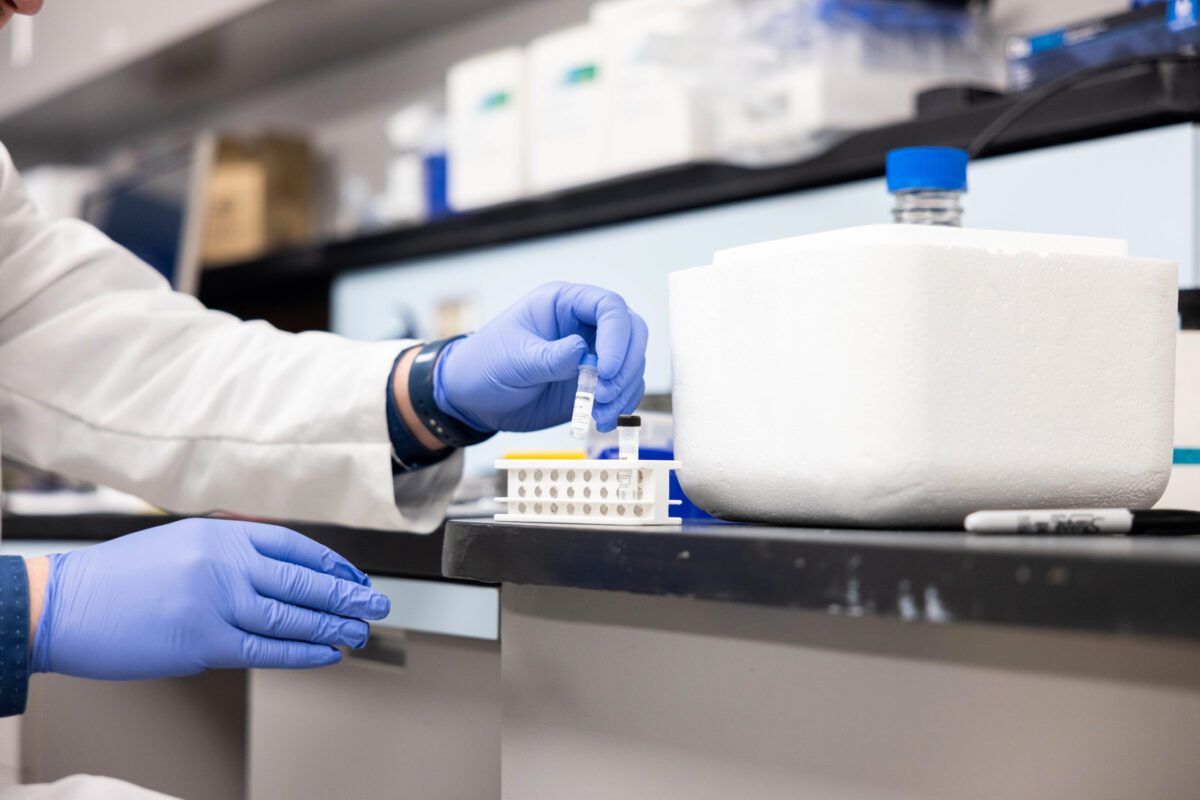
Two hands wearing blue gloves holding and organizing beakers.
Research scientist Adam Warner holding two small beakers while wearing a lab coat in a lab.

Cutting edge genetics and genomics analysis

The Raincoast Conservation Genetics Lab is equipped with a complete set of instrumentation to conduct molecular biology and genetics, including cutting-edge DNA sequencing technology. Our Research Scientist, Dr. Adam Warner, has extensive experience in genetics, genomics and DNA sequencing, has set up our lab space and has begun to carry out this research under the guidance of our Cetacean Research Program directors Dr. Lance Barrett-Lennard and Dr. Valeria Vergara. The lab works alongside Fisheries and Oceans Canada, which is hosting our lab space at the Pacific Science Enterprise Centre.

Understanding killer whale diet

A lack of sufficient Chinook salmon in the diets of Southern and Northern Resident killer whales has been linked to declines in population health. Our lab has the ability to extract and analyze salmon DNA from Resident killer whales feces, to identify the salmon stocks of most importance to the whales. Since we can identify the individual whales that produced fecal material genetically, we can link other health metrics such as stress hormone levels (also found in the fecal material) to individual killer whales. 
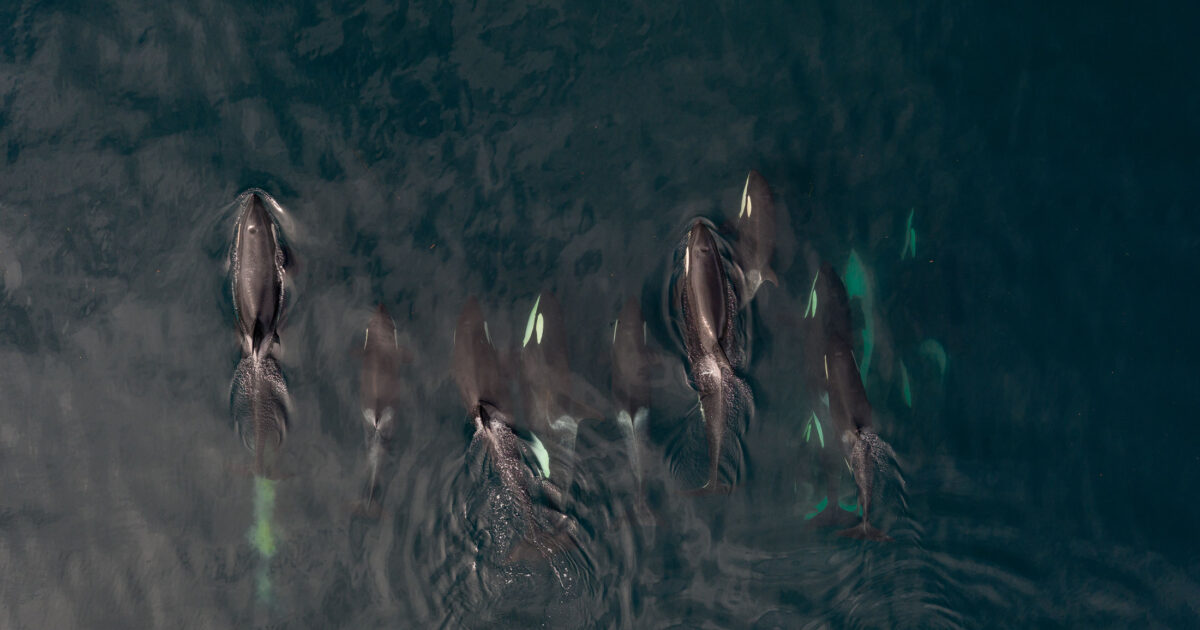
Overhead photo of a pod of killer whales swimming in the ocean.
Photo by Raincoast Conservation Foundation, taken under SARA Research License XMMS-2-2022.
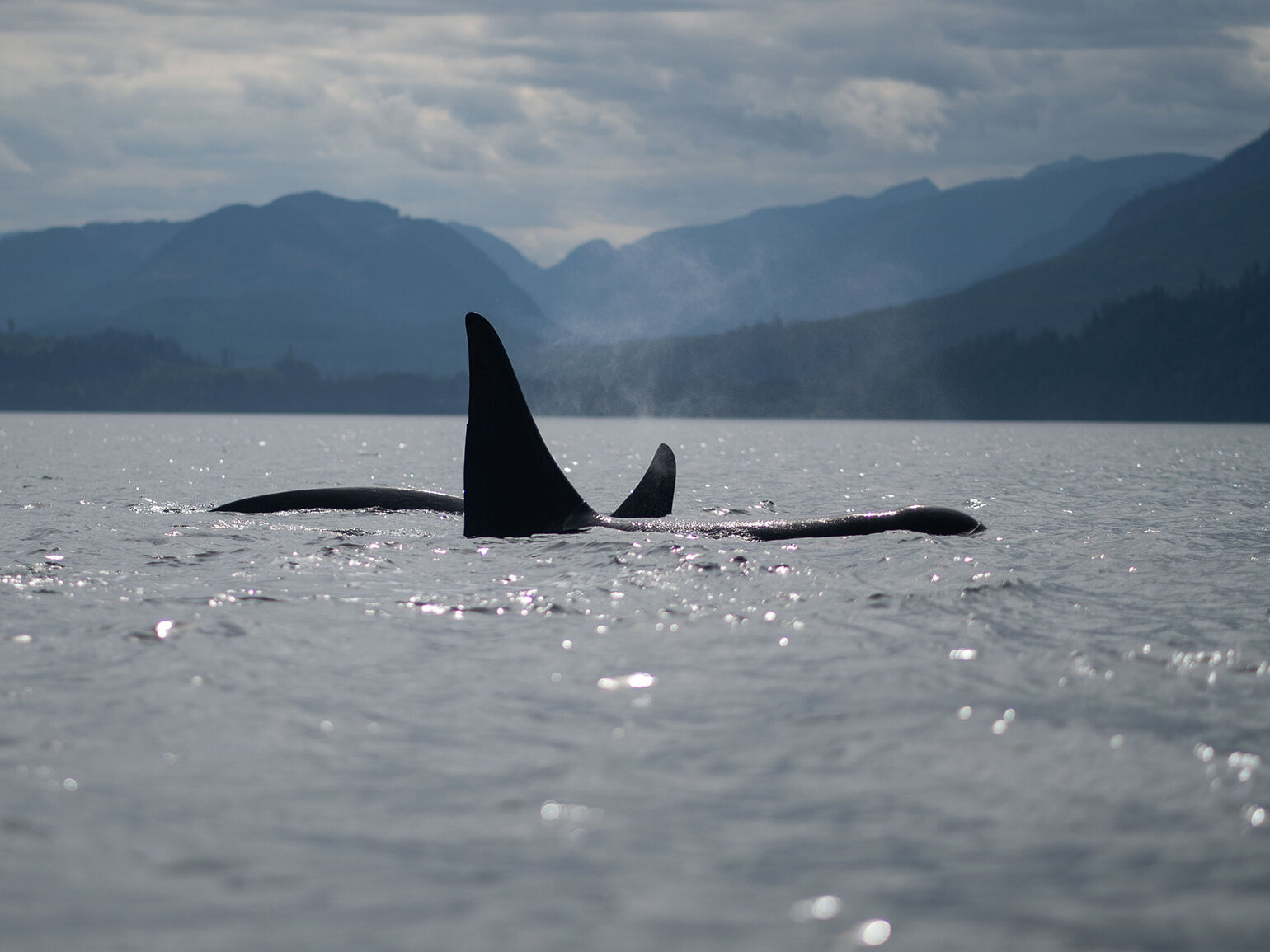
Two killer whales surfacing on the ocean.
Photo by John Kelsey.

Killer whale population health and dynamics

Killer whales live in small populations that from their size alone would appear to be vulnerable to negative effects of inbreeding.  We recently sequenced the entire genomes of 142 members of the Northern Resident population to directly  assess inbreeding, genetic diversity, and immune system strength. We are comparing this information in this dataset to one for Southern Residents compiled by NOAA in the United States. This will help us gain insight into the comparative health of these important fish-eating populations of killer whales. We are also finalizing a study of inbreeding in marine mammal-eating Bigg’s killer whales, which will inform our understanding of similarities and differences between North Pacific killer whale populations.

Environmental DNA to aid research focused on wild salmon and coastal wolves

Our research on wild salmon and coastal wolf populations has the potential to be expanded through the use of environmental DNA (eDNA) monitoring and analysis. Through eDNA, we can track and assess salmon populations and determine abundance and diversity. Using wolf scat samples we can identify specific individuals, their sex, and the prey consumed. By learning more about these important populations, we hope to drive policy change to protect biodiversity.

Research scientist Adam Warner holding two small beakers while wearing a lab coat in a lab.
Photo by Alex Harris / Raincoast Conservation Foundation.

Recent articles

A salmon splashes in a shallow stream, surrounding by the vibrant colours of autumn.

Finding communities in salmon conservation

As I crouch on the riverbank taking measurements of the salmon carcass, the ever-telling sensation of being watched creeps up my neck. I look up to see a mother black bear and her two cubs across the river, staring right at me. Our eyes meet, and time slows. In this moment of connected eyes and…
A collage of faces and supporters who have done peer to peer fundraising on behalf of Raincoast Conservation Foundation.

A short history of fantastic peer to peer fundraising campaigns

As an organization working to end commercial trophy hunting in the Great Bear Rainforest, we rely on our supporters. We’re inspired, and grateful, for those who take donations to the next level by creating their own supporting campaigns. Already, people have been working with us towards securing the Kitlope Tenure. As we continue towards our…
A happy large black bear walks down the road.

B.C.’s human-wildlife conflict response needs reform

Recent events have raised important legal questions about the policies, practices, and procedures of the British Columbia Conservation Officer Service (BCCOS) for responding to human-wildlife conflicts. This past summer was marked by multiple encounters involving people and black bears in the Lower Mainland, with accompanying BCCOS-related controversy as well. In a high-profile incident in Coquitlam,…
Doug Neasloss speaks to the crowd at the Pipe Shop for BC Bear Day 2019.

BC Bear Day was a success!

BC Bear Day this past weekend was a grand success. We saw lots of kids, teddy bears in hand, residents looking for tips on how to coexist with bears and people generally interested in learning more about bears. The afternoon portion of the event was filled with presentations, games, face painting, bear yoga and an…
Grass in the foreground gives way to epic mountains of the Kitlope valley.

Kitlope River estuary visit

This spot on a map of BC means little until you follow the 70-mile Gardner Canal that branches off Devastation Channel and winds its way deep into the coastal mountains of northern BC.  While single-handing my old wooden sailboat, ERN, I was reminded of my first trip to the mountains and the thrill of seeing…
Close up of a painting of a golden grizzly.

BC Bear Day photography exhibit

As part of BC Bear Day – this Sunday in North Vancouver – you can view a fantastic collection of wildlife photography that will, of course, include BC Bears. You can take a sneak peak below, and we hope you can view them in person.  The event is hosted in the stunning heritage status Pipe-Shop,…
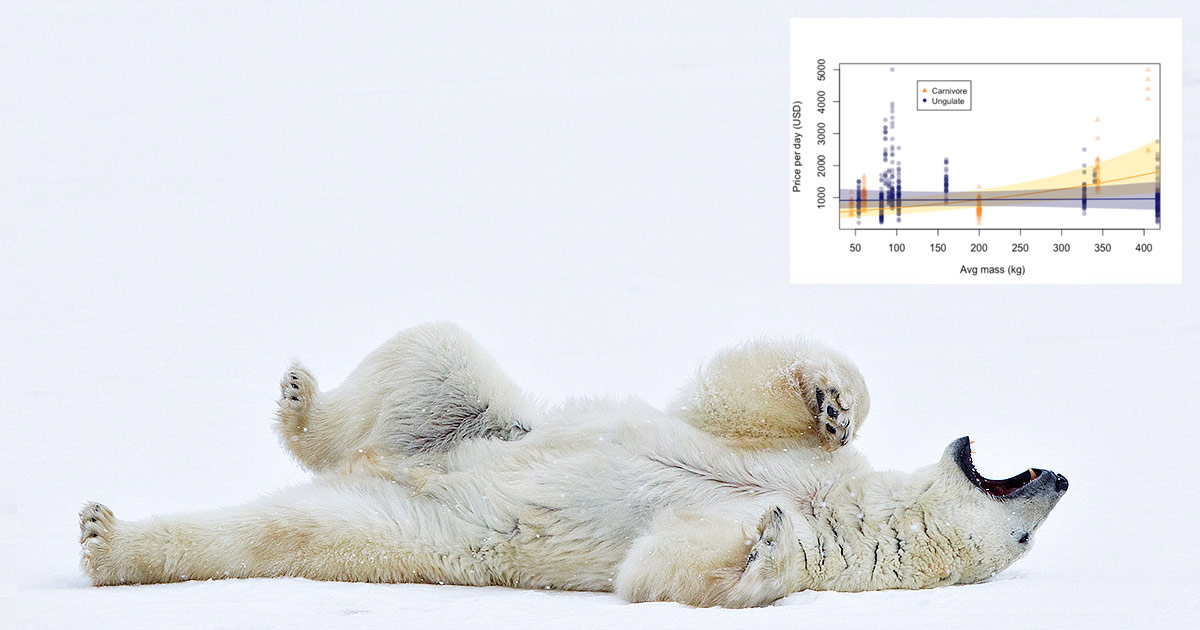
A polar bear rolls on their back with their mouth open, and there's a graph floating in the top right.

Research: Trophy hunters pay more to target larger-bodied carnivores

The behaviour of human hunters diverges from other animals. Other predators tend to target vulnerable individuals in prey populations. Humans, often males, tend to hunt large, reproductive-aged individuals. In the case of guided trophy hunting these species are likely perceived as costly, by increasing failure risk and risk of injury, and providing lower nutritional returns.
Dave Scott, Misty MacDuffee, Lia Chalifour, and Charlie Clark work in the Fraser River Estuary.

How new research on habitats within the Fraser River estuary implicates conservation strategy

Raincoast biologist Misty MacDuffee joined Mark Brennae on CFAX 1070 to talk about the Fraser River and the fish that rely on its distinct and interconnected habitat. The Fraser Estuary supports more than 100 species that are recognized as “at-risk” (threatened, endangered or of concern) either provincially or federally.1 Misty MacDuffee is part of a…