
New research aims to bring underwater noise’s true impact on killer whales into focus
Extended periods of time at sea are necessary to collect the data that will bring us closer to understanding – and protecting – killer whales.
Our cetacean scientists are preparing for an ambitious 2026 field season aboard Raincoast’s Sailing Vessel Achiever. Raincoast Conservation Foundation has joined forces with Earth Species Project, a non-profit research lab using machine learning to advance our understanding of animal communication. At the heart of this project is a deceptively simple idea: to watch and listen at the same time. The team aims to uncover how killer whales use sound to coordinate movements, share prey, and maintain social bonds – to ultimately understand and mitigate how noise pollution interferes with these processes.
Today, we’re chatting with our Cetacean Research Conservation program’s director Dr. Valeria Vergara about why this is the most exciting project of her career so far.

Hi Valeria, can you tell us a little bit about what your field season is going to look like this year?
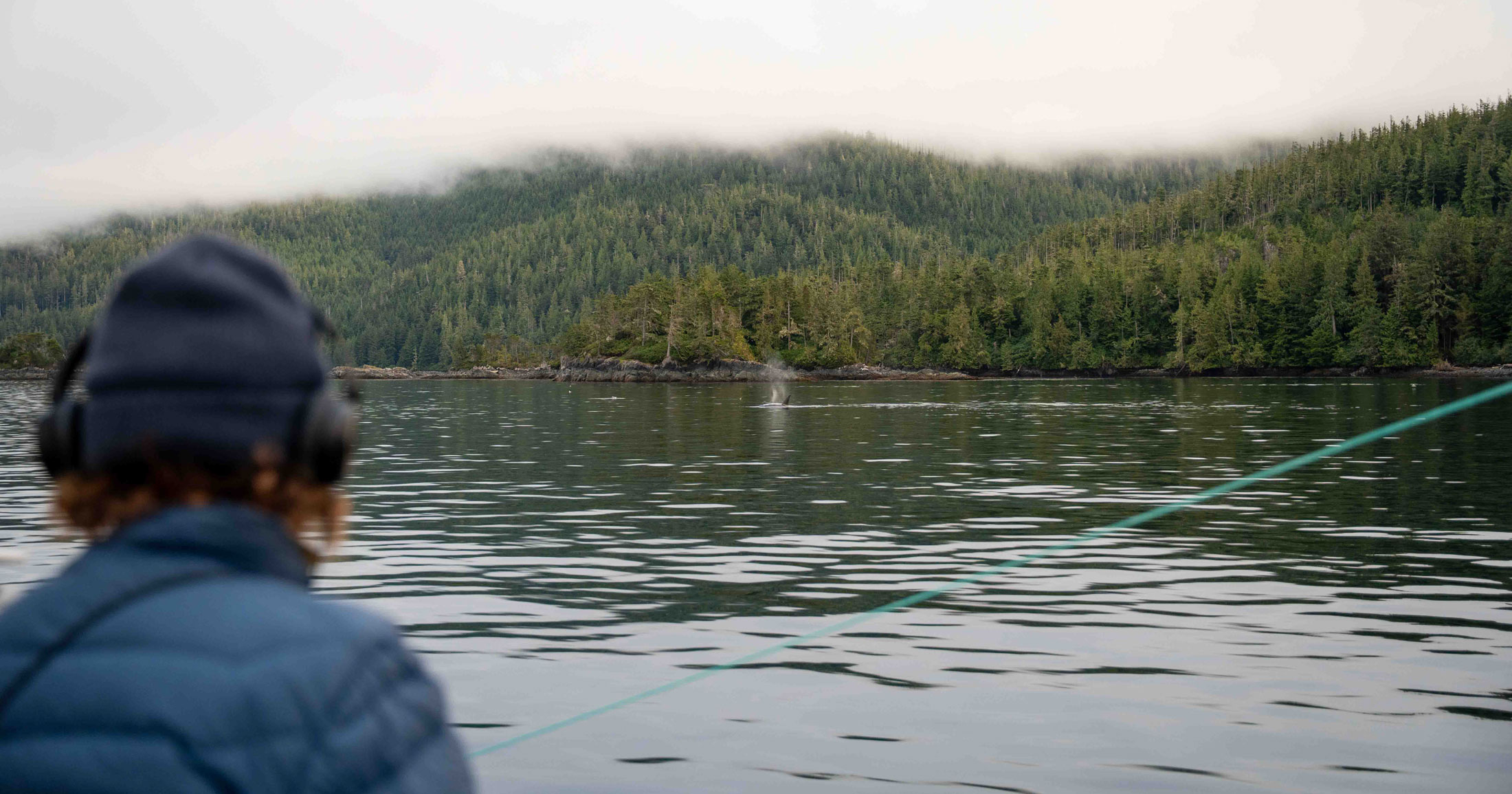
This year’s field season will be our most ambitious yet. We’ll be spending 30 days aboard Raincoast’s research vessel, Achiever, working in the waters of British Columbia’s central coast, with both Northern Resident and Bigg’s killer whales. It’ll be a busy boat, with field biologists from Raincoast, colleagues from Earth Species Project, and potentially international collaborators joining us again. Each brings something different to the table, and that mix of expertise is really what makes this project special. The days at sea are long and unpredictable, but that’s where the magic happens.
What is the data you and your team are collecting?
We will be synchronizing drone footage from above, hydrophone recordings from below, and behavioural observations, all aligned to the nearest second. For the behavioral observations, two observers are usually stationed on the boat’s research platform: one tracking everything that could affect the whales (vessel traffic, sea state, visibility, the presence of other cetaceans nearby), while the other records everything happening outside the drone’s field of view. Simultaneously, a third team member, usually our photo-identification expert Dr. Amy Rowley, photographs dorsal fins and saddle patches to identify exactly which individuals and matrilines we are recording. Throughout, the drone is flown at conservative altitudes to ensure the whales are not disturbed – which also helps to fit more whales into the frame.
That level of synchronisation is what allows us to ask questions that weren’t answerable before: what the whales are doing at that exact moment that calls occur, and who else is around – which individuals? Which matrilines? We’re essentially building a window into their social world in real time.

What are your big takeaways from last year’s pilot season?
So many! One of the most practically important lessons from our pilot was how valuable the moments when Achiever’s engine is off truly are, to obtain clean recordings without engine noise from our own vessel. Even though we tend to operate at slow speeds to reduce noise as much as possible, moments when we simply drift are gold.
Another lesson was about timing. August on this coast is notoriously foggy (we call it ‘Faugust’) and fog is a real hurdle: we can’t see the whales, and we can’t fly the drone. So we’re shifting the second leg of the 2026 season later into the calendar, starting in late August and running into mid-September, to give ourselves better conditions.
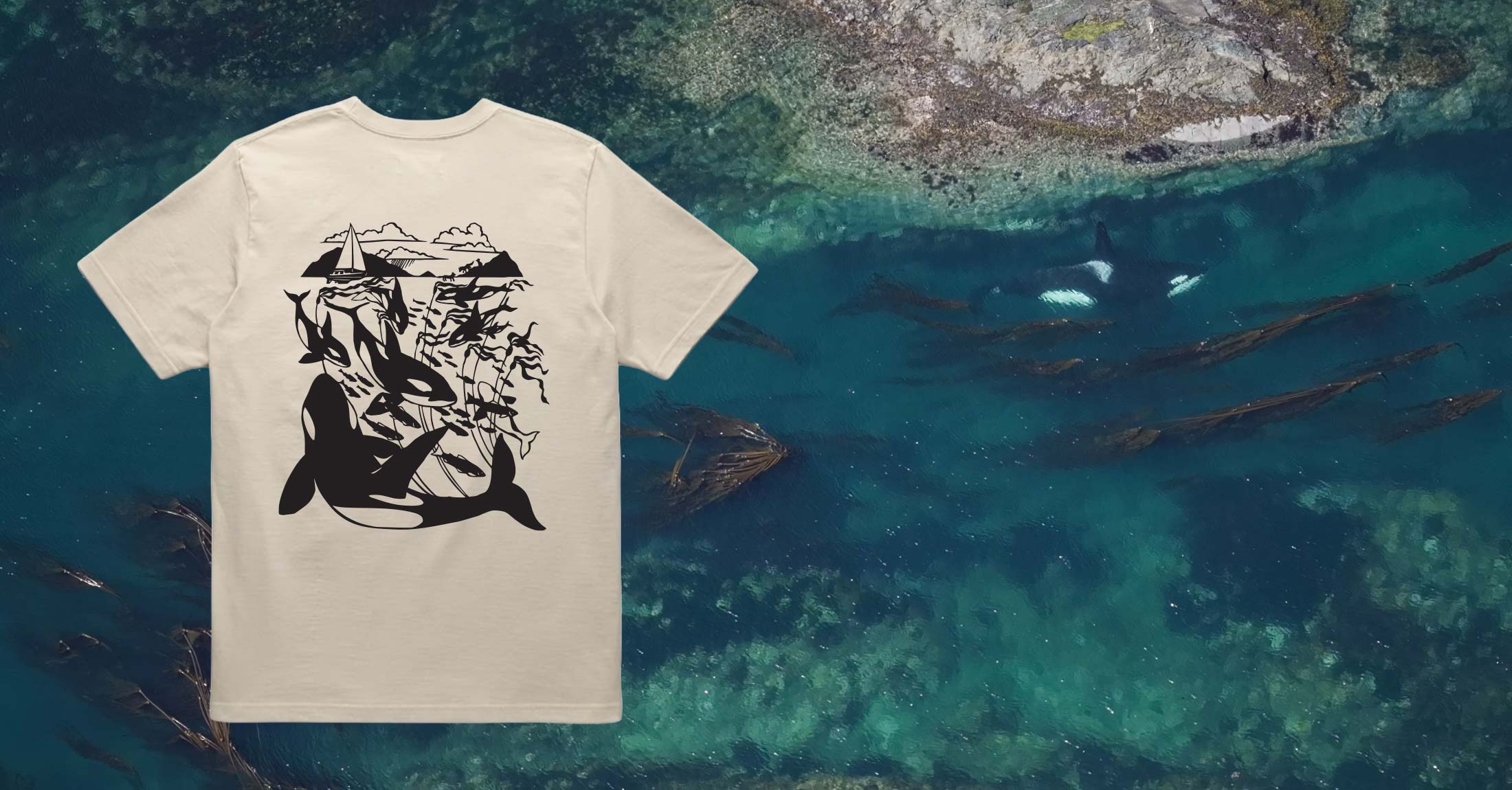
An unexpected gem was discovering that killer whales sometimes release bubblestreams from their blowhole when they vocalize. That means we can actually see who is speaking in the drone footage… which is remarkable! Knowing the sender and receiver of a communication signal is fundamental in animal communication research, and here nature handed us a way to do it visually. So we’ll be on the lookout for those tell-tale bubble streams!
And then there’s the data itself, the sheer volume of it. What we bring back from the field needs to be carefully annotated and organized before it can be fed into the machine learning models that Earth Species Project is developing. That annotation work is time-consuming and requires real dedication. Funding for that analysis phase is just as critical as funding the field season itself: one doesn’t work without the other.
Can you tell us more about killer whale culture? What is killer whale culture exactly? And why is understanding it so crucial for conservation? Would killer whale culture collapse because of underwater noise?
Killer whale culture is one of the most compelling examples of non-human vocal culture we know of. These whales live in stable, multigenerational family groups, and they pass down vocal traditions, hunting techniques, and social customs from one generation to the next – much like humans do. What killer whales eat, how they hunt, how they communicate, how they care for one another – all of this is culturally inherited.
A fish-eating Resident killer whale and a marine mammal-eating Bigg’s killer whale don’t just have different diets; they have fundamentally different cultures and vocal traditions. And that diversity extends globally: a killer whale in Iceland is not the same as a killer whale in British Columbia, much like a human in Canada is not the same as a human in Argentina. Each population has its own vocal culture, shaped by ecology, social history, and tradition, which is why studying them across regions is so important, and why our collaboration is international.
This year, our partners from the Icelandic Orca Project have confirmed they will be initiating a pilot study in Iceland based on our methodology. Filipa Samarra, founder and director of the Icelandic Orca Project, joined our 2025 pilot season for exactly that reason.
What makes all of this conservation-relevant is that if noise disrupts the calls that carry that cultural information, the consequences ripple through the entire social fabric. We don’t yet know exactly which calls are most vulnerable to masking, or which social functions are most at risk – that’s precisely what this research is designed to find out. You can’t protect what you don’t understand!
Would underwater noise cause killer whale culture to collapse? Not overnight, and perhaps not completely. But noise can interfere with their ability to practise it – to coordinate, to teach, to stay connected. Culture requires communication. If the calls that transmit and sustain it are masked, killer whales can’t fully be who they are.
Why is this project so incredibly exciting to you?
This project is close to my heart because it goes back to when I was seven years old, when I decided I wanted to spend my life trying to understand how animals think and communicate. I’ve always been captivated by the richness of their social lives. That curiosity is what drove me to study first canids, then belugas, and now killer whales. This project feels like the convergence of everything I’ve ever wanted to understand.
But beyond the personal, this project has the potential to genuinely transform how we study and protect killer whale societies. By working with ESP and having access to tools that facilitate the processing and analysis of massive multimodal datasets, we can find patterns that traditional analyses may miss, especially in the temporal relationships between calls, behaviors, and social configurations. And this is an iterative process, allowing us, as we move forward, to ask questions we didn’t even know we could ask. It expands the landscape of what is thinkable.
What are you hoping to achieve this year?
Several things. On the technical side, we’re working toward finalizing the training of ESP’s call classifiers, machine learning models that will dramatically speed up the process of identifying and classifying killer whale calls across our datasets. Right now, that work is done largely by hand, call by call. Once the classifiers are trained and validated, we can begin processing data at a scale that simply wasn’t possible before.
We’re also hoping to begin integrating the pilot season data with the 2026 field season recordings into the broader machine learning models, looking for patterns across thousands of calls and contexts that we might otherwise miss entirely. That’s where the real discoveries are likely to emerge: in the patterns, sequences, and relationships between calls and behaviours across time.
And underlying all of it is the goal of building a dataset robust enough to start answering the question we set out with: what are killer whales actually saying to one another, and what happens to their communication when the ocean gets louder?
We need to raise $155,000 by June 30th. Donors’ support directly fuels the science, helping get the vessel and researchers into the field so this critical research can continue.