
In an era of scarcity, the Pacific Salmon Treaty must strengthen conservation
Canada and the U.S. can continue to simply negotiate for our piece of a smaller and smaller pie, or we can come together to defend the legacy of wild salmon in our two countries.
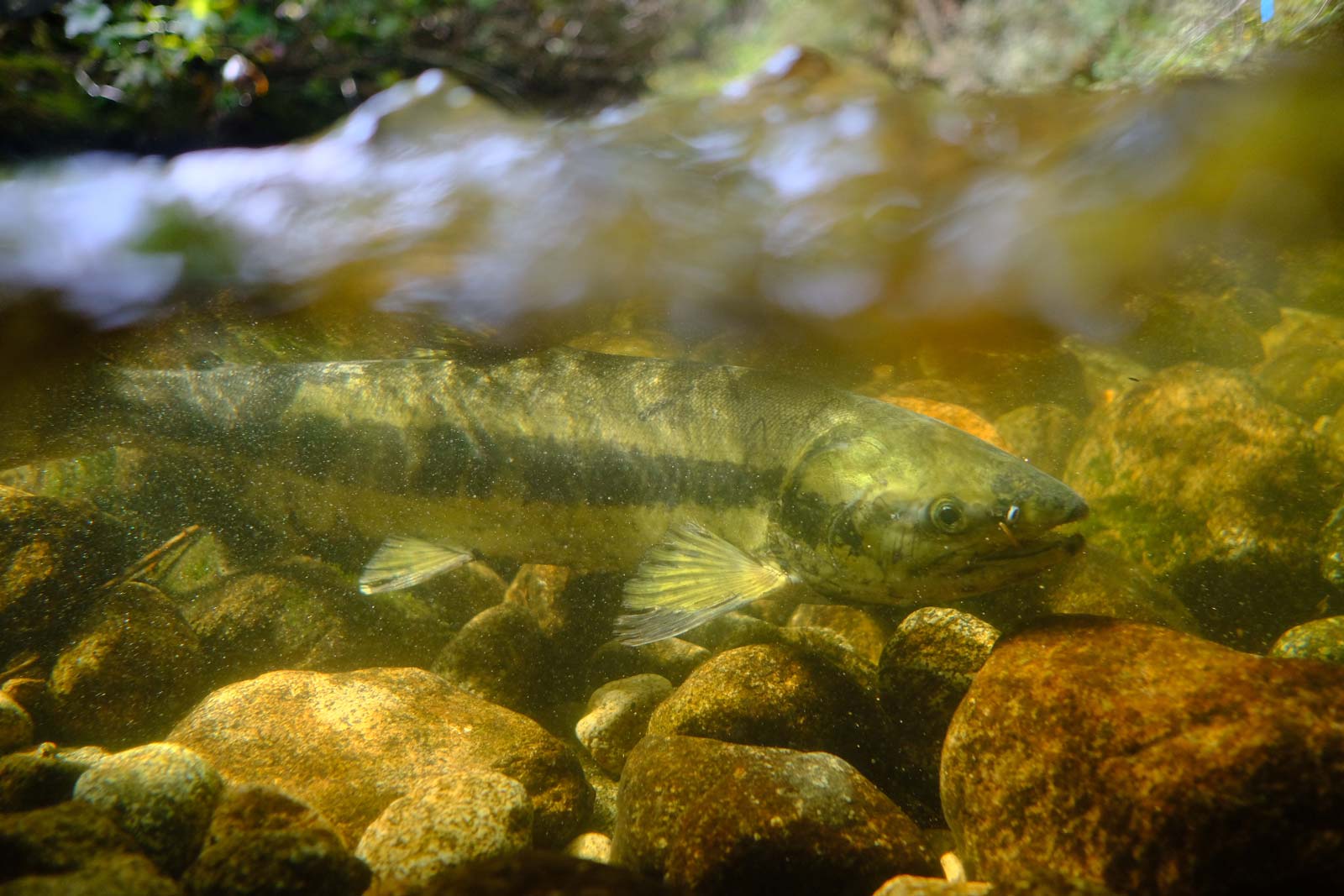
Pacific salmon don’t heed borders. After leaving their natal rivers and spending years roaming the North Pacific, they have to swim through a gauntlet of fisheries managed by different governments, rules, and priorities to make it home.
That mismatch – between fish biology and political boundaries – is why Canada and the U.S. first established the Pacific Salmon Treaty and why its current renegotiation is so consequential. That urgency is coming into focus, with the Pacific Salmon Commission’s annual meeting in Vancouver from Feb. 9 to 13.
The treaty was created 40 years ago to coordinate conservation and fisheries for salmon that migrate across the Canada-U.S. border. On the surface, it’s a sharing agreement, but its deeper purpose is conservation: ensuring spawning numbers, rebuilding where needed, and sustaining long-term productivity while prioritizing salmon access for countries of origin.
Forty years later, things have changed. We’re negotiating pieces of a smaller pie.
Up and down the coast, many salmon stocks are under pressure from changing ocean conditions, warming rivers, degraded habitat, and fishing impacts. Allocation is no longer just about who gets what. It’s increasingly about whether future generations will inherit resilient salmon runs at all – or merely a memory of them.
The negotiation environment is more complicated than in the past, too. Salmon policy is shaped by larger international relationships. Trade tensions, domestic political pressures, and regional priorities can harden positions and make compromise difficult. Even when countries share long-term interests, brittle relationships and scarce fish increase the incentive to chase short-term domestic wins.
It’s a risky combination: fewer fish, less flexibility, more politics.
In principle, a modern salmon agreement should reduce cross-border conflict and protect long-term salmon health. In practice, the treaty has always been strongest at negotiating each country’s harvest, and weakest at addressing broader causes of salmon decline. The latter are hard to solve with the traditional “divide the harvest” approach.
Here are four ways the treaty must be strengthened to improve its conservation mandate
First, the treaty must better address the challenge posed by mixed-stock fisheries, which often catch co-migrating salmon from multiple rivers and regions, and from both strong and weak populations. The treaty seeks to protect salmon diversity because it makes them resilient to changing conditions. Mixed-stock fisheries threaten diversity because even if a fleet aims for healthier stocks, weaker ones are caught along the way.
Climate change intensifies this problem. Shifting migration timing, ocean distribution, and run composition make it harder to predict where fish will be, and how many. Warmer water increases stress and mortality for salmon already struggling to survive.
Second, the treaty must set stronger standards for monitoring. The adage “what gets measured gets managed” applies to salmon, too. When returns decline, conservation depends on counting every fish, not just the ones that land on a dock. The standard must be simple and consistent: count all mortality, report transparently, and ensure decisions are based on what actually happens in the water, not just what’s easiest to measure.
Third, a renegotiated treaty must also better address the threats posed by large hatcheries. Small-scale conservation hatcheries have legitimate roles, but large, expensive industrial hatcheries reduce wild fish productivity. Flooding the ocean with hatchery-raised salmon can blur the difference between apparent abundance and wild resilience. Hatchery decisions are largely made by each country independently, but the consequences are felt across our shared ocean.
Fourth, a new treaty must address steelhead, the ocean-migrating rainbow trout that migrates alongside salmon. There is no consistent, coast-wide, binational framework to conserve steelhead, and the current treaty is silent on the matter. When steelhead are caught in fisheries targeting other species, their fate depends mostly on domestic rules and voluntary cooperation rather than treaty obligations. This must change.
When salmon are abundant, imperfect agreements can limp along. But when salmon are scarce, the cost of ineffective measures becomes clear. If the next agreement doesn’t put conservation first, “sharing” will become simply a conversation about dividing up a salmon legacy in decline.
At the same time, a fair agreement isn’t only about equity between countries. It’s also about creating incentives to invest in recovery. Habitat protection, restoration, monitoring, enforcement, and community-led stewardship all require long-term commitment. That commitment falters when people don’t believe their fish will be able to return home or when the rules don’t protect the most vulnerable stocks.
The question now is whether the treaty’s next chapter can match the reality of our time: fewer fish, more variability, and higher stakes.
We can continue to simply negotiate for our piece of a smaller and smaller pie, or we can come together to defend the remarkable legacy of wild salmon and steelhead in our two countries.
Let’s choose the latter.
Nathan Meakes is assistant director of SkeenaWild Conservation Trust. Learn more about Nathan. A version of this article was first published in The Vancouver Sun on February 09, 2026.