Help us give killer whales a voice
We have a little over three months to raise $77,500 for our marine expedition to take place!
Last December, Raincoast launched the first phase of our killer whale communication campaign. Thanks to your generosity, we attained our goal in only a couple of weeks.
Last summer, researchers from Raincoast Conservation Foundation, Earth Species Project, and Icelandic Orca Project completed a highly successful pilot season in British Columbia. We tested and refined our multimodal workflow, demonstrated the feasibility of collecting synchronized datasets under challenging field conditions, and validated our analytical methods.
This pilot season laid the foundation for a scalable and long-term research program – one that will ultimately allow us to protect killer whale societies from the impacts of ocean noise.
Our team of scientists is preparing for an ambitious 2026 field season aboard Raincoast’s Sailing Vessel Achiever. These extended periods of time at sea are necessary to collect the data that will bring us closer to understanding – and protecting – killer whales.
We’re thrilled to announce that one of our partners has committed to providing half of the funds required for this marine expedition to take place. That means we have a little over 3 months to raise the remaining $77,500. You can track our progress and learn more about this initiative.
Your contribution directly fuels science, helping us get the vessel, our researchers, and our equipment into the field so we can continue advancing this critical research.
About this campaign
Noise pollution is profoundly disrupting the whales’ ability to communicate. It is a threat that is invisible to us, but devastating to them.
To killer whales, sound is survival.
They rely on calls to feed, to coordinate, and to maintain relationships. But with the ocean getting louder from vessel traffic, their vocalizations are being drowned out.
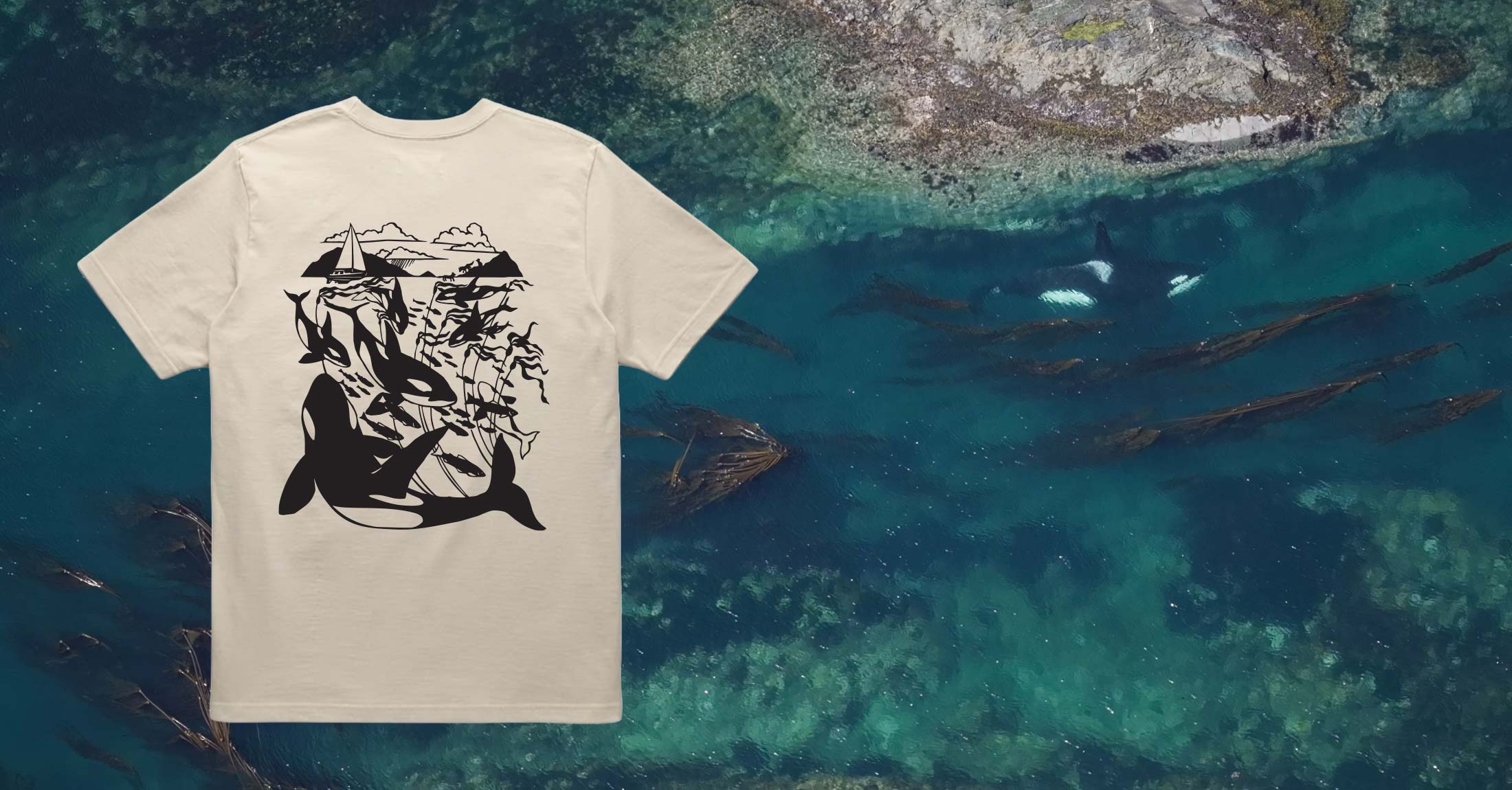
Raincoast Conservation Foundation has joined forces with Earth Species Project, a non-profit research lab using machine learning to advance our understanding of animal communication. At the heart of this project is a deceptively simple idea: to watch and listen at the same time. By synchronizing drone footage, underwater acoustic recordings, and time-stamped behavioral observations to the nearest second, the team aims to uncover how killer whales use sound to coordinate movements, share prey, and maintain social bonds – to ultimately understand and mitigate how noise pollution interferes with these processes.