

Wolf Science
Collaborative research and monitoring to understand wildlife communities in altered landscapes.
Photo by Michelle Valberg.
Grey wolves are one of BC’s most ecologically important terrestrial predators, affecting the diversity, abundance, and distribution of plant and animal species, as well as ecological interactions across multiple trophic levels. Because they are so influential, wolves offer a perfect entry point to understanding the broader ecosystems they inhabit. By studying these apex predators alongside foundational species such as Pacific salmon, we, as scientists, are working to better understand and support long-term biodiversity in interconnected coastal landscapes of British Columbia.
Wolf recovery in the Pacific Northwest
Grey wolves historically occupied much of southern British Columbia, including the temperate rainforests of the west coast. As part of the broader Pacific Northwest, a transboundary region of western North America, these populations were part of interconnected ecosystems extending across provincial and international borders. However, widespread predator-control programs and habitat changes during the late nineteenth and early twentieth centuries resulted in significant population declines and local extirpations across portions of this region.
Today, wolves are experiencing a significant recovery in southern British Columbia, with a marked westward expansion toward the Pacific coast. As they reoccupy and adapt to these landscapes, their recovery reflects a layered history of ecological relationships, human persecution, shifting environmental pressures, and distinct coastal and inland environments that continue to shape their ecology, behaviour, and genetics.
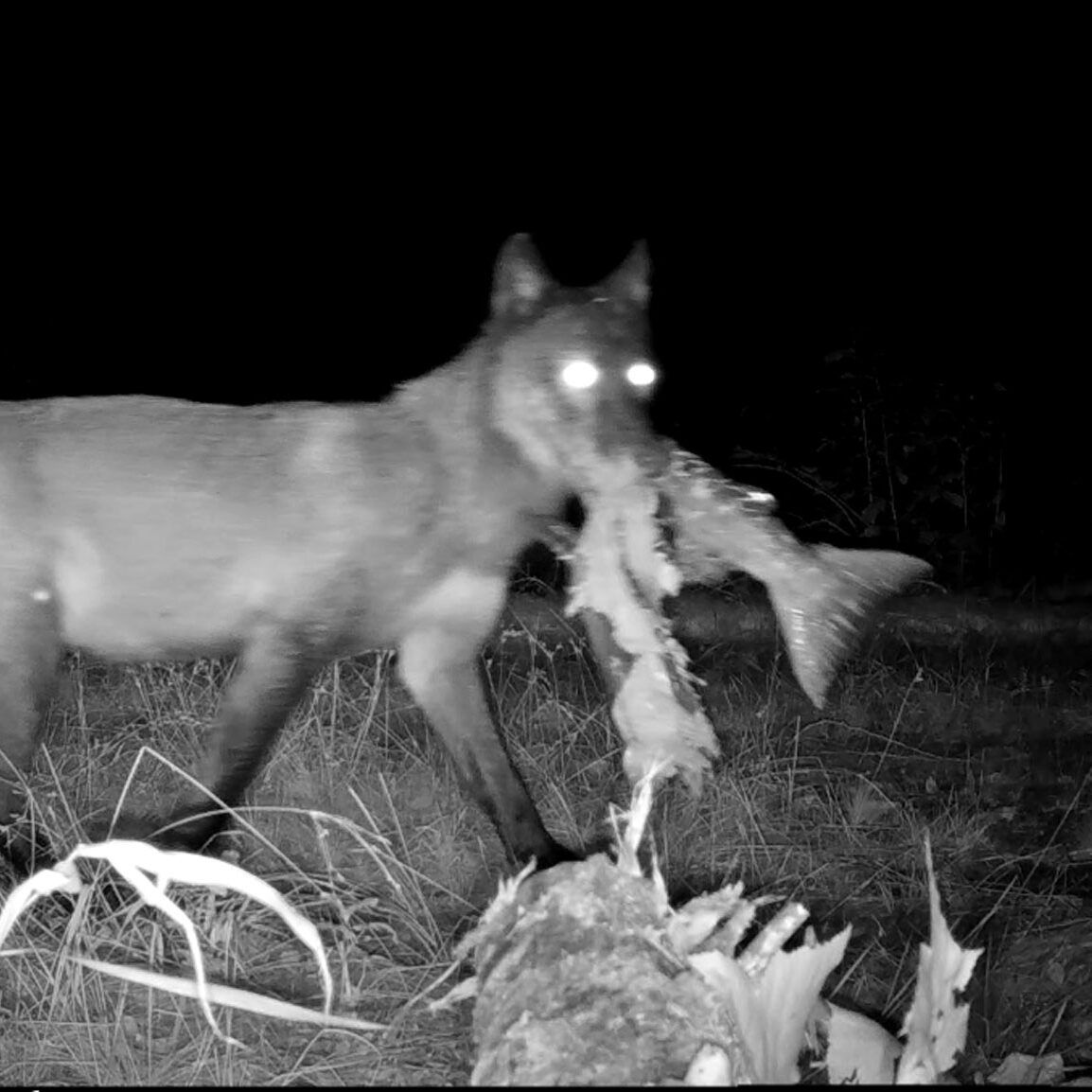
Collaborative, ecosystem-based research
Through decades of collaborative efforts to restore salmon habitat and reintroduce Roosevelt elk to the south coast, wolves are returning to landscapes that once again offer abundant food sources. However, these areas are no longer the intact, continuous ecosystems they once were. The cumulative impacts of industrial development, habitat fragmentation, climate change, and ongoing lethal persecution remain significant concerns for the long-term resilience of recovering wolf populations and the ecosystems to which they belong.
Together with First Nation partners, we are documenting the recovery of wolves and the broader ecosystems they inhabit across the south coast of British Columbia, with current research and monitoring focused in two watersheds. This work takes an ecosystem-based approach, recognizing that understanding wolves means understanding the web of relationships that connects them to other species and the habitat they depend on.
Our partnerships
Our research is guided by the priorities of First Nations partners. We are honoured to carry out this work in active partnership with the səlilwətaɬ (Tsleil-Waututh) Nation and other First Nation communities, whose knowledge and leadership shape every aspect of the research. Our partnerships are grounded in reciprocal knowledge sharing, bringing together Western scientific methods and Indigenous Knowledge systems to strengthen our understanding of the wildlife and ecosystems we work to protect. We are committed to building long-term capacity with our partners, and supporting Nation governance and Indigenous-led stewardship of land and wildlife well beyond the life of any single project.

Questions guiding our research
Our research is driven by questions that deepen our understanding of wolves, their ecological relationships, and the ecosystems they inhabit.
- What ecological relationships do wolves maintain in their environment?
- Who are the wolves returning to these landscapes, and where did they come from?
- How do wolves and other wildlife respond to disturbance in human-modified landscapes?
- What are the ecological and community benefits of wolf recovery?
Our unique approach
At Raincoast, our approach is grounded in doing the most good and the least harm to people, animals, and the environment. We recognize that protecting wildlife requires consideration of individual animal welfare, as the integrity of wildlife populations and ecosystems is closely linked to the well-being of the animals within them. Across our programs, we prioritize minimally invasive research methods and seek to minimize human-caused harm.
In practice, much of our wolf research hinges on collecting data from remote cameras, acoustic recorders, and non-invasive genetic samples such as wolf scat (feces). Together, these methods allow us to monitor individual wolves, understand population dynamics, document behaviour, assess health, and examine habitat use while minimizing disturbance to the animals we study.
Non-invasive genetics
The Raincoast Conservation Genetics Laboratory uses non-invasive genetics tools to advance our understanding of wolf recovery, ecology, and population health. Genetic material collected from wolf scat allows us to identify individuals, investigate diet and predator–prey relationships, assess disease and parasite presence, and understand wolf ecotypes and recolonization patterns – all without the need to capture or handle animals.
Combined with remote camera and acoustic monitoring data, these genetic insights help reveal how wolves move through landscapes, connect habitats, and respond to a changing environment. Through this integrated approach, we are gaining a deeper understanding of individual wolves and the broader processes shaping wolf recovery.
Forests for wildlife
Remote cameras provide a unique window into the lives of wolves and other wildlife that shape and depend on healthy ecosystems. Using detection data from a network of wildlife cameras deployed and managed with First Nation partners, we are quantifying how species of ecological and cultural importance respond to different ecological conditions and cumulative effects from human disturbance. Camera locations are selected using a stratified study design that captures variation across landscape conditions, including forest age, proximity to industrial development, cutblocks (logged areas), recreation areas, restoration sites, spawning channels, and culturally significant locations.
Collecting these data will help improve our understanding of wildlife responses to landscape change and inform evidence-based management strategies that protect critical habitat, mitigate disturbance impacts, support holistic watershed management, and contribute to long-term monitoring frameworks stewarded by First Nations. The methods and stratified study design used to develop this framework provide a flexible, transferable monitoring toolkit that can be applied by other Nations and researchers to build on wildlife and habitat stewardship and conservation initiatives that reflect unique priorities, ecosystems, and knowledge systems.
Building on conservation science
This research framework was adapted from a three-year project led by the Raincoast-UVIC Applied Conservation Science Lab in partnership with the Heiltsuk Integrated Resource Management Department in Haíɫzaqv Territory. Using a network of 96 remote cameras across multiple watersheds, the project examined wildlife responses to landscape variation at broad spatial scales. Building on this approach, our current research applies similar methods at a finer scale to investigate ecological relationships within watersheds, revealing how wolves and other wildlife interact across these dynamic ecosystems.

eBay encourages wildlife depletion?
Raincoast calls on eBay to stop auctioning trophy hunts
Raincoast launches eBay campaign to end bids for grizzly hunts
Raincoast scientists contribute to paper on impacts of commercial harvesting
Old growth clearcuts are pushing out deer
The cry of the wolf
War on wolves fails test of reason, efficacy and morality