

Wolf Conservation Program
Raincoast’s Wolf Conservation Program is built on peer-reviewed science, public education, and wildlife management reform.
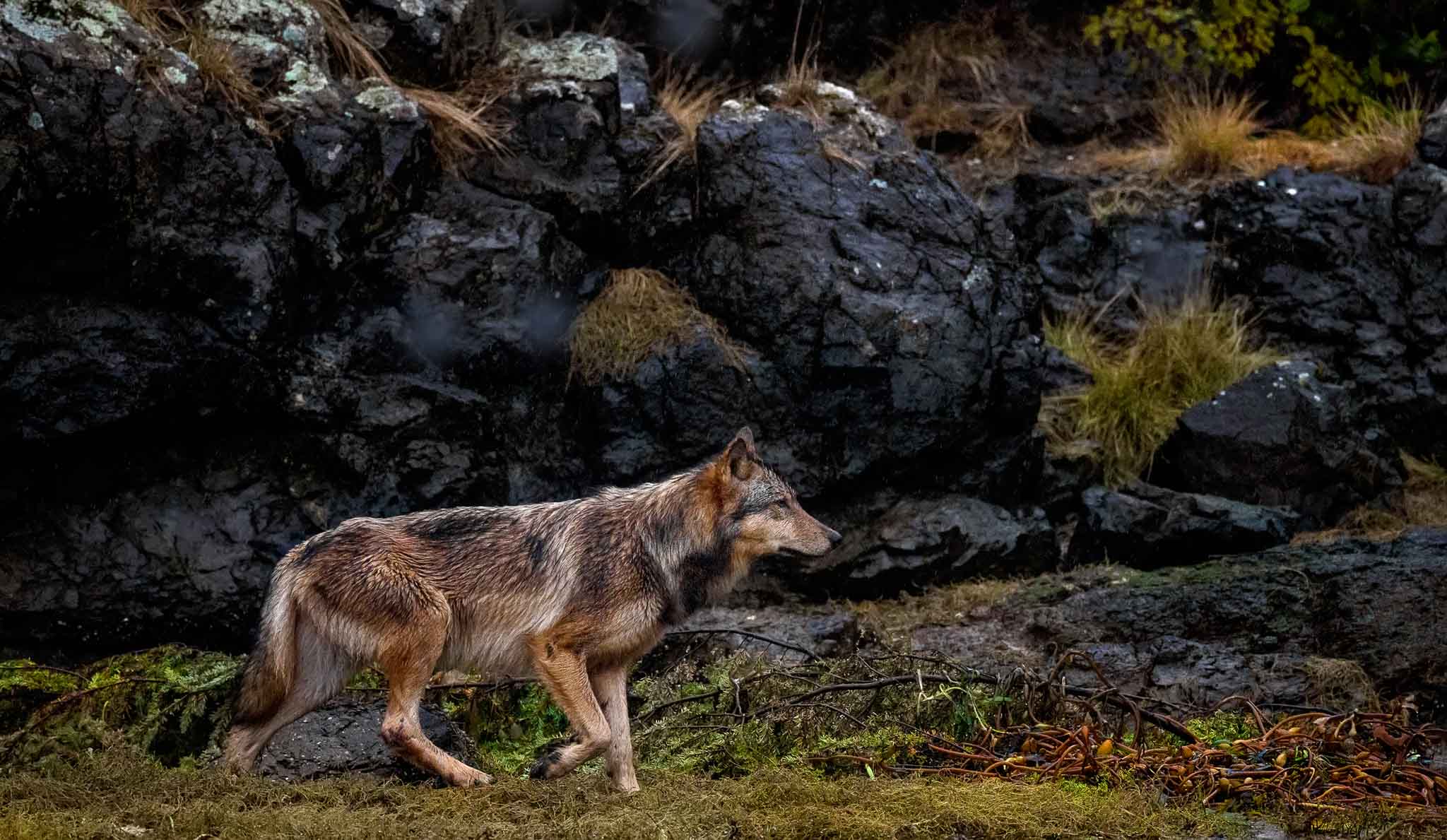
Photo by Michelle Valberg.
Raincoast’s wolf initiatives are working towards shifting the provincial management of gray wolves away from a poorly-informed and exploitation-based model to one that respects the welfare of wolves and their important role in functioning ecosystems. Our ultimate goal is to end the killing of wolves in British Columbia for the purposes of predator control, trophy, and perceived competition for shared prey.
Moving towards coexistence
The level of human-caused wolf mortality in BC can only be described as staggering. In addition to the hundreds of wolves dying at the hands of lethal control programs (government sanctioned wolf culls), the BC government estimates that some 1,200 wolves are killed annually from recreational hunting and trapping, all sanctioned and encouraged by the province. To ensure that wolves continue their wild ways amidst an uncertain future, coexistence must replace killing wolves.

Science-based approach
Our policy recommendations and advocacy on behalf of wolves are grounded in rigorous, peer-reviewed research and conservation ethics. With our community partners, we continue to gain scientific understanding about wolves across BC. This includes work on coastal wolves – a subspecies that has been found to be genetically distinct from their inland cousins, unique to the Pacific coast. Collaborative efforts among Raincoast scientists, Indigenous Nations, organizations, and several universities are creating contemporary knowledge about this globally unique wolf-deer-salmon system.
Questions we are asking
At Raincoast, we aim to apply and advance research methods that are minimally invasive to wildlife. Accordingly, much of our wolf research hinges on obtaining information from camera traps, acoustic loggers, and samples such as hair and scats, which we collect without capturing or handling wildlife. Through our research along the central and south coasts of BC, we hope to gain a better understanding of wolves and other apex predators in anthropogenically-disturbed populations, and their interactions with prey species in salmon-bearing watersheds. Along the south coast, we are conducting initial surveillance in tributaries of the Fraser River and working collaboratively to develop this research with the local First Nation.
- How do wolves interact with their environment during disturbance?
- How does seasonal salmon abundance influence the distribution and behaviour of wolves in wolf-ungulate-salmon systems?
- How do apex predators, like wolves, contribute to carbon cycling in this unique system?
- What are the economic and ecological benefits of wolf presence in anthropogenic landscapes?

British Columbia’s Rainforest Wolves

Cross-breeding in Vancouver Island wolves

Cross-bred animals found on Vancouver Island ‘aren’t fit as pets or wild creatures’
New paper tells story of Vancouver Island wolves
Raincoast Wolves posterchild
eBay should halt trophy hunt sales
Landscape heterogeneity and marine subsidy generate extensive niche variation in a terrestrial carnivore